









Home & Garden News
August 11, 2008
Heat Stress on Vegetables
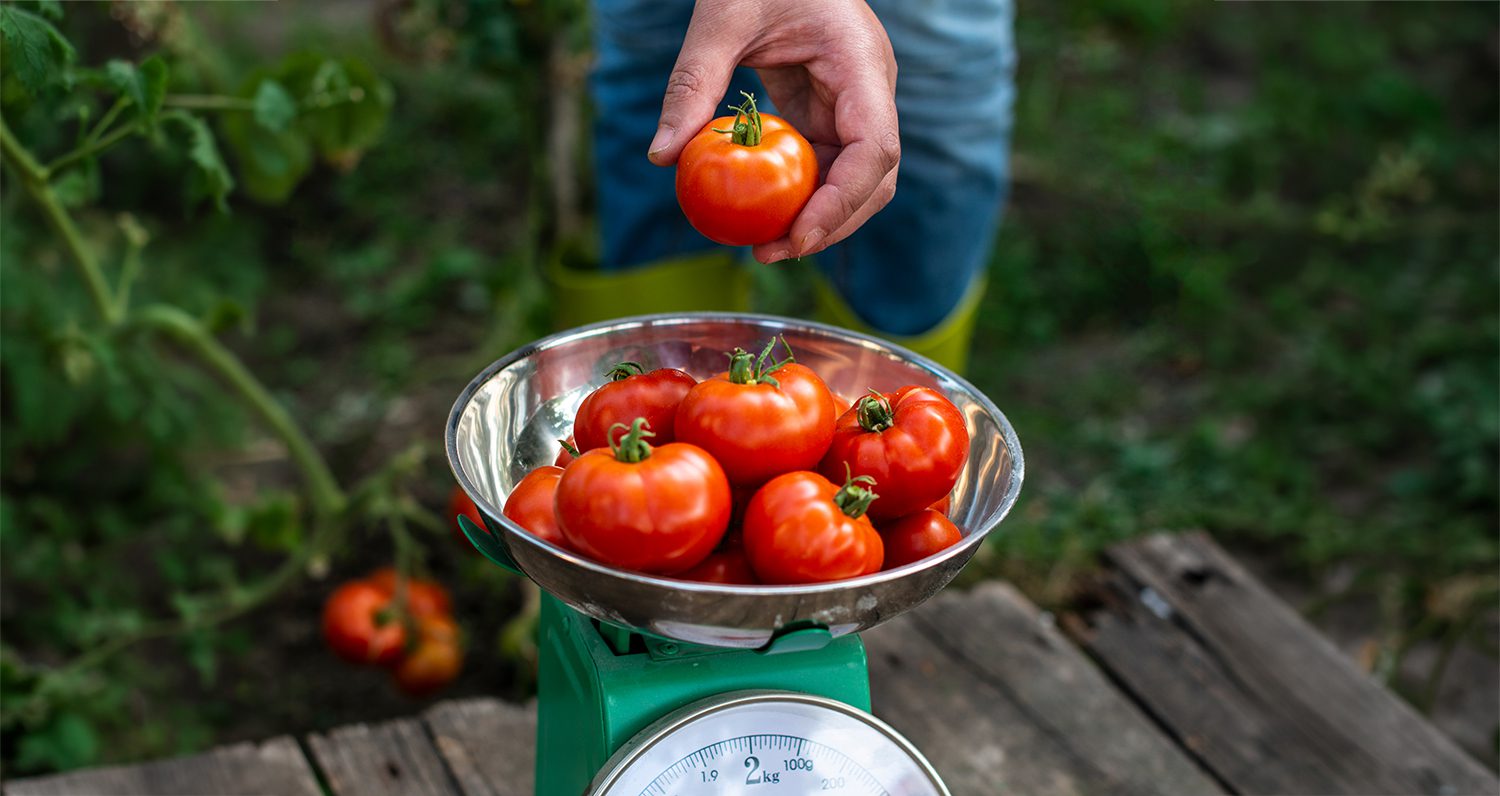
The past few weeks I have found and harvested several ugly and distorted tomatoes from my garden. What aren’t my vegetables pretty?
Many of the vegetable problems facing homeowners and farmers in mid-summer are likely weather related and are considered environmental disorders, not diseases. The extreme heat and lack of rainfall typical of July and August can be to blame for some things and greatly affects late season growth and flowering production. However, many of the cosmetic flaws found on the fruit to be harvested may be attributed to drastic changes in temperature and moisture levels during flowering and as well as during fruit development.
Catfacing and rough blossom scars are commonly seen on home-grown tomatoes giving them an imperfect appearance. Catfacing is the term used to describe fruit with deep indentations in the blossom end or fruit with significant distortions. According to Dr. Joe Kemble, Extension Specialist, these problems are more serious with large-fruited varieties than they are with cherry or Roma tomatoes. These disorders are more prevalent if the weather is cool and cloudy at the time of bloom. Unfortunately there is little that can be done for control of catfacing, except selecting varieties that are not prone to the problem.
Cracking fruit is another common environmental disorder found on tomatoes that really frustrates home gardeners at harvest. Dr. Kemble states there are two distinct types of fruit cracking: radial and concentric. Radial cracking is the most common and results in the most fruit damage. Cracking occurs when internal expansion is faster than the expansion of the epidermis, causing the outer skin to split. It occurs more often during rainy periods when the temperature is relatively high, especially when rains follow a long, dry period. Radial cracking can occur at all stages of fruit growth but as fruit mature they become more susceptible, especially as color develops. Concentric cracking begins on green fruits that are fully exposed to the sun. Maintaining a uniform water supply throughout the growing season with drip irrigation, mulches, or both, and maintaining good foliage cover will help reduce fruit cracks.
Other late season woes are probably from heat stress. Mature tomato plants suffering from such stress may produce small fruit, hold its fruit on the plant but not enlarge, or drop its flower blossoms. Regular watering and general care may help improve the situation but it may be best to start new young plants around mid summer for fall harvest rather than relying on the poor vigor of an old and depleted tomato plant. Planting heat resistant varieties of tomatoes is also recommended and worth trying.
For help on other home and garden questions, call the Master Gardener Horticulture Helpline at 1-877-ALA-GROW (1-877-252-4769) or visit us online at www.aces.edu.
August 07, 2008
FALL ARMYWORM MANAGEMENT IN LAWNS
Picture courtesy of Florida Extension.
Tim Reed, Extension Entomologist
July 29, 2008
This is the time of year when home owners need to start checking their lawns for fall armyworms (FAW’s). Problems with FAW’s generally start in extreme south Alabama in late July to early August and then move quickly northward. FAW’s were especially bad last year along the Gulf Coast where some athletic fields required 4 insecticide treatments. FAW’s will eat many kinds of grass, especially bermudagrass that is well-fertilized and watered. Home owners frequently notice them shortly after their grass starts to thin. First let’s talk about the biology of this pest and then cover control options.
FAW’s are susceptible to cold, and are unable to survive even the mildest winters in Alabama. Each year, FAW moths, carried by air currents, make their way from Central and South America. The size and timing of the initial moth flights are two factors that influence the outbreak potential of this pest. FAW damage often seems to appear "overnight." Young armyworms don't eat much. Almost all the damage is caused by the oldest caterpillars which eat more than all the other ages put together. Larger fall armyworms will sometimes "march into" (quickly invade) an uninfested area in search of food once an adjacent field or lawn has been defoliated. Large armyworms frequently disappear almost as suddenly as they appeared, either burrowing into the ground to pupate or moving on in search of food.
The 4 stages of development of the FAW are the egg, larvae, pupae and adult. The adult is an ash-gray moth with a wing-span of about 1½ inches. The front wings are mottled and have white or light gray spots near the tips. The back wings are white with a narrow, smokybrown edge. Moths become active at twilight and feed on nectar. They have an average life span of 2 to 3 weeks. The female moths lay eggs at night in masses of up to several hundred in grass and on light-colored surfaces, such as fence rails, tree trunks, and the underside of tree limbs. The eggs are light gray and covered with grayish fuzz from the female's body. These masses darken with age, and the eggs hatch within 2 to 4 days. All the eggs within a mass hatch at about the same time.
The tiny, light-colored, black-headed larvae (caterpillars) spin down to the ground on silken webs and begin to feed. As they grow, their bodies darken and noticeable stripes appear. When fully grown, larvae may be up to 1½ inches long and vary in color from light green to almost black with several stripes along the body. The "face" is marked with a light colored inverted "Y." Development from egg to fully grown larva requires about 2 to 3 weeks. The larvae feed for two to three days, grow, form a new skin and shed the old one. Once the caterpillar reaches maximum size it burrows into the soil and forms a pupa. The moths emerge in about 10 to 14 days. Three generations can occur in south Alabama.
Homeowners should begin inspecting their lawns each week for FAW To check areas where FAW populations are suspected, use soap flushes (about 2 tablespoons of lemon-scented dishwashing detergent in 1 gallon of water) to bring larvae to the top of the sod. Since other insects (such as grubs, mole crickets, sod webworms) may be involved, the soap flush allows you to check for these and other soil insects. There are several approved insecticides available to homeowners that provide effective control of FAW. These include labeled products containing carbaryl, trichlofon, Bacillus thuringiensis, and several pyrethroid insecticides. A number of pyrethroid materials are available in a variety of homeowner formulations for use as broad-spectrum contact insecticides. Common pyrethroids include bifenthrin, cyfluthrin, cypermethrin, deltamethrin, lambda-cyhalothin, permethrin and tralomethrin. Active ingredients are listed on the label. Be sure to follow label directions on each product to insure optimum results.
For more information on home gardening questions, call the Master Gardener Hotline toll-free at 1-877-252-GROW (4769).

RSS Feed