
About Us

The environment is important to the existence of people and animals. People need clear air, water, food, and natural resources, and depend upon the environment for physical and mental well-being. Preserving biodiversity and healthy ecosystems for future generations is just as important. Alabama Extension’s forestry, wildlife, and natural resources programs teach people how to live in harmony with nature and protect the environment, our natural resources.
E-Waste Management Education Program (EMEP)
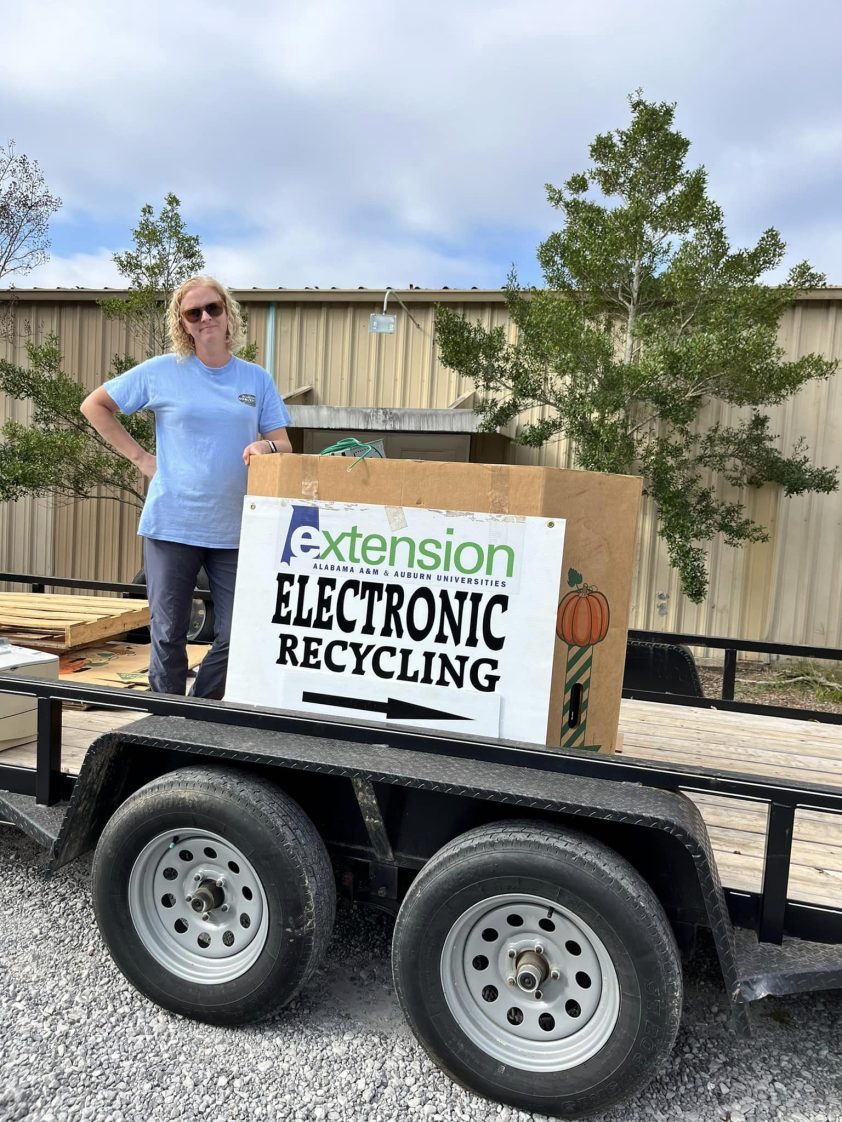
The EMEP: E-Waste Management Education Program educates audiences about the hazards of electronic waste (e-waste), the importance of recycling, and the benefits of being good stewards of the environment.
Urban Environmental Science Education Program (UESEP)
The UESEP: Urban Environmental Science Education Program provides youths and adults with natural resource conservation strategies to improve environmental awareness and stewardship. This program provides indoor, outdoor, or virtual experiences to explore the environment, wildlife, and natural resources, focusing on traditional conservation and new and emerging environmental issues.
Synergistic Efforts to Reduce Pharmaceutical Impacts on the Environment (SerPIE)
The SerPIE: Synergistic Efforts to Reduce Pharmaceutical Impacts on the Environment offers a one-health approach to minimizing environmental impacts. SerPIE highlights the connection between pharmaceutical drugs, personal care products, and pollution by tackling tough topics like the opioid crisis and giving the public information to safeguard their home and the environment by properly disposing of unused medication and personal care products for both humans and animals.
2024 Program Impacts
- 22,570 direct impacts were made due to programming activities.
EMEP
- 7 e-cycling drives resulted in 782 cars dropping off 42,324 pounds (21 tons) of e-waste.
- 195 printer cartridges were recycled via the small electronics recycling program, generating $580.00 in revenue.
SerPIE
- 531 participants dropped off 1,354 pounds of medication at 16 drug take-back events.
- 6 new drug boxes were installed in Bibb, St. Clair, Limestone, and Lauderdale counties.
- 2,634 total pounds of unwanted medication were collected via SerPIE.
- 442 participants took the Lock-your-Meds pledge, promising to adopt best management practices to safeguard the use of pharmaceuticals.
UESEP
- 38,000 pounds of paper were recycled, saving 101 trees, 961 gallons of oil, 714,968 hours of electricity, and 30,424 gallons of water, per the Montgomery County Environmental Calculator.
- 10 STEM books were shared with 2,288 youth; disaster preparedness was the focus. Schools designated in the Alabama Turnaround Initiative were among the targeted schools. As a result of the lessons, 76% (1,739) of youth wanted to read more because of the Lend an EAR virtual story time series; 77% (1,762) of youth felt the story time series increased their knowledge of natural resources; 86% (1,968) of youth felt reading the books aloud helped them understand them better; and 70% (1,602) of youth felt the story time series made them me want to protect the environment.
- 107 of 304 participants completed the post-delayed survey, which indicated that 95% (102) had recycled glass, paper, plastic, or aluminum in their homes; 75% (80) created an emergency preparedness kit; 36% (39) tested drinking water in their homes; and 58% (62) tested the soil in their yards.
Environmental education programs empower people to be eco-friendly by conserving natural resources and by fostering greater harmony with nature.
For More Information
For more information about environmental programs, please contact Karnita Garner at (256) 372-8331.