







 |
Antioxidants and Free Radicals
By Dr. Cathy Sabota, Horticulture
Specialist
|
The
Alabama Cooperative Extension System at Alabama A&M University
held its 2006 Urban-Rural Interface Conference in April that
focused on functional foods. Here is some information on antioxidants
and free radicals that was presented at that event.
The presentation by Dr. Ronald Prior of
the Arkansas Children's Hospital Research Center provided significant
information on what we should be eating and why.
Free radicals are a part of life and are
described as the chemical reaction of ions or atoms in the body
that destroys cells. We consume 6 to 11 pounds of oxygen every
day, of which 2.8 percent is not completely reduced and forms
free radicals. As much as five pounds of peroxide may be produced
in our body every year. If excessive free radicals remain in
the body without the consumption of enough antioxidants, then
oxidative stress may occur. Oxidative stress can contribute to
aging, cancer, Parkinson's disease, radioactive damage, arthritis,
diabetes, frostbite, inflammation, and infection.
To reduce the risk of oxidative stress,
it is important to include sufficient high-antioxidant foods
in our diets. ORAC, short for Oxygen Radical Absorbance Capacity,
is a test tube analysis that measures the total antioxidant power
of foods and other chemical substances (McBride, 1999). The average
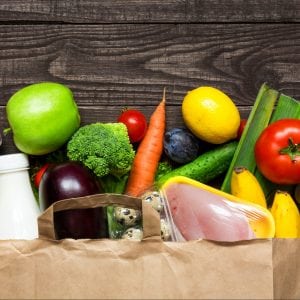
antioxidant level of vegetables is 1.37 ORAC per serving with
artichokes having the highest level at about 8 ORAC per serving.
Avocados, potatoes, broccoli, raab, peas, and asparagus score
above the 1.37 ORAC average for vegetables. Fruits average 3.56
ORAC per serving with wild blueberries at more than 13 ORAC.
Cultivated blueberries and cranberries score about 9 ORAC per
serving, while blackberries, raspberries, strawberries, cherries,
black plums, and apples score above the 3.56 ORAC fruit average
per serving (Prior, 2006).
If you prefer to drink your antioxidants,
the most potent fruit juices are blueberry, plum, red grape,
and cranberry. However, when consuming juices, be aware of the
sugar content and consume with caution. If you prefer to chew
your antioxidants, granola, toasted oatmeal squares, and oat
bran provide 1.0 ORAC or more antioxidants per serving. Pecans,
walnuts, hazelnuts, and pistachios contain more than 2.0 ORAC
per serving.
The average intake of antioxidants per
day in the United States from 2.5 servings of fruits and vegetable
is 4.6 to 5.5 ORAC. The estimated ORAC intake from 9 high-ORAC
value servings of cereal, fruits, and vegetables per day is 20.7
ORAC. Depending on energy output, smoking, drugs, and other factors,
you should consume between 4.4 and 13.3 ORAC of antioxidants
per day. The more active you are the higher the requirement,
as is true of smoking or other health conditions.
If you would like more information on Dr.
Prior's presentation or to purchase a copy of the conference
video, please contact Dr. Cathy Sabota at Catherine.sabota@email.aamu.edu
or call 256.372.4257.
References
McBride, Judy. (February 8, 1999).
High-orac foods may slow aging. News and Events.
United States Department of Agriculture.
Prior, Ronald. (2006). Antioxidants,
free radicals and health: Translating the science into dietary
recommendations. [videotape] (Available from Alabama Cooperative
Extension System, Alabama A&M University, Normal, AL 35762).
If
you do not have the latest version of Adobe Acrobat and wish
to view the
PDF publication on this site, click here
to download:
Return to Metro News...
|