








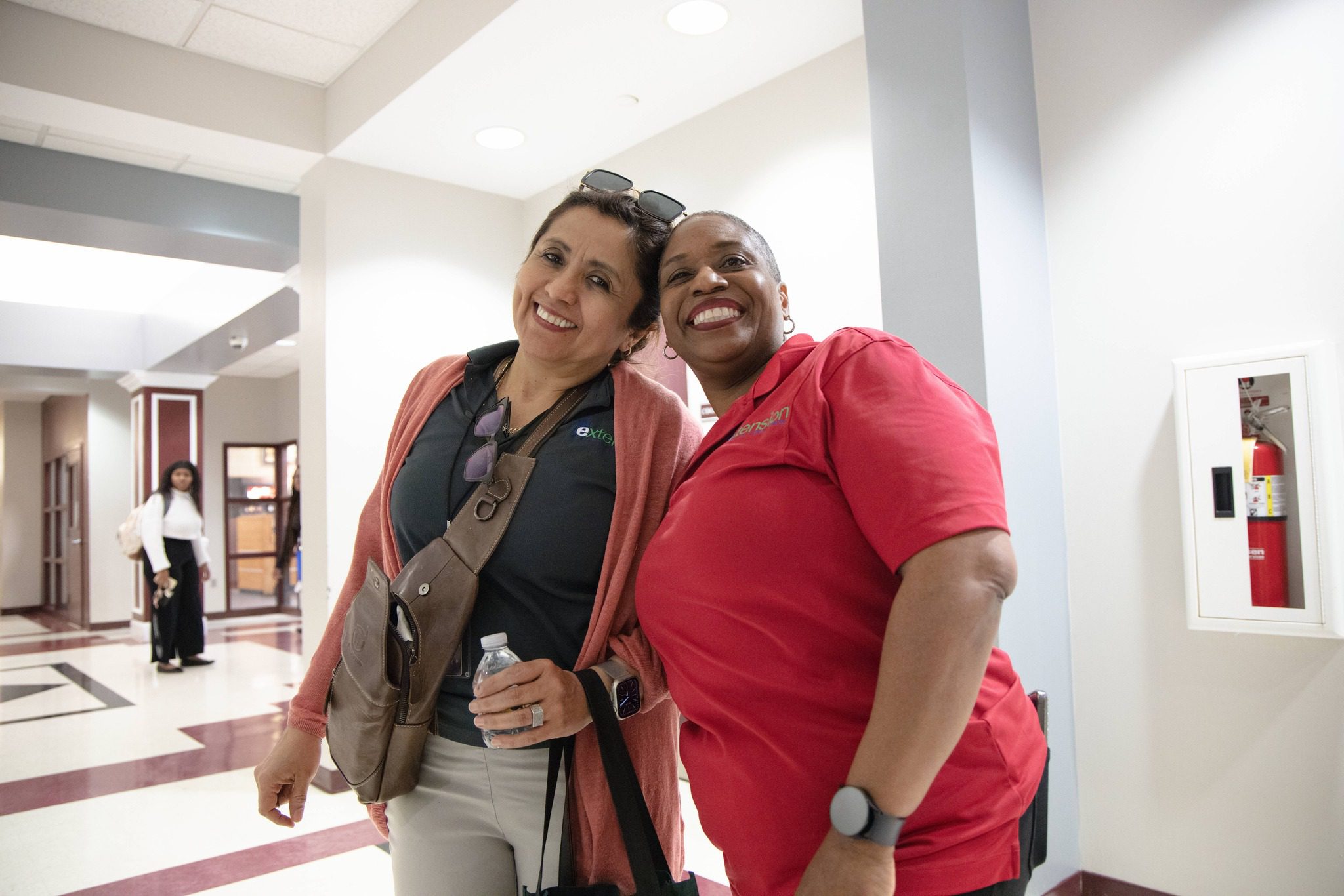



Today's facilitators such as Extension agents, specialists, and other professionals are successfully using different approaches to train and educate adults in informal learning environments. Oftentimes adult participants do not complete the training programs and shortchange their opportunity for lifelong learning experiences. However, Extension facilitators are in a position to help clients take an ownership approach in their learning experiences as they work together to achieve educational goals.
Such an approach is called Learning-Centered Programs (LCP) (Boud 1990, Hammond & Collins 1991) where students and facilitators collaborate to "diagnose their learning needs, formulate learning goals, identify resources, select and implement learning strategies, and evaluate learning outcomes" (Lowry, 1989, p.98). Hargreaves (2000) calls this a "culture of collaboration." Extension practitioners can approach the entire teaching concept as a partnership to encourage accountability and develop result-oriented clients. Although the philosophy is broad, there are components that Extension clients and facilitators can do together such as "diagnose (the clients) learning needs and formulate learning goals." Through the use of the pre- and post-tests, facilitators can formulate open-ended questions where the client can communicate their desired needs and goals. Clients should be encouraged to sign the pre-test as a contract to take ownership of the learning process (Hammonds & Collins, 1991; Jedrey 1985; Lowry, 1989; Vernon, LoParco, & Marsick, 1993).
Is LCP a new approach? No! This kind of collaborative approach to education has been around for a long time. Educational collaboration was done in the early 40s, when postwar America was developing its workforce to meet the demands of a new technological and industrial-based economy. Evening schools were springing up all over the country to prepare adults to answer the needs of a changing society. At that time, industry and educators strategized on the best approach to get the most able-bodied individuals quickly trained to meet current employment needs. Presently, the educational workforce plan remains a collaborative effort between the individual student and an adult facilitator, focusing on the best way to address the future needs of the adult learner in a global marketplace.
While standing in a room full of adult learners whose average educational level is grade 11 or less, Extension facilitators need to be sincere in their delivery so that students feel more at ease about participating in their learning experience. Let's face it adult learners are very different from young learners. Some of the experiences adults bring to the classroom are varied and range in scope from parenting to serving as heads of their household. They can also be further identified by such societal pursuits as workers, volunteers, community leaders, neighbors, homeowners, renters, and churchgoers.
Adult educators, on the other hand, can be viewed as change agents because they help adults become lifelong learners and achieve their educational goals. Former Vice President Gore clearly recognized the unique contributions of this untapped resource and held a Lifelong Learning Summit in January 1999 to celebrate the contributions of the adult learner. He talked about how to get every American prepared for high paying jobs that would be available in the twenty-first century. Gore recognized the "central answer" for adults was not only to get a good education, but also to continue learning for a lifetime. He added, "Education can no longer stop after you leave high school or even college."
Regardless of whether adults only received an eighth or ninth grade education, they are vital links in the developmental success of our communities, states, and nation. Educators can encourage adult participants or students to become lifelong learners to enable them to further chart their course in life. During training and educational sessions, Extension educators can inform their clients about other Extension programs that could enhance their clients' lifelong learning pursuits.
Extension programs are poised and ready to assist adults in becoming lifelong learners. Extension facilitators treat adult learners with respect and dignity as they work together to identify goals, objectives, and expect outcomes that will lead to an improved quality of life.
References
Boud, D. (1990). Assessment and the promotion of academic values, studies in higher learning. Studies in Higher Education, (pp. 101-111).
Crowe, Jean L. (Fall 2000). Evaluation of adult learners: Ethical issues. New Horizons in Adult Education. Retrieved April 5, 2004.
Gore, Al. (January 29, 1999). Remarks as prepared for delivery by vice president Al Gore: Lifelong Learning Summit. Selected speeches of Al Gore, vice president of the United States: Education. Retrieved March 29, 2004.
Hammond, Merryl. and Collins, Rob. (1991). Self-directed learning: Critical practice. New York, NY: Nichols/G. P. Publishing.
Hargreaves, A. (2000). Four ages of professionalism and professional learning. Teachers and Teaching: History and Practice (pp. 151-182).
Herod, Lori-Kyle. (Winter 2003). Promoting reflective discourse in the Canadian adult literacy community: Asynchronous discussion forums. New Horizons in Adult Education. Retrieved April 5, 2004.
Jedry, C. M. (1985). Grading and evaluation on M. M. Gullette: The art and craft of teaching. Cambridge, MA: Harvard University Press.
Lowry, C. M. (1989). Supporting and facilitating self-directed learning. Columbus, OH: Eric Clearinghouse on Adult, Career and Vocational Education.
Vernon, S. and LoParco, L. B. and Marsick, V. J. (1993). Satisfying accountability needs with nontraditional methods. In P. Mulcone (ed). Current Perspectives on Administration of Adult Education Programs. San Francisco, CA: Jossey Bass.