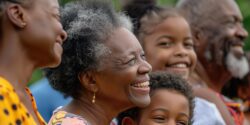






It was an overcast September morning as over 150 local residents of Triana, Alabama and guests from as far away as New Jersey, gathered in Flamingo Park and the Flamingo Wildlife Refuge to celebrate their first Arbor Day. They didn't mind the sun was shining all around as far as they were concerned.
The residents had accomplished a number of goals over the past six months. They had accepted an offer to participate in a Cooperative Extension-led research project to determine the impact of a tree-based community revitalization project on social issues. Trees are seen as a valuable asset in the larger urban forest ecosystem and are known to reduce negative social problems such as teen drug abuse, domestic violence, and unemployment. Therefore, in a predominately African-American community like Triana on the fringe of the more trendy "new urbanism movement," trees serve as a vital social commodity for families and communities located in at-risk areas. Based on the research presented to Triana residents, the community was quite receptive to several initiatives proposed by the Alabama Cooperative Extension System.
Marilyn Simpson Johnson, a family welfare specialist at Alabama A&M University (AAMU), had seen rapid urban growth absorb the character and tradition of other at-risk communities across the state and did not desire the same for Triana. What was needed, she reasoned, was a spark a project that would bring the residents together to work toward the common goal of revitalizing the community and building a solid campaign to articulate their own "smart growth" agenda. She sought consultation on an urban forestry idea and was linked with Dr. Brenda Allen, a forestry assistant professor at Auburn University. The researchers were awarded a grant from the Alabama Urban and Community Forestry Association and launched a tree-planting initiative on the impact of urban forestry on social well-being.
Special emphasis was placed on helping Triana to qualify for Tree City USA status. A tree board was organized to spearhead the procedural requirements of the Tree City USA process. The community completed their application prerequisites with the Arbor Day celebration on September 21. Extension also worked with the board and other public and private partners to undertake the revitalization of both the town park and wildlife refuge, including a tree-planting plan. Installation of an outdoor learning center utilizing the USDA Forest Service Project's Learning Tree curriculum, and a walking tour on the social, economic, and environmental benefits of trees were also implemented. A four-week public radio campaign on AAMU's campus with youth from the Triana Boys and Girls Club promoted the campaign "Trees Are Your Friends." The Alabama Forestry Association grant enabled the town of Triana to plant over 20 flowering trees.
A New Day The Arbor Day Celebration, including the tree-planting ceremony, marked a number of milestones and a new day for Triana. Funding through the Al