









 |
|
|
Urban Affairs and New Nontraditional
Programs |
|
| Volume 1, Number 4 |
April - June
2002 |
Challenges of the Urban-Rural Interface:
Families and Communities
By Maurice Dorsey, Ph.D.
National Program Leader, Public Policy
USDA/CSREES
Washington, D.C.
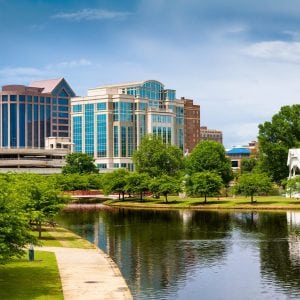
Protecting prime farmland and open space and redeveloping
blighted core areas of the inner cities invoke fighting words
when debating urban-rural interface issues.
According to the 2000 Census, more than one-half of the American
population now lives in suburban/metropolitan areas, thus we
no longer have a rural or urban society, but a "suburban
society". If we rejuvenate the inner (central) cities, this
would slow the migration of people to the suburbs and save prime
farmland and open spaces from urban sprawl.
Urban and rural families and communities can benefit from
high profile programs in food safety and quality, environmental
education, electronic communications, financial security, workforce
preparation, entrepreneurship, community development, public
issues in education, sustainable agriculture, diversity and pluralism,
children, youth and families, and countless others. Successful
urban-rural programs require the attention of Extension agents,
specialists, and administration listening to tough, nontraditional
urban issues; urban programs should not stand-alone. We must
demonstrate strong and successful interdisciplinary, multi-state
and regional programs. To do this, it means collaborating differently
and out-of-the-box internally with campus directors, deans, presidents,
Extension Committee on Organization and Policy and the Cooperative
State Research, Education and Extension Service, as well as externally
with nontraditional partners and stakeholders. We must prioritize
and elevate the significance of urban-rural programs, gain support
from research communities, including the Agricultural Experiment
Stations and most of all; we need strong leadership-individuals
who are sensitive and adaptable to both urban and rural audiences.
Are we ready to accept the challenges?
The Bullmastiff: A Giant of an
Urban Dog
The Code of the Extension Worker
E-Learning & E-Conferencing Come
to Alabama
Impact of Urban Forestry Development
on Domestic Violence
In the Wake of Disasters
Interview with Hurricane Mitch Survivor
LifeSmarts
Raising Cane: Farmland Preservation
Urban and Rural--At the Interface
WECAN4U Exhibits at National Conference
Grassroots Connections
4-H Youth Entrepreneurship Program
No
Smoke Screen: Health Fair Lets Students See Effects of Tobacco
as printed in the Lauderdale County Times Daily
Editorial Staff & Content Areas
If you have any questions, please contact
the appropriate editorial staff member by content area. When
in doubt, contact the editor.
Wendi Williams (Editor/National-International
News)
wawillia@aces.edu
Jannie Carter, Ph.D. (County News)
jcarter@aces.edu
Edna Coleman (Specialist News)
ecoleman@aces.edu
Julio Correa, Ph.D. (Spanish Programming)
jcorrea@aces.edu
Kevin Crenshaw, Esq. (Legal Issues)
kkcren@aol.com
Jean Hall-Dwyer (Print/Electronic Design,
Spanish Programming)
jhall@aces.edu
Erica James (Administrative News/Distribution)
ejames@aces.edu
Jacqueline Johnson, DVM (Online Database)
jujohnso@aces.edu
Jeanetta Williams (Proofreading/Distribution)
jwilliam@aces.edu
Phone: 256-851-5710 Fax: 256-851-5840
|