- About Urban Affairs
- Resources
- Urban Extension Programs
Upcoming Events:
- 05/22 - Urban Nutrition Education Program
- 05/23 - Arthritis Foundation Exercise Program
- 05/28 - Arthritis Foundation Exercise Program
- 05/28 - Urban Nutrition Education Program
- 05/29 - Urban Nutrition Education Program
- 05/30 - Arthritis Foundation Exercise Program
- 06/03 - Urban Nutrition Education Program
- 06/04 - Urban Nutrition Education Program
- 06/05 - Urban Nutrition Education Program
- 06/07 - Safari to the Wild Side of Alabama/MCPSSTeacher workshop
Animal Science & Agriculture
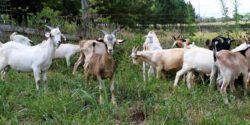
Crop and livestock production contributes significantly to Alabama’s economy. However, the state’s agricultural production is dominated by livestock products, mainly broilers (young chickens), cattle and calves, and chicken eggs. Due to the increased population of ethnic groups that consume goat and lamb products, Alabama’s goat and sheep producers have also enjoyed a good market in recent years.
Through a variety of educational activities and technical assistance services, the Alabama Cooperative Extension System at Alabama A&M University has enabled small-scale and limited-resource farmers to own and operate profitable goat and sheep farms and associated businesses. Extension strives to create new ways of learning and to provide research-based information that helps Alabama’s goat and sheep industries to enhance their profitability and competitiveness in the national and global markets. Extension animal science specialists provide educational information to the public on small ruminant reproduction, nutrition and health, the identification of appropriate breed resources, record keeping, performance evaluation and genetic improvement, forage resource management, parasite control, meat quality assurance and safety, and product marketing.
While most of Alabama’s agricultural production is in livestock, the state has consistently ranked as a top United States producer of several vegetable and fruit crops. Furthermore, as public concerns about health and the environment increased, the interest in organic vegetable, fruit, and herb production in Alabama has grown significantly. Likewise, the number of educational opportunities for small farmers interested in the production of specialty vegetables and herbs has expanded significantly. New direct marketing opportunities such as farmers’ markets have spurred an effort to provide Alabama consumers with organically produced foods and specialty vegetables and herbs.
- Alabama Ethnic Food Security Network (AEFSN)
- Alabama A&M University Agribition Center
- Urban and Nontraditional Animal Sciences Publications

Metro News
Urban newsletter
Contribute to 4-H