
Crop Production


Apple and Pear
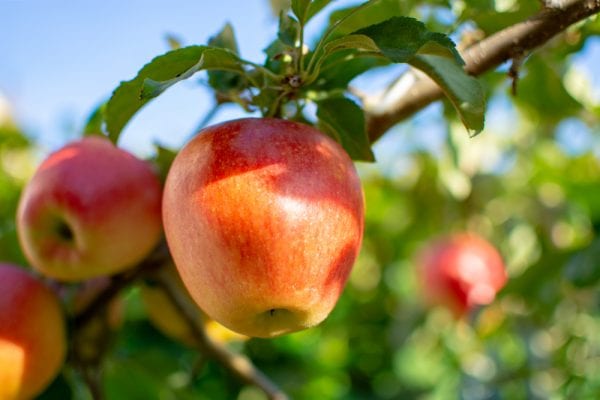 Apple and pear trees are subject to serious damage from pests. As a result, a preventive spray program is needed. The following practices will improve the effectiveness of the pesticides and may lessen the need for sprays.
- Plant disease-resistant varieties. This method of disease control is especially important for fire blight, where chemical control options are limited. Varieties resistant to cedar-apple rust, scab, and powdery mildew are also available and will potentially reduce the need for sprays.
- Rake and discard or burn leaves in the fall if apple scab or pear leaf spot are problems. The fungi that cause these diseases can survive through the winter in infected leaves.
- Remove diseased galls from cedar trees. Spores from these cedars can infect apples, causing cedarapple rust. Eliminating the source of spores (cedar trees) is effective but not always possible. Where cedars are part of an established landscape, remove and destroy all galls caused by the rust fungus on cedars in the late fall. Inspect the cedars again in the early spring, during or just after a rain, when the orange, gelatinous fungus growth from any remaining galls is highly visible. Remove these galls.
- Prune trees according to recommendations to improve control of all aboveground diseases. In well-pruned trees, air circulation and sunlight penetration are improved. This helps to control diseases by promoting rapid drying after rains and dew. Penetration of sprays into the canopy is also better if the trees are well pruned.
- Prune out and destroy all dead or diseased shoots and limbs during the dormant season. This helps reduce fire blight, fruit rots, and certain leaf spots, as the organisms that cause these diseases can survive through the winter in the wood. Removing mummified (dark, shriveled, dry) fruit helps prevent the overwintering of the fruit rot organisms.
- Prune out fire blight–affected shoots and blossom clusters during the growing season only as symptoms appear. Prune during dry weather and sterilize tools between cuts. Make pruning cuts at least 8 to 12 inches below infection.
- Control weeds that may harbor insect pests.
- Use only copper, mancozeb, sulfur, and streptomycin sulfate disease-control products on pear trees. Streptomycin sulfate can be used for fire blight, as seen in table 1. Mancozeb, copper, and sulfur can be used for leaf spot, scab, quince rust, and other diseases as directed on the label. Both copper and sulfur can injure pears, so read the label carefully.
- Once fruits have formed, bagging is an alternative to pesticide sprays. For more information, see the Clemson University Cooperative Extension, College of Agriculture, Forestry, and Life Sciences website.
- If you have only a few fruit trees, one option is to use a multipurpose fruit tree spray. These multipurpose products contain both fungicides and insecticides and are convenient and effective methods for controlling many but not all common pests and diseases. Bonide Fruit Tree & Plant Guard is a multipurpose product that contains a mixture of two fungicides and an insecticide and can be used on apples and pears. This product may be applied up to four times during the growing season. Because it contains an insecticide, do not apply during bloom to protect pollinators. See the product label for more information.
Table 1. Disease and Insect Management for Apple Orchards
| Time of Application | Pest Controlled | Material to Use1 | Comments | ||
|---|---|---|---|---|---|
| Dormant: when leaves start to protrude from buds | Fire blight | Copper | Refer to label for specific application timing. | ||
| Dormant: when leaves start to protrude from buds | Aphid, mite, scale | Horticultural oil | Apply three times during the dormant season. | ||
| Pink: just before blooms open | Scab, rusts | Captan, myclobutanil | If cedar apple rust or quince rust has been a problem, use myclobutanil in this stage, petal fall, and first cover sprays. | ||
| Pink: just before blooms open | Aphid, mite, scale, plant bugs, leafminer | Malathion, permethrin, zeta-cypermethrin | |||
| Bloom | Fire blight | Streptomycin | If fire blight has been a problem, apply streptomycin every 3 to 4 days during bloom. | ||
| Bloom | Do not apply insecticides during bloom to protect pollinators. | ||||
| Petal fall: when most of the blooms have fallen | Scab, rusts, powdery mildew | Captan or myclobutanil | |||
| Petal fall: when most of the blooms have fallen | Codling moth, leafroller, leafhopper, plum curculio, Oriental fruit moth | Malathion, permethrin, zeta-cypermethrin | Permethrin can provide some control of stinkbugs as well. | ||
| First cover: 7 to 10 days after petal fall spray | Bitter rot, white rot, rusts, scab | Captan or myclobutanil | |||
| First cover: 7 to 10 days after petal fall spray | Codling moth, leafroller, leafhopper, plum curculio, Oriental fruit moth | Malathion, permethrin, zeta-cypermethrin | |||
| Remaining covers: at 2-week intervals until harvest restriction date | Bitter rot, white rot, sooty blotch, fly speck | Captan | |||
| Remaining covers: at 2-week intervals until harvest restriction date | Codling moth, plum curculio, Japanese beetle | Malathion, permethrin, zeta-cypermethrin | |||
| Bud break: from 1/2 inch long green leaves to tight cluster | Scab | Captan | |||
| Bud break: from 1/2 inch long green leaves to tight cluster | Aphid, mite, scale, plant bugs, leafminer | Malathion, permethrin, zeta-cypermethr | Repeated use of pyrethroids such as permethrin will increase mite populations. Malathion rarely induces secondary pest populations. | ||
Table 2. Disease and Insect Management for Pear Orchards
| Time of Application | Pest Controlled | Material to Use1 | Comments | ||
|---|---|---|---|---|---|
| Dormant: when leaves start to protrude from buds | Fire blight | Copper | Refer to label for specific application timing. | ||
| Dormant: when leaves start to protrude from buds | Aphid, mite, scale | Horticultural oil | Apply three times during the dormant season. | ||
| Bud break: from 1/2-inch long green leaves to tight cluster | Aphid, mite, scale, plant bugs, leafminer | Malathion, permethrin | Repeated use of pyrethroids such as permethrin will increase mite populations. Malathion rarely induces secondary pest populations. | ||
| Pink: just before blooms open | Scab, rusts | Mancozeb, copper, sulfur | |||
| Pink: just before blooms open | Aphid, mite, plant bugs | Malathion, permethrin | |||
| Bloom | Fire blight | Streptomycin | If fire blight has been a problem, apply streptomycin every 3 to 4 days during bloom. | ||
| Bloom | Do not apply insecticides during bloom to protect pollinators. | ||||
| Petal fall: when most of the blooms have fallen | Scab, rusts | Mancozeb, copper, sulfur | |||
| Petal fall: when most of the blooms have fallen | Codling moth, leafroller, leafhopper, plum curculio, Oriental fruit moth | Malathion, permethrin, zeta-cypermethrin | Permethrin can provide some control of stinkbugs as well. | ||
| First cover: 7 to 10 days after petal fall spray | Fruit rots, rusts, leaf spot | Mancozeb, sulfur | |||
| First cover: 7 to 10 days after petal fall spray | Codling moth, plum curculio | Malathion, Spinosad, zeta-cypermethrin | |||
| Remaining covers: at 2-week intervals until harvest restriction date | Codling moth, plum curculio | Malathion, Spinosad, zeta-cypermethrin | |||
Peach, Plum, and Nectarine
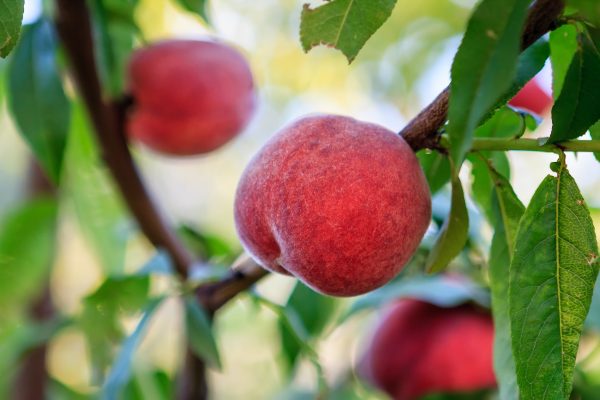 Peach, plum, and other stone fruits are commonly affected each year by several insect and disease problems. A spray program is therefore needed for successful fruit production. The following sanitation and cultural practices will improve the chances of success and may lessen the need for sprays.
- Prune trees according to recommendations to allow better air circulation and sunlight penetration. Pruning helps to control diseases by promoting rapid drying after rains and dew. Penetration of sprays into the canopy is also better if the trees are well pruned.
- Remove and discard old mummified fruit left hanging in the tree or laying on the ground.Mummified fruit is an important overwintering site of the brown rot fungus.
- Avoid planting peach varieties that are highly susceptible to bacterial spot, as there are few options for control of this disease. Examples of highly susceptible cultivars are Elberta, Halehaven, Rio-Oso-Gem, O-Henry, Cresthaven, and Sunhigh.
- Control broadleaf weeds with regular mowing to control insect pests.
- Remove fruit damaged by insect or bird feeding
- If you have only a few fruit trees, one option is to use a multipurpose fruit tree spray. These multipurpose products contain both a fungicide and insecticide and are a convenient and effective method to control many but not all of the common pests and diseases. Bonide Fruit Tree & Plant Guard is a multipurpose product that contains a mixture of two fungicides and an insecticide and can be used on peaches, plums, and nectarines. This product may be applied up to five times during the growing season. Because it contains an insecticide, do not apply during bloom to protect pollinators. See the product label for more information.
- Control black knot of plum trees by removing knots before they begin to produce spores. In late winter, prune out and destroy these rough, black swellings or galls that develop on twigs and branches.
Table 3. Disease and Insect Management for Peach, Plum, and Nectarine Orchards
2Refer to product labels for preharvest interval (PHI) or the number of days between final spray and harvest.
| Time of Application | Pest Controlled | Material to Use1 | Comments | ||
|---|---|---|---|---|---|
| Delayed dormant: when buds swell | Aphid, mite, scale | Horticultural oil | Do not apply when temperatures are below 40°F or are predicted to fall below 40°F within 24 hours. | ||
| Pink: Just before blooms open | Black knot of plum | Captan, chlorothalonil | Fungicides are needed for plum trees if black knot is a problem. Remove and destroy all signs of black knot during the dormant season. | ||
| Pink: Just before blooms open | Lesser peachtree borer, peachtree borer, plum curculio, Oriental fruit moth | Malathion, permethrin, zeta-cypermethrin | Treatment provides some control of leaffooted bug and stinkbugs. Permethrin can be used only on peaches. | ||
| Bloom | Do not apply insecticides during bloom to protect insect pollinators. | ||||
| Petal fall | Brown rot, scab | Captan, chlorothalonil, sulfur | |||
| Petal fall | Lesser peachtree borer, peachtree borer, plum curculio, Oriental fruit moth | Malathion, permethrin, zeta-cypermethrin | Repeated use of pyrethroids such as permethrin will increase mite populations. Malathion rarely induces secondary pest populations. | ||
| Shuck split: when flower shucks begin to split | Brown rot, scab, black knot of plum | Captan, chlorothalonil, sulfur | Do not apply chlorothalonil after shuck split. | ||
| Shuck split: when flower shucks begin to split | Lesser peachtree borer, peachtree borer, plum curculio, Oriental fruit moth | Malathion, permethrin, zeta-cypermethrin | |||
| Cover sprays: repeat at 10–14 day intervals | Brown rot, black knot of plum, scab | Captan | |||
| Cover sprays: repeat at 10–14 day intervals | Lesser peachtree borer, peachtree borer, plum curculio, Oriental fruit moth | Malathion, permethrin, zeta-cypermethrin | Repeated use of pyrethroids such as permethrin will increase mite populations. Malathion rarely induces secondary pest populations. | ||
| Preharvest sprays: 2–3 weeks before harvest 2 | Brown rot | Captan, propiconazole | These are critical sprays for brown rot control. Propiconazole is more effective than captan for brown rot control. | ||
| Preharvest sprays: 2–3 weeks before harvest 2 | Lesser peachtree borer, peachtree borer, plum curculio, Oriental fruit moth, stinkbug, leaffooted bug, grasshopper | Malathion, permethrin, zeta-cypermethrin | Spray permethrin 14 and 7 days prior to the anticipated harvest date. | ||
| Dormant: late fall to early spring before bud swell | Peach leaf curl | Chlorothalonil, copper | Fungicide application is needed for peach leaf curl only if there is a history of this disease. | ||
| Dormant: late fall to early spring before bud swell | Aphid, mite, scale | Horticultural oil | Apply three times during the dormant season. | ||
Blueberry
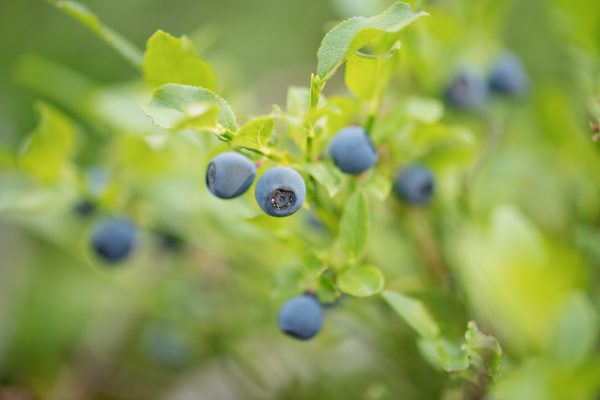 Blueberries can often be grown with few, if any, fungicide treatments. Possible diseases include mummy berry, twig blights, leaf spots, and Botrytis blight. If mummy berry disease has been a problem, rake the area beneath and around plants to collect or bury any mummified fruits from the previous year’s crop in the location where the diseased fruit was found. Adding a 2-inch layer of mulch during the winter to bury the mummified fruit also helps prevent mummy berry. To reduce twig blights, prune out and destroy dead twigs and branches.
- Monitor for insects and spray as needed.
- Monitor for spotted wing drosophila (SWD), which isa new pest that infests developing fruit. Make sprays once or twice a week to control or prevent SWD.
- If maggots are found, pick all blue and ripe fruit from the plants. Also remove fruit from the ground.Burn the fruit or seal it in a bag and take it off-site for disposal.
- Apply insecticidal sprays regularly if the orchard was previously infested with SWD.
Table 4. Disease and Insect Management for Blueberry Orchards
2 Refer to product labels for preharvest interval (PHI) or the number of days between final spray and harvest.
| Time of Application | Pest Controlled | Material to Use1 | Comments |
|---|---|---|---|
| Dormant season | Scale | Horticultural oil | |
| Delayed dormant: when buds swell | Gall midge, thrips | Spinosad | |
| Bloom | Mummy berry, Botrytis blight, leaf spots | Captan | Spray only if these diseases have been a problem in past years. Additional sprays for leaf spots may be needed in rainy years between bloom and harvest on a 7- to 14-day interval. |
| Petal fall: until 30 days after bloom | Leafhopper | Zeta-cypermethrin, pyrethrins | |
| Cover sprays: from 1 month after bloom until preharvest | Japanese beetle | Zeta-cypermethrin | Apply as needed. |
| Preharvest: appearance of berry color to harvest 2 | Spotted wing drosophila | Malathion, spinosad, zeta-cypermethrin | Use malathion in rotation with spinosad or zeta-cypermethrin. |
Blackberry
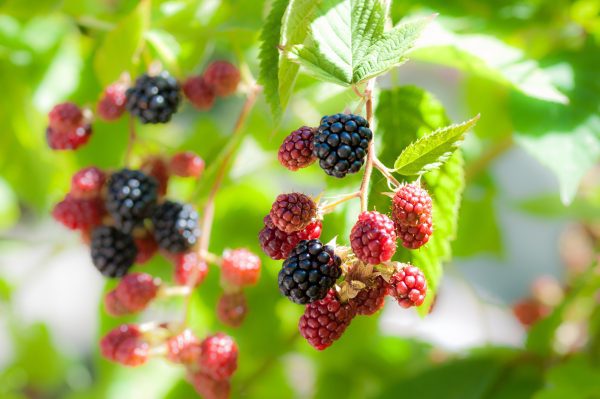 An intensive spray program is generally not needed for blackberry plants. Fungicide and insecticide sprays can be applied as needed. The following sanitation practices will reduce the need for pesticide sprays.
- Remove and destroy nearby wild blackberries to reduce the source of pests.
- Remove and destroy fruiting canes immediately after harvest.
- Promote rapid drying and good air circulation within the canopy by controlling weeds and keeping the plants properly thinned.
- Pick berries often during the harvest period to minimize the amount of overripe fruit. This will reduce problems with berry rots, sap beetles, wasps, and fruit flies.
- Promptly dig up and remove or destroy plants infected with orange rust as soon as symptoms appear in spring. Symptoms of orange rust include willowy growth of new shoots and the presence of orange spore pustules on the undersides of the leaves.
- Remove and destroy infected canes before blooms begin to open to control the spread of rosette. You can recognize rosette by the presence of clusters of stems on fruiting canes that produce a bunchy appearance. Flower sepals are extended and pinkish in color on plants with rosette.
- Make sprays once or twice weekly to control or prevent spotted wing drosophila (SWD), which is a new pest that infests developing fruit.
- Apply insecticidal spray regularly if the orchard was previously infected with SWD.
Table 5. Disease and Insect Management for Blackberry Orchards
2 Refer to product labels for preharvest interval (PHI) or the number of days between final spray and harvest.
| Time of Application | Pest Controlled | Material to Use1 | Comments | ||
|---|---|---|---|---|---|
| Prebloom | Aphid, Japanese beetle, fruitworm, stink bug | Malathion | |||
| Early to midbloom | Anthracnose, rosette, rusts | Copper, myclobutanil, sulfur | Apply a fungicide if anthracnose, rosette, or rust has been a problem in the past. | ||
| Early to midbloom | Do not apply insecticides during bloom to protect insect pollinators. | ||||
| Cover sprays: every 2 weeks postbloom | Anthracnose, rosette, rusts | Copper, myclobutanil, sulfur | Apply a fungicide if anthracnose, rosette, or rust has been a problem in the past. Myclobutanil and sulfur are not effective against anthracnose. | ||
| Cover sprays: every 2 weeks postbloom | Japanese beetle | Zeta-cypermethrin | Apply as needed. | ||
| Pre-harvest sprays: appearance of berry color to harvest2 | Spotted wing drosophila | Malathion, spinosad, zeta-cypermethrin | Malathion rarely induces secondary pest populations. Use malathion in rotation with spinosad, zeta-cypermethrin. | ||
Bunch Grape
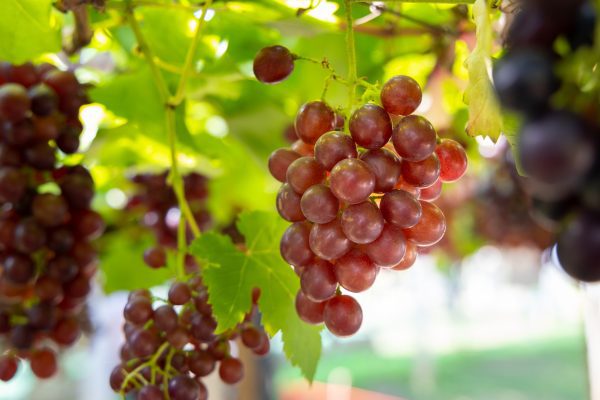 Most grape plantings, except muscadine, require a preventive schedule of fungicide and insecticide sprays for successful production. Pests such as black rot can completely destroy a crop of fruit. However, the following sanitation and cultural practices will reduce the need for pesticides.
- Keep vines well pruned according to recommended standards. This prevents overgrowth of vines and a dense canopy. It also removes insect-infested wood. Pruning improves air circulation and sunlight penetration, thus promoting rapid drying after rains and dew. Penetration of sprays into a foliar canopy also is better when vines are pruned.
- Remove and destroy mummified fruit (shriveled, dry, raisin-like) on vines as well as fruit on the ground. Fruit rot organisms of grapes can survive through the winter on old vines and dried fruit on the vines and ground.
- Prune and destroy vines with stem cankers as they are also a site for fungi to survive through the winter.
Table 6. Disease and Insect Management for Bunch Grape Orchards
| Time of Application | Pest Controlled | Material to Use1 | Comments |
|---|---|---|---|
| Dormant season | European red mite, mealy bug, scale | Horticultural oil | Make two applications of horticultural oil during the dormant season. |
| Delayed dormant: when buds swell | Mealy bug | Malathion | |
| New growth sprays: when new growth reaches 2 to 4 inches long and again 7 to 10 days later | Black rot, Phomopsis, powdery mildew, downy mildew | Captan, mancozeb | |
| Prebloom: just before blooms open | Black rot, Phomopsis, powdery mildew, downy mildew | Captan, mancozeb, myclobutanil | Mancozeb and myclobutanil are most effective against black rot. |
| Prebloom: just before blooms open | Malathion | ||
| Bloom | Black rot, powdery mildew, downy mildew | Captan, myclobutanil | Myclobutanil is not effective against downy mildew. |
| Postbloom: when most bloom caps have fallen | Black rot, powdery mildew, downy mildew | Captan, myclobutanil | Do not use myclobutanil more than 5 times per season. |
| Postbloom: when most bloom caps have fallen | Leaffooted bug, stinkbug, Japanese beetle, grape berry moth, grape curculio, rose chafer | Malathion, zeta-cypermethrin | |
| Summer cover sprays | Japanese beetle, green June beetle, grape berry moth, grape curculio, black rot, powdery mildew | Malathion, zeta-cypermethrin, Captan | |
| Preharvest sprays2 | Green June beetle, Spotted wing drosophila, wasp, yellow jacket | Malathion, zeta-cypermethrin |
Fig
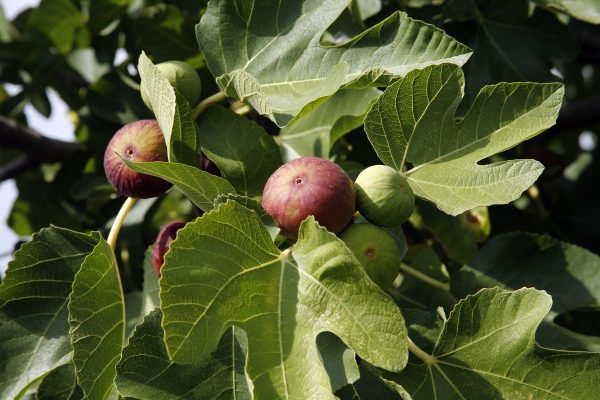 Figs can grow as tall as 60 feet in some regions of the country. In the southeast, tree height is reduced to 15 to 20 feet because of freezes that cause significant dieback and regeneration of the plant tissue during some years. In places like California, the fig is trained to have a single trunk, but in the southeast and other places that can have damaging freezes, figs are grown more like shrubs with multiple canes rather than a single trunk.
The common fig is highly adapted to the southeast, but the following practices will help to ensure that quality fruit is harvested throughout the season.
- Plant the most adapted varieties. Planting varieties that are tolerant to the cold will result in reduced incidence of damage to plant tissue. Damage to the trunk or stems can provide entry points for disease and insects. Additionally, varieties that produce fruit with a closed eye (ostiole, which is the opening at the end of the fruit) provides less opportunity for fruit flies and other insects to gain entry.
- Train figs to have multiple trunks or canes. In the southeast, damaging cold weather is a common occurrence. The trunks/stems of figs are often damaged by cold weather; weather-induced delays can significantly reduce harvestable fruit. Maintain no more than nine canes (trunks) per tree. This will allow sunlight penetration and air flow for good fruit development along with rapid drying of leaves for reduced disease spread. This type of plant training will reduce chances of the plant being toppled by wind. Newer canes can be used to replace aging canes for continued harvest of quality fruit.
- Prune out dead and diseased wood. This will remove disease inoculum as well as entry points for insects and disease.
- Avoid planting in soils with nematodes. A nematode infestation can be diagnosed by digging up a few fig roots and looking for small nodules or bumps. To prevent planting on an infested site, have the soil tested for nematodes.
- Harvest fruit often. Figs are highly perishable.Frequent harvests (once daily or 3 to 4 times per week) will discourage disease and insect pests.
- Control fig rust. Fig rust and other leaf and twig blight can be controlled through removal of infected leaves or application of Bordeaux mixture. For more detailed information, see “Fig Production Guide” at on the Alabama Extension website at www.aces.edu.
Strawberry
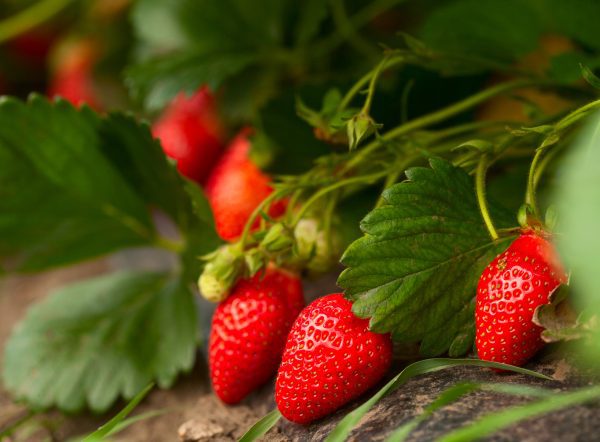 Strawberry plants often can be grown almost disease-free without spraying. In some years, frequent rainy weather during springtime may require the use of fungicide sprays to prevent disease. The following practices will improve the effectiveness of the pesticides and may lessen the need for sprays.
- Practice dormant season sanitation. This can reduce disease pressure most years. Strawberry leaf spots and botrytis blight pathogens can survive through the winter on old leaves and debris on the bed. Clipping old leaves, raking, and composting or destroying will help with disease control.
- Control weeds during the growing season. Weeds increase disease by reducing light penetration and air circulation, and they intercept pesticide sprays. Weeds also can harbor insects and mite problems.
- Spotted wing drosophila (SWD) is a serious, invasive pest that infests developing fruit. To reduce the population of SWD, remove fruit that has fallen to the ground as well as fruit on plants that is diseased or damaged.
- Alternate insecticides so that SWD does not build resistance to insecticides.
Table 7. Disease and Insect Management for Strawberry Orchards
2 Refer to product labels for preharvest interval (PHI) or the number of days between final spray and harvest.
| Time of Application | Pest Controlled | Material to Use1 | Comments |
|---|---|---|---|
| Plant establishment to dormant | Spider mite | Horticultural oil or insecticidal soap | |
| Prebloom | Crown borer, strawberry weevil, leafroller, insects that cause cat-facing, strawberry clipper | Malathion | |
| Bloom | Gray mold, anthracnose | Captan | |
| Postbloom to harvest2 | Gray mold, anthracnose | Captan | |
| Postbloom to harvest2 | Aphid, tarnished plant bug, spider mite, whitefly, spotted wing drosophila | Malathion; use insecticidal soaps for spider mites |
Table 8. Products Available in Small Packages for Disease & Insect Control in Home Fruit Crops
| Active Ingredient | Product Name |
|---|---|
| Mancozeb | UPL Manzate Max Fungicide |
| Myclobutanil | Spectricide Immunox Multipurpose Fungicide Ferti-lome F Stop Lawn & Garden Fungicide Monterey Fungi-Max |
| Permethrin | Bonide Eight Insect Control Vegetable Fruit & Flower Hi-Yield Indoor/Outdoor Broad Use Insecticide Hi-Yield Garden and Farm Insect Control |
| Propiconazole | Bonide Infuse Systemic Disease Control |
| Pyrethrins | PyGanic Gardening Monterey Bug Buster-O |
| Spinosad | Southern Ag Conserve Naturalyte Insect Control Bonide Captain Jack’s Dead Bug Brew Natural Guard Spinosad Borer, Bagworm & Leafminer Spray Monterey Garden Insect Spray |
| Streptomycin sulfate | Ferti-lome Fire Blight Spray |
| Sulfur | Bonide Sulfur Plant Fungicide Hi-Yield Dusting Wettable Sulfur Safer Brand Garden Fungicide Southern Ag Wettable or Dusting Sulfur |
| Boscalid + pyraclostrobin + lambda cyhalothrin | Bonide Fruit Tree & Plant Guard |
| Captan | Arysta Captan 50% Wettable Powder ADMA Captan 80WDG |
| Chlorothalonil | Ferti-lome Broad Spectrum Landscape and Garden Fungicide Bonide Fung-onil Concentrate Ortho Max Garden Disease Control Hi-Yield Vegetable, Flower, Fruit, and Ornamental Fungicide Southern Ag Liquid Ornamental and Vegetable Flowable Fungicide |
| Copper fungicides | Bonide Copper Liquid Concentrate Monterey Liqui-Cop Southern Ag Liquid Copper Fungicide Natural Guard Copper Soap Liquid Fungicide Soap-shield Flowable Liquid Copper Fungicide |
| Horticultural oil | Bonide All Seasons Horticultural Spray Oil Hi-Yield Dormant Spray Monterey Horticultural Oil Southern Ag Parafine Horticultural Oil |
| Malathion | Bonide Malathion Insect Control Hi-Yield 55% Malathion Insect Spray Ortho Max Malathion Insect Spray Spectracide Malathion Insect Spray Southern Ag Malathion 50% EC |
| Zeta-cypermenthrin | Gardentech Sevin Insect Control Gordon’s Bug-No-More Lawn & Garden Insect Control |
Sources
R.E. Durham, R.E., J.G. Strang, N. Ward, R. Bessin. 2013. Disease and Insect Control Programs for Homegrown Fruit in Kentucky Including Organic Alternatives. University of Kentucky Bulletin ID-21. 19 pages.
Hansen, Zachariah, Karen Vail, Frank Hale, and Natalie Bumgarner. 2021 Disease and Insect Control in Home Fruit Plantings. The University of Tennessee Agricultural Extension Service, PB1622
Bost, Steve; Karen Vail, Patricia Barnwell, and Frank Hale. 2015. Disease and Insect Control in Home Fruit Plantings, The University of Tennessee Agricultural Extension Service, PB1622
 Revised by James Jacobi, Extension Specialist, Commercial Horticulture, and Edgar Vinson, Assistant Extension Professor, Commercial Horticulture, both with Auburn University
Revised June 2025, Home Orchards: Disease and Insect Control Recommendations, IPM-1308