
Crop Production

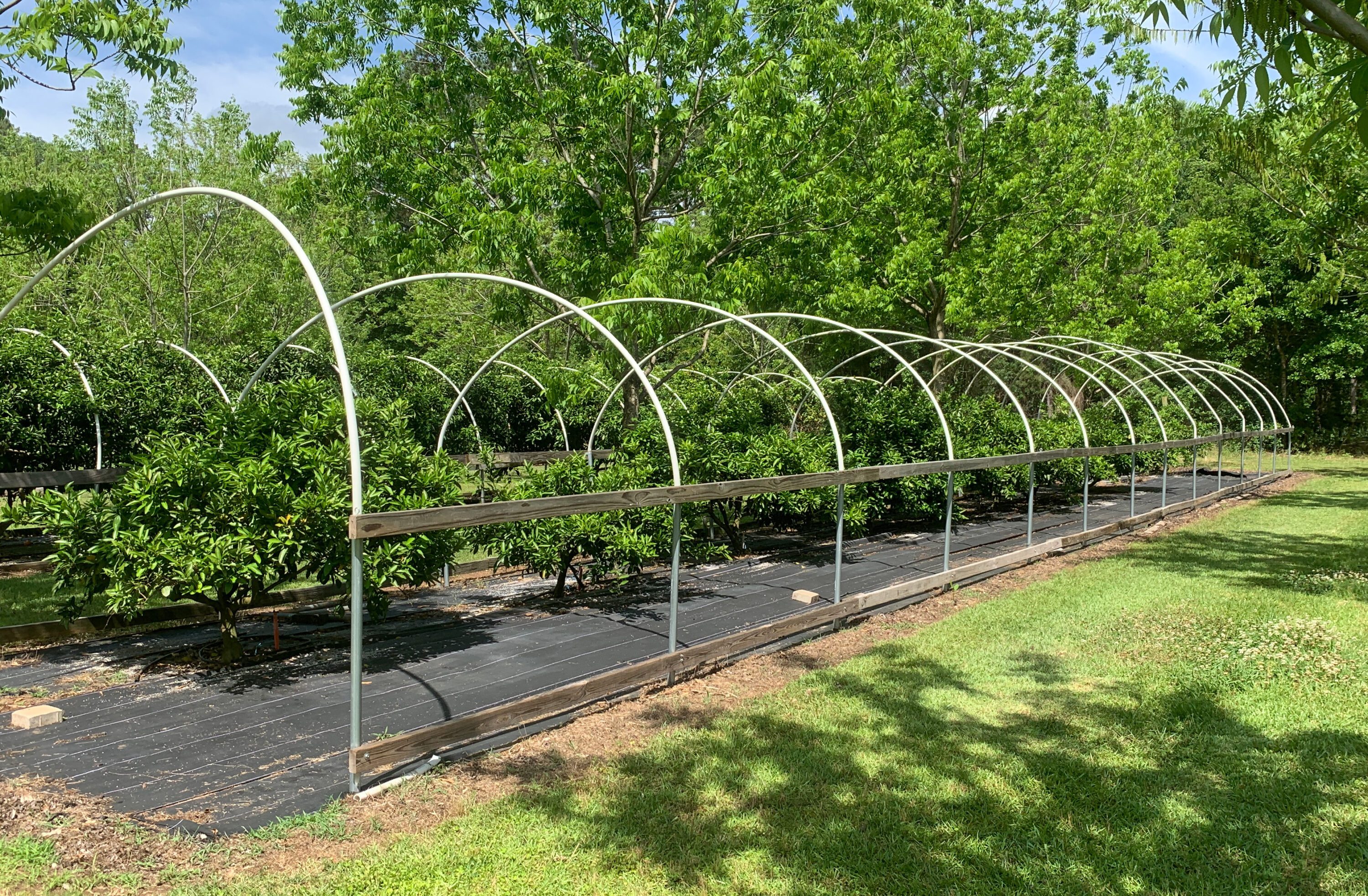
Weed interference during citrus grove establishment can reduce tree growth and delay early production. Effective weed management requires the use of pre- and postemergent herbicides. For this, growers must know available herbicides and their uses to choose the best applications for their operations. Widely used herbicides are featured here along with the weeds they control.
In young citrus plantings, weeds compete for water and nutrients, restrict grove access, and may complicate freeze-protection activities. Some weed species also serve as alternate hosts for insect pests and plant pathogens. An effective weed management program is, therefore, essential. While hand weeding may be used in limited situations, most citrus producers rely on a combination of pre- and postemergent herbicides for consistent control.
Preemergent herbicides provide residual control by preventing weed seed germination and emergence. They are most effective when applied to weed-free soil. In south Alabama citrus, a late-winter application can suppress spring and early summer weeds; a midsummer application can reduce late-summer and early fall weeds; and a fall application can help manage winter annuals. Many preemergent products require rainfall, irrigation, or shallow incorporation for activation. It is important to read the product label for specific details. In first-year plantings, delay use or apply with spray shields to prevent contact with young trees, and apply only after the soil has settled to reduce the risk of root uptake and injury.
Table 1. Preemergent Herbicides for Citrus
| Trade Name | Active Ingredient | Planting Year | Years 2 to 3 | Bearing Trees | Weed Controlled | Group Number |
|---|---|---|---|---|---|---|
| Alion* | Indaziflam | 1 month after planting of potted plants | Yes | Yes (PHI: 7 days) | Annual grasses & broadleaf | 29 |
| Chateau EZ | Flumioxazin | Yes (protection required) | Yes | Yes (PHI: 3 days) | Annual grasses & broadleaf | 14 |
| Surflan | Oryzalin | Yes | Yes | Yes | Annual grasses & broadleaf | 3 |
| Solicam DF | Norfluazon | Yes | Yes | Yes (PHI: 30 days) | Annual/perennial grasses, broadleaf & suppression nutsedge | 13 |
Postemergent herbicides control emerged weeds. They may work systemically (move within the plant) or by contact (injure only treated tissue). Postemergent products are most effective on small, actively growing weeds and often provide limited suppression of established perennials. To reduce citrus injury, minimize drift and trunk or foliage contact by using proper nozzles, spray volumes, wind restrictions, and shields as needed in young plantings.
Table 2. Postemergent Herbicides for Citrus
| Trade Name | Active Ingredient | Systemic or Contact | Weeds Controlled | Group Number |
|---|---|---|---|---|
| Roundup* | Glyphosate | Systemic | Nonselective | 9 |
| Rely 280 | Glufosinate | Contact | Nonselective | 10 |
| Aim EC | Carfentrazone | Contact | Nonselective | E |
| Poast | Sethoxydim | Systemic | Annual & perennial grasses | 1 |
| Fusilade DX | Fluazifop | Systemic | Annual & perennial grasses | IA |
| Treevix | Saflufenacil | Systemic | Broadleaf weeds | 14 |
Weed mats, made of a geotextile fabric (figures 1 and 2), can supplement or, in some situations, reduce the need for herbicides in young citrus plantings. When properly installed and maintained, fabrics can provide multiyear weed suppression and improve soil moisture retention.
-
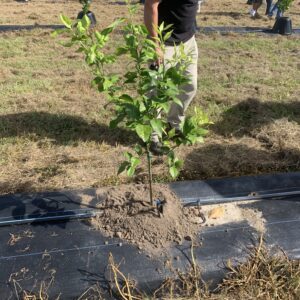
- Figure 1. Weed mat made of geotextile fabric
-
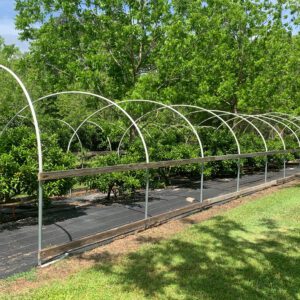
- Figure 2. Use of weed mat to suppress weeds and improve soil moisture retention
This information is a general reference, and growers should always follow the current product label, as formulations and active ingredients may change. For more information, see the Florida Citrus 2025–2026 Production Guide on the University of Florida, IFAS Extension website.

Jacob Kelley, Extension Agent, Commercial Horticulture, Auburn University
New July 2026, Weed Management for Young Citrus Groves in South Alabama, ANR-3276
For more information, contact your county Extension office. Visit aces.edu/directory.
Trade and brand names used in this publication are given for information purposes only. No guarantee, endorsement, or discrimination among comparable products is intended or implied by the Alabama Cooperative Extension System.