
Forestry

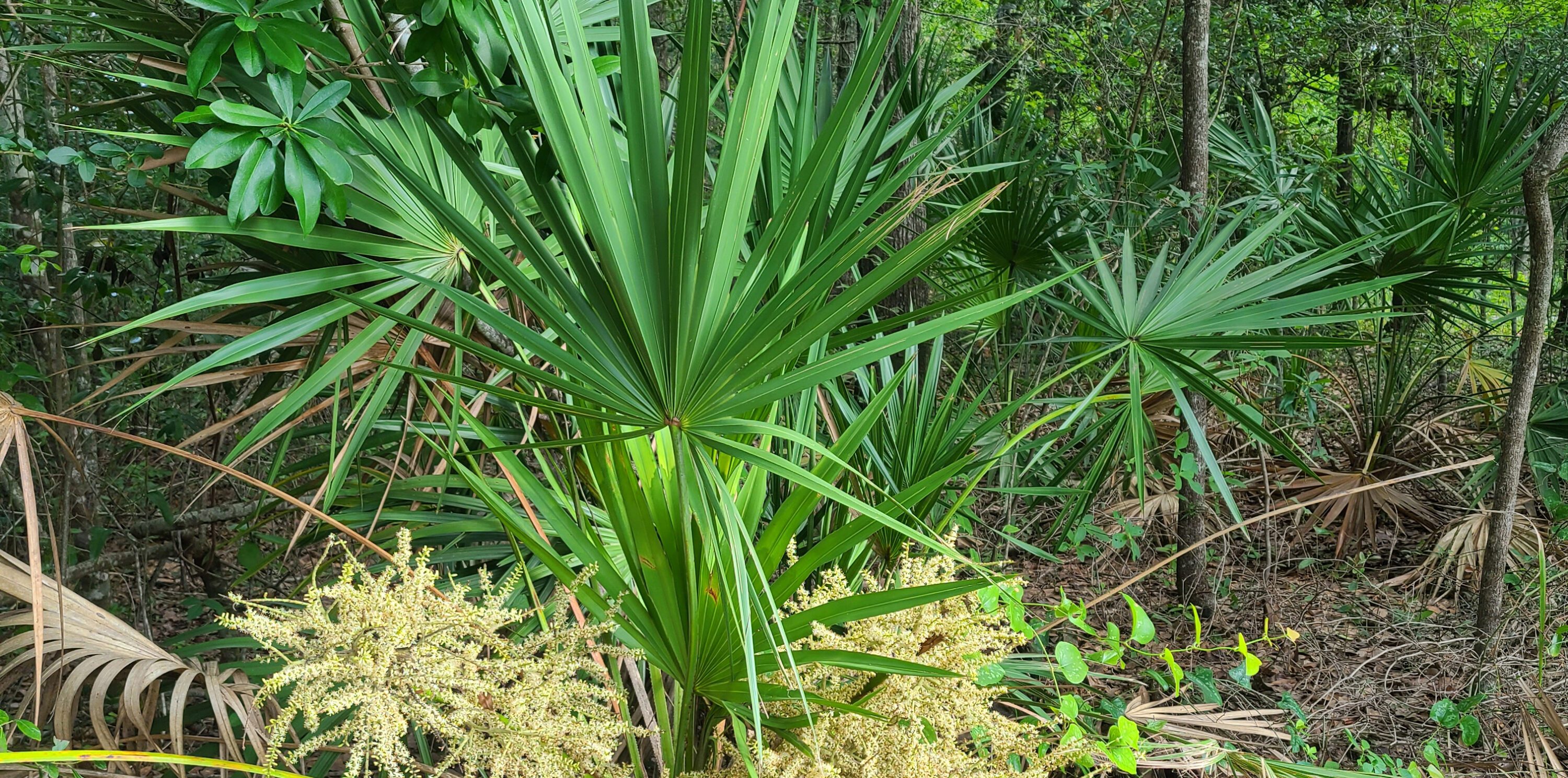
Alabama is home to four native palm species. Only one—the cabbage palm (Sabal palmetto)—grows tall enough to be widely recognized. The others are more shrub-like, often blending into the undergrowth. Among them is the saw palmetto (Serenoa repens), a small but ecologically important palm that blooms across south Alabama.
Characteristics and Growth
 European settlers viewed saw palmettos as obstacles to farming and ranching. Large colonies were cleared to make way for agricultural purposes, and modern development continues to threaten the remaining stands. It is possible that ancient clonal colonies of saw palmettos—comparable in age to famous, long-lived organisms like Pando, the quaking aspen—were lost before their significance was understood. Despite these past losses, the saw palmetto remains widespread.
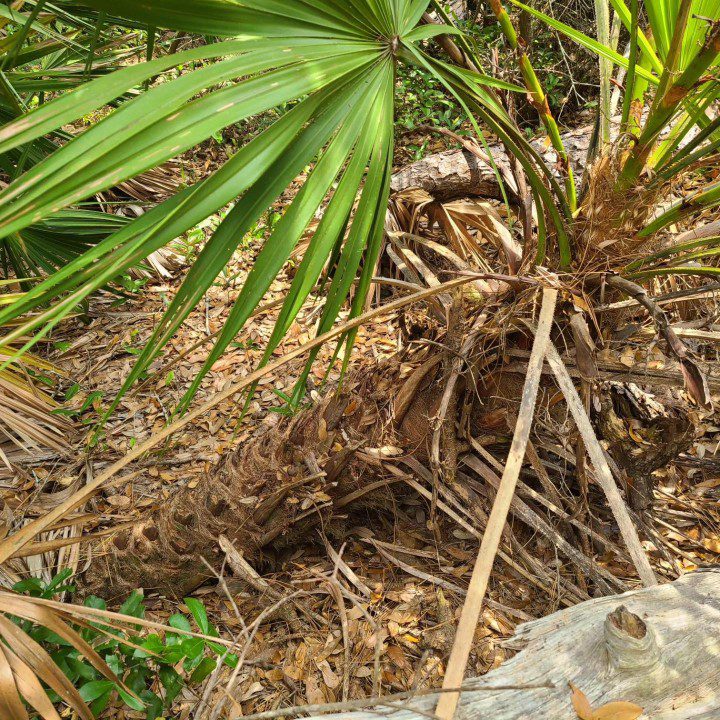
A saw palmetto can grow to 5 to 7 feet in height, though it rarely stands upright. Its trunk grows horizontally along the ground, with only the tip arching upward. This growth is also extremely slow, sometimes only a growing a 1/2 inch per year. Because of that, a saw palmetto with a 4-foot trunk may be more than 50 years old, while a 6-foot trunk could exceed a century. Some research suggests that undisturbed colonies can live for hundreds or even thousands of years. There are some claims of 8,000-year lifespans, though they remain unverified.
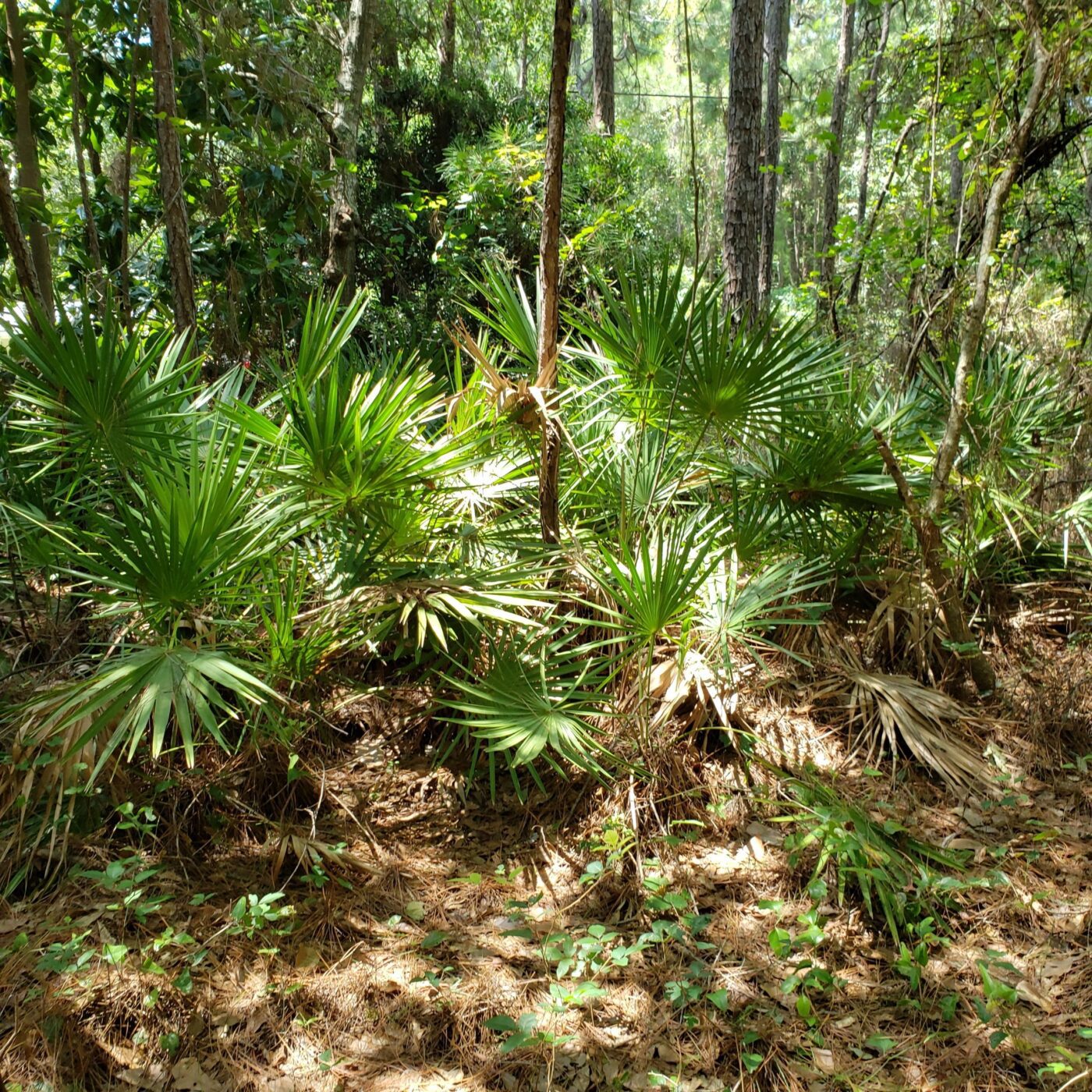
Saw palmettos thrive in fire-prone ecosystems, spread through branching and clonal growth, and germinate readily from seed. They also perform well in home landscapes. The species can survive as far north as Zone 7b, though it grows best in Zones 8 and 9. Gardeners should choose a sheltered location with afternoon shade, good drainage, and mulch. For those seeking a more striking ornamental, a silver-blue form, Serenoa repens var. sericea, of saw palmetto is available in the nursery trade.
Uses and Benefits
 Saw palmetto has long been valued by people. Indigenous communities, early settlers, and modern researchers have all used the plant for medicinal extracts. Its trunk fibers were once woven into cordage strong enough to be traded across the eastern United States by native peoples, with some examples found as far north as New York. Its fronds served as thatching and insulation for traditional structures, and the leaves were used in basket making. The plant’s small, purple-black berries are technically edible, but they contain little flesh. Their flavor is often described as sweet but soapy. Today, the fruit is harvested for supplement production, but clinical studies show inconsistent results for the many claimed health benefits. Some of these extracts can be harmful, especially for pregnant women.
Most people don’t associate palm trees with flowers, but the saw palmetto produces nectar-rich blooms that support a wide range of native pollinators, including butterflies, bees, wasps, moths, flies, and beetles. Honey bees also take full advantage of the blooms, and palm honey is considered especially flavorful. Saw palmetto serves as a larval host plant for two butterfly species, the monk skipper (Asbolis capucinus) and the palmetto skipper (Euphyes arpa), both of which are found in south Alabama. The plant’s fruit feeds birds and mammals, and its dense fronds and low trunks provide shelter for wildlife such as deer and turkeys.
More Information
Saw palmetto is a long-lived part of Alabama’s coastal ecosystem—supporting wildlife, stabilizing habitats, and contributing to the state’s natural history. While it has been often overlooked and removed during land clearing, the plant plays an important ecological role and generally thrives when left undisturbed. Recognizing this native palm, understanding its slow growth and ecological value, and giving it space in both natural and landscaped settings can help protect remaining stands.
For more information other native plants in Alabama, visit the Alabama Extension website at www.aces.edu.