
Forestry

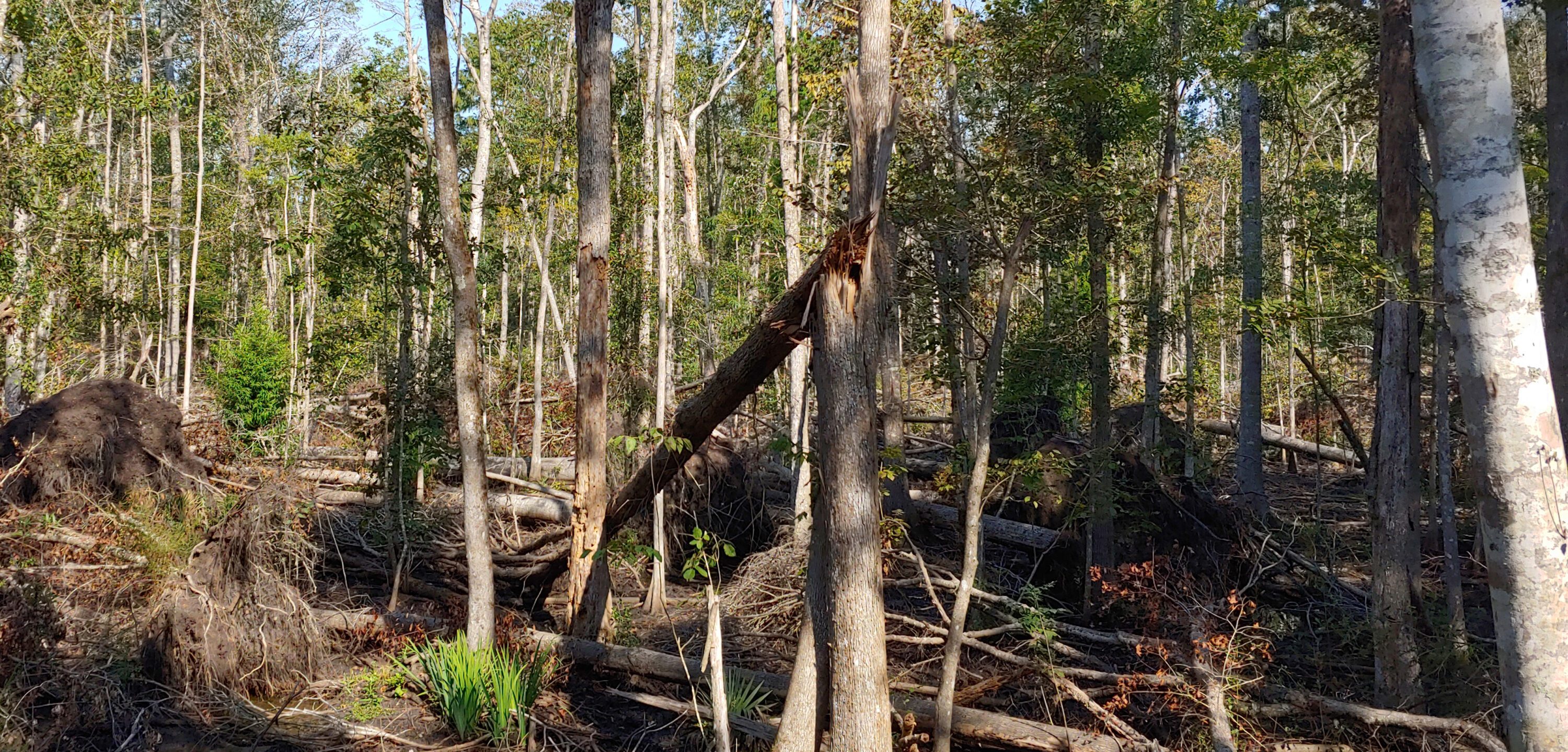
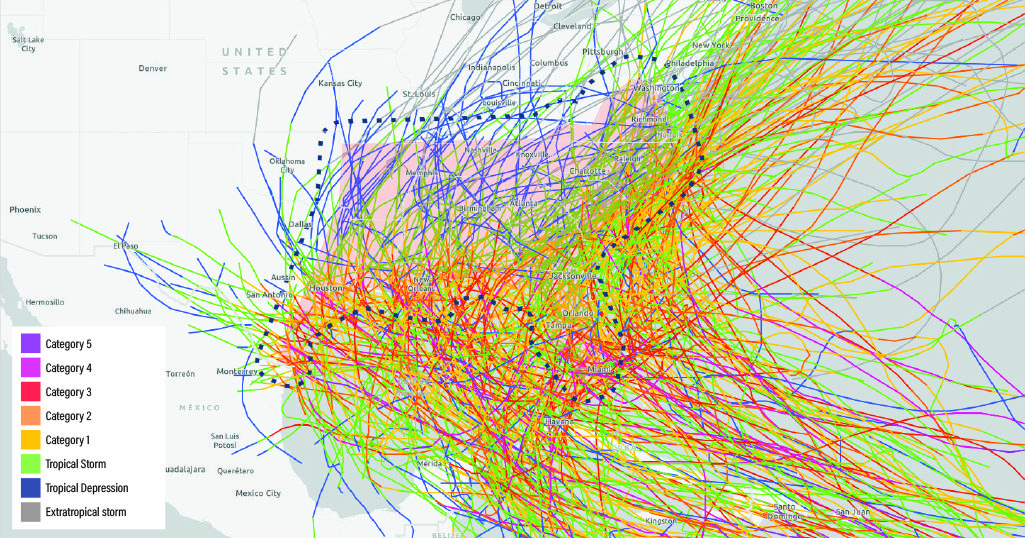
Figure 1a. The paths of all hurricanes since 1851 (N=324) that have made landfall within the southeastern United States. Tracks provided only for storms that were hurricane strength at the time of landfall. The area defined as the Southeast is outlined by the dotted line, which extends from coastal Texas to Virginia. (Image credit: Historical Hurricane Tracks. National Oceanic and Atmospheric Administration. 2025 August2)
Managing hurricane risk is an important part of forest planning to best meet the goals of forest owners. The United States Department of Agriculture (USDA) Southeast Climate Hub and Clemson Extension developed this guide to provide actionable information on preparing for hurricanes, building resilient forests, and recovering quickly after a hurricane passes. This guide provides background information on hurricanes in the Southeast, management options based on forest owner goals, recovery strategies, and resources available to forest owners. It was designed with forest managers and landowners in mind to provide a comprehensive guide for fostering resilient forests, preparing for hurricanes, and promoting forest recovery after a hurricane.
Introduction
Landowners and land managers in the Southeast are familiar with hurricanes and the destruction they cause. An average of two hurricanes has struck the southeastern United States every year since 1900. All hurricanes that make landfall cause some damage to property, the environment, and human life. Usually, this destruction is related to the storm’s intensity. While the frequency of hurricanes has not meaningfully changed, the storm intensity has. Since the 1970s, hurricane intensity has increased while speed has decreased, leading to increased destruction from stronger wind, more precipitation, and more devastating floods.
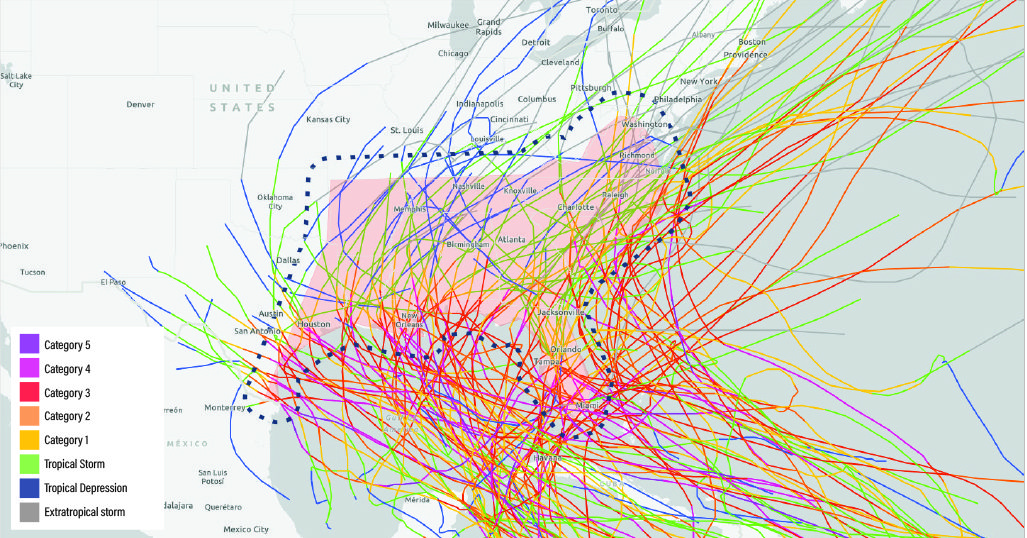
Figure 1b. The paths of major hurricanes, Category 3 or above (n=114), since 1851. The area defined as the Southeast is outlined by the dotted line, which extends from coastal Texas to Virginia. (Image credit: Historical Hurricane Tracks. National Oceanic and Atmospheric Administration. 2025 August3)
Background
Hurricane conditions have affected the southeastern United States for millennia. The North Atlantic Ocean warms up from June through November and surpasses the temperature threshold for the formation of hurricanes (79 degrees F). Low-pressure systems can gain energy from these warm waters and strengthen to form hurricanes. Westward winds push hurricanes and tropical storms in the Atlantic Ocean toward the southeastern United States.1 Although there is a lack of high-quality data before the 1960s, there is evidence that the frequency of hurricanes since 1860 has remained relatively stable. The National Oceanic and Atmospheric Administration (NOAA) reports hurricane tracks from 1851 to the present. In this time, 324 hurricanes have passed through southeastern states, and 114 of these were major, Category 3 or above (figure 1).
An average of 6.6 major hurricane strikes (Category 3–5) have occurred in the United States per decade from 1851 through 2024.2 There has been no significant change in the frequency of hurricanes since satellite monitoring became widespread in 1960 (figure 2). Since 1980, hurricanes have caused more than $1.5 trillion in damage, averaging $23 billion per event. Hurricanes have caused 7,200 deaths since 1980.3
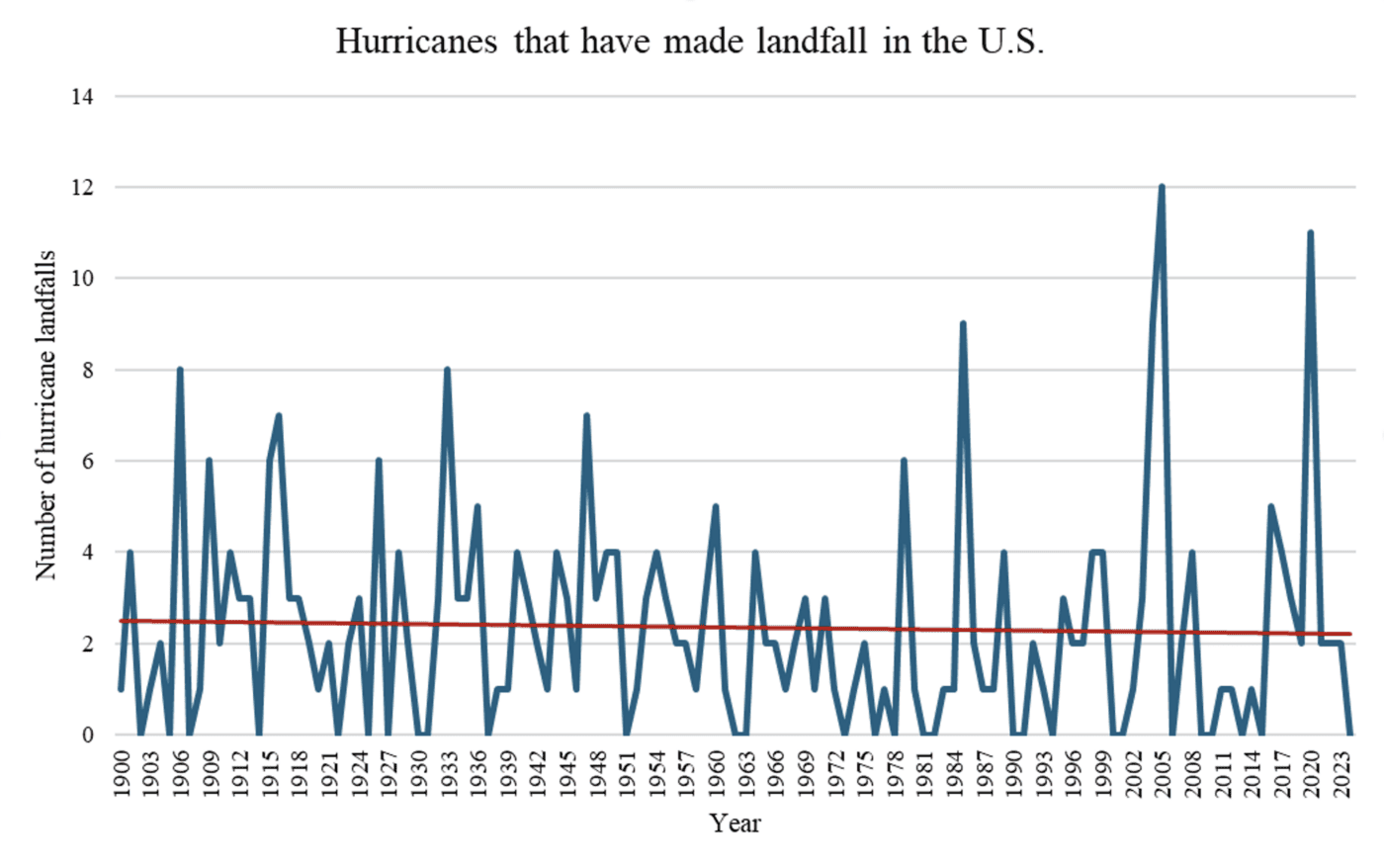
Figure 2. Hurricanes that have made landfall in the United States by year from 1900 to 2024. (Data credit: National Oceanic and Atmospheric Administration4)
Hurricanes are the most destructive natural disturbance in eastern North America. Loss of life, destruction of housing and property, and economic disruptions are short-term effects of hurricanes caused by intense winds, precipitation, and storm surge. Hurricanes can be accompanied by secondary effects, including floods, landslides, and tornadoes, which exacerbate destruction. The states most likely to be affected by hurricanes are Florida, Texas, Louisiana, and North Carolina, but other states are vulnerable as well (figure 3).4
The hurricane return period describes the average frequency with which a hurricane can be expected in a given area based on historical occurrence of previous hurricanes. While average hurricane frequency is useful information, it is important to note that return intervals can be significantly shorter or longer in the short term and can vary greatly when larger areas of coastline are broken down. Areas with the most frequent return period for hurricane strikes of any intensity are the North Carolina coast, the southern tip of Florida, and the southeastern tip of Louisiana (figures 4a and 4b). The average return period for these areas is only 6 or 7 years, but nearly the entire southeastern coast has return periods of 15 years or less.5 The same high-frequency regions had a return period of 14 to 22 years for major hurricanes, while the entire southeastern coast averages a strike by a major hurricane at least once every 50 years, meaning that major hurricanes are a relevant threat to these regions.
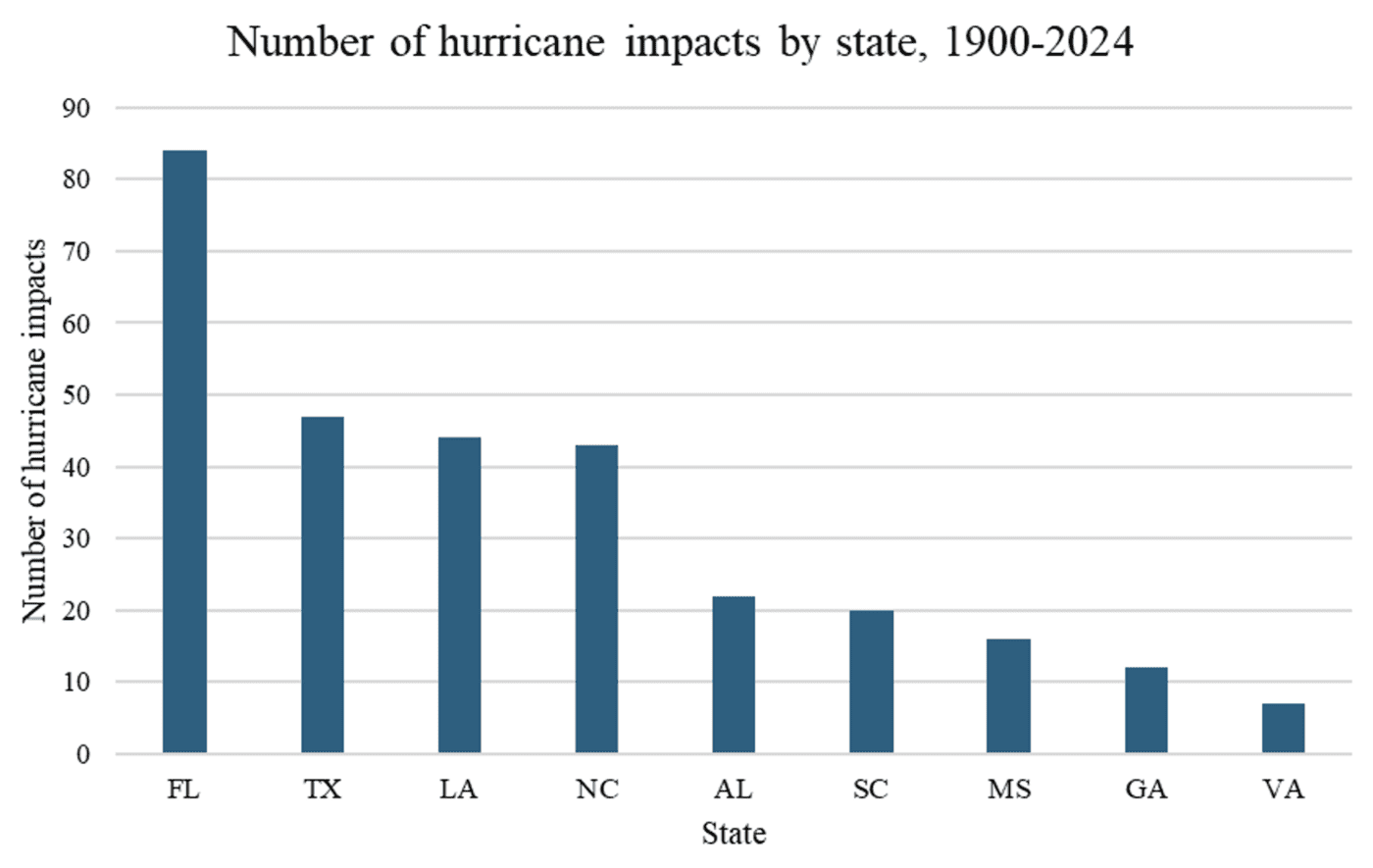
Figure 3. Hurricane events of mainland U.S. hurricanes, by state, from 1900 to 2024. (Data credit: National Oceanic and Atmospheric Administration4)
Although the location of storm landfall is important, damage is not limited to the coast. Hurricanes can cause damage to natural resources and developed areas hundreds of miles inland. Hurricanes cross state boundaries, so trends regarding landfall events per state do not describe the total effects of hurricanes on states. Historic storm paths, including the states storms enter after landfall, are shown in figure 1.
Broadly, hurricane impacts on forests depend on hurricane intensity and frequency as well as local ecological conditions and trends. Hurricanes can have varied impacts on forests and landowners, depending on previous rainfall, tree species composition, stand density, forest health, tree size and age, and soil conditions.
Individual storms can cause billions of dollars in damage to forests. It is difficult to determine the dollar value of a disaster, but initial estimates found that Hurricane Michael caused $1.3 billion in damage in Florida, while Hurricane Helene caused $1.28 billion of timber losses in Georgia.6 7 Unfortunately, only a small portion of this can be recouped through salvage harvests. According to a 2005 study of Hurricane Hugo, only 9 percent of total tree biomass was recovered. Even this is a relatively high amount due to the well-coordinated salvage efforts following Hurricane Hugo.8
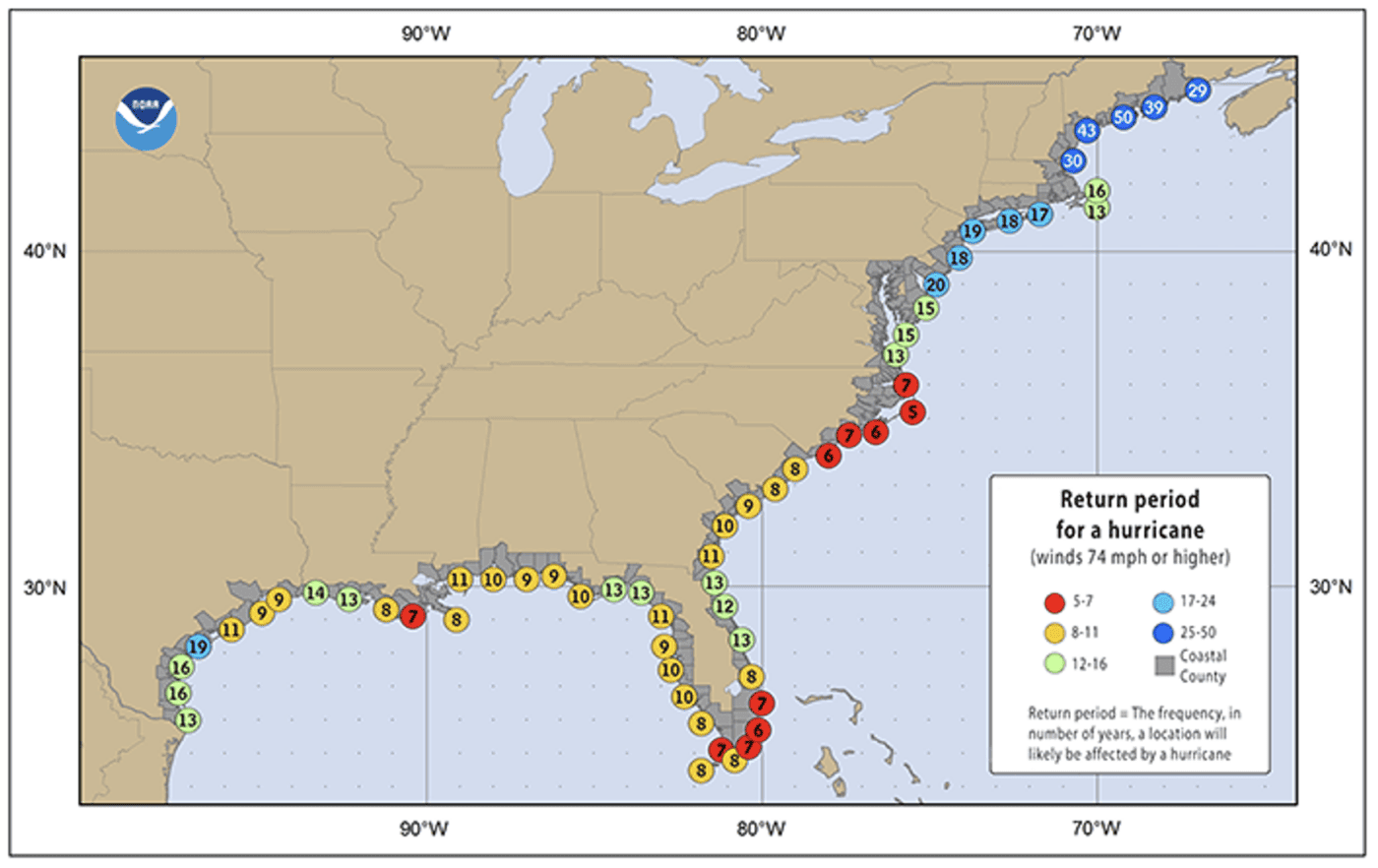
Figure 4a. The estimated return period in years for all hurricanes passing within 50 nautical miles of the U.S. East Coast.5
Single hurricanes regularly damage millions of acres of forest in the Southeast. In 1989, Hurricane Hugo hit South Carolina, damaging 4.45 million acres of forests.9 Hurricane Andrew in 1992 damaged 70,000 acres of forests in Florida. Nearly 5 million acres and 320 million trees were damaged by Hurricane Katrina10 in 2005. More recently, more than 820,000 acres of forest land in North Carolina were damaged by Hurricane Helene.11
Hurricanes also create long-term damage. Downed trees and limbs left on the ground following a storm become fuel that increases wildfire risk and potential intensity. Damaged trees left standing are at a greater risk of being infected by pests and pathogens, increasing the risk of an outbreak. Broken limbs and damaged stems provide pests and pathogens with opportunities to enter trees and spread.12 Hurricanes can also bring saltwater inland via storm surges, which can lead to salinization of soils on forest lands, decreased productivity, and tree mortality.12 Saline storm surge enters coastal freshwater forested wetlands, and the subsequent salt stress can kill trees and convert forested swamps to grass-dominated marshes and ghost forests. Closer to the coasts, soil can be lost due to coastal erosion, which decreases total land area, diminishes nutrients and water available to trees, and leads to reduced productivity.
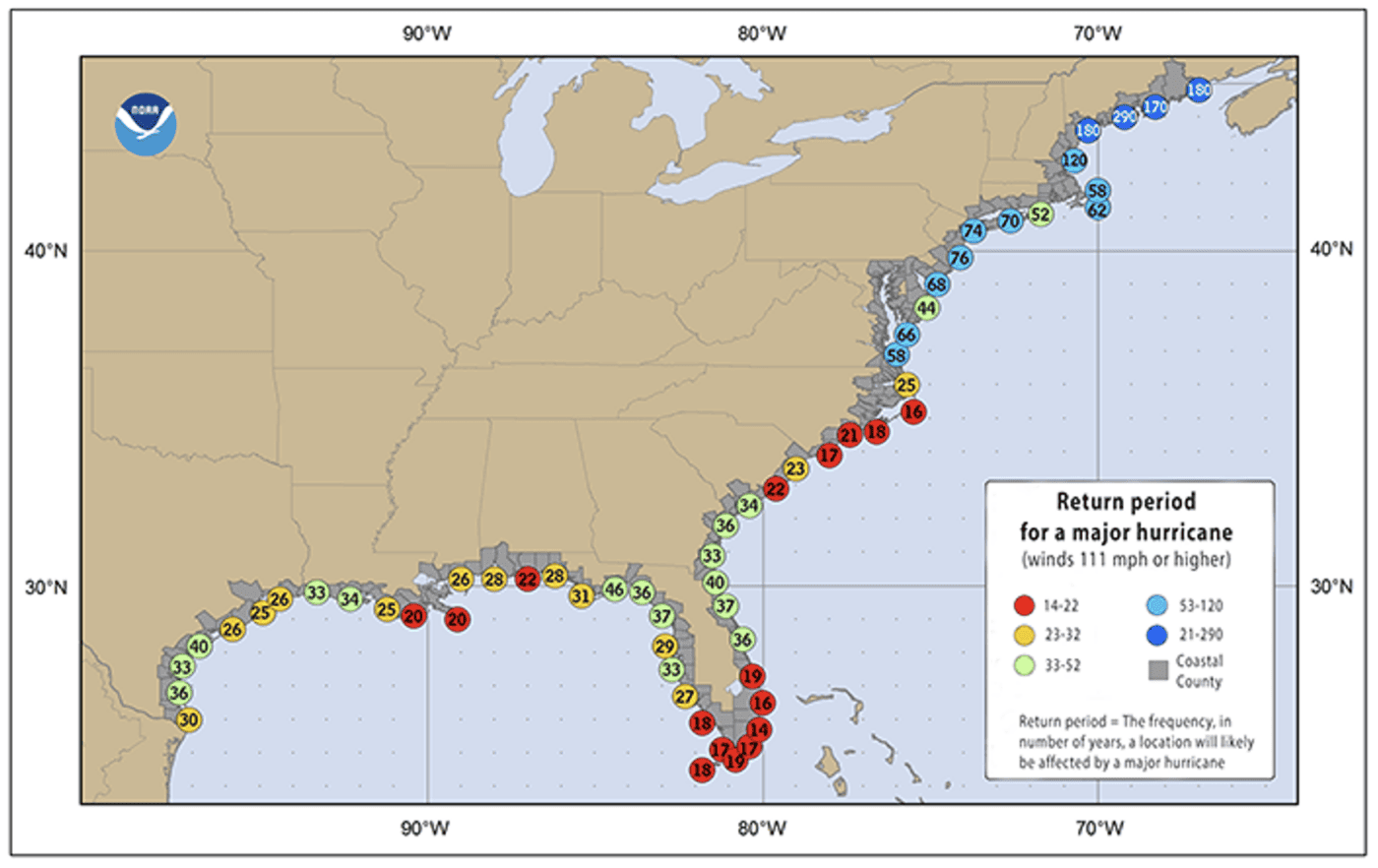
Figure 4b. Major hurricanes passing within 50 nautical miles of the U.S. East Coast.5
Not all long-term impacts on forests are negative, as hurricane damage can promote regeneration. Windthrow often affects poorly rooted, damaged, or diseased trees, culling weak trees from the forest. Openings in forest canopies allow smaller trees to grow and can give fewer dominant species a window in which to thrive. In other words, the change to forest structure creates a more varied ecosystem, which can sustain more biodiversity and heterogeneity over the long term.13
Impacts
Disturbances on the scale of hurricanes can change forests significantly and in many ways. Strong winds and heavy rains that accompany hurricanes can lead to the uprooting of tall canopy, weak, or damaged trees. Smaller trees can be damaged by being pinned or bent by fallen, larger neighboring trees. The impacts of hurricanes on forests include changes in forest structure, changes to carbon storage, altered habitat structure for wildlife, and an increased risk of other disturbances. The following section will briefly describe the direct (damage resulting from hurricane winds and rain) and incidental (secondary damages caused by something other than hurricane forces) impacts of hurricanes on the physical environment and how these impacts affect forest landowners.
Changes in Forest Structure
Changes in Forest Structure
Direct Impacts
Tree mortality from hurricane winds and flooding leads to changes in the structure of a forest. The direct effects will depend on the type of forest impacted (e.g., pine, mixed hardwood, bottomland hardwood), the age of trees, the proximity of trees to each other, and the species of trees.
During a hurricane, trees can be damaged by strong winds and rain or secondarily damaged by other trees (figure 5). In general, large trees are more susceptible to direct damage from hurricane winds because their larger crowns act as a sail, causing them to lean or uproot. Small and intermediate-sized stems are often snapped. Smaller understory trees can be damaged by the storm, but are more frequently damaged by being bent or pinned by falling larger trees.14
-
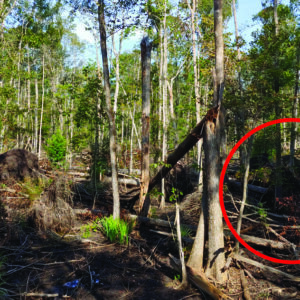
- Figure 5a. Uprooted trees in Southwest Georgia and the Florida Panhandle in the wake of Hurricane Michael in 2018. (Photo credit: David Clabo)
-
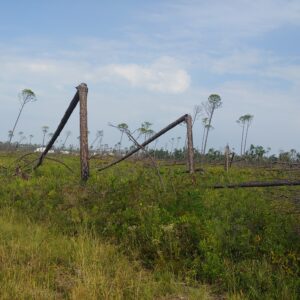
- Figure 5b. Southwest Georgia and the Florida Panhandle in the wake of Hurricane Michael in 2018. Damage included snapped trees. (Photo credit: David Clabo)
-
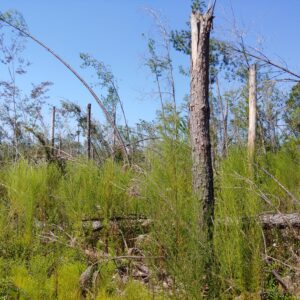
- Figure 5c. Bent trees in Southwest Georgia and the Florida Panhandle in the wake of Hurricane Michael in 2018. (Photo credit: David Clabo)
Tree species differ in their vulnerability to damage, and wind resistance is an important factor to consider when deciding which species to plant. Trees that are more vulnerable to wind are fast growing with shallow roots. Wind-resistant trees tend to be slow-growing hardwoods with a low center of gravity and deep radial roots. These traits give trees more stability and a better chance of surviving an extreme wind event. Examples of wind-resistant trees include bald cypress (Taxodium distichum), live oak (Quercus virginiana), sabal palm (Sabal palmetto), blackgum (Nyssa sylvatica), and Shumard oak (Quercus shumardii).15 Not all wind-resistant species are commercially viable, but incorporating more resilient trees where possible can limit the amount of damage done by a storm. For example, small, deep-rooted species could be planted near buildings to decrease the chances of treefall damage. See table 1A in the appendix for more information on hurricane-resilient species.
Even if trees are not uprooted or bent, hurricane-force winds can cause severe defoliation. Isolated instances of defoliation do not usually cause tree mortality, but they do leave trees weakened and more susceptible to disease and insects. Many insects, such as pine beetles, gain openings to trees through external damage. This allows outbreaks to worsen the existing damage caused by a hurricane. If many or most of a forest’s trees are defoliated in a wind event, it can have ramifications on the ecosystem as a whole. Widespread defoliation can create gaps in the canopy, allowing light onto the previously shaded forest floor. This can lead to drought as the soil heats up from sun exposure, and increased predation of animals that use the canopy for shelter.16
Incidental Impacts
Hurricane damage can shift species composition by creating openings in the canopy that can allow a new mixture of species to establish. In the case of Hurricane Fran in 1996, the dominance of measured Duke Forest stands significantly shifted from shade-intolerant canopy species to shade-tolerant species. The average age of stands also decreased, as old trees fell, allowing new seedlings to grow. Species distribution shifted as young hardwoods became established where pines, oaks, and hickories had fallen. In general, the diversity of the stand increased following Hurricane Fran.17
Tree mortality from hurricanes opens gaps in the canopy, allowing other species to colonize. Unfortunately, these gaps often give fast-growing exotics and invasives the opportunity to develop. The Hurricane Fran case study showed that basal area loss ranged from 16 percent to 20 percent in some stands with delayed mortality. This area was then available for exotic species to recruit and potentially outcompete native species if nearby seed sources were available. Duke Forest plots experienced a modest increase in exotics following the hurricane.17 The risk of exotics gaining traction would depend on many factors and could be mitigated through management.
Changes in Carbon Storage
Changes in Carbon Storage
Direct Impacts
Many estimates of forest carbon sequestration do not include the influence of hurricanes in their estimation.17 According to a 2002 study, 10 percent of the total annual sequestered carbon by U.S. forests can turn into dead biomass after a storm. It is worth noting that only 15 percent of the lost carbon is typically salvaged.17 Carbon that is not salvaged is left to rot and re-enter the atmosphere. After a hurricane, there is a short-term burst in forest productivity, but it is not large enough to make up for the lost carbon.18
A 2021 study by the Jones Center at Ichauway in southwestern Georgia found that it takes between 10 and 35 years to recoup the stored carbon lost from a hurricane, depending on the intensity of the storm, stand structure, species makeup, and site conditions.19 Due to this long period of recovering lost carbon, it is in the best interest of forest owners to manage their forests by implementing practices that increase carbon storage before another storm hits. These management practices include selecting more resilient species that are less susceptible to damage, harvesting marketable timber before a projected hurricane hits, and increasing the amount of biomass recovered in salvage operations. One opportunity for increasing the amount of salvageable wood is by using timber for biomass products including biofuel or pellets, which can utilize poor-quality wood.
Following a hurricane, logging companies will be overrun with requests to harvest. It is good practice for forest owners to contact logging companies before hurricane season to learn what they require to harvest. In general, logging organizations need properties to be accessible, boundaries to be clearly marked, and a forest harvesting plan to be outlined. For more information on preharvest planning, see the North Carolina Forest Service Preharvest Planning website and the online North Carolina Forest Service Preharvest Planning Tool.
Incidental Impacts
The carbon storage capacity of forests is relevant to private landowners, corporations, and federal governments. There are different types of programs and incentives available for landowners who want to manage their forests for carbon sequestration, including forest carbon markets. These programs provide financial compensation for landowners who keep their forests intact and store carbon. Furthermore, nature-based solutions have been highlighted as a tool to mitigate carbon emissions in various global and national plans.20 Continuous reductions in forest carbon storage due to hurricanes could reduce the viability of these programs, increase uncertainty and hesitancy for participating in carbon markets, and affect climate mitigation goals set by governments and private industries.
Damages to Wildlife Habitat
Damages to Wildlife Habitat
Direct Impacts
The direct effects on wildlife can include a spike in mortality in the short term due to a storm’s high winds or rainfall. This trend has been difficult to measure, but there is evidence that raccoon, rabbit, and deer populations have experienced mortality due to hurricanes.21 Wildlife is also displaced in the short term, as populations often leave home ranges to avoid an incoming storm.
Incidental Impacts
The incidental effects following a hurricane can be more severe for wildlife populations. These effects include the loss of food sources, loss of habitat, increased risk of predation, and an increased risk of conflict with humans. The characteristics of different terrestrial species can affect their vulnerability to hurricanes.22 Fortunately, there are management decisions that can decrease the risk to wildlife species from hurricanes. These are discussed in the Adaptation/Mitigation section.
Severe storms strip flowers, fruits, seeds, and foliage from vegetation, which decreases food availability for herbivores and can lead to a decline in their populations. This has been documented in birds specifically.22 Additionally, the destruction of habitat can result in a loss of foraging sites. For example, bird and reptile species that eat insects off leaves or stems were vulnerable to hurricane effects.22 Many species can shift their diets or foraging locations following a hurricane and survive. The destruction of cover and nesting sites can also make prey animals more vulnerable to predation following a hurricane.22
The microclimates present in habitats can also change following a hurricane. A reduction in canopy cover from high winds and heavy rains increases the amount of light that reaches the understory and results in warmer surface temperatures. Most understory species are accustomed to microclimates with lower light and temperatures. The changes in microclimates would primarily affect species with limited dispersal options, such as amphibians.22
The displacement of wildlife and a reduction in reliable food sources can increase wildlife-human interactions. Wildlife may move into populated areas to escape storm conditions or search for food. These interactions threaten wildlife and humans alike. However, wildlife may also move to less damaged stands, potentially increasing deer browse and other herbivory.
While hurricanes can be distinctly negative for wildlife, they also offer some benefits. Hurricanes create early successional habitats by altering light levels and growing space in landscapes dominated by forests. The diversity in habitat types can influence the number and types of species present, benefiting wildlife that rely on forest edge and early successional conditions.22 Edge and early successional habitat are generally not in short supply and would be self-replacing after a storm, while mature forests and forest interiors are more likely to experience habitat conversion from hurricanes. For forest managers who include hunting as a management goal, hurricanes are likely to increase habitat for most game species.
Increased Risk of Other Damage
Increased Risk of Other Damage
Direct Impacts
Heavy rain and storm surge associated with hurricanes can lead to flooding, which can be exacerbated by dams or levees breaking. Aging water control infrastructure increases the threat of catastrophic flooding from storms. Generally, floods can cause root damage, injure trees, prevent gas exchange, introduce contaminants to the soil, and reset succession.23
Tornadoes are another potential hazard caused by the wind shear and instability of a hurricane. Not every hurricane produces a tornado, and the likelihood of producing tornadoes is correlated with the strength of a hurricane. The stronger a hurricane, the more likely it is to produce tornado outbreaks. A 2007 study analyzed hurricanes that made landfall in the United States from 1954 to 2004 and found that 68 percent of Category 2 or higher hurricanes produced tornadoes.24 The path of a hurricane is also related to tornado formation. The same study found that hurricanes that make landfall along the Gulf Coast and recurve to the northeast are the most likely to form tornadoes. Hurricanes that make landfall on the East Coast or on the Gulf Coast and do not recurve, were less likely to be accompanied by tornadoes.24 The risk of tornadoes to forests is primarily through wind damage, similar to hurricanes but with a higher concentration of downed trees in the smaller tornado path.
Incidental Impacts
Following a hurricane, damage can lead to an incidental increase in other disturbances. Downed trees, fallen branches, and biomass removed from vegetation are a large source of fuel for potential wildfires. Most biomass on forest floors is left to dry out and eventually decompose. Until they decompose, the added fuels increase the risk and potential intensity of wildfires. These effects can occur years after a hurricane, often during a severe drought, after post-hurricane fuel loads have increased and dried.
Financial
Financial
Direct Impacts
Timber producers in the Southeast must manage for the potential risk of hurricanes every year. Single storms can damage millions of tons of timber. Additionally, forestry infrastructure, such as structures, roads, vehicles, and other valuable property, can be damaged or destroyed. Losses of these assets are all significant expenses and vital components to a functioning forest land. Many of these costs can be recuperated through insurance, but this process takes time and can leave landowners in difficult situations until compensation or settlements are reached. Several forms of government assistance, including federal and state emergency and disaster-related reforestation funds, are available. Even with these safety nets, landowners can incur major costs from hurricanes.
Incidental Impacts
The financial impacts are not limited to the stands directly affected. Timber producers with undamaged timber may be negatively affected by a depression in the price of timber in the short term (sometimes as low as 10 to 20 cents on the dollar) due to abundant wood supplies associated with salvage logging operations.25 Hurricanes also prevent timber producers from getting the full value of their timber due to generally degraded timber quality as time passes after a hurricane, price depression, and because not all timber lost can be salvaged.
Several management options are available to minimize the risk of financial losses to forest owners. These options are discussed in-depth in the Adaptation/Mitigation section of this document, but they include using specific thinning techniques and timing management actions to increase wind resistance and diversifying holdings geographically to minimize risk. There are also methods to recover some losses, which are described in the Recovery section.
Adaptation/Mitigation
Adaptation/Mitigation
Managing for hurricane risk is crucial for maintaining productive stands, and impacts can be mitigated through adaptive management before the storm. Adaptive management describes a structured, cyclical process of decision-making that incorporates feedback from monitoring to measure the effectiveness of different management options.26 The following section describes hurricane preparation, in the long and short term, for forest landowners in the Southeast.
Short-Term Preparation
Short-Term Preparation
Preparing for a hurricane can protect personal property and finances from unnecessary damage. Recordkeeping is vital to protecting the economic value of your land. Before a storm, forest owners should have established a baseline to determine losses after the hurricane. This is accomplished by keeping thorough records of establishment costs, harvest, equipment, and supply purchases as well as having a recent timber inventory. A timber inventory allows forest owners to establish a timber basis when filing timber casualty losses following a storm.27
When a hurricane is forecast for your area, it is important to prepare the land before it arrives. This includes checking infrastructure and equipment to ensure that gates are locked, drainage ditches are clear, and equipment is stored safely. Trees with obvious defects located close to structures should be removed, if possible, to prevent damage to homes and buildings. Any planned thinning should be postponed until hurricane season ends, whenever possible. Delaying thinning until after hurricane season can increase stand resilience to windthrow. Thinning should also be focused on weak and diseased trees. This allows the remaining healthy trees to develop deep root systems and good trunk taper, which improve the resistance to windthrow.28
For trees with low, spreading crowns, such as live oak, selective cutting to increase wind resistance can be beneficial. Pruning (removing branches back to the trunk throughout the crown to evenly distribute foliage) or reducing (making a single cut through the trunk at a point that removes the desired amount of foliage) tree crowns reduces upper trunk movement, limiting damage caused by heavy winds. Raising the crown of trees concentrates weight at the top of the tree, increasing the risk of bending at the top of the crown.28 Protective cutting practices are best suited to improve the resilience of yard or street trees but are impractical for forest stands.
Most importantly, people must take appropriate action to keep themselves, their families, and their animals safe. Monitor the situation through reputable news sources (see the Management Resources table later in this document for suggestions). Gather supplies in case of an emergency, including cash, gasoline or propane canisters, first-aid supplies, battery chargers, flashlights, clothes, food, potable water, pet supplies, prescription medications, important documents, and other supplies as needed. The American Red Cross provides an online suggested supply list for hurricane kits titled “Hurricane Supply List and Preparedness Tips.” Additionally, make a hurricane evacuation plan by learning about local evacuation routes and nearby shelters. Share this plan with loved ones so they know where to find you if a hurricane disrupts phone and internet services.
Long-Term Preparation
Long-Term Preparation: Building Resilient Forests
The most resilient forests are developed over time, with adaptation options considered before and throughout the stand’s rotation. Forest lands can be managed to lessen the impacts of hurricanes and build resilience. Important management choices include species selection, tree spacing, and the timing of operations.
Species Selection
When managing for hurricane resilience, biodiversity is best. Species-rich forests are more resilient and recover more quickly from storm disturbances.13 Individual species’ differences in growth rates and crown structure have improved resistance to wind events when compared with single-species stands. Species can be selected to reduce risk from certain disturbances, such as floods and heavy winds. For example, longleaf pine is more resistant to wind damage than slash pine, which is more resistant to wind damage than loblolly pine. Longleaf pine’s wind resistance also prevents damage to nearby trees.19 Tree species that are native to hurricane-prone areas tend to be more resilient to heavy storms. Some resilient species include live oak, sweetgum, longleaf pine, slash pine, and bald cypress. A list of tree species ranked by their resilience to various stressors is available in the appendix on page 16. Forest owners should pick tree species based on their individual goals, local conditions, and species’ resilience.
Stand Structure
The physical makeup of a forest stand also affects long-term hurricane resilience. Stand structure is defined as the “horizontal and vertical distribution components of a stand, including the height, diameter, crown layers and stems of trees, shrubs, herbaceous understory, snags and down woody debris.”29 Stand structure includes components such as stand density, tree age, and the distribution of biomass.
Hurricane damage to forests can be mitigated by manipulating the stand structure to provide different levels of protection. A greater density in tree size is beneficial for hurricane resilience, as trees break the wind and protect neighboring trees.30 Stands with greater diversity in size and age classes are more resilient to hurricane damage. A 2022 study suggested that high-density stands with more small trees were generally more resistant to damage than lower-density stands with more large trees.31 This indicates that increasing the proportion of smaller size classes, reducing the maximum tree size class in selection systems, and shortening the duration of even-aged rotations are useful management techniques to increase hurricane resistance.
While thinning creates short-term vulnerabilities in a stand (reduced windfirm 1 to 2 years following a thin), it also helps trees become more resilient to wind. Increased space and resources allow trees to grow deeper roots and establish trunk taper. These features make trees much more stable during extreme wind events. It is important to thin stands to remove unhealthy trees and allow healthy trees to grow stronger.
Management Timing
Age and stand assessments should be conducted to ensure that forests are more resilient to hurricanes. Conducting regular forest inventories every 4 to 5 years provides information that can help optimize harvest schedules, maintain forest health, and serve as a timber basis for income tax purposes in case of casualty losses incurred by a storm. A higher stand density protects trees from intense wind, but overcrowded stands lead to increased susceptibility to disease and pests, suppress tree growth, and decrease productivity as density-dependent mortality begins. In addition, constant monitoring for pests, diseases, invasive plants, and other health issues is crucial for the long-term sustainability of your forest. Keeping track of your forest’s health will help it remain more resilient to hurricanes, as problems can be addressed quickly.32
Planting should be done with hurricane resilience in mind. Standard tree-planting practices that promote seedling survival and early growth can help improve hurricane resilience of young, artificially regenerated stands. These practices include planting at the correct depth for your species, avoiding j-rooting, and not overpruning. Planting years can be staggered across larger forests with many stands to create diversity in size and age classes.32
Recovery
A multitude of tasks can be done following a hurricane that can mitigate the harm done by a storm. The following section is largely based on the USDA Climate Hub’s “Hurricane Preparation and Recovery in the Southeastern United States: Pine Forest Landowners Guide,” but the information is also applicable to hardwood and pine/hardwood mixed stands.32
Within a week of a hurricane:
Remain safe. Immediately following a hurricane, safety and health are top priorities. Wait to return to your forested land until it has been deemed safe to do so. Also be wary of downed power lines, hanging limbs or detached treetops, washed-out bridges and culverts, damaged roads, power outages, and ruptured pipes. If possible, contact your local utilities regarding any of these issues.
Document damages. Once it is safe to return, thoroughly document all damages. Carefully inspect the property boundaries and roads and take photos of any damaged timber, roads, fences, or gates. Look for downed trees or flooded roads, and do not attempt to inspect the property unless it is safe to do so. The “after” photos will be used along with the “before” photos as proof of losses. Aerial imagery is also beneficial and can be conducted using a drone, if you have the equipment and licensing, or through web-based services such as Google Earth. Along with photos, keep written records to note all work done and expenses incurred during the recovery process. Record notes from conversations with insurance and state and federal agency contacts. These records can be used as documentation for disaster assistance programs. It is always better to record too much rather than too little. More information on evaluating storm damage can be found on the Forest Resources Association’s website, which includes an article titled “Evaluating and Managing Storm-Damaged Forestland.”
Explore disaster assistance options. After a destructive hurricane, disaster assistance programs typically become available for various commodities. The amount of assistance available will vary depending on the hurricane and the available budget. To get the most accurate information, contact local offices, including the USDA Farm Service Agency, university Cooperative Extension offices, State Department of Agriculture, and the Federal Emergency Management Agency (FEMA). When working with the USDA Farm Service Agency, provide documentation of losses and damages, and inquire about available assistance programs as well as their specific procedures and deadlines. Other agencies and offices should also be contacted to see what assistance is available to you following a hurricane. Visit the USDA Disaster Resource Center website for updated information on FEMA aid and other disaster assistance programs. See table 1A in the appendix for more disaster assistance resources.
Begin the insurance claims process. It is important to start the paperwork for insurance claims as soon as possible, even if complete and accurate losses have not yet been fully documented. Insurance claims take a long time to process, so it is better to start early than to wait until all loss estimations are confirmed to be accurate.
Within a month of a hurricane:
The following actions should be undertaken one after the other, with safety being the most important consideration.
Continue to monitor recovery assistance options and insurance claims. Recovery assistance programs depend on the hurricane’s impact and legislators’ actions. Programs are not guaranteed and will take time to be proposed, confirmed, and allocated. Keep track of the latest recovery assistance developments using the USDA Disaster Resource Center website or through your state forestry agency’s website. Thorough documentation of damages and lost income can help demonstrate the true impact of the hurricane to policymakers. Continue taking notes, along with photos and videos of personal losses, as this can help make a case for recovery assistance programs. Once programs are announced, file additional paperwork for state or federal disaster assistance programs. Monitor the process for insurance claims and follow up with insurance agents.
Assess land for salvage harvest. After a hurricane, there will be varying amounts of damage to your forested land. To understand the best options moving forward, you should first get your forested land assessed. State and private consulting foresters can perform forest inventory assessments to provide information on salvage value and management options. Forest inventory plots within your property can also give you a better understanding of the severity of damage across your land. Different amounts and types of damage will help inform which specific options and management decisions you should pursue. For more information about management recommendations for different levels of damage, search online for the September 2020 University of Georgia paper titled “Assessing Storm Damaged Forest Stands.”
If there is only minor bending or leaning, minor wounds, or broken tops with most of the crown intact, no action is necessary as the trees will likely recover naturally. Trees with broken crowns should be closely monitored but can be left standing. Uprooted trees, trees with severe bending, snapped main stems, major wounds, severe lean (amount depends on average tree height for the stand, but less degree lean from vertical in taller trees is more problematic than the same degree lean in shorter trees), or broken tops require more action. Trees with major wounds should be removed as they are at high risk of damage from insects, disease, and future wind events. Trees that were uprooted, severely bent, or suffered snapped main stems or broken tops should be harvested if it is logistically and economically possible. For information on what to do with leaning pine trees following a storm, see “Leaning & Uprooted Pine Recovery After a Major Storm Event” by the University of Georgia. Determine if it would be profitable to salvage these trees based on the salvage harvest value and the cost of harvesting. Harvesting storm-damaged stands is slower and costlier than typical logging. The increased cost is due to dangerous conditions for operators and equipment, difficulty moving and operating equipment, and the greater toll on harvest equipment operating in storm-damaged stands. For more information, see the USDA Climate Hub’s “Hurricane Preparation and Recovery Commodity Guides” website.
Claim casualty loss deductions. If you regularly harvest your timber to sell, you can reclaim a portion of lost timber investment when filing your federal income tax. This is done via a tax casualty loss deduction. This path is available to people whose timber was damaged by a hurricane and landowners who make a reasonable effort to sell damaged timber. A 2020 tax law allows forest owners to take a deduction in the amount of a reduction in fair market value or your adjusted basis for the property. Always consult a tax attorney for specific recommendations. For more information about tax deduction and casualty losses, see the following:
- USDA Forest Service: “Income Tax Deduction on Timber and Landscape Tree Loss from Casualty”
- Mississippi State University Extension Service: “Forestry Income Tax Series: Frequently Asked Questions about Timber Casualty Losses”
- National Timber Tax Website: “Casualty Losses”
- University of Georgia Outreach: “Income tax deductions for hurricane-damaged timber losses”
Management Tools
Management Tools
Resilience and Recovery by Landowner Goals
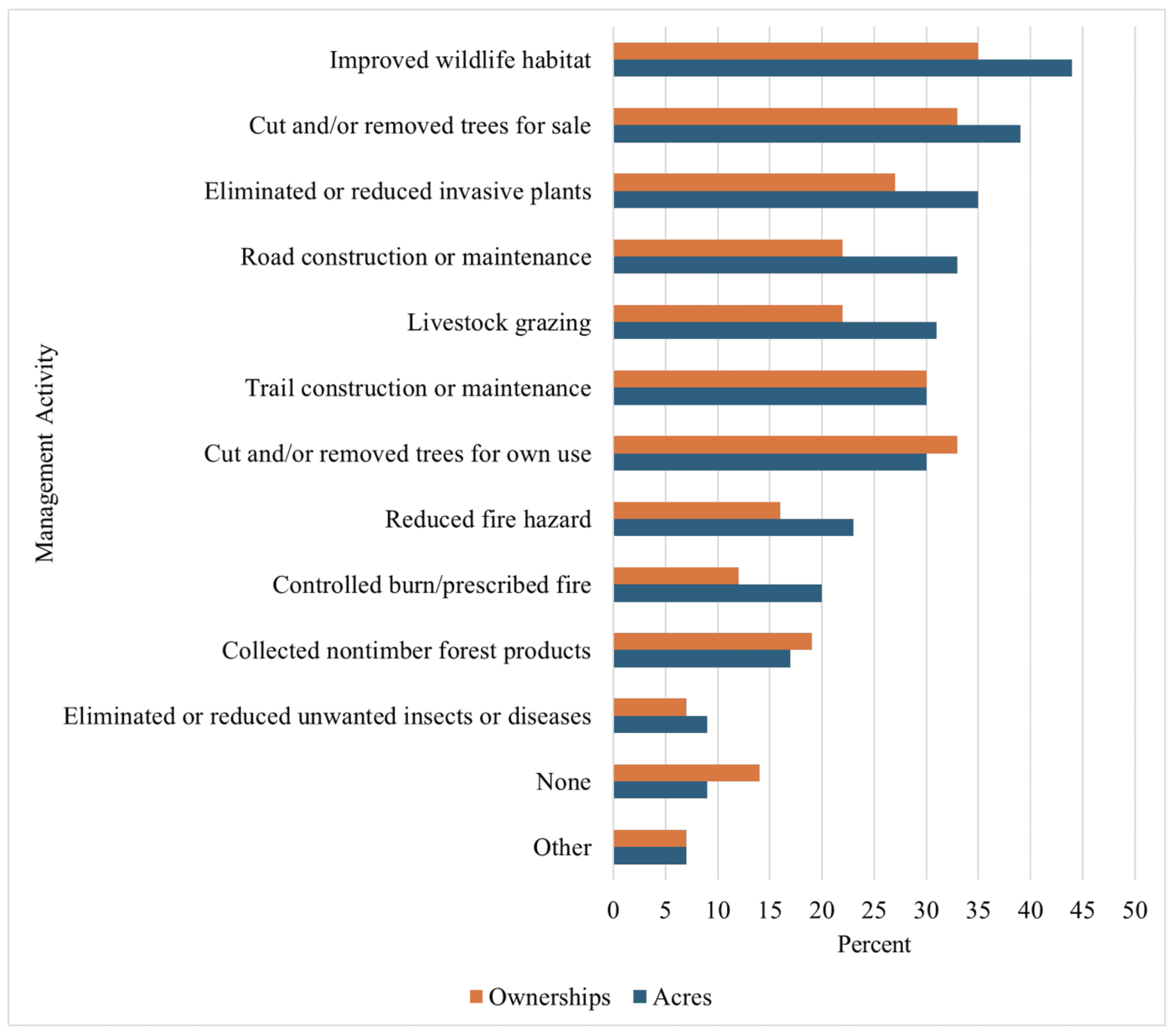
Figure 6. The percent of family forest owners who participated in various management activities from 2013 to 2018 and the forest acres they hold. (Data and figure credit: Butler et al. 202133)
The above sections describe how to build resilience and recover from hurricanes in general, but this guidance may not be applicable in every situation. Forest landowners have unique goals and objectives related to their forests that shape their management decisions. Pre- and post-hurricane management activities can be tailored to accommodate these values. To better understand the objectives of nonindustrial private forest landowners, data from the 2018 National Woodland Owners Survey (NWOS) was used. The following section describes hurricane resilience and recovery actions, based on NWOS management activity responses.33
Management activities provide insight into the use of family-owned forests. The NWOS questionnaire asked forest owners about their participation in twelve management activities as well as an “other” category. From 2013 to 2018, the top five most common management activities were improved wildlife habitat, cut or removed trees for own use, cut or removed trees for sale, eliminated or removed invasive plants, and trail construction or maintenance (figure 6).
The personal goals and uses for individual forest owners will shape how they should prepare for, adapt to, mitigate, and recover from hurricanes. The following sections describe adaptation and recovery practices by management activity, which are used as a proxy value for forest use. Management activities are sorted by percentage of landowner participation; activities included had a minimum of 10 percent respondent participation.
Improve Wildlife Habitat
An estimated 35 percent of forest owners surveyed in the United States have taken action to improve wildlife habitat, according to the NWOS. Forest landowners who prioritize wildlife habitat in their forests should focus on travel corridors, food sources, and limiting wildlife-human interactions. Wildlife can instinctively sense dangerous weather patterns and will move or find shelter. For this reason, it is important to restrict their movement as little as possible. Landowners with fenced-in areas could check before a storm to ensure that corridors are open to wildlife, allowing them to exit the property.
Hurricanes significantly affect food availability for wildlife. High winds, heavy rains, and falling trees can damage herbaceous plants that are food sources for wildlife populations. Not much can be done to prevent damage, but planting vegetation used as a food source for wildlife can support populations as they recover from a hurricane. These plants include red and white clover, pokeweed, Virginia creeper, deerberry, and other native species. Different regions will have their own native species; native plants that support wildlife by state and other state-specific resources are included in the appendix. Another good resource is the book Forest Plants of the Southeast and Their Wildlife Uses by James H. Miller and Karl V. Miller. Make sure the planted species’ soil and light requirements align with forest conditions.
Hurricanes can also significantly change the habitat and microclimates available to wildlife. These changes can produce new types of habitats and support a more biodiverse ecosystem. Likely, habitats will not be entirely destroyed or will quickly recover, and no action is often necessary. If a significant habitat area has been destroyed, new cover and host plants could be planted. These should be specific to the site conditions and wildlife species you want to favor. Consider the moisture availability, light conditions, topography, soil type, and nutrient availability of a site. Make sure that plants are suitable for the area and use native plants when possible. Locally sourced seeds or seeds from your U.S. Department of Agriculture Plant Hardiness Zone should be used when possible.
Disruptions from hurricanes increase the likelihood of wildlife-human interactions, which are dangerous for people and animals. It is important to protect wildlife and prevent interactions by making loud sounds when walking in the woods, properly storing food and scented items, and giving animals space.
Cut or Remove Trees (For Personal Use and to Sell)
According to the 2018 NWOS, 33 percent of U.S. nonindustrial private forest landowners (NIPFLs) cut or remove trees for sale, and 33 percent reported cutting or removing trees for personal use. The use of private forests for timber is one of the most significant uses reported in the NWOS, and many forest owners rely on timber for personal use or as a source of income. Forest owners can undertake certain management practices to protect their timber and recover after hurricanes.
Before a hurricane, it is important to time activities to optimize resilience. This includes waiting to thin stands, when possible, until hurricane season ends to decrease the risk of wind damage. Since harvesting before a storm is unlikely due to time constraints, salvage harvest following a hurricane is another way to recoup losses. Salvage harvesting results in lower stumpage prices for landowners than undamaged stands because of the increased difficulty of conducting forest operations following a storm and the high regional supply of wood on the market that lowers stumpage prices. Salvage harvests must be completed in a timely manner or wood degradation begins to occur, causing the timber to lose value quickly. Weather conditions, timber product class specifications, and tree species makeup affect how quickly wood must be salvaged before serious wood degradation begins. The University of Georgia’s Warnell School of Forestry and Natural Resources published “Assessing storm damaged forest stands,” which includes tables and information on salvage harvest timelines based on tree species and product. For more information on salvage harvests, see resources in the appendix.
Following a hurricane, replanting in a specific way can increase resilience in the future. To determine the most appropriate species, consider native species, soil and climate conditions, growth rate, and the species’ resilience. For example, fast-growing species that are more resilient to hurricanes can be selected to promote timber growth and decrease the risk of storm damage in the future. Other qualities can make trees more wind resistant including having a low center of gravity, open branching, deep radial roots, and flexible limbs.15 Wind-resistant species to consider include longleaf pine, live oak, southern magnolia, slash pine, and bald cypress. Consult a forester or arborist for specific recommendations and information on the marketability of species in your region.
Eliminate or Reduce Invasive Plants
According to the 2018 NWOS, 27 percent of family forest owners engaged in management actions to eliminate or reduce invasive plants on their land. Keeping invasive plants at bay is an important part of forest management, and disturbances increase the likelihood of invasive plants spreading. There are management and recovery options forest owners can use to protect their forests from problematic non-native plants. Thinning, harvesting, and prescribed burns can be used to limit the growth of invasive plants.
Thinning should be paused until after a hurricane to limit damage and canopy openings that would allow other plants to establish populations. Mechanical thinning and targeted herbicide application can be used to remove unwanted invasive plants. Additionally, properly timed harvests could remove valuable timber and allow managers to use herbicides or fire to remove unwanted vegetation following a hurricane. Prescribed fire is a valuable tool for removing unwanted vegetation and improving the efficacy and specificity of herbicide applications. Prescribed fire should only be conducted by experienced practitioners to ensure safety and to follow local regulations and laws.
Implement Trail or Road Construction and Maintenance
Approximately 22 percent of U.S. family forest owners reported conducting trail construction or maintenance in the NWSO survey. Many private forest owners maintain trails on their land, either for personal or family use or for public access. Trails are frequently damaged due to heavy storms and can become impassable or washed out by hurricanes. The following options can be used to limit the damage to trails before a storm and restore trails following hurricane damage:
- Before a storm arrives, forest owners and managers can shape the natural environment to prevent damage. This includes creating a built-in buffer around trails and implementing erosion control measures.
- Trees can be planted away from trails to minimize the risk of future downed trees affecting trails, though this would not be ideal if landowners prioritize shaded trails.
-
Thinning can also be conducted along trails, decreasing the risk of weakened or diseased trees falling and damaging other vegetation.
-
Following a hurricane, landowners can remove debris from trails using chainsaws, controlled burns, or salvage harvests.
Consider Livestock Grazing
The deliberate integration of forest land and livestock operations is defined as silvopasture. Silvopasture allows landowners to diversify their income while protecting their livestock and the environment. A significant minority of forest owners surveyed claimed that they used their forests for livestock grazing (22 percent). Forest owners who use their land for grazing have specific needs to consider when preparing for and recovering from a hurricane, including the following:
- Prioritizing the safety of all people and animals on the land.
- Ensuring that fences are intact before a storm, and using extra fencing supplies to mend any gaps to prevent animals from escaping.
- Ensuring that you have 7 to 10 days of water and food for livestock.
- Storing feed and hay in a secure place that will likely stay dry.
- Having basic veterinary care products on hand to treat minor injuries.
- Marking cattle with temporary identification to help them be returned should they escape. Temporary marking options include spray paint or paint sticks.
- Monitoring hurricanes and starting livestock evacuations 96 hours before landfall if you are evacuating.
It is important to prepare your land to minimize hurricane damage. This includes leaving interior gates open to allow livestock to reach higher ground, moving equipment to higher ground, and turning off gas and electricity to prevent fires. These actions will decrease the risk of damage to infrastructure and livestock in the event of a hurricane.34
Following a hurricane, first ensure that it is safe to return and secure the area. Landowners also need to document damage and consult insurance companies and disaster assistance program agents to learn about assistance options. Document all damage to property and livestock with photographs, as these will be useful in insurance recovery programs. Record all losses and report them to your local Farm Services Agency office.
To restore pastures, remove all debris to allow forage grasses to recover quickly. Replant desired tree species where trees were lost. It may be beneficial to choose species that are more resilient to wind and water damage. For a list of resilient tree species, see table 1A in the appendix. Forest owners who are interested in harvesting timber should consider timber marketability for species on their site, but forest owners who are not harvesting to sell may have more flexibility in species selection when replanting.
For more information on preparing for and recovering from hurricanes in livestock operations, see the USDA Southeast Climate Hub’s “Hurricane Preparation and Recovery Commodity Guides” website. This site includes guides for beef, dairy, poultry, swine, and forage producers.
Collect Nontimber Forest Products
In addition to being sources of timber or integrated with pasture for livestock, forests also provide many forms of nontimber forest products (NTFPs), including foliage, pine straw, mushrooms, fruit, and medicinal plants. According to the 2018 NWOS, 19 percent of family forest owners collected nontimber forest products on their land. Hurricane damage can destroy forest resources and temporarily affect the opportunity to harvest NTFPs. There are management practices available to help forest owners prevent some damage, recover after a storm, and promote resilience in the future.
Forest owners who harvest specific NTFPs should invest in practices that protect their resources before a storm strikes. For example, if a forest owner has several valued fruit trees, they could provide additional support using stakes, trellises, or other structures. Of course, having many valuable trees makes this less feasible. Targeting hurricane preparation to protect the most valuable NTFPs gives forest owners a better opportunity to protect them from storm damage. The type of preparation will depend on the NTFP and resources available to the landowner.
Following a hurricane, forest owners can restore NTFPs using specific management options. These include replanting or reintroducing NTFPs intentionally or restoring the physical environment to promote the natural growth of NTFPs. If forest owners are considering replanting or reintroducing NTFPs, they could explore more resilient options. For example, landowners who value fruit trees on their land could switch to trees with deeper root systems, such as apple trees, which decrease the risk of uprooting during a storm. The best species for each site will depend on the local conditions and landowner objectives.
Reduce Fire Hazard
Many forest owners are concerned with the risk of wildfire on their property. Around 16 percent of family forest owners took action to reduce fire hazard between 2013 and 2018, according to NWOS. Hurricanes increase the risk of fires due to downed power lines and more debris that increases the available fuel load when dry. Large wildfires frequently follow hurricanes because there is more fuel and woody debris. Large storms also create ladder fuels, which are downed trees or limbs that allow fire to climb from the forest floor up to the canopy and spread rapidly. Preventive actions to decrease the risk of a fire affecting forest land include securing electrical wires on the property and turning off electricity. Following a storm, the most important factor should be safety. Never touch downed wires; contact your local utility to have them removed if present. Remove debris as soon as possible to decrease the risk of fires. Prescribed burning is a fast method of removing debris, and it can also be a safe way to reduce fuel loads in the months and years following a hurricane, if done under the right weather and fuel moisture conditions. Ensure that you have the proper state permits, and consider mechanically moving debris into piles and burning it if you want to conduct burns to facilitate removal.
Use Controlled Burn/Prescribed Fire
As previously described, prescribed fire (i.e., controlled burns) is a tool forest managers use to reduce the risk of large wildfires, create habitat, and maintain ecosystem functions on their land. Approximately 12 percent of forest owners engaged in controlled burns between 2013 and 2018, according to NWOS. Controlled burns can be used to clear debris that is an issue following a large storm. Forest owners who want to use prescribed fire after a hurricane need to be aware of conditions that can affect burn outcomes, including drought, no-burn orders, and fuel loads on their land. Consult a state forestry agency or local prescribed burn association for support if needed.
Limitations of the NWOS
While the National Woodland Owners Survey provides meaningful insight into the actions and values of U.S. forest owners, it is important to recognize its limitations. NWOS results are based on a sample of forest owners, and there are always underlying issues with samples. One issue with surveys is the risk of sampling bias. The NWOS takes measures to reduce sampling bias, including generating random points in hexagons within states, determining the land use of each point, and identifying the landowner from public tax records. Another issue is nonresponse bias. As with many public surveys, there is a significant amount of nonresponse among survey targets. If a large portion of the desired population does not respond, the survey results may not be representative of the larger population.
Management Resources
Management Resources
Many useful tools are available to forest managers before, during, and after a hurricane. Tools help assess individual risk, manage forests to mitigate threats, obtain up-to-date news during an event, and provide insight into financial and technical options. Other useful resources, including your local Extension and Risk Management Agency offices are available in table 1.
Table 1. Online Management Resources and Tools
| Goal | Resource | Purpose |
|---|---|---|
| Understanding your risk | Know Your Zone websites:
South Carolina Emergency Management Division North Carolina Department of Public Safety Virginia Department of Emergency Management Georgia Emergency Management and Alabama (U.S. Department of Homeland Security: Ready) Florida (Florida Division of Emergency Management) Louisiana (Louisiana Department of |
Find your hurricane evacuation zone, flood risk, and vulnerability to storm surge based on your location. |
| Understanding your risk | FEMA Flood Map Service Center | Find your official flood map based on your location. |
| Understanding your risk | NOAA National Hurricane Center | Information on current and predicted storm activity with advisory information. |
| Understanding your risk | USDA Risk Management Agency (RMA) | Provides information on risk and assists with crop insurance. |
| Forest management for hurricanes | Updated Silvics of North America Project (USNAP) | Select species for your specific conditions. |
| Predicting hurricane impacts | Forest Vegetation Simulator | Forest growth simulation models which can simulate any type of management or disturbance. Outputs include tree volumes, biomass, density, canopy cover, etc. |
| News sources | U.S. Department of Agriculture | News and developments about disaster recovery and agriculture. |
| News sources | NOAA National Weather Service Weather-Ready Nation | Updated news to assess risk and support decision-making. |
| Financial and technical information | USDA Natural Resources Conservation Service (NRCS) | Financial and technical assistance for forest landowners. |
| Financial and technical information | U.S. Department of Homeland Security Federal Emergency Management Agency (FEMA) | Information on preparation and recovery, including financial information. |
Conclusion
Forest owners and managers need to consider many factors when managing their land, including hurricanes. For many in the Southeast, hurricanes and the damage they cause are an unfortunate reality. Hurricanes can decimate forests, structures, and lives. However, there are ways to prepare for and recover from storms that can mitigate the harm inflicted.
Forest owners and managers should be prepared for eventual hurricanes by establishing forests with resiliency in mind. This will help to protect as many trees and resources as possible and can be done in conjunction with supporting other management goals. Resilient forests have native, site-adapted, or specialized species that are more wind and water resilient, decreasing the risk of uprooting and damage. They also have staggered ages and heights of trees that break up the wind and allow trees to support each other. It is important to note that uneven-aged stand management is not always practical, but it can be possible with species like southern pine. To this end, all thinning and harvesting should ideally be postponed until after the hurricane, unless a complete harvest can be finished before the storm hits.
Forest landowners also need to prepare in the short term for a forecast hurricane by prepping their land. Structures should be secure, electricity and water turned off, and exterior gates closed. These factors help protect the safety of landowners and their property. Monitor the storm’s progress and listen to advice from trusted news outlets for the most up-to-date information.
After a hurricane, many forests will be damaged. Following specific recovery procedures can help your forests recover as quickly and sustainably as possible. In general, forest owners should conduct a thorough evaluation of the damage, engage forestry professionals, remove damaged trees that could harm others, and explore the option of a salvage harvest. Forest owners should also consider personal goals or objectives for their land when recovering from a hurricane. Factors such as wildlife habitat improvement, recreation, or livestock grazing in forested areas can shape the actions landowners take following a storm. Incorporating goals or objectives into recovery and having a comprehensive recovery plan in place helps build a more resilient operation while rebuilding forests.
The most important things to remember are to stay informed, be aware of and use resources provided in this guide, and take all measures necessary to protect your personal safety, your land, and your community.
Appendixes
Appendixes
Native Plants for Wildlife Support
Check the following websites by state to learn about native plants for wildlife support:
Alabama “Gardening with Native Plants in Alabama” Garden for Wildlife by the National Wildlife Federation
Arkansas “Native Plants for Arkansas Wildlife” (What native plants are good for Arkansas wildlife) University of Arkansas Cooperative Extension Service
Florida “NSIS: Florida Native Plants – Families”
Georgia “Plants that Attract Georgia Wildlife” Georgia Department of Natural Resources,
Wildlife Resources Division
Kentucky “Trees and Shrubs” Kentucky Department of Fish and Wildlife Resources Louisiana “Native-Plant-Guide”
Louisiana Department of Wildlife and Fishers Mississippi: “Native Habitat”
Mississippi Department of Wildlife, Fisheries, and Parks North Carolina: “Landscaping for Wildlife with Native Plants”
North Carolina State Extension Publications South Carolina: “Native Plants for Wildlife” (Printable List)
Tennessee: “Native Plants and Wildlife” University of Tennessee Hort Team, Plant Sciences Department
Virginia: “Native Plants for Conservation, Restoration and Landscaping” Virginia Department of Conservation and Recreation
Tree Species Resistance to Hurricane Disturbances
The following from “How to Evaluate and Manage Storm-Damaged Forest Areas” from ForestPests.org, the University of Georgia, Bugwood.org ranks tree species from most to least resilient to hurricane and storm damage based on flood tolerance, breakage, uprooting, salt, and deterioration by insects and disease:
Trees listed in each section below are in order from most resilient to least resilient for the hurricane disturbance specified.
Flood tolerance: bald cypress, pond cypress, tupelo-gum, sweetbay, willow, sweetgum, sycamore, river birch, cottonwood, green ash, red maple, pecan, mulberry, American elm, persimmon, silver maple, water oak, swamp chestnut oak, magnolia, hickory
Breakage: live oak, palm, bald cypress, pond cypress, sweetgum, tupelo-gum, mimosa, dogwood, magnolia, sweetbay, southern red oak, water oak, sycamore, longleaf pine, slash pine, loblolly pine, redcedar, hickory, red maple, pecan
Uprooting: live oak, palm, bald cypress, pond cypress, tupelo-gum, redcedar, sweetgum, sycamore, longleaf, pine, mimosa, southern red oak, magnolia, slash pine, loblolly pine, sweetbay, water oak, red maple, dogwood, hickory, pecan
Salt: live oak, palm, slash pine, longleaf pine, pond, cypress, loblolly pine, redcedar, tupelo-gum, bald cypress, sweetgum, water oak, sycamore, sweetbay, southern red oak, hickory, mimosa, pecan, magnolia, red maple, dogwood
Deterioration by insects or diseases: live oak, palm, sweetgum, water oak, sycamore, bald cypress, pond cypress, southern red oak, magnolia, tupelo-gum, sweetbay, hickory, pecan, redcedar, red maple, mimosa, dogwood, longleaf pine, slash pine, loblolly pine
Table 1A. Recovery Resources Available Online
| Organization | Resource |
|---|---|
| USDA | USDA Disaster Resource Center
Disaster Assistance Discovery Tool Farm Stress and Mental Health Resources |
| Disaster Assistance | DisasterAssistance.gov |
| Alabama Cooperative Extension System | Assessing and Managing Storm-Damaged Timber
Agricultural Disaster Assistance Programs |
| University of Arkansas | Arkansas Salvage Damaged Timber | Casualty Loss, Income Tax Deductions
Arkansas Storm Damage - Trees | Assess, Prune, Disaster Recovery, BM |
| Clemson University | Decision-Making for Landowners With Storm-Damaged Timber |
| University of Florida Institute of Food and Agricultural Sciences | Trees and Hurricanes
Trees & Landscapes |
| University of Georgia | After Hurricane Helene: How to Claim Timber Casualty Losses and Defer Taxes on Salvage Timber Sales Georgia Timber Tax Credit: Answers to frequently asked questions Hurricane/natural Disaster forestry resources |
| University of Kentucky | Extension Disaster Preparedness and Recovery
Kentucky Woodlands Storm Damage |
| Louisiana State University | Dealing with damaged trees after a storm |
| Mississippi State University | Frequently Asked Questions about Timber Casualty Losses |
| North Carolina State Extension | Recovering From the Storm: Resources for Woodland and Forest Landowners NC State Extension Decision Making Guidelines for Storm-Damaged Trees NC Disaster Information Center |
| University of Tennessee | When a Tornado Strikes: Steps to Claim a Timber Casualty Loss |
| Virginia Tech | Trees and Storms Virginia Cooperative Extension
Hurricane Recovery Zoom Series - Tax Strategies Post-Hurricane Helene Tree Selection Guide for Mid-Atlantic Silvopastures |
References Cited
References Cited
- Hurricanes. National Oceanic and Atmospheric Administration. 2025 Jul.
- Historical Hurricane Tracks. National Oceanic and Atmospheric Administration. 2025 Aug.
- Hurricane Costs. National Oceanic and Atmospheric Administration. 2025 Sep.
- Continental United States Hurricane Impacts/Landfalls 1851,2024. National Oceanic and Atmospheric Administration. 2025 Sep.
- What are the chances a hurricane will hit my home? National Oceanic and Atmospheric Administration. 2018 Aug.
- Palmer W., Sisson, D.C., Hiers, K. Hurricane Michael severely damages forest lands in the region. Tall Timbers. 2018; 11(4).
- Hurricane Helene timber impact assessment 2024. Georgia Forestry Commission. 2024 Nov.
- McNulty, S.G. Hurricane impacts on US forest carbon sequestration. Environmental Pollution 116 S17-S24. 2002.
- Hook, D.D., Buford M.A., Williams J.G. Impact of Hurricane Hugo on the South Carolina Coastal Plain Forest. In Haymond, Jacqueline L. and William R. Harms, Eds. Hurricane Hugo: South Carolina Forest Land Research and Management Related to the Storm. Gen. Tech. Rep. SRS-5. Asheville, NC: U.S. Department of Agriculture, Forest Service, Southern Research Station. 1991.
- Thuon J. Hurricanes and forests: impacts over the past two decades. American Forests. 2016 Oct.
- Graff, F. Hurricane Helene’s Devastating Toll on NC’s Forests. PBS North Carolina. 2025 Jan.
- Vogt J.T., Gandhi K.J.K., Bragg D.C., Olantinwo R., Klepzig K.D. Interactions between weather-related disturbance and forest insects and diseases in the Southern United States. United States Department of Agriculture. United States Forest Service, Southern Research Station. General Technical Report SRS-255. 2020 Aug.
- Barrere J., Reineking B., Jaunatre M., Kunstler G. Forest storm resilience depends on the interplay between functional composition and climate- Insights from European-scale simulations. Functional Ecology. 2024 Jan; 38(3).
- Xi, W., Peet, R.K., Urban, D.L. Changes in forest structure, species diversity and spatial pattern following hurricane disturbance in a Piedmont North Carolina forest, USA. Journal of Plant Ecology. 2008 Mar; 1(1).
- Joffrion B.B. Jr. Choosing trees for hurricane resistance. LSU AgCenter. 2007 Jan.
- Kyhl J., Diss A. Tree defoliation in forests & woodlots. The Wisconsin Department of Natural Resources. 2004; PUB-FR-220a.
- Xi, W., Peet, R.K., Lee, M.T., Urban, D.L Hurricane disturbances, tree diversity and succession in North Carolina Piedmont forests, USA. Journal of Forestry Research. 2018 Oct; 30(1).
- McNulty S.G. Hurricane impacts on US forest carbon sequestration. Environmental Pollution. 2002 Mar; 116(1): S17-S24.
- Kenny G., Staudhammer C.L., Wiesner S., Brantley S.T., Bigelow S.W., Starr G. Hurricane Michael altered the structure and function of longleaf pine woodlands. Journal of Geophysical Research: Biosciences. 2021 Nov; 126(12).
- Chizmar S. Climate-smart forestry: research on programs and incentives. Yale Forest Forum. 2023 Oct.
- Ensminger A.B., Nichols L.G. Hurricane damage to Rockefeller refuge. Proceedings of the annual conference, southeastern association of game and fish commissioners. 1958: pp 52–56
- Wunderle J.M. Jr. Effects of hurricanes on wildlife: implications and strategies for management. Conservation of faunal diversity in forested landscapes. 1996 Jan: 253–264.
- Flood Impacts on Arkansas Forests. University of Arkansas System, Division of Agriculture Cooperative Extension Service. N.d.
-
Verbout S.M., Schultz D.M., Leslie L.M., Brooks H.E., Karoly D.J., Elmore K.L. Tornado outbreaks associated with landfalling hurricanes in the North Atlantic Basin: 1954-2004. Meteorology and Atmospheric Physics. 2007 Mar; 97(1): 255-271.
-
Prestemon J.P., Holmes T.P. Economic Impacts of Hurricanes on Forest Owners. U.S. Department of Agriculture, Forest Service, Pacific Northwest and Southern Research Stations. General Technical Report. 2010. PNW-GTR-802: 207-221.
-
Adaptive Management, Monitoring and Analysis. U.S. Department of Agriculture, Forest Service. N.d.
-
Tankersley L. Setting up the books: a forest owner’s guide to capital accounts and record-keeping for federal income tax purposes. The University of Tennessee, Agricultural Extension Service. 2001 Dec. PB1691-1M-12/01 E12-4915-00-009-02.
-
Gilman E.F., Masters F., Grabosky J.C. Pruning affects tree movement in hurricane force wind. Arboriculture & Urban Forestry. 2008: 34(1):20-28.
-
Helms J. A. The dictionary of forestry. Bethesda, MD: Society of American Foresters. 1998.
-
Rutledge B.T., Cannon J.B., McIntyre K.R., Holland A.M., Jack S.B. Tree, stand, and landscape factors contributing to hurricane damage in a coastal plain forest: Post-hurricane assessment in a longleaf pine landscape. Forest Ecology and Management. 2021 Feb;481.
-
Polinko A.D., Willis J.L., Sharma A., Guldin J.M. Stand-level structural characteristics dictate hurricane resistance and resilience more than silvicultural regime in longleaf pine woodlands. Forest Ecology and Management. 2022 Oct; 526: 120585. 10 p.
-
Barlow B., Andreu M., Asaro C., Maggard A., Auel J. Pine forest landowners guide. Gen. Tech. Rep. SRS-260n. Asheville, NC: U.S. Department of Agriculture Forest Service, Southern Research Station. SRS-GTR-260n. 2021:36.
-
Brett J.B., Butler S.M., Caputo J., Dias J., Robillard A., Sass E.M. Family forest ownerships of the United States 2018: results from the USDA Forest Service, National Woodland Owner Survey. Gen. Tech. Rep. NRS-199. Madison, WI: U.S. Department of Agriculture, Forest Service, Northern Research Station. 2021; 52 p. [plus 4 appendixes]
-
Farmer K.J. Tips for livestock, pasture, hay, and feed issues during hurricane recovery. N.C. Cooperative Extension, Haywood County Center. 2024 Nov.

Michelle Thompson, Climate Science Communication Specialist, Clemson University; Michael Gavazzi, Natural Resource Specialist, Southern Research Station, US Forest Service; Steven McNulty, Senior Research Ecologist, US Forest Service; Adam Maggard, Associate Dean for Academic Affairs, Forestry, Wildlife, and Environment, Auburn University; Skip J. Van Bloem, Professor, Forestry and Environmental Conservation, Experiment Station, Baruch Institute of Coastal Ecology and Forest Science, Clemson University; Puskar Khanal, Associate Professor, Forest Economics and Management, Clemson University; David Clabo, Assistant Professor, Silviculture Outreach, University of Georgia; Mac A. Callaham Jr., Acting Director, USDA Southeast Climate Hub, US Forest Service; and Becky Barlow, Associate Dean, Extension Assistant Director, Agriculture, Forestry, and Natural Resources, Auburn University
The authors acknowledge and thank Marzieh Motallebi, Clemson University, for providing helpful comments that greatly improved the manuscript. Support was provided by the National Institute of Food and Agriculture.
New July 2026, Silviculture Management After Hurricanes & Storms, FOR-2202
For more information, contact your county Extension office. Visit aces.edu/directory.
Trade and brand names used in this publication are given for information purposes only. No guarantee, endorsement, or discrimination among comparable products is intended or implied by the Alabama Cooperative Extension System.

