|
Lichen it to Some Other Problem
By Jerry A. Chenault, Urban
Regional Extension Agent, Lauderdale County
|
Lichens are inconspicuous, hardy, and
adaptive plants that are composed of fungi and blue-green algae.
This union produces an organism unlike the fungi or algae. Both
partners contribute to its growth and survival. Most of the lichens
you see on trees are probably gray-green; however they vary in
color from yellow and orange to dark brown.
The appearance of lichen is usually related
to damage from environmental stress or poor management. Exposed
limbs on damaged plants simply give lichens access to the sun
they need for growth with little competition.
Lichens are not picky about where they
live. They can be found on exposed surfaces of limbs, stumps,
fence posts, soil, rocks, and other living and nonliving objects.
They attach firmly to their host and are usually found on limbs
and trunks of large mature trees and shrubs in full sun. Lichen
is most commonly found on trees with thin canopies. They usually
do not thrive on heavily shaded twigs or branches of healthy
woody plants.
Lichens reproduce by pieces breaking off and fragments being
spread by wind, splashing water, or other means. Generally, their
reproduction process is not a concern. However, certain kinds
of lichens on leaves may shade foliage, and thick coverage on
limbs may interfere with gas exchanges of plant tissues.
Good plant vigor is the best defense against lichens. Good growing
conditions, proper watering, and soil fertility are major parts
of this defense. Light pruning of affected limbs will remove
some lichens and stimulate new shoot growth to help shade out
other lichens. There are no pesticides registered for the control
of this plant life.
Unfortunately, lichens often get blamed for killing trees or
shrubs. So, if lichens are innocent bystanders, then who killed
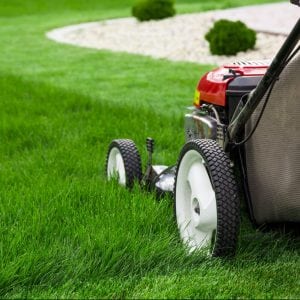
your tree? A good possibility is your lawn mower or weed trimmer.
These machines cut through the bark, girdle trees, or just knock
the bark off causing damage or complete desolation of the plants
water-carrying vessels inside. Other problems could be caused
by borer insects, the lack of fertilizer, or several other arboreal
criminals. It's not likely that the "lichen brothers"
were involved at all. Therefore, I enter a plea of innocent on
their behalf and ask that we clear their name once and for all.
All of this false blame could be "lichened to slander."
References
Costello, L. R., Perry, E. J., Matheny, N. P., Henry, J.
M., & Geisel, P. M. (2003). Abiotic disorders of landscape
plants: A diagnostic guide. California: University of California,
Agriculture and Natural Resources, Publication 3420.
Reeves, C. (1999, January). Lichens on trees. Yard & Garden Brief. University of Minnesota
Extension. Retrieved July 23, 2009.
Shigo, A. L. (2003). Modern arboriculture:
Touch trees. New Hampshire: Sherwin Dodge Printers.
If
you do not have the latest version of Adobe Acrobat and wish
to view the
PDF publication on this site, click here
to download:
Return to Metro News...
|