
Animals

The Impact of Urbanization
Urban agriculture is becoming more than just a trend. According to the United Nations Department of Economic and Social Affairs, approximately 55 percent of the world’s population currently lives in urban areas. By 2050, nearly seven in ten people will live in cities. This population growth adds an estimated 2.5 billion people to urban centers. Greater economic opportunities and access to essential services are some major reasons why people continue to migrate from rural to urban areas.
Despite these advantages, rapid urbanization strains local ecosystems as natural landscapes are converted into commercial or residential environments. Urban expansion contributes to climate change, loss of natural habitats and agricultural land, and food insecurity. In the United States alone, an estimated 18 to 24 million acres of agricultural land will be converted to developed land by 2040.
The loss of productive farmland threatens food security by reducing the availability of fertile soils and displacing agricultural communities. These land-use changes also disrupt local and global food systems. They limit food production and accessibility while creating broader economic consequences. As many urban residents choose not to grow their own food, they are vulnerable to supply chain disruptions, rising food prices, and economic instability. These factors also undermine reliable access to nutritious food.
Early Urban Agriculture
Although a forgotten reality, cities were once the most productive agricultural hubs on the planet. Our ancestors, who practiced urban farming out of pure necessity, knew that maximizing produce in minimal spaces made the most sense. From Mesopotamia to Mesoamerica, people built cities around localized food systems.
Early civilizations survived and thrived by integrating dense fruit and vegetable farming. They also had livestock and built irrigation systems directly inside the city walls. For example, Ancient Egyptians integrated fruit and nut trees within growing cities to provide shade and extra subsistence. In holy spaces and tombs, vegetation was viewed as a symbol of rebirth and eternal life. In addition, the Aztecs established complex floating garden plots and a canal system to sustain the growth of the expanding Aztec empire. Mankind has valued food close to home since the height of early societies.
During the 1940s, Victory Gardens started to augment the nation’s food supply so that more commercially grown food could be sent to soldiers and allies. By the peak of the war, an estimated 20 million households grew their own produce and supplied nearly 40 percent of all fresh fruits and vegetables consumed in the United States. Unfortunately, when the war ended, so did the enthusiasm for growing a person’s own produce. After the world wars, it shifted to commercial farming and large-scale industrial agriculture, such as buying food at local grocery stores, giving rise to food insecurity.
Food Insecurity
Today, experts contend that food insecurity is a severe global crisis. As many as 318 million people across 47 countries will face hunger or worse in 2026. Health officials stress that the lack of reliable access to nutritious food is directly linked to the development of chronic illnesses, malnutrition, and mass displacement. It is a common belief that rural areas are more susceptible to food insecurity and malnutrition. However, more than three-quarters of the world’s food-insecure people reside in urban areas.
Historically, cities were established in the most fertile areas and cultivated to support urban populations. Advances in storage and transportation during the Industrial Revolution catalyzed the separation between cities and food production. However, there is growing reconsideration of urban farming, acknowledging its potential to address food security challenges in cities worldwide. Urban farms utilize urban spaces, such as balconies, rooftops, and vacant lots, to create resilient, food-secure communities where people live. This can significantly lessen shipping emissions and food deserts and establish green spaces that cool cities and provide economic and educational opportunities for residents.
Transforming Urban Spaces
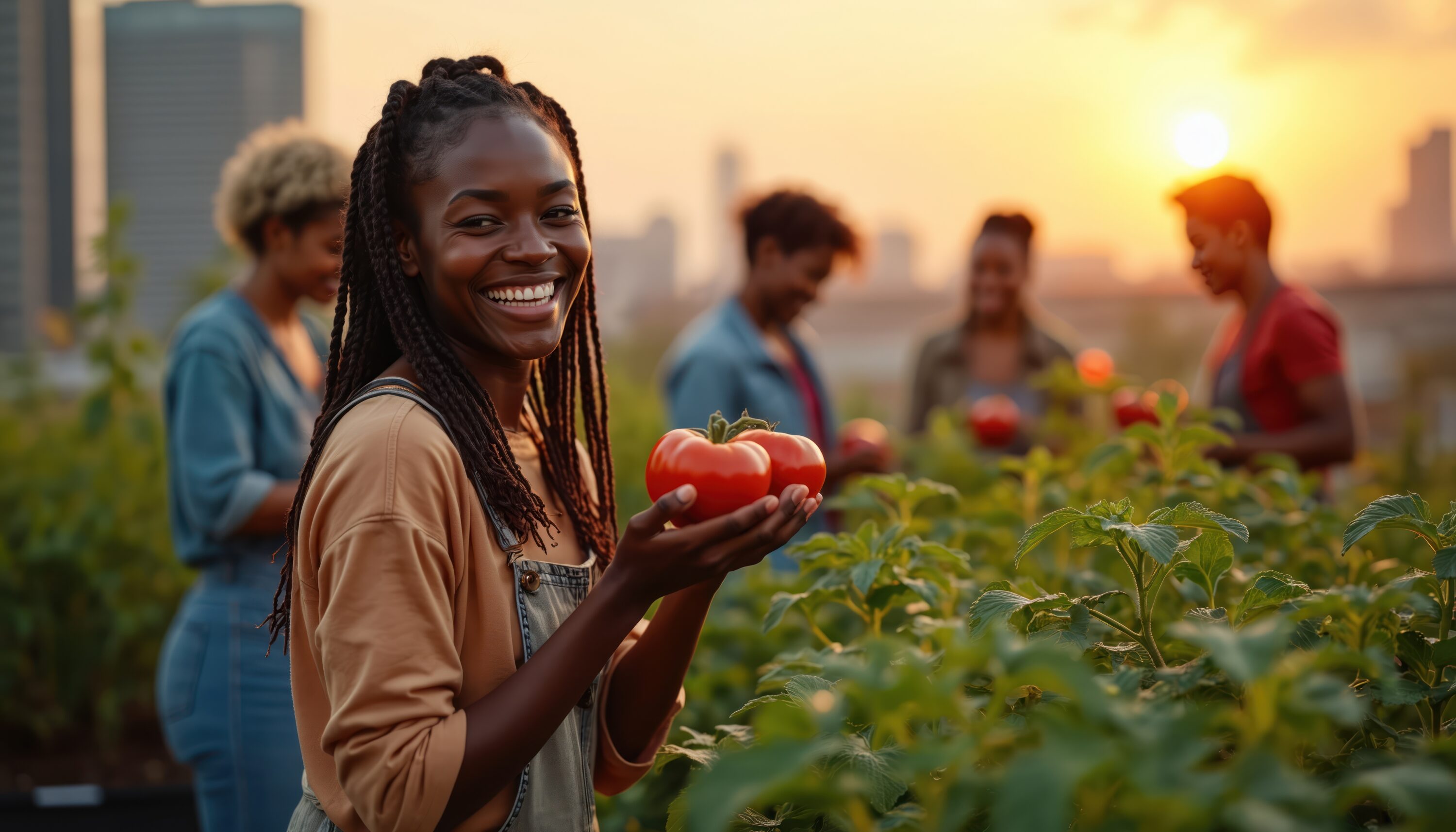
Now is a great time to turn urban spaces into thriving farms where people can maximize their space and minimize the impact. Some of the most popular types of urban farming include the following:
- Community gardens. Consider utilizing shared spaces to raise fresh food, put more money in pockets, promote sustainability, and create community engagement.
- Rooftop farming. Millions of square miles of urban roof space sit unused worldwide. In the United States alone, more than 80 percent of rooftops have the physical space to accommodate raising produce. Additionally, rooftop farming insulates buildings and reduces stormwater runoff.
- Vertical farming. This maximizes underutilized urban space by stacking crops in modular, soilless systems. This enables year-round crop production and offers a significantly higher yield per square foot than traditional farming. Vertical farming also improves building insulation and mitigates the urban heat island effect.
- Vacant lot farms. Blighted spaces are transformed into thriving sources of fresh produce. These lots can significantly reduce the carbon footprint associated with long-distance food transport while expanding education and access to healthy, fresh produce for nearby residents.
For thousands of years, cities were innately sustainable, relying exclusively on local farming for sustenance and recycled waste to fertilize crops. Urban farming is experiencing a resurgence, gaining global recognition as a proactive and sustainable supplementary strategy to traditional agriculture. As a strategic approach to shortening the food supply chain, enhancing food security, and reducing environmental footprint, urban farming underscores the synergism between urban living and the natural environment.
For more information, visit the Urban Agriculture section of aces.edu.