







When the ground begins to thaw, Extension county agents will be hard at work again using innovative methods to develop community gardens in Alabama's urban areas. With a $250,000 grant made possible from Alabama State Representative John F. Knight (D), community gardens will be springing up all over the place.
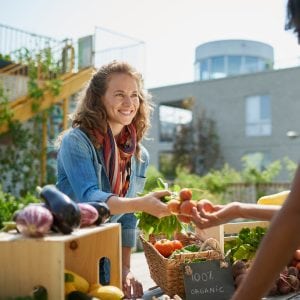
Agriculture has typically been associated with the production of food and commodities in rural areas. In the twenty-first century, however, this scope includes turf grass, flowers, trees, shrubs, insect and rodent control, wildlife management, and food production by urban dwellers. In recent years, local and regional governments have recognized the need for agriculture education programs aimed at urban communities, and Extension's Urban Affairs & New Nontraditional Programs unit is helping to lead the way. The Greenspace Project helps to convert deserted property or unused land own by state or local governments into community gardens, farmer's markets, and other related cooperatives.
Michele Mobley in Tuscaloosa County established the "Plant and Extra Row" Urban Community Gardening Project. Her project started last year with the goal of getting gardeners to donate fresh vegetables and fruits to local food banks. Gardeners are encouraged to plant an extra row of produce to donate and then deliver that produce to the food bank after harvest. She will be expanding the "Plant and Extra Row" program this year and plans to start a community garden in the Tuscaloosa area. Mobley will also work with various organizations to obtain volunteers to participate in the project. The garden will be used as an educational tool for city youth, giving them the opportunity to grow their own produce and educate them about where the food they eat is obtained. She does plan to sell some of the produce from the garden to allow for garden sustainability.
Phillip Carter in Houston County plans to establish a honeybee and pollination education and training program in Landmark Park in Dothan. The program objective is to recruit 5-10 individuals for the program. These participants will hear lectures and receive hands-on training from experienced beekeepers to learn how to properly manage their own beehives. Each participant will be given one hive free of charge and will be responsible for managing the hive and finding fruit or vegetable producers that are growing crops that need pollination. Viable hives and beekeepers are in short supply in Alabama. It is anticipated that this program will not only train new beekeepers, but also help fruit and vegetable producers optimize the yields of crops such as squash, watermelons, cucumbers and muskmelons.
Hayes Jackson in Calhoun County plans to construct and maintain a working banana farm on the campus of Coosa Valley Youth Services in Anniston. He plans to plant one acre of hardy ornamental bananas that will be sold locally as potted or bareroot specimens. The program will train local youth about horticulture, entrepreneurship, and nontraditional agriculture.
Thomas Daugherty at the Mobile Urban Center plans to establish multiple community and school gardens by using a "Garden Roadshow." He will create a mobile garden unit with equipment and supplies that can be moved to various locations. He plans to provide a mechanism to move diverse community garden projects from the meeting stage to established gardens. These gardens will be used for production and education, and produce will be distributed to the participants or to designated recipients in the area.
Mark Mayeske has worked with the Birmingham Urban Garden Society (BUGS) program for several years. He plans to establish ten new community gardens and 15 new school learning gardens. He also intends to train volunteers for this program to be "Garden Angels." Gardening increases science test scores, teaches patience and responsibility, and increases interest in eating a variety of vegetables. Mayeske plans to create competition and recognition between schools and students relative to their gardening skills and knowledge. This project will also launch several more BUGS gardens into entrepreneurship ventures. Project participants have been offered a free stand at a prominent market and are developing plans to work with the Hope 6 revitalization project in downtown Birmingham that will have a full production kitchen built for surrounding low-income residents. Residents will have the opportunity to begin to learn to run a food distribution business, thus return unemployed citizens to the job market. Valerie Conner and Deborah Bouteliers are working with several other agencies in Autauga County to construct a community garden. The City of Prattville has provided land to be developed into a community garden to serve limited-resource families and senior citizens. The garden is located in an area designated for economic redevelopment with an eye towards maintaining the heritage of the community. The garden will not only be productive but will also beautify and enhance the downtown riverfront. The community garden will be developed to accommodate diverse populations who otherwise would not be able to participation in the production of foodstuffs. The planting beds will be raised and the pathways will be paved to accommodate wheelchairs and semi-ambulatory citizens. The City of Prattville also provided an area for the development of a fragrance garden for sight-impaired citizens. Signs for plants will be designed for sighted and sight-impaired visitors. Several community partners will be involved in these programs.
For more information on these projects, please contact the Extension county agents e-mail or call Dr. Cathy Sabota at csabota@aamu.edu or (256) 372-4257