Defining Nontraditional Families

By Jannie Carter, Ph.D.

The state of Alabama has over 1,737,000 households (2000 Census). When we think of the term household, we generally get a mental image of members of a family living together under one roof. By definition, the traditional family has been characterized as a husband and wife team and their offspring sharing a common dwelling. But statistics present a more complex definition of Alabama's families for the 21st century.

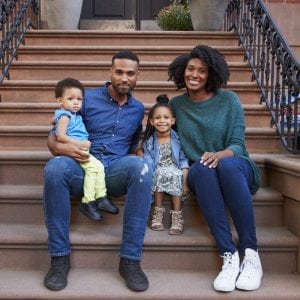
Unlike the traditional concept of two parents, 2.5 children and a pet, today's family exists in a variety of forms. In fact, nontraditional families are currently more the norm. Across the nation some 30-60% of youth in urban school districts live with caregivers that are not their biological parents. In Alabama, 29% of families with children are headed by single parents. And, new forms of nontraditional families continue to evolve as social service agencies and kinship groups seek to ensure supportive and nurturing environments for parents and "displaced" children. Nontraditional families may be single parents, foster parents, multiracial, grandparents raising grandchildren, same- sex parents, and blended households.

Single-parent families are perhaps the most recognized form of the nontraditional family. Only one parent is in the home, generally female. More than half of all children will experience this family form at some point in their lives. But over the past decade, more fathers have stepped up to the plate to take on more responsible roles as single parents. Programs like the U.S. Department of Health and Human Services' Fatherhood Initiative that promotes responsible fatherhood and supports national research, has helped to improve our understanding of the positive role of fathers in children's lives.

Intergenerational households, where grandparents function in dual roles to rear their grandchildren, are becoming more prevalent also. Crisis situations such as death, health, substance abuse, etc. are more often resulting in children being placed with grandparents and other relatives.

Blended families created through divorce and remarriage are also on the rise. Projections are that 1 out of 10 children will go through at least two divorces before they reach the age of 16.

Same-sex families consist of two adults of the same sex who have established a functioning household. Children from other relationships may be a part of same-sex families or children may have been adopted or conceived through medical procedures.

Multiracial families have increased significantly since the late 60s. Research from the last decade indicates that over 1.5 million children lived with biracial families.

Foster families provide temporary family support to children placed in their care by the courts or government agencies.

Obviously, nontraditional families don't fit the traditional mold. They have special needs that are quite different from those of the traditional family. But, they desire the same outcomes-healthy relationships based on love, trust and respect. Truly responsive service providers and programs such as those provided by the Alabama Cooperative Extension System recognize the uniqueness of the nontraditional family and offer workable solutions to address their needs and help them cope with their realities.

Return to Metro News...


Page was last updated:
MON, 7 October 2002

Webpage was designed and is maintained by Jean Hall-Dwyer. Please send suggestions or comments to jhall@aces.edu.