Alabama Cooperative Extension System
Auburn University College of Agriculture


Invasive Plants in Alabama Forests

Non-native invasive plants

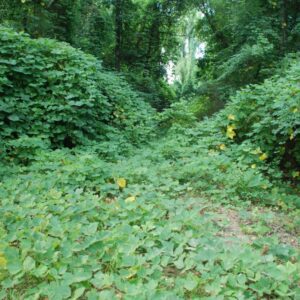
Plants are considered non-native if they were introduced to an area by human activity, either accidentally or on purpose.  The majority of non-native plants are not considered harmful.  In fact, many of our agricultural crops and ornamental plants are non-native and are beneficial to our economy and well-being.  However, some of these plants escape cultivation and become weedy pests.  Kudzu is probably the most notorious non-native invasive plant in Alabama but it certainly isn’t the only invasive pest plant for which we need be concerned.

Impact of invasive species

Non-native invasive species are of concern because they can literally overrun native species, reducing numbers and biodiversity of native plants and the insects and animals that depend on them.  Infestations of invasive species can also change the way ecosystems work – altering fire regimes, water cycles, soil characteristics, and the regeneration of forests and other natural areas.  Infestations may also reduce crop and forest productivity, impact wildlife, and hamper hunting, fishing and other outdoor activities.

In addition to harming the environment, the control of invasive plants costs billions of dollars each year.  The elimination of infestations often takes years of herbicide applications and/or back-breaking work cutting down or pulling out plants.  Preventing the establishment of invasive plants or catching an infestation while it is still small is the most cost-effective way to help slow the spread of invasive plants across the landscape.

Common characteristics of invasive plants

Characteristics often observed in invasive plants are rapid and aggressive growth, production of numerous seeds that are spread easily by wind, birds or water, and the ability to grow under many different conditions.  They often have long lived seeds that persist in the soil until disturbance triggers germination.  Some have roots and rhizomes that readily sprout and can be spread by flood waters or on vehicles and equipment.  In addition, the natural diseases and predators that typically keep plant populations in check are absent in the new range. This is not to say that all plants with these characteristics are, or will become, invasive.  However, since it may take decades for a plant species to become a recognized invasive pest, it is best to be extra cautious when growing plants that share the characteristics listed above. 

Invasive species in Alabama forests

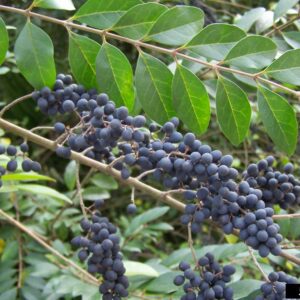
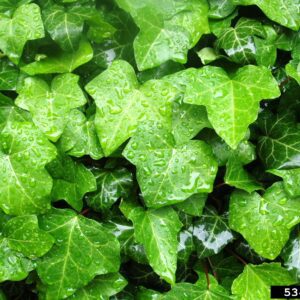
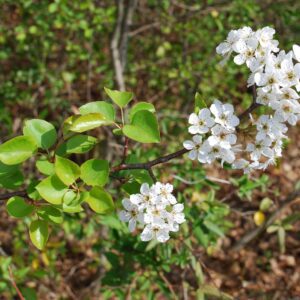
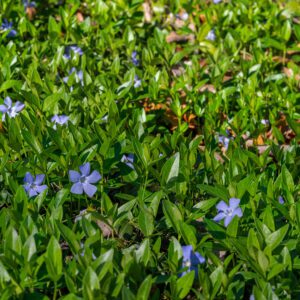
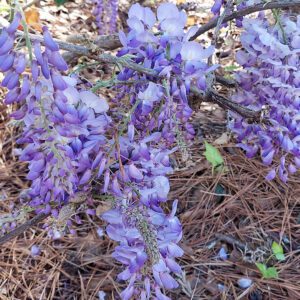
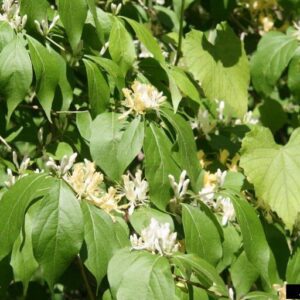
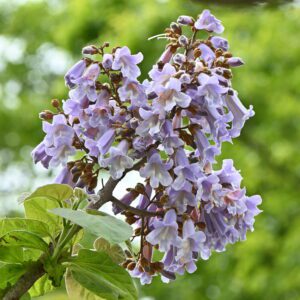
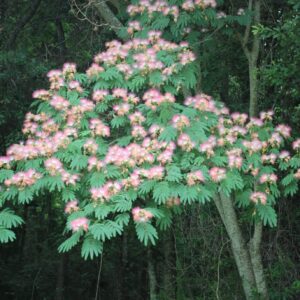
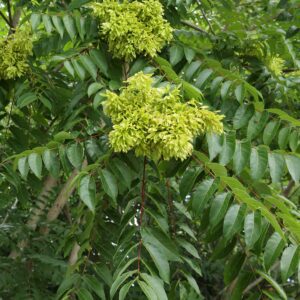
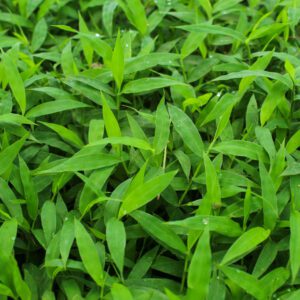
A list of plants considered invasive in Alabama can be found on the Alabama Invasive Plant Council’s web page.  Some of the tree species on the list which can invade forests or forest edges are: silktree or mimosa (Albizia julibrissin), princess tree (Paulownia tomentosa), Bradford pear (Pyrus calleryana), and Chinese tallowtree or popcorn tree (Triadica sebifera).  Several shrubs which invade forests are: thorny olive (Elaeagnus pungens), bush honeysuckles (Lonicera maackii and Lonicera x bella), Chinese privet (Ligustrum sinense) and tropical soda apple (Solanum viarum).  In addition to kudzu (Pueraria montana), invasive vines include English ivy (Hedera helix), Japanese honeysuckle (Lonicera japonica), and Japanese climbing fern (Lygodium japonicum).  Invasive grasses include: cogongrass (Imperata cylindrica), Japanese stiltgrass (Microstegium vimineum) and giant reed (Arundo donax).  A few of the invasive forbs of concern in forests are Chinese or sericea lespedeza (Lespedeza cuneata), shrubby or bicolor lespedeza (L. bicolor), and benghal dayflower (Commelina benghalensis).

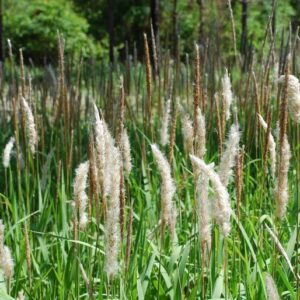
Cogongrass, a species of particular concern in Alabama, is a growing threat as it continues its rapid spread across the Southeast, reducing forest and pasture productivity, destroying wildlife habitat, impacting waterways and presenting an extreme fire hazard.  A compilation of much of the latest information regarding cogongrass can be found in A Cogongrass Management Guide.  This guide, the proceedings of a recent conference ‘Confronting the Cogongrass Crisis Across the South’, provides information from experts around the Southeast regarding cogongrass biology, control and approaches to cooperative management.      

One way cogongrass is spreading so rapidly is by hitchhiking around the state attached to skidders, road graders, mowers, food plot equipment and other forest and road maintenance equipment.  Three steps to help slow the spread of cogongrass are: 1) learn to identify cogongrass, 2) avoid cogongrass and 3) clean vehicles, equipment and clothing after operating in infested areas.  Additional information about cogongrass can be found at www.cogongrass.org.

Additional invasive species to watch for

There are a number of invasive species which are not yet strongly established in Alabama but are extremely invasive in nearby states.  In order to keep these plants out of, or at least under control, in Alabama it is crucial that we find and treat infestations in as timely a manner as possible.  Oriental bittersweet (Celastrus orbiculatus), garlic mustard (Alliaria petiolata) and Japanese knotweed (Polygonum cuspidatum) are of particular concern.  Other ‘watch’ species are listed on the ALIPC plant list.  If you encounter any of these species please contact your local extension agent or the Auburn Forestry Extension Office (loewenj@auburn.edu).  The locations of these and other invasive species can also be reported on EDDMapS, the Southeast Exotic Pest Plant Council’s Early Detection and Distribution Mapping System.

Forest management practices and invasive species

As recently as a decade ago, forest land managers had little reason to be concerned with non-native invasive plants as the threat was not high and, if present, invasive species generally were restricted to forest edges.  However, with the increasing number and densities of invasive species across the region, more and more forest lands are being negatively impacted by invasive species and the threat is only likely to increase.  Of the 58 species identified by the Alabama Invasive Plant Council (ALIPC) as currently or potentially invasive in Alabama, 39 species occur in natural and managed forests.  A number of invasive species such as cogongrass, Japanese climbing fern, Japanese stiltgrass and Chinese tallowtree are already of particular concern to forest managers due to their rapid spread, negative impact on forest productivity and difficulty of control.

Unfortunately, forest management practices such as thinning, release treatments, harvesting, site preparation and burning, which disturb the soil, increase light levels to the understory and forest floor, remove native vegetation and/or involve the use of off-site equipment may favor the establishment, growth and spread of invasive species.  The establishment of food plots can directly introduce invasive species through intentional planting or use of contaminated equipment.  Streamside management zones may serve as a haven for invasive species which may spread to adjacent lands.  Pine straw production  strategies create conditions favorable to the establishment and growth of Japanese climbing fern, and bales and equipment from infested stands can spread the fern long distances.

The brochure ‘Invasive Plant Responses to Silvicultural Practices in the South’ contains a wealth of information on this topic.  The following list from the brochure provides an overview of general principles to reduce the impact of invasive plants:

  1. Learn to identify invasive plants and incorporate their management into any land-use plan.
  2. Prevent introduction of invasive plants into uninfested sites: This critical component is one of the most cost-effective methods of management.
  3. Contain and treat new invasive plants or those not yet well established: Controlling small infestations is more effective and economical than trying to control well-established, rapidly spreading infestations.
  4. Minimize transport of invasive plants from infested to uninfested areas: Cleaning vehicles and equipment is the most effective method of prevention.
  5. Minimize soil disturbance: Invasive plants often prefer disturbed ground, don’t disturb soil unless it is necessary.
  6. Maintain desirable species: Establishing and maintaining competitive, desirable plants along roadsides and disturbed areas prevents or slows establishment of invasive plants.

Landscaping and invasive species
Many invasive plants are escaped ornamental plants.  Managers of natural areas suggest that you consider not planting known invasive species in your yard, especially if you live near the edge of town or in the country where seeds and/or aggressive plants can easily spread into nearby woods, fields or other natural areas.  Contact your local extension agent or the Auburn Forestry Extension office (loewenj@auburn.edu) for information about alternative species that can be used in the landscape. 

Control of invasive plants
          Approaches to control invasive species depend on the species of concern, the site, the size of the plants, the size of the infestation and the resources available for the job.  The book ‘Nonnative Invasive Plants of Southern Forests’ by Dr. James H. Miller contains control information for many species of concern in Alabama forests.  Additional information can be found in the brochure ‘Invasive Plant Responses to Silviculture’ and the Southeast Exotic Pest Plant Council Invasive Plant Manual.

Additional information about invasive plants can be found at the following links:
Invasive.org
The Alabama Invasive Plant Council
The Southeast Exotic Pest Plant Council
National Invasive Species Information Center
The Nature Conservancy
Global Invasive Species Initiative
Silent Invaders of Southern Forests
Weeds Gone Wild
The U.S. National Arboretum


School of Forestry & Wildlife Sciences Extension
602 Duncan Drive  ·  Auburn University, Alabama 36849
        Click here to ask a question