
Crop Production

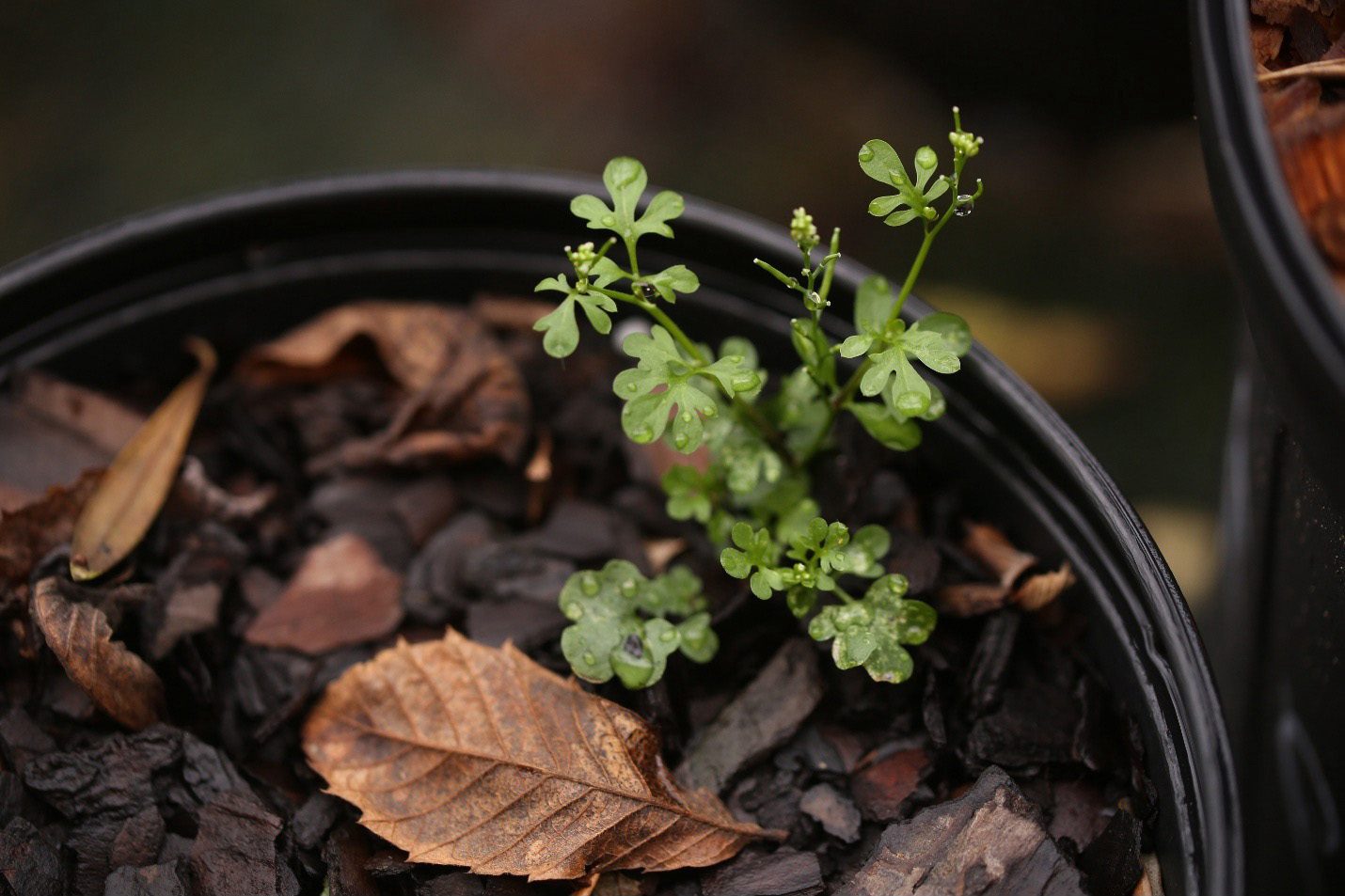
Hairy bittercress (Cardamine hirsuta) is an invasive weed found throughout much of the world. Although it is used as a medicinal plant in some regions, it still causes considerable frustration in both landscapes and nurseries. In the southern United States, hairy bittercress is considered a cool-season weed. However, it can remain a nuisance in shady, moist areas well into spring and early summer.
The spread of hairy bittercress is rapid due to a phenomenon known as explosive dehiscence, where seedpods burst open and expel seeds, with surprising force, as far as 6 feet. The pods can discharge seeds once they mature and reach a certain moisture level. The pods may also be triggered simply by touch. With twenty to thirty seeds per pod, a large plant can disperse 600 or more seeds, making hairy bittercress highly adapted for rapid invasion.
Identification
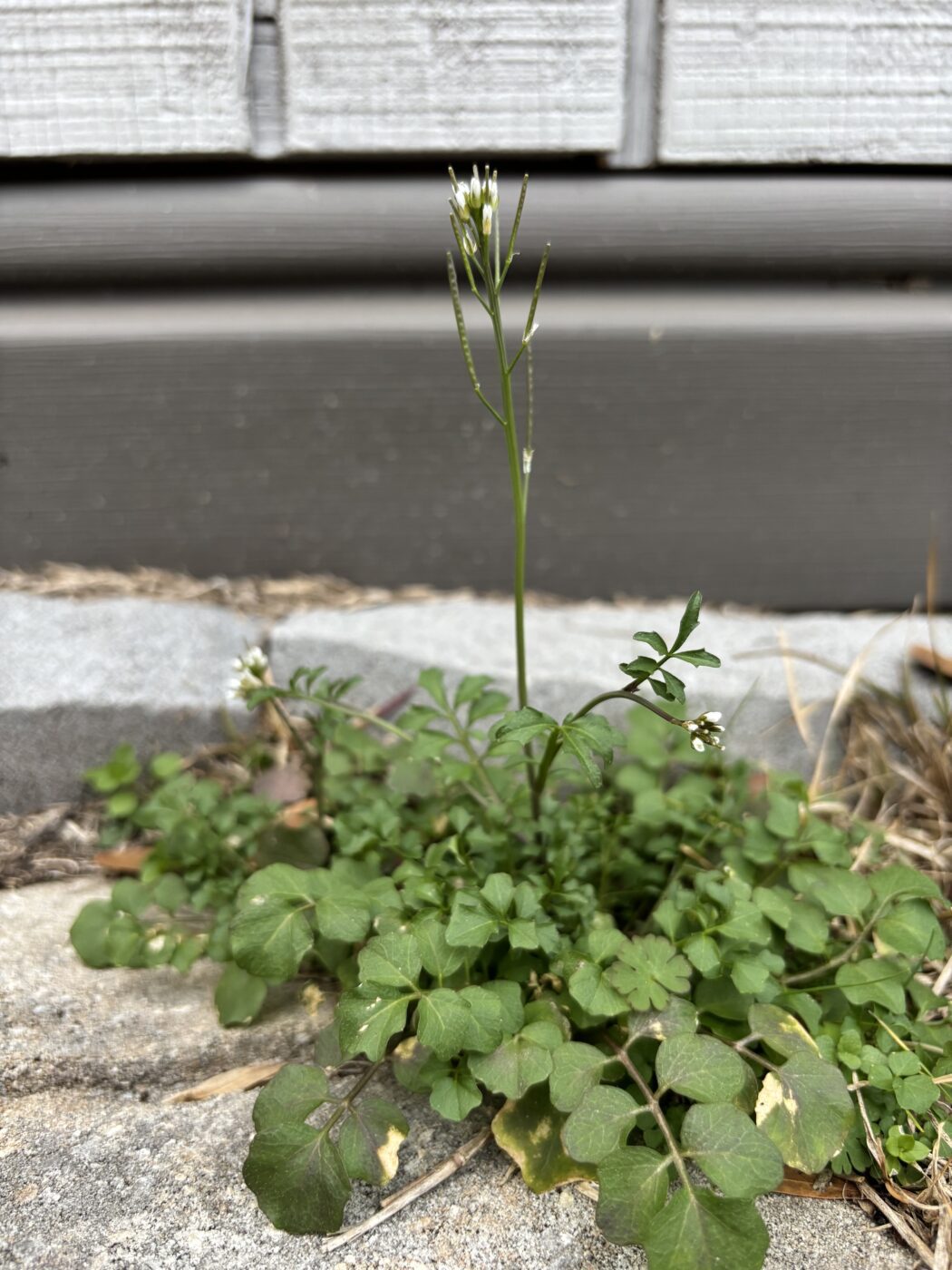
Figure 1. Hairy bittercress flower stalk growing out of basal rosette stage
In its vegetative stage, hairy bittercress is low growing and forms a basal rosette. Young plants may appear more upright, especially in shaded environments. As the plant enters its fruiting stage, it develops upright flowering stems, though the overall growth habit still centers around the rosette.
The leaves are pinnately compound and alternately arranged. Because the leaflets are distinct, they are often mistakenly identified as individual leaves. True leaves arise from the basal crown and typically contain two to eight leaflets, with the terminal leaflet usually larger than the lateral ones. Leaflets vary in the degree of lobing and may exhibit slight serrations along the margins. Despite the name, the plant is not notably hairy. However, the stems and leaves do have fine pubescence.
The flowers are small, white, and composed of four petals. Flower stalks emerge from the center of the rosette and support the development of seedpods after fertilization. Lobed leaves may appear on flower stalks in an alternate arrangement. The seedpods are narrow, cigar shaped, and resemble miniature bean pods. As noted earlier, these pods burst open upon maturity through explosive dehiscence. Each pod typically contains twenty to thirty seeds, each measuring 1.5 to 2.5 millimeters in length.
Control in Turfgrass
Hairy bittercress in turfgrass can be controlled by good management practices. By mowing, fertilizing, and watering the lawn to keep it healthy and flourishing, the weed will be choked out before it becomes a problem. Frequent mowing before flowering and seed-head development is recommended.
When few weeds are present, hand weeding is also a good option, since it has a shallow root system and can easily be pulled out of the ground.
For more heavily affected turfgrass, apply a preemergent herbicide—such as dimethenamid, dithiopyr, or isoxaben—in late summer to early fall. However, do not use a preemergent herbicide if you are planning to overseed with a cool-season grass. The herbicide would prevent the grass from germinating.
Postemergent broadleaf herbicides—such as 2,4-D; Methylchlorophenoxypropionic acid (MCPP); dicamba; sulfentrazone; and several others—can also be used for control.
Control in Nursery Crops
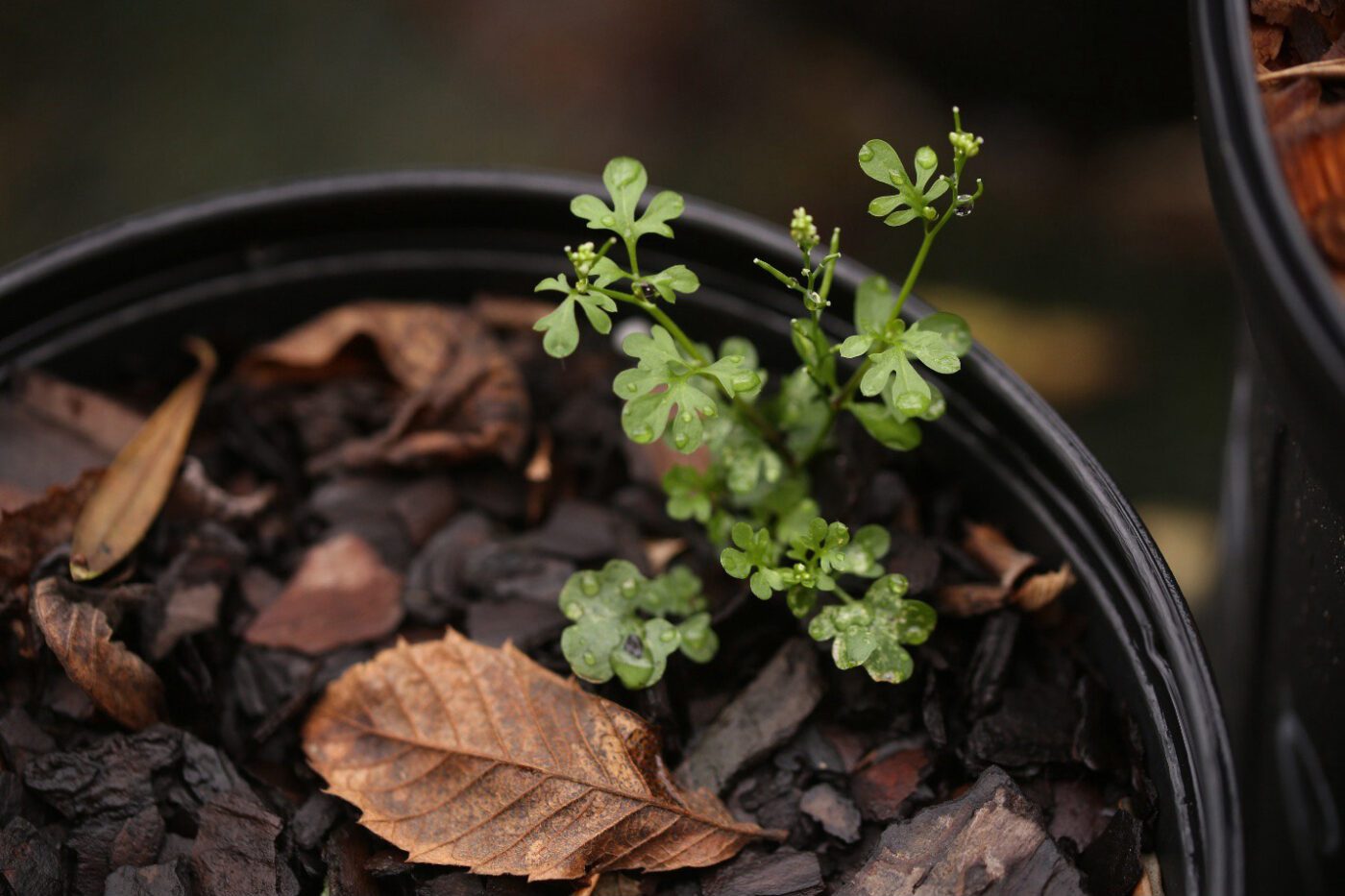
Figure 2. Upright hairy bittercress in nursery container. Photo credit: John Olive, retired director, Auburn University Ornamental Horticulture Research Center
The most effective way to manage hairy bittercress in nursery production is through prevention. This can be achieved by maintaining strict sanitation practices and applying appropriate preemergent herbicides. Preemergent products labeled for hairy bittercress control contain active ingredients such as flumioxazin, dimethenamid-p, oxyfluorfen, pendimethalin, oxadiazon, and prodiamine.
The active ingredient isoxaben has demonstrated postemergent activity when applied to small, newly emerged plants—typically before flowering.
In a trial that evaluated several rates of Gallery, an isoxaben-based herbicide, across three size classes of hairy bittercress—the postemergent control measured 92 percent on small plants, 71 percent on intermediate plants, and 48 percent on large plants. In this study, small hairy bittercress were defined as plants that were 0.2 to 1.2 inches tall and not yet flowering.
It is important to note that Gallery can be applied over the top of many ornamental species. However, the product label should always be consulted before application. For a more comprehensive review of weed management strategies in nursery production, refer to ANR 2787, Weed Control in Container Nurseries.