
Farming

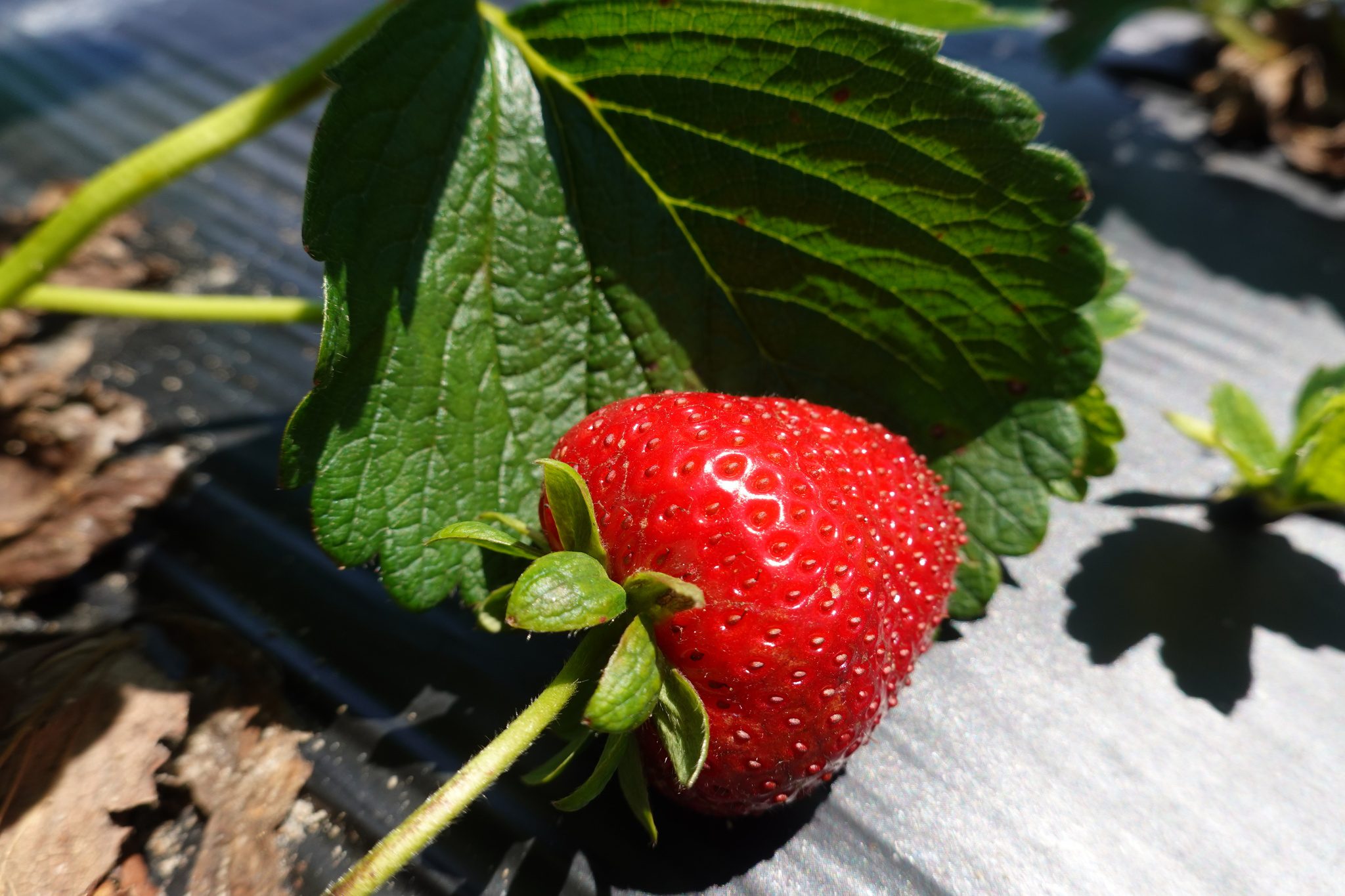
AUBURN UNIVERSITY, Ala. — A beautiful, juicy strawberry comes from more than just luck — it’s the product of thoughtful breeding and attentive management. That’s why researchers at Auburn University dig into each strawberry cultivar, looking for the traits that matter most to growers.
Since 2024, Auburn researchers have been conducting in-field trials at the outlying units of the Alabama Agricultural Experiment Station where they study old and new strawberry varieties.
Sushan Ru, assistant professor of horticulture, explained that this project analyzes traits that shape everything from taste to how plants handle real-world growing conditions.
“For our variety trials, we focus on survival rate, vigor, tolerance, food quality and yield,” Ru said. “A primary goal of this project is to answer a simple question, ‘Can we find a cultivar that complements Camarosa?’”
The Camarosa Cultivar
The strawberry industry in Alabama is built by more than 100 growers who serve U‑pick operations, markets and communities statewide. For decades, many growers have relied on Camarosa as the region’s dominant cultivar.
As a favorite of growers and consumers alike, the Camarosa cultivar is a heavy hitter when it comes to performance. Attributes like high yield, great flavor and overall consistency make it widely favored.
Still, no variety is immune to vulnerability. Camarosa now faces increasing pressure from anthracnose fruit rot, a fungal infection that can cause symptoms during flowering, rapid fruit decay and sunken lesions. Unfortunately for Alabama producers, this disease thrives in warm, humid climates.
Beyond anthracnose, Neopestalotiopsis leaf spot has become another concern. This fungus brings blight, leaf spotting and fruit lesions. In severe cases, it can even cause crown and root infections.
Trials for Alternatives
To guide recommendations, Ru and assistant Extension professor Edgar Vinson structured this trial around the needs of growers, ensuring that the results translate to data-driven decisions.
The team conducted the infield trials at the E.V. Smith Research and Extension Center in Shorter, Alabama, evaluating bare-root plants transplanted in fall 2023 and 2024. Because most Alabama growers use plug plants, the trials were designed to reflect the establishment conditions growers typically face. Plug plants are pulled from nursery beds and transplanted into the field, usually bare-root and within a short time period.
“A strawberry variety that performs well in central Florida may not respond in the same way to the environment in central Alabama,” Vinson said. “Variety trials provide growers with an idea of how varieties will respond to Alabama soils and the environment.”
To see the full viability of available cultivars, Ru, Vinson and the team worked with major breeding programs to study each variety. In 2023, five cultivars were evaluated, which included the following:
- Camarosa
- Radiance
- Royal Royce
- Ruby June
- Victor
In 2024, the team expanded its work and evaluated the following 16 cultivars:
- Brilliance
- Eclipse
- Felicity
- Finn
- Fronteras
- Golden Gate
- Keystone
- Mojo
- Monarch
- Pearl 109
- Royal Royce
- Sensation
- Surfline
- Valiant
- Victor
- Warrior
Research Results
For yield in 2024, the Victor and Camarosa cultivars were the top performers. In the 2025 season, Victor took the top spot followed by Sensation, Felicity and Warrior.
For survival rates in 2024, Camarosa and Royal Royce stood above the rest. In 2025, Felicity, Royal Royce and Fronteras emerged as the strongest contenders.
Weight
In the fruit‑weight category, the varieties separated themselves even further. In 2024, Victor, Royal Royce and Ruby June were the heaviest. In the 2025 season, Eclipse, Victor, Royal Royce, Valiant and Warrior topped the list for fruit weight.
Sweetness
In fruit production, another highly marketable category is the total soluble solids— also known as the Brix scale. This scale measures sweetness or sugar content, which is just as important to producers as it is consumers.
In the 2024 trial, Ruby June and Camarosa had the highest Brix values. In 2025, Sensation, Mojo, Warrior, and Felicity were among the sweetest cultivars.
Acidity
They also tested cultivars for titratable acidity— the measure of total fruit acid. Coming in tart, Camarosa and Ruby June topped the category in 2024. In 2025, Felicity, Brilliance, Surfline and Golden Gate contained the highest percentage of acidity.
Ru said that when she and the researchers conduct trials, they try to find the most harmonious balance between what the grower needs and what the consumer wants.
“Our lab is definitely looking for sweetness, but the balance of sweetness and acidity is critical to a strong performing berry,” Ru said. “Of course, everyone has their own preference, and we also want to find the best cultivar for growers in terms of yield and overall quality for marketability.”
Overall High-Performers
With all the collected information, the team discovered that, even with its setbacks, Camarosa is still one of the best performing cultivars available. With the highest yield, great vigor, stable shelf life, high survival and flavor, growers can still count on this credible cultivar.
According to this study, the second highest recommended cultivar is Victor thanks to high yields and survival. While researchers report excellent taste for this cultivar, it falls short of Camarosa.
“‘Victor has been a top performer and looks to be a strong alternative to the market standard Camarosa,” Vinson said. “However, the most important takeaway is to remember that variety performance is evaluated over several years. While these results are promising, each year brings different rainfall, disease pressure and heat stress, so we want to see if Victor maintains this consistency.”
Another strong performer, Sensation provides pristine fruit quality with a great flavor and high Brix score. However, compared to Camarosa and Victor, the yield and survival rates are not quite as high. The research also suggested Sensation has potential risks for frost damage, meaning it might not be suitable for growers in north Alabama.
Following the top performers, Felicity and Warrior have important qualities, like high yield and survival rates, that make them viable options for growers, too.
The study revealed that a broad set of cultivars are capable of supporting the Alabama strawberry producers, but Camarosa still claims the top spot.
With recommendations supported by research from the Alabama Agricultural Experiment Station and Alabama Extension outreach, growers can use these results to make informed decisions year after year.