
Farming

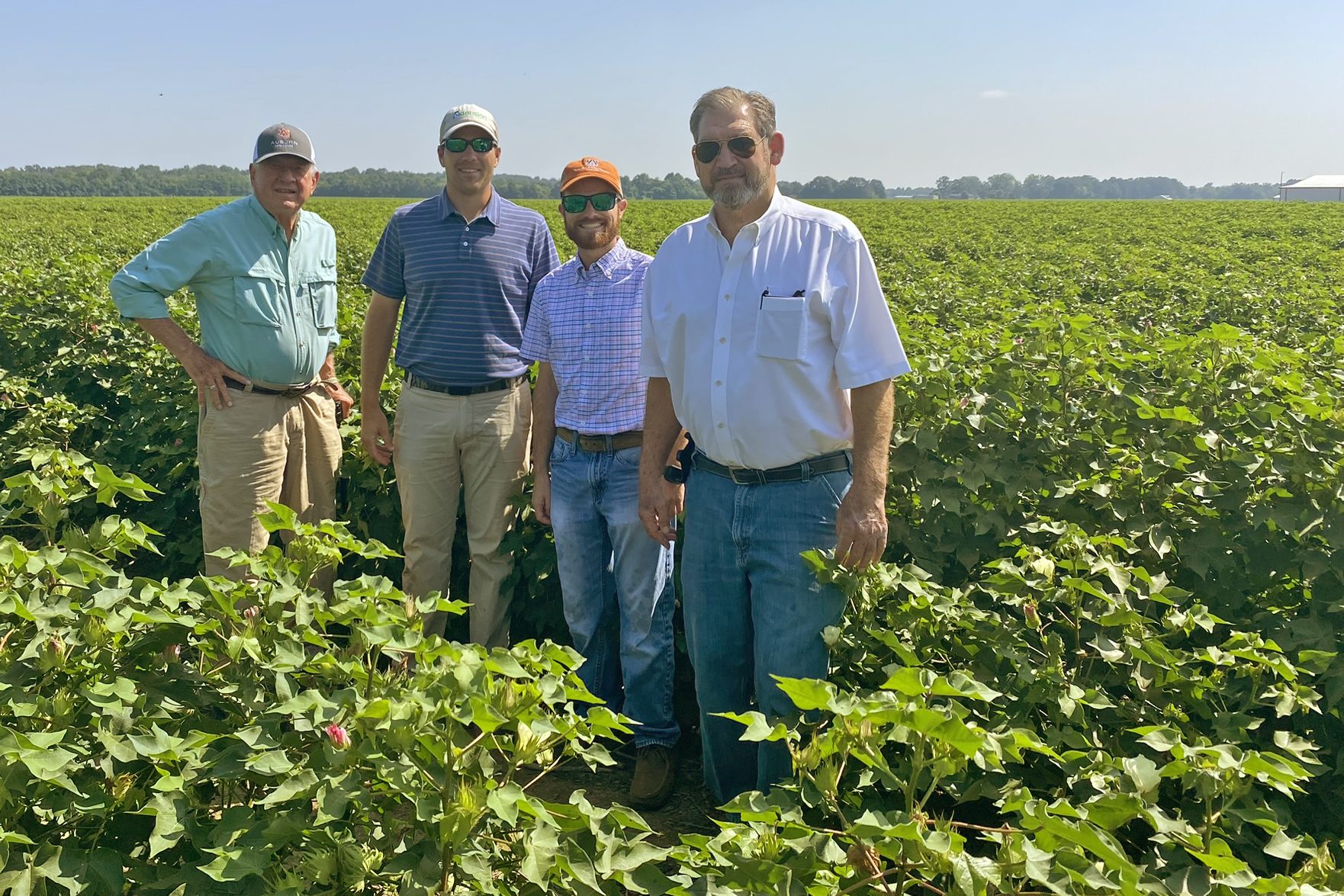
AUBURN UNIVERSITY, Ala. — Honoring decades of leadership, the Friends of IPM (Integrated Pest Management) selected Ron Smith as a 2026 Hall of Fame inductee. Coordinated by the Southern IPM Center, the awards recognize individuals who have demonstrated a commitment to advancing pest management and supporting growers.
For 54 growing seasons, Smith worked as a cotton entomologist for Alabama Cooperative Extension System at Auburn University. Smith conducted applied research and implemented outreach programs to help row crop producers in Alabama, and beyond.
Living a Legacy
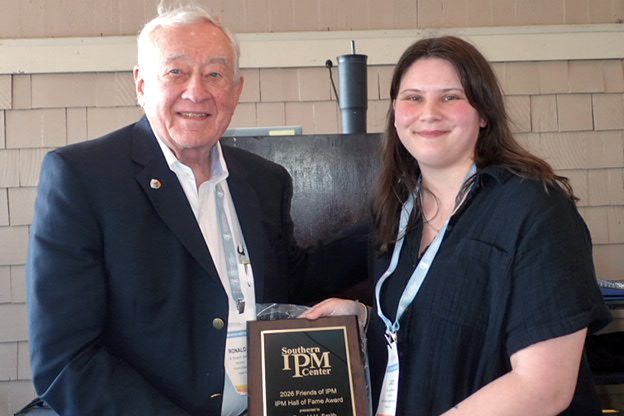
Alabama Extension retiree Ron Smith accepting his IPM Hall of Fame Award from Lacy Belanger with the Southern IPM Center. Photo courtesy Nancy Hinkle.
According to Eddie McGriff, an agronomic crops agent with Alabama Extension, Smith’s work shaped how growers tackle insect management today.
“His career spanned the evolution of cotton insect management from the boll weevil to stink bugs and control tools from DDT to three-gene cotton varieties,” McGriff said. “He influenced the early adoption of new technologies and developed scouting techniques and economic treatment thresholds for new pests as they emerged.”
Smith’s work is etched into the landscape of southern agriculture. He did not limit his pest expertise to cotton. He also worked with other crops including corn, sorghum and soybeans. His research consistently bridged the gap between the lab and the field, guiding growers season after season.
Scott Graham, a cotton, soybean and peanut entomologist with Alabama Extension, said Smith’s legacy continues through the crop consultants, growers, and specialists he shaped. Their work builds on his foundation.
“When I started at Auburn, Ron was eager to mentor me and pass the torch, so to speak,” Graham said. “Ron has shaped not only pest management tactics, but he has influenced the way people view Extension in our state for the better. That is a legacy I hope to continue.”
Beyond the Field
While Smith spent a lot of his career in fields, he also made significant contributions in ag media and publications. He presented more than 200 papers at leading professional groups. Reaching national audiences, his publications and writing brought timely information to growers and researchers alike.
Smith reflected on his numerous decades of service in Extension with deep fondness. Even now, he continues to work with Graham through the Alabama Agricultural Experiment Station on invasive pest issues.
“I’m honored that people valued my contributions enough to give me this award,” Smith said. “Standing alongside colleagues I respect reinforces that the long days in the field and the miles on the road were worthwhile because the work made a real difference.”
Graham and McGriff credit Smith’s impact on entomology and agriculture to the ways he adapted over his career.
“Dr. Smith has consistently remained at the vanguard of agricultural science,” McGriff said. “He played a pivotal role as the lead entomologist in Alabama during the dramatic fight against the boll weevil, even being the principle contact as we worked tirelessly to eradicate it.”
Throughout his tenure, Smith put the interests and needs of Alabama cotton farmers at the forefront. The Hall of Fame award is a testament to the contributions he has made to the Southern IPM Center and Alabama Extension.