
Farming

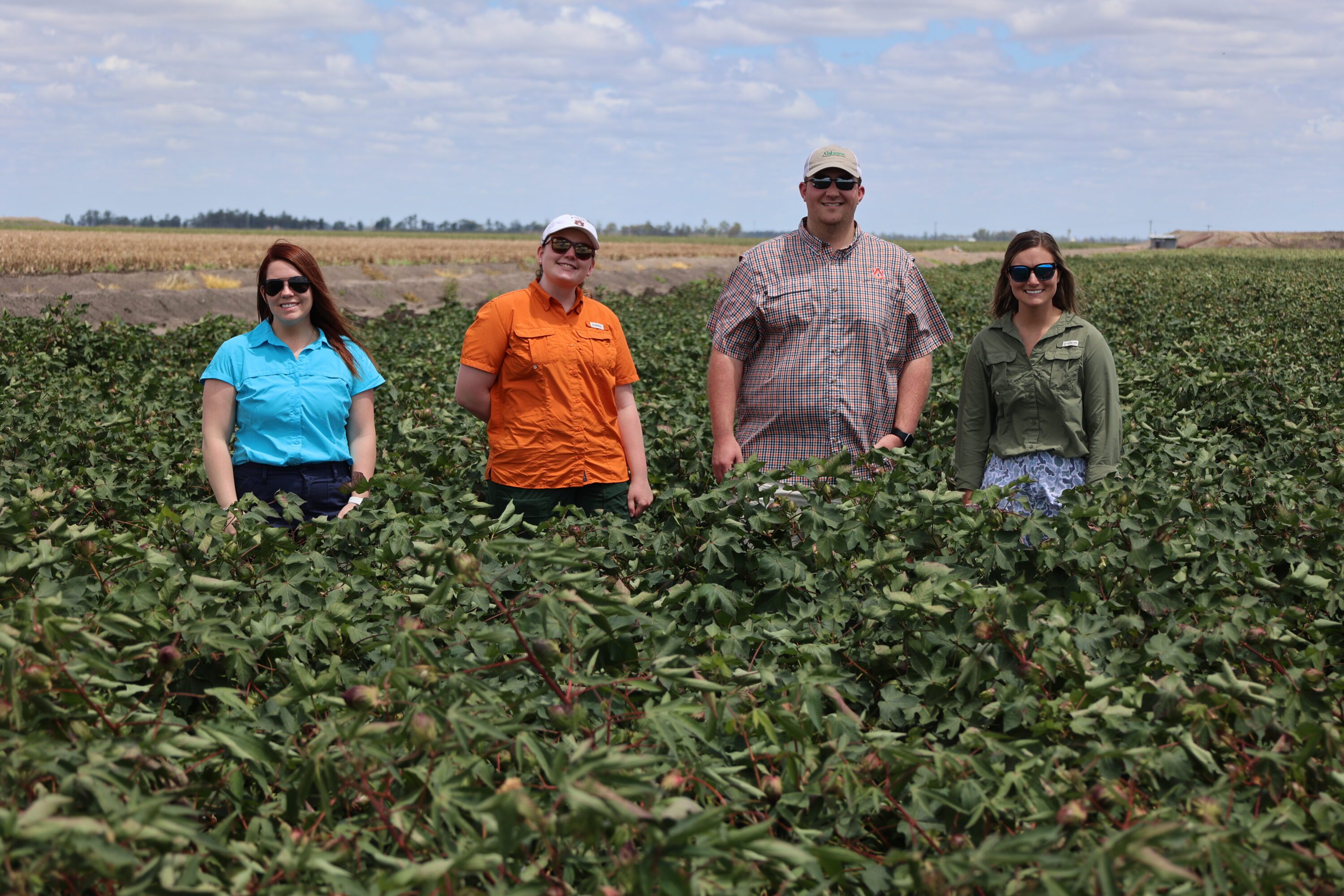
AUBURN UNIVERSITY, Ala.—From cotton and peanuts to sugarcane and macadamias, four Auburn University graduate students recently studied how producers in Queensland, Australia, tackle many of the same challenges faced by growers in the southeastern United States—through an international tour with the Alabama Extension agronomic crops team.
The spring trip, led by Extension Entomologist Scott Graham and Agent Eddie McGriff, gave students an on-the-ground look at production practices and research efforts while connecting them with growers, researchers and industry professionals.
“This experience has certainly given them a better perspective on the industry,” Graham said. “It’s important to see what’s outside Alabama and the U.S. and to see up close just how big this system is. Their horizons have expanded, and they’ve been able to make some global contacts along the way.”
Students Share Lessons Learned
Caitlyn Daniels, a third-year Ph.D. student from Leesburg, Georgia, said the tour reinforced how connected the industry is across continents.
“We met growers who talked about how we all work together,” Daniels said. “Even though we compete across the world on these crops, we still come together. It’s a big deal to work as a team to figure out how to do things efficiently and sustainably.”
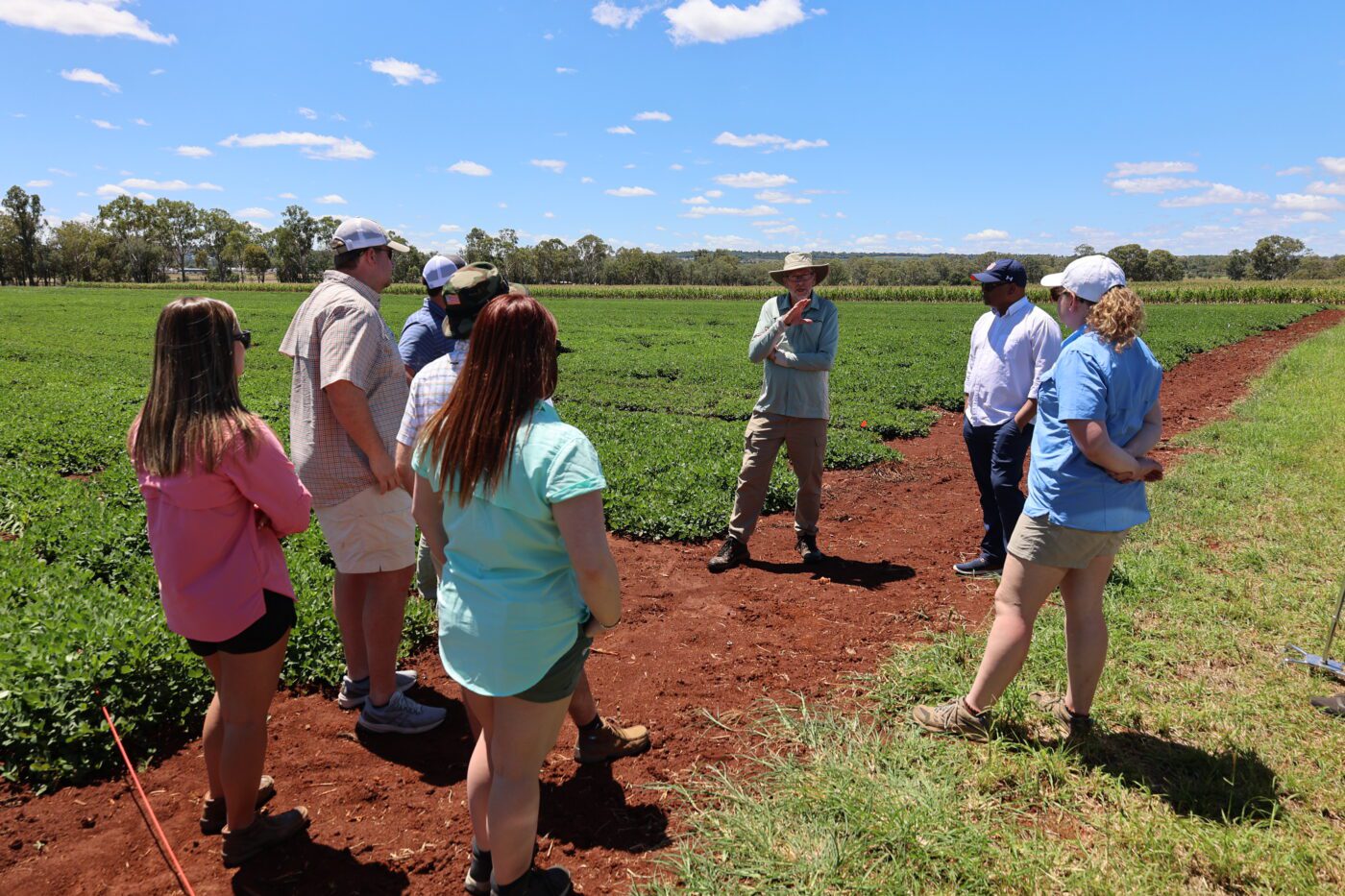
Auburn graduate students discuss growing Australian peanuts with breeder Graeme Wright at the J. Bjelke-Petersen Research Facility in Kingaroy, Queensland.
Students toured more than a dozen farms and research stations producing not only cotton and peanuts but avocados, macadamias and mangoes—orchard crops not commonly grown in the Alabama.
While practices and scale differed from farms back home, students said producers in Australia and Alabama share the same priorities: protecting yield, managing risk and making sound decisions for the bottom line. For Ph.D. student Sawyer Hopkins of Selma, Alabama, comparing management practices was one of the most valuable parts of the tour.
“They grow a lot of the same things we do,” Hopkins said. “But seeing how they approach some things a little differently, you can pick up a lot and hopefully find ways to improve. You’re still wanting to focus on what gives you the most dollar in your pocket at the end of the day.”
Master’s student Megan Woodall of Skyline, Alabama, said experiential learning opportunities like this—outside the classroom—add practical value to her education.
“A textbook is never going to fully prepare you for real-world encounters,” Woodall said. “As a student who will soon be entering the workforce, this hands-on experience will. I can say, ‘I’ve done this before, and I know what to expect.’”
Master’s student Emma Wingfield, who is originally from Huntsville, Alabama, said the tour highlighted the innovation and adaptability required in agriculture.
“I really like how resourceful all of the Australian people are—and all the farmers,” Wingfield said. “They see a problem and figure out a way to get around it, fix it or be innovative.”
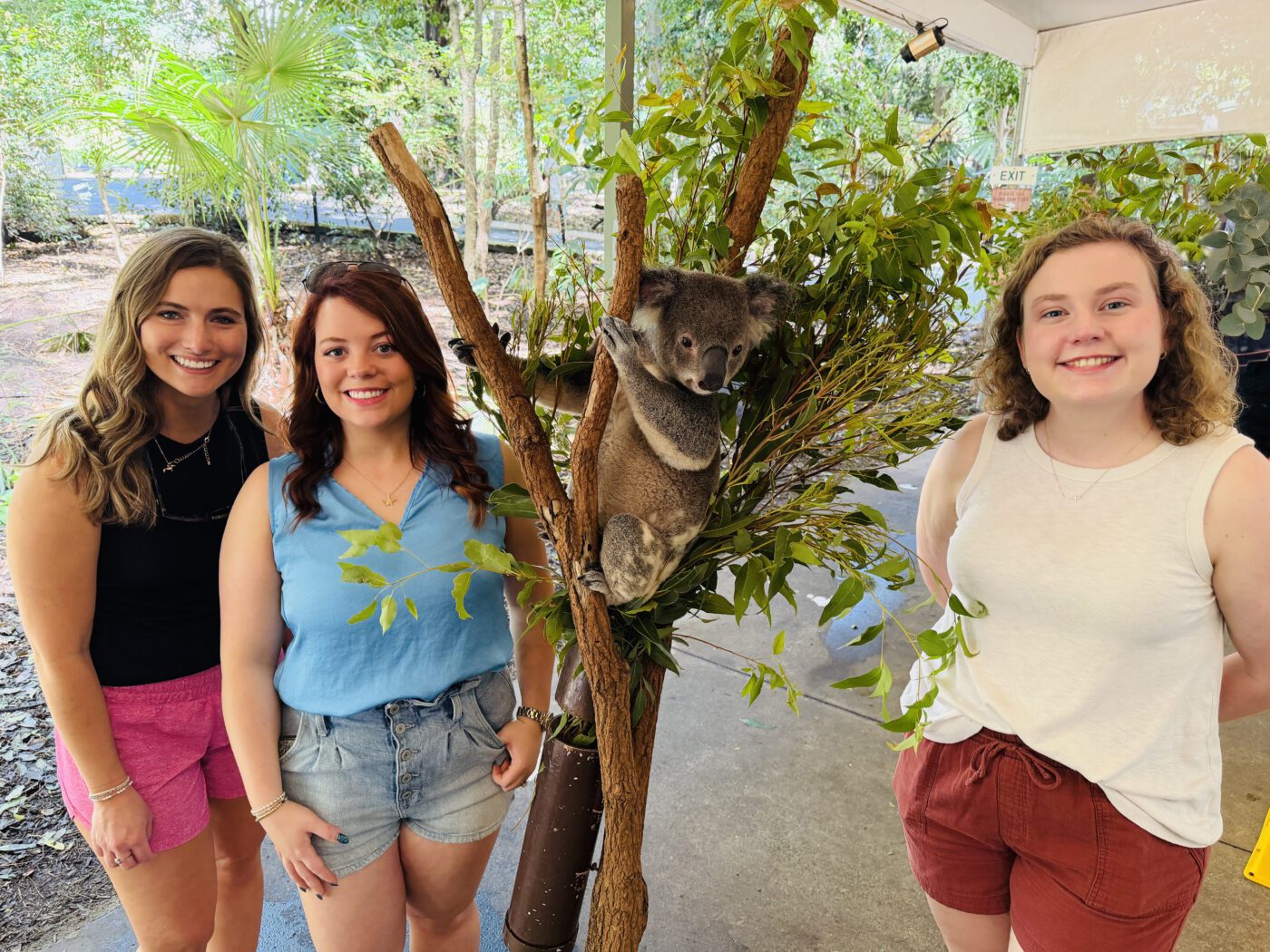
Up-close encounters with Australian culture and wildlife enriched the experience.
Parting Thoughts from Down Under
Although Auburn and Queensland are separated by about 9,000 miles, students said the tour underscored how producers in both regions rely on research and collaboration to address shared challenges.
“Ultimately, at the end of the day, everyone’s focusing on the same end goal,” Woodall said. “How are we going to produce enough food to be able to feed the world?”