
Farming

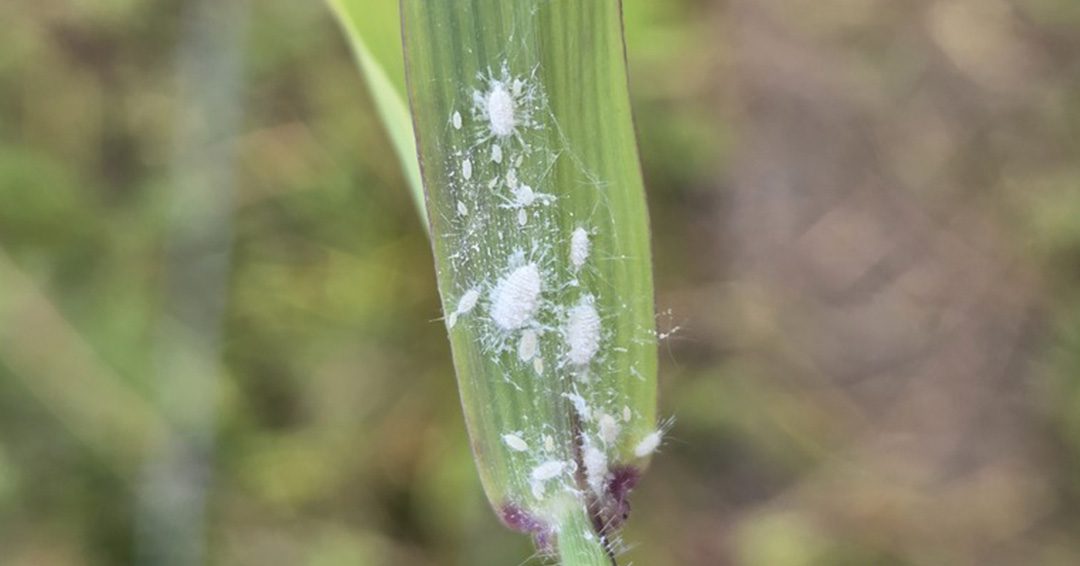
Pasture mealybug (PMB) (Heliococcus summervillei) is a small, invasive, sap-sucking insect that causes serious damage to pastures and hayfields.
Severe infestations can cause areas of pastures to thin or die, reducing the amount of forage available for grazing or hay production. Since it was first detected in Texas in 2025, PMB has been found in other Gulf Coast states throughout the South.
What Does an Infested Pasture Look Like?
Damage from PMB usually begins with yellowing of grass leaves that may progress to purple or red discoloration. These symptoms can easily be confused with drought stress, cold damage, fertility problems, or other pasture pests.
As damage progresses, producers may notice stunted growth, thinning stands, and brown or dead patches. Severe dieback can eventually reduce the amount of forage available for grazing or hay production. Because these symptoms can result from several pasture problems, symptoms alone do not confirm a PMB infestation.
Where Should I Look for Pasture Mealybug?
Start scouting along the edges of declining patches rather than in the center of areas where the grass has already died.
Pay particular attention to the following:
- Undersides of lower leaves.
- Stems, bases, and crowns of plants.
- Thatch.
- Soil surface.
- Areas beneath old, dried manure pats.
Pasture mealybugs are very small, particularly during their immature stages, so a magnifying glass may be helpful. Look for small, white, waxy or “fuzzy” insects on or around affected plants.
I Found Something Suspicious, Now What?
If you find suspicious insects after noticing symptoms and scouting the pasture, take photographs and collect a sample for identification. Contact the Alabama Department of Agriculture and Industries (ADAI), Plant Protection Division, or your local Alabama Cooperative Extension System (ACES) office for assistance.
When collecting a sample, avoid removing individual mealybugs by hand. They are soft-bodied and covered by a waxy layer that can be damaged during handling, making identification more difficult. Instead, use clean shears or scissors to cut a 3- to 4-inch section of grass containing the insects. Avoid excessive shaking or handling so the insects do not fall from the plant.
Place the infested clipping in an appropriate container and follow current ADAI or ACES instructions for preserving and submitting the sample. Label the sample with your name, collection date, county, forage species, and location where it was collected. Your local Extension agent can help determine how to submit the sample for identification.
Don’t Spread It to Another Pasture
Biosecurity is important for reducing the spread of PMB between fields. Pasture mealybugs may be moved on equipment, boots and clothing, hay or other plant material, livestock, and wildlife.
When leaving a suspected or known infested pasture be sure to do the following:
- Clean equipment before entering another pasture.
- Clean boots, pant legs, and small equipment before moving between fields.
- Avoid moving potentially infested hay or plant material into unaffected areas.
- When possible, work in uninfested fields before entering infested fields.
What Can I Do About It?
Recommendations are still changing as researchers learn more about PMB. Always follow current state-specific pesticide recommendations and product labels.
Chemical control should not be the only management strategy. A tall, dense forage canopy can reduce pesticide coverage and make PMB more difficult to control. When appropriate, grazing, cutting, or mowing may help reduce excess biomass and thatch before treatment. Pastures should then be monitored closely as the forage regrows.
Proper grazing and fertility management may also help the pasture withstand damage caused by PMB. Reducing excess thatch and other sources of plant stress may also help. Good sanitation and biosecurity are important, along with protecting beneficial insects, such as ladybugs and parasitic wasps.
Conclusion
Pasture mealybug can cause substantial forage losses, making early detection and proper identification important. Regularly scout pastures for unexplained decline, avoid moving potentially infested material between fields, and contact your local Extension office if PMB is suspected. As more is learned about this emerging pest, continue to follow current state recommendations for management.
Featured image by Isaac L. Esquivel, University of Florida, budwood.org.