
Farming

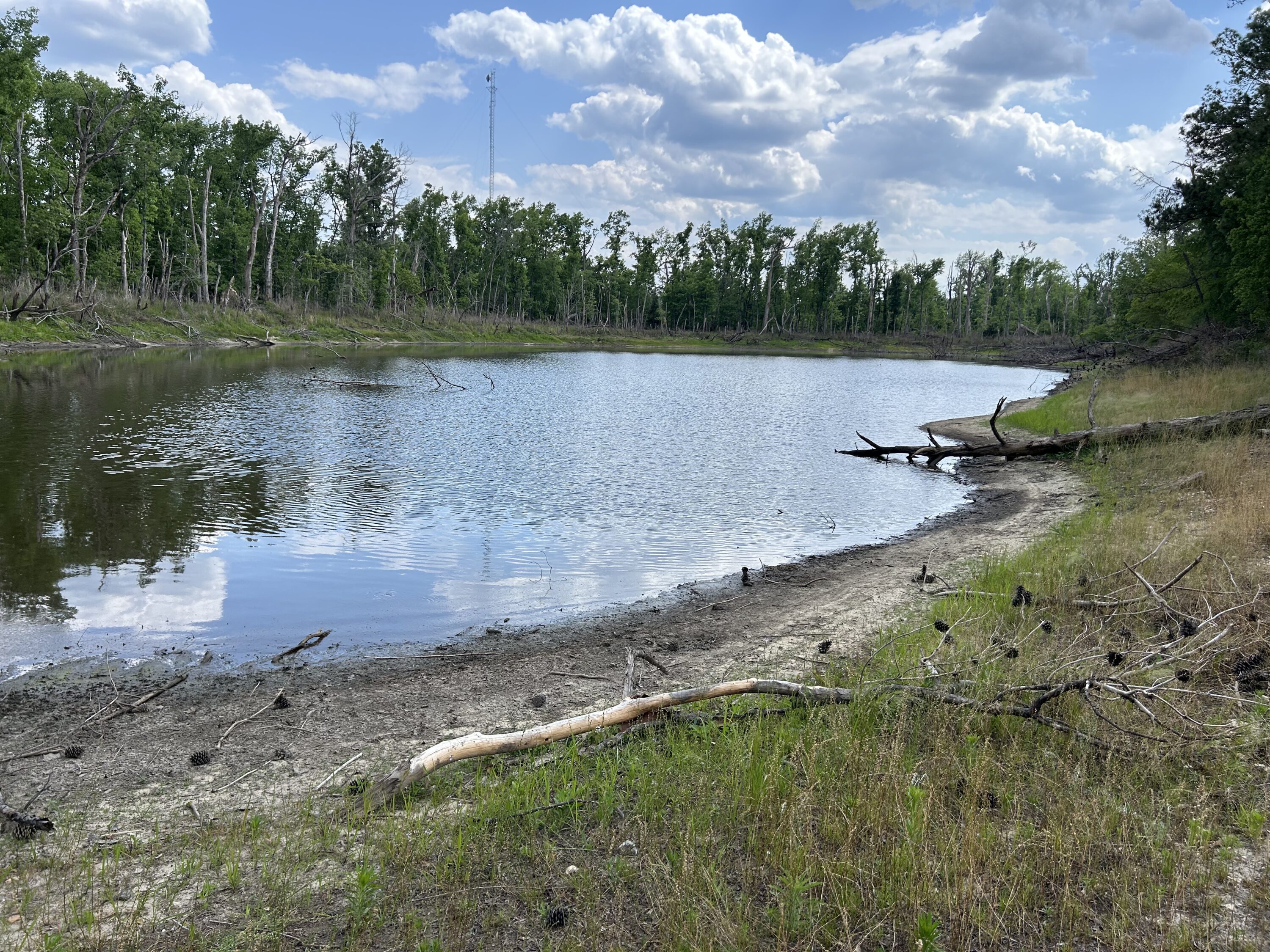
AUBURN UNIVERSITY, Ala. — Consistent dry weather is causing concerns for Alabama agriculture. Planting has slowed, pastures are stressed and ponds are drying up.
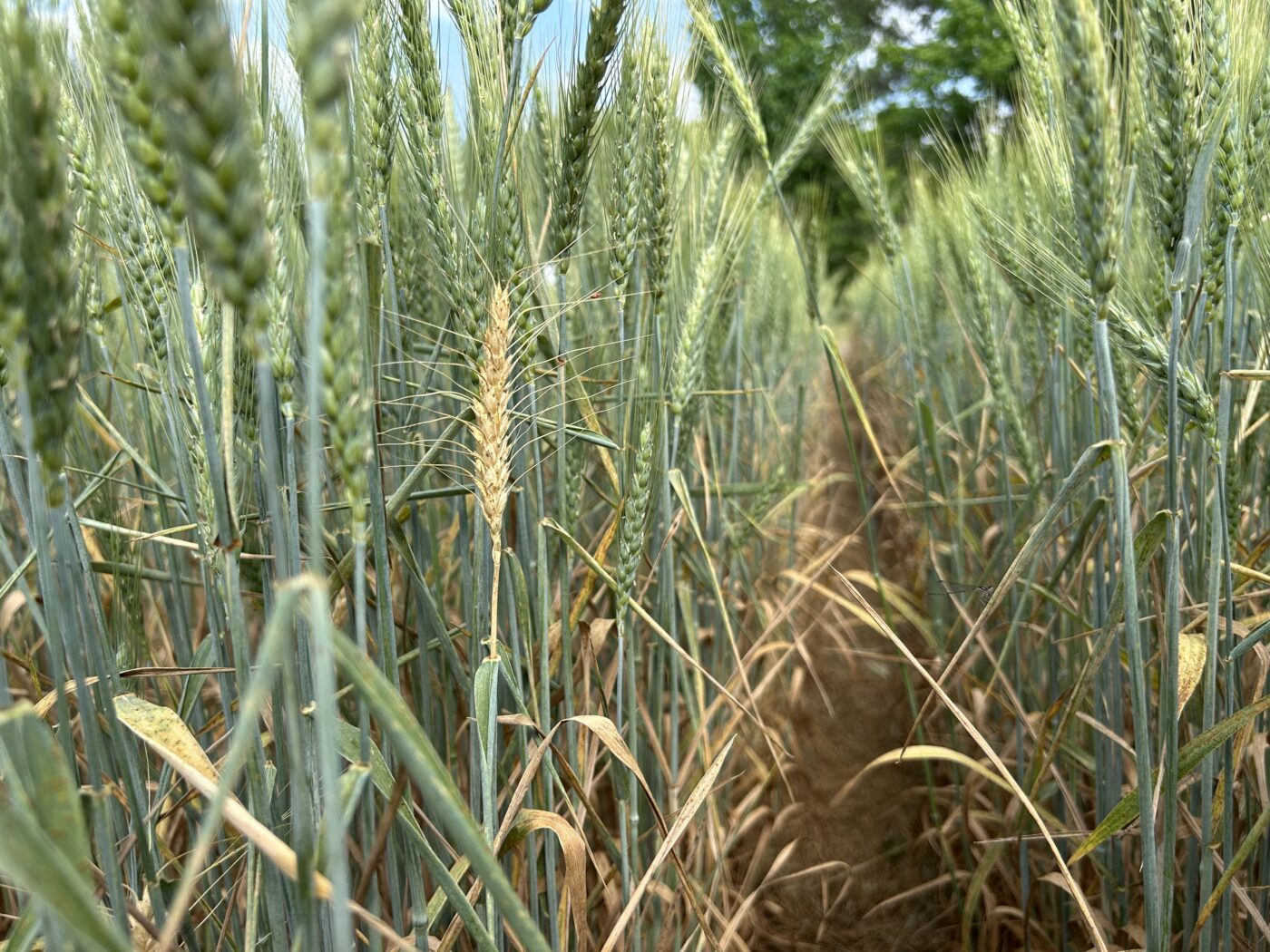
Drought has stressed wheat. The dry leaves indicate a lack of chlorophyll, which means the plant cannot photosynthesize. The dried head of the wheat plant is another indication the plant has stopped growing.
The U.S. Drought Monitor released April 23 reported 100 percent of the state is now experiencing drought conditions of varying severity. Extreme drought has been reported in 46 percent of the state. That’s a 20-percent increase in that drought category since the previous week. The driest portions of the state stretch across south and into west central Alabama.
Aaron Wells, an agronomic crops agent with Alabama Extension at Auburn University, said there’s only been one day in April with significant rain reported in southeast Alabama.
“As a whole, this past winter and early spring, we did not receive nearly the amount of rain we typically get,” Wells said. “Winter is usually when the subsurface soil moisture has a chance to recharge. Right now, we don’t really have any of that. Plus, our ponds and creeks are extremely low.”
Even with rain in the short-term forecast for most of Alabama, Alabama Extension experts warn those April showers may not be enough to make an impact on the drought. To help lessen the drought’s negative impacts, they offer advice and resources.
Current Farm Conditions
Cattle and Catfish
For cattle farmers, the drought is impacting pastures and delaying planting of warm-season grazing. Ali Gotcher, an animal science and forages agent with Alabama Extension, said northwest Alabama terrain is drier than normal.
“This time of year, pastures are usually green and full of life thanks to the fescue, which is a cool-season grass that’s prominent in this area,” Gotcher said. “With the drought, the fescue isn’t doing well. Also, this is the time of year farmers start planting warm-season grazing, but that grass seed won’t germinate without a good rain.”
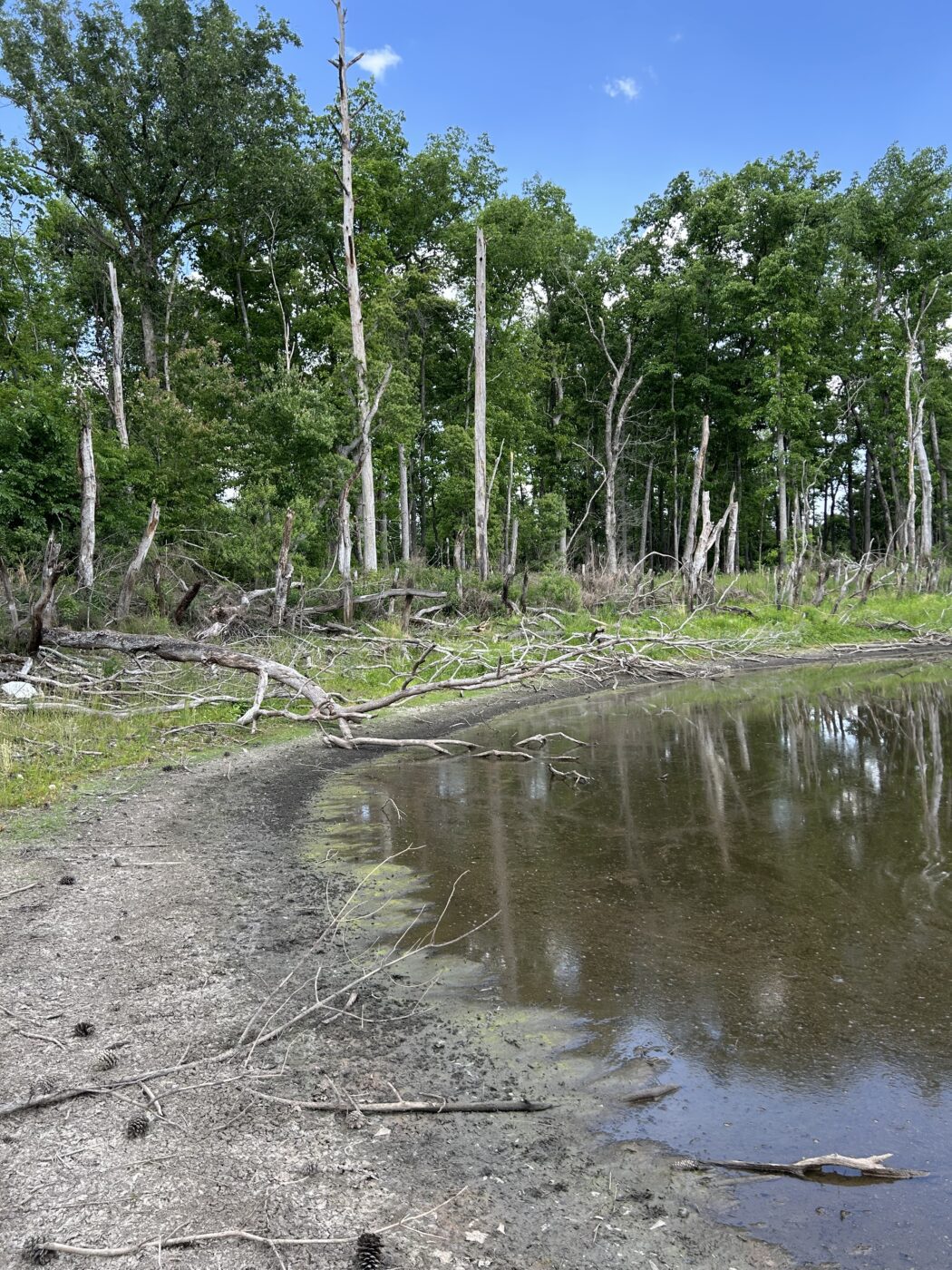
Lower pond water levels are another concern. As ponds dry up, cattle have less access to water, an important and necessary nutrient. For catfish farmers in west Alabama, less water means more crowding. Anita Kelly, who serves as aquatic resources state coordinator with Alabama Extension, said she’s seen ponds levels that have decreased two feet or more.
“If you have a 10 acre pond that is five feet deep, you have 50-acre feet of water,” Kelly said. “When drought causes that pond to lose two feet of water, you’re down to 30-acre feet of water, but you still have the same amount of catfish stocked in that pond. This makes it difficult to maintain oxygen levels and water quality.”
Row Crops
While row crop planting is not yet behind the five-year average, farmers need rain for seeds to germinate and establish a strong stand.
“I think all the corn that’s going to be planted in southeast Alabama has been planted, and it looks fair as far as plant emergence is concerned,” Wells said. “For peanuts and cotton, it’s still early in the planting season, and we’ll have farmers planting through the end of May. If we could get a few inches of rain, I think that would have our farmers feeling better about things. Historically, May is the second driest month of the year for us, so that’s concerning. We don’t have much wiggle room.”
-
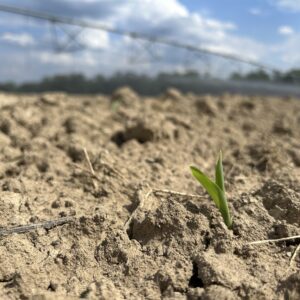
- Around 50 percent of the Alabama corn crop has been planted. While the corn is emerging from the ground, additional rain is needed to ensure a strong stand.
-
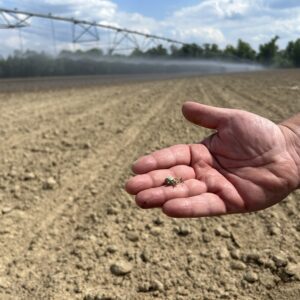
- After planting, the corn tried to emerge from the seed, but lack of mositure caused failure.
-
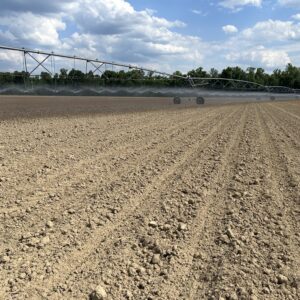
- An irrigated corn field shows the color variation between the dry land in the foreground and the moist land the irrigation has already reached in the background.
Drought also makes it difficult to manage row crop fields. Christy Hicks, an Extension agronomic crops agent in southwest Alabama, said some crop protection products are ineffective without rain.
“To be activated to control weeds, pre-emergent herbicides normally require three-quarters of an inch of rain within seven to 10 days of being sprayed,” Hicks said. “Most of these applications have not received the rain needed to be activated. Also, we need rain to move nitrogen from fertilizer applications into the soil profile.”
Additionally, winter crops of wheat, oats and rye will soon be harvested. These crops naturally dry out as they mature, which makes them susceptible to wildfire. On April 13, the Alabama Forestry Commission issued a statewide Fire Alert to warn citizens of the dangers of burning during the drought. With more than 380 wildfires burning almost 16,000 acres since mid-March, the commission has also restricted outdoor burn permits.
Drought Disaster Declaration
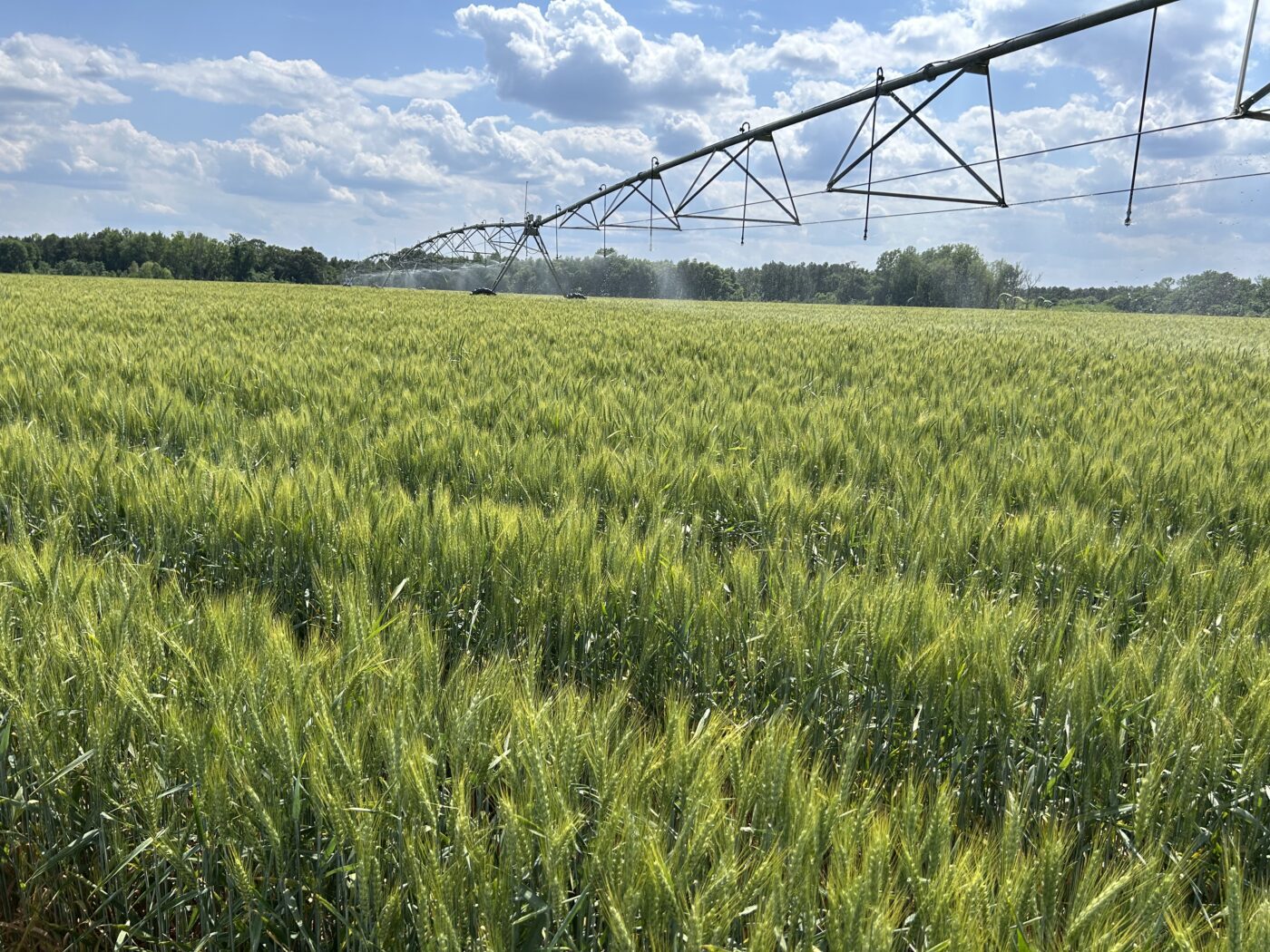
With wheat harvest on the horizon, irrigation has been needed to ensure the wheat heads fill out with grain. With sufficient rainfall, this would have happened naturally.
Earlier this month, the U.S. Department of Agriculture designated 30 Alabama counties as primary natural disaster areas due to drought. This declaration means farmers in those areas, as well as 12 contiguous counties, are eligible for emergency loan assistance through the Farm Service Agency. However, farmers must meet certain eligibility requirements to receive the emergency loans.
“Alabama is the second largest catfish producing state in the U.S., but, unfortunately, our catfish farmers do not qualify for drought assistance for that part of their operations,” Kelly said. “Now, a lot of catfish farmers also have cattle, so they may qualify through that portion of their farm.”
The primary disaster counties are Barbour, Bullock, Butler, Chambers, Choctaw, Clarke, Coffee, Conecuh, Covington, Crenshaw, Dale, Elmore, Escambia, Geneva, Greene, Hale, Henry, Houston, Lee, Lowndes, Macon, Marengo, Monroe, Montgomery, Pike, Russell, Sumter, Tallapoosa, Washington and Wilcox. The contiguous counties included in the declaration are Autauga, Baldwin, Bibb, Chilton, Clay, Coosa, Dallas, Mobile, Perry, Pickens, Randolph and Tuscaloosa.
Agricultural Recommendations
During drought, following best practices can help mitigate negative impacts. Gotcher stressed the importance of managing forages well.
“Do not overgraze your pastures,” Gotcher said. “Your pastures need time to develop a good root system so they can withstand a drought. Once a field has been grazed down to four to six inches, move your cattle to another pasture. Give pastures 21 to 28 days of rest. To do that, you might need to feed hay at some point, so make sure you have a good amount of forage in storage to make it through the season.”
Available on Alabama Extension’s YouTube channel, the video “Preparing for Drought” has additional recommendations for protecting forages during drought.
 On catfish farms, management strategies involve more oxygen and less feed.
“Mechanical aerators raise oxygen levels in ponds, so farmers need to run those more frequently for their fish,” Kelly said. “Also, feeding less often will help maintain water quality. It does mean farmers have to keep their fish longer to get them to market size, but it will also keep their fish healthy.”
It is still early in the planting season for soybeans, cotton and peanuts. With this in mind, Extension staff said flexibility with planting plans may be a best practice this year.
“Cotton seed has to be planted somewhat shallow, because it can’t really emerge from deeper in the soil,” Wells said. “Peanuts can be planted deeper in the soil and still emerge. So, if you do have some subsurface moisture, you might have greater success with peanuts this year.”
No matter the commodity, Alabama Extension experts agree that numerous, sustained rainfall events are needed to improve conditions.
“It’s so dry,” Kelly said. “Even once we get a good rain, I don’t think it’ll bring us out of the drought. We need to have a torrential rain — something like five to six inches of rain — to bring our ponds back up to where they need to be.”
Additional Resources
Alabama Extension is one of numerous partners behind the Alabama Drought Reach program, which was created to improve drought communications and impact reporting. On the Alabama Drought Reach website, any Alabamian can submit a drought report. Additionally, the website includes publications about drought preparation, row crops, livestock & forages, irrigation, forestry, home & garden and Southeast drought updates.
For homeowners, the publication “Drought and Landscape Trees: Effects, Signs and Watering Guidelines” offers suggestions to protect their trees. Forest landowners will find helpful recommendations in the publication “Drought and Forests: Information for Landowners.”