
Animals


Lactation is a complex and demanding physiological process in small ruminants. It encompasses the synthesis, secretion, and excretion of milk from the mammary gland. Goats (Capra hircus) and sheep (Ovis aries) have been domesticated for thousands of years, with milk production serving as a major component of agricultural systems worldwide. The global importance and growth of goat milk production have increased substantially, surpassing those of sheep and cattle. Goat milk accounts for approximately 2.3 percent of global milk output, compared to 1.3 percent attributed to sheep milk. This growth reflects increasing consumer demand for goat milk products, driven by their perceived health benefits, hypoallergenic properties, and unique nutritional composition. Learning how to manage dairy sheep and goat production systems is critical as consumer demand grows worldwide.
Mammary Gland Development and Lactogenesis
Mammary gland growth is called mammogenesis. It begins before birth and continues during puberty, pregnancy, and milk production. From birth to puberty, the mammary gland grows at the same rate as the rest of the body. At puberty, it begins to grow much faster. Estrogen helps the milk ducts grow and branch. Progesterone helps form the alveoli, the small structures that produce milk. The alveoli finish growing near the end of pregnancy. By the time of birth, the lobules and alveoli make up almost 90 percent of the gland’s cells.
Placental lactogen, prolactin, and hormones from the adrenal glands prepare the mammary cells to make milk. Milk production is called lactogenesis. It happens in two stages. During pregnancy, the gland makes small amounts of milk materials, such as casein and lactose. Casein is a milk protein, while lactose is milk sugar. Around the time of birth, the gland begins to produce large amounts of milk. Prolactin, growth hormone, placental lactogen, glucocorticoids, and insulin control this process through the hypothalamus and pituitary gland.
Colostrum production is called colostrogenesis. It happens before normal milk production begins. Colostrum is the first fluid made by the mammary gland. It is very important because it gives the newborn passive immunity, which helps protect it from disease. Goat colostrum contains about 2.8 times more IgG than the mother’s blood serum. IgG makes up 90.3 percent of the antibodies in goat colostrum. IgM makes up 6 percent, and IgA makes up 3.7 percent. Estradiol and progesterone start colostrum production. Lactogenic hormones, which promote milk production, bring colostrum production to an end. The movement of IgG from the mother’s blood into the mammary gland begins several weeks before birth and stops shortly before the young animal is born.
The Lactation Curve
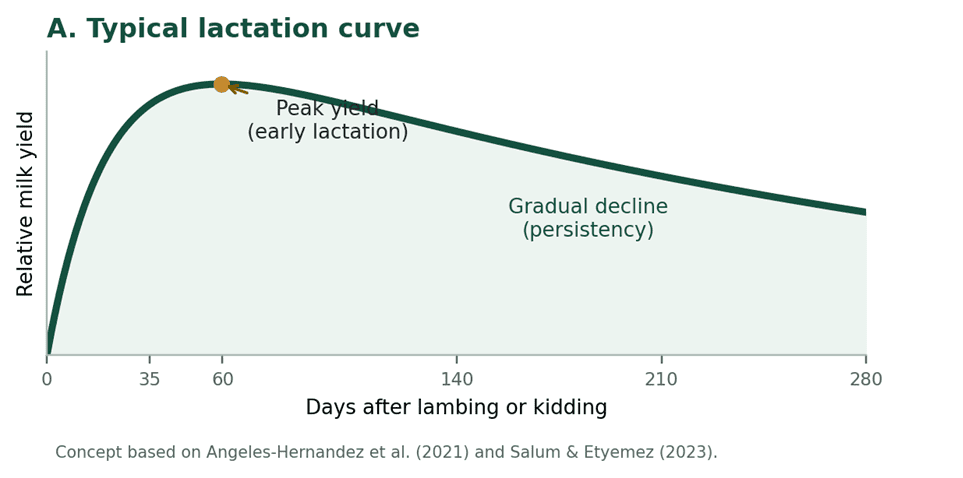
Milk production changes during lactation. It rises after birth, reaches its highest level around days 35-60 in goats, and then slowly decreases until milking stops. A full goat lactation usually lasts about 210-280 days. Persistency describes how slowly milk production falls after the peak. Animals with good persistency produce useful amounts of milk for longer.
Milk yield and quality are affected by breed, age, number of births, litter size, season, diet, health, and milking routine. Goats may produce more milk each day than sheep, but goat milk may contain lower percentages of fat and protein. Farmers should record milk yield, days in milk, and important events for every animal.
Nutritional Requirements for Lactation
Energy Requirements
Lactating sheep and goats need a lot of energy to produce milk. In high-producing goats, the daily energy balance may range from −4.69 to +3.72 MJ, depending on diet and stage of production. Goats can use stored body fat for milk production, but they later need an energy-rich diet to replace it. During the final weeks of pregnancy and first weeks of lactation, energy intake may not meet the animal’s needs. This causes a negative energy balance and increased use of body fat. Poor adjustment to this condition can cause metabolic diseases, reduce milk production, and harm animal health and welfare.
Protein Requirements
Lactating ewes need diets containing about 11-18 percent crude protein (CP) on a dry-matter basis. During early lactation, they need about 17-18 percent CP to support high milk production. Protein requirements in goats depend on breed, production level, and lactation stage. Dairy goats usually need more protein than meat goats. Protein quality is also important. Essential amino acids and escape protein, which passes through the rumen without being broken down, can increase milk yield in ewes. Methionine may be limited in the diet. Feeding rumen-protected methionine can improve milk production and lamb growth.
Fiber and Carbohydrate Requirements
Dietary fiber helps maintain rumen health and supports milk production. The best level of neutral detergent fiber (NDF) ranges from 32.4 percent for high-producing animals to 45.0 percent for animals producing less milk. The forage eaten by lactating ewes contains about 5 percent more NDF than the whole diet. This shows that sheep can control how much fiber they eat. During early lactation, more grain and up to 35-40 percent non-fiber carbohydrates (NFC) may help ewes with a negative energy balance produce more milk. Later in lactation, too much grain may cause excess body fat and reduce milk production.
Lactation Management
Dry Period Management
The dry period is the rest time between two lactations. It is important for goat health and future milk production. A dry period of about 50 days allows the mammary gland to recover and grow new tissue. It also helps the goat rebuild body reserves and respond to hormonal changes near birth. However, goats may not need the same dry period as dairy cows. Murciano-Granadina goats with no dry period produced only 1.73 L of milk per day. Goats with 27-day and 56-day dry periods produced 2.68 and 2.53 L per day, respectively. A shorter dry period did not reduce milk yield and allowed the herd to begin producing milk sooner. Farmers should choose the optimal length of the dry period for each breed and management system.
Heat Stress Management
Dairy goats may suffer from heat stress when temperature and humidity are high. Heat stress raises body temperature and breathing rate. It also reduces milk yield and may alter the fat and protein content of milk. About half of the milk loss is caused by goats eating less dry matter. The other half may result from greater energy needs, lower growth hormone levels, less blood flow to the udder, reduced activity of milk-protein genes, and increased death of mammary cells.
After four days of heat stress, Saanen goats produced 3 percent less milk under moderate stress and 13 percent less under severe stress. A high temperature-humidity index (THI) reduced milk production in Alpine goats but not in Nubian goats. This shows that breeds respond differently to heat. Farmers can reduce heat stress by providing shade, clean and cool water, good airflow, fans, misters, or sprinklers.
Feeding Behavior and Management
Dairy goats can easily change their feeding behavior. They may spend between 3.9 and 9.1 hours grazing, depending on the time and amount of pasture available. When goats have long or unlimited pasture access, they may spend more time eating than needed. Farmers can manage grazing time to improve production efficiency. Farmers can also lower feeding costs by using local farm and food byproducts. These feeds include tomatoes, citrus pulp, brewer’s grain, date pits, Moringa oleifera leaves, and olive cake. These materials have been safely added to dairy-goat diets without reducing milk production or quality. In some cases, they also improved the milk’s fatty acid content and antioxidant capacity.
Management Plan
- Before birth: Group animals by expected birth date, litter size, and body condition. Raise feed quality during late pregnancy without making animals too fat. Prepare a clean, calm birth area and plan for early colostrum intake.
- Early lactation: Offer the best forage and sufficient supplement to meet milk output. Watch appetite and condition closely. Record milk yield so a sudden fall can be found quickly.
- Milking: Use a regular, gentle routine. Calm handling supports milk let-down. Observe the udder and milk at every milking; swelling, pain, heat, or abnormal milk needs prompt attention.
- Mid and late lactation: Adjust feed as milk yield declines. Avoid wasting concentrate, but do not let thin animals remain in poor condition. Use records to judge persistency and decide when drying off is suitable.
- Breeding and light: Balance milk goals with reproduction. In dairy goats, a 16-hour light period increased late-lactation yield and persistency but reduced ovulatory activity in one study. Lighting plans must therefore fit the breeding plan.
Conclusion
Milk production in sheep and goats is a complex body process that needs careful management. Successful dairy goat farming depends on understanding mammary gland growth, the hormones that regulate milk production, and the changing nutritional needs of animals during pregnancy and lactation. The demand for goat milk products is growing, especially in developing countries and among people who value healthy foods. More research is needed to improve feeding methods, control heat stress, and use local feed materials. This will help farmers produce more milk in a safe and lasting way while protecting animal health and welfare.