
About Us

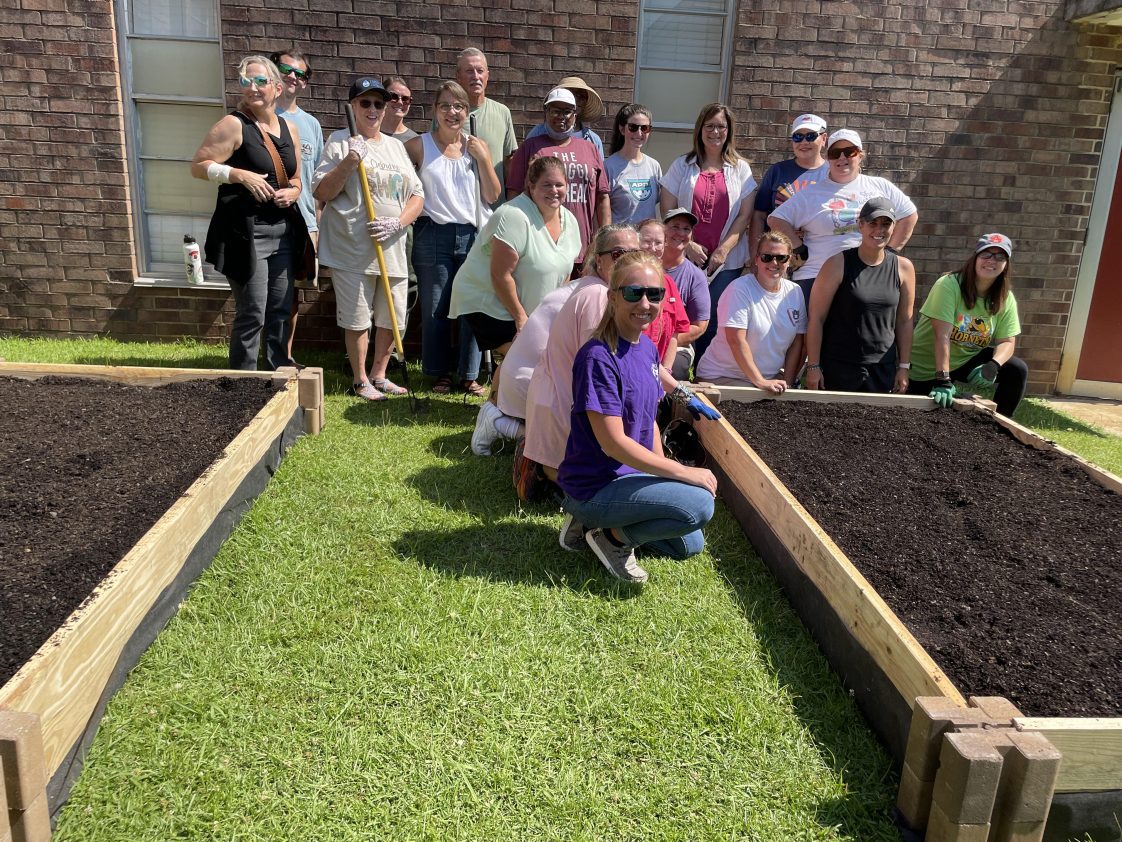
Home horticulture and urban green programs can help improve physical and mental health. Lawn care and gardening, for example, allow individuals to exercise, enjoy the outdoors, and connect with other family members and people in the community. It can also reduce food insecurity and save on family food costs.
Alabama Extension’s home horticulture and urban green programs enable people to learn eco-friendly practices to manage landscapes, urban gardens, and control harmful pests.
STEM in the Garden
STEM in the Garden trains teachers on basic gardening principles and ways to align the Alabama gardening calendar with a school year calendar. This program also helps to maximize a school’s STEM teaching capability.
Urban Ag: Urban Food Production and Sustainable Communities
Urban Ag provides education and training concerning research-based agricultural methods and business process management strategies to support food production and city planning efforts. Learning components in commercial horticulture, food safety and quality, animal sciences and forages, economic and community development, and forestry, wildlife, and natural resources all work together to support those interested in urban agriculture opportunities.
Urban Green
Urban Green is an education program that provides urban residents with sustainable practices to manage landscaping, urban gardening, and home pests.
2024 Program Impacts
- 10,434 direct contacts were made in urban ag programming efforts.
STEM in the Garden
Survey results revealed the following:
- 100 percent of participants learned something new.
- 99 percent of participants planned to implement a practice they learned.
- 99 percent of participants planned to share what they learned with family and friends.
Results further revealed that participants planned to adopt plant propagation, soil health monitoring, transplanting, insect control practices, composting, umbrella techniques for frost protection, mixed planting, and cover cropping. They also planned to install pollinator, small‐scale, raised bed, and container gardens.
Urban Ag: Urban Food Production and Sustainable Communities
A program survey among 2,637 participants indicated the following:
- 84 percent increase in knowing the importance of water irrigation systems and 68% increase in learning at least four ways to conserve water in a garden.
- 92 percent increase in the importance of identifying beneficial insects.
- 90 percent importance in the use of trap plants and crops.
- 92 percent in the importance of pollinators and pollinator gardens.
Urban Green
- 957 participants increased their knowledge of water conservation, sustainable landscapes, and the importance of integrated pest management practices.
- 71 percent average increase in knowledge of urban green practices.
Home horticulture and urban green programs can help reduce food insecurity and increase knowledge and skills that are beneficial to the environment.
For More Information
For more information about urban agriculture programs, please contact Karnita Garner at (256) 372-8331.