
Crop Production

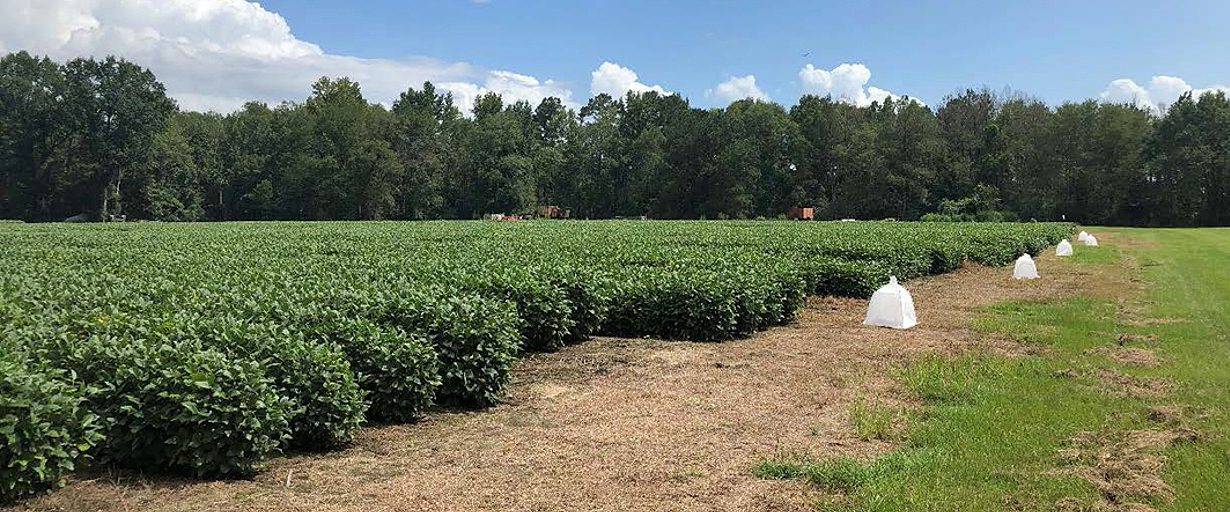
With Alabama’s large acreages of row-crop agriculture, understanding how different tillage systems affect ground-nesting bee communities is important. Understanding tillage effects is relevant for both agricultural and environmental sustainability as well as pollinator conservation. A study by the Auburn University Bee Center provides practical insights for conserving beneficial pollinators in working agricultural landscapes.
Introduction
When you think about bees, you often picture honey bees buzzing about flowers, collecting pollen before returning to their hexagonal-walled hives. Yet the United States is home to more than 4,000 native bee species, with more than 400 different species likely occurring in Alabama. Native bees play an important role in keeping the gears of our ecosystems turning by pollinating wild plants and, in many cases, crops. Native bees contribute approximately 3 billion dollars’ worth of pollination services to various crop types each year. Most native bees are small and easy to miss. Roughly 75 percent of all native bee species spend most of their lives developing in the ground below our feet. In addition to their concealed lifestyle, most ground-nesting bees are solitary, meaning that one individual female bee will dig tiny tunnels in the soil where she raises her young in small chambers filled with the pollen she tirelessly forages and collects. Normally, ground-nesting bees raise only one batch of offspring per year, which will overwinter underground.
In recent years, scientists have grown increasingly concerned about declines in native bee populations. While there are many suspected causes, such as the loss of suitable habitat and the use of insecticides, intensive farming practices that disturb the ground where bees nest may be especially damaging. The term tillage refers to varying farming practices in which the soil is mechanically turned or stirred to prepare fields for planting, managing weeds, or incorporating crop residues. Farmers rely on a range of tillage systems that differ in how intensely they disturb the soil, and how residues on the soil surface are treated. It is uncertain how different tillage systems may affect ground-nesting bees. Since tillage disturbs the soil that bees nest in, one would suspect that bees may find tilled fields unfavorable and there would be both fewer total bees and fewer bee species in those areas. To test this, the Auburn University Bee Center conducted an experiment funded by the USDA-NRCS at Auburn University’s E. V. Smith Research Center (figure 1). The study included three different tillage systems, representing common management practices used by crop producers in Alabama. This included what is called conventional tillage, reduced tillage, and conservation tillage.
When farmers are tilling their fields to prepare the soil for crop cultivation, they may choose to implement different tillage systems. The conventional tillage system employs methods that thoroughly turn the soil. In this study, disking was the primary method. Disks are a type of tractor-drawn implement that acts to cut and mix the soil to a depth set by the operator (figure 2).
-
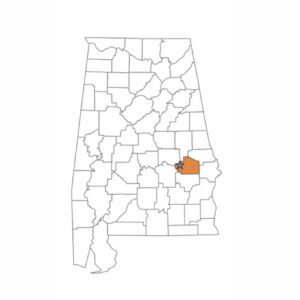
- Figure 1a. Map of Alabama depicting the location of the E. V. Smith Research Center (star) in Macon County (highlighted).
-
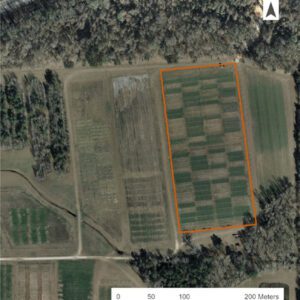
- Figure 1b. The experimental field, which is outlined, contained the three different tillage systems. (Source: Google Earth)
-
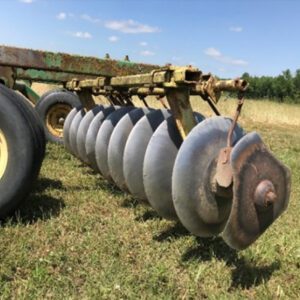
- Figure 2a. Example of the disk implement.
-
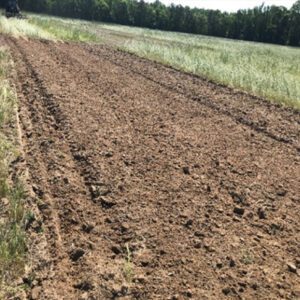
- Figure 2b. Example of the effect of disking on the soil.
After disking, conventional tillage includes subsoiling, which is performed with a tractor-drawn implement called a subsoiler. As the tractor pulls the subsoiler, the curved metal blades pierce deeply into the ground, acting to break up and mix the soil below without disturbing the surface (figure 3). The reduced tillage included only subsoiling as a management action, excluding disking to reduce the overall intensity of soil disturbance.
The last of the three experimental tillage systems is conservation tillage. Conservation tillage also included subsoiling as a component of its overall tillage management; however, conservation tillage is distinguished from other tillage types by intentionally leaving cover crop residues on the soil surface (figure 4). The buildup of residues on the soil surface helps reduce soil erosion, suppress weeds, and retain soil moisture.
-
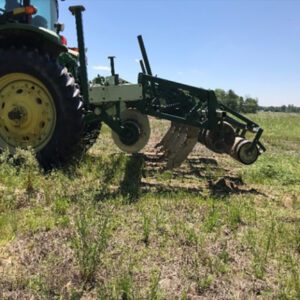
- Figure 3a. Example of the subsoiling implement.
-
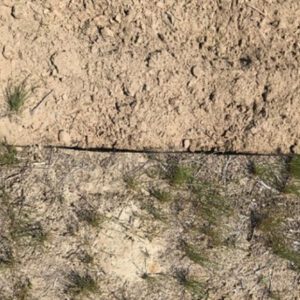
- Figure 3b. Example of the resulting disturbance at the soil surface.
-
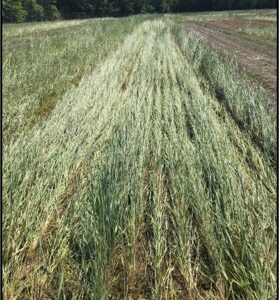
- Figure 4. Rolled rye cover crop in the conservation tillage system.
Ultimately, the experiment contrasted three tillage systems with areas immediately adjacent to the field plots that were referred to as the field edge (table 1). The field edges represented common, seminatural vegetated areas with no soil disturbance that is beneficial for native bees and served as a baseline for what their communities would look like in untilled areas.
Table 1. Management Actions for Each Experimental Tillage System and Field Edge
| Tillage System | Disk | Subsoil | Cover Crop |
|---|---|---|---|
| Conventional | Yes | Yes | No |
| Reduced | No | Yes | No |
| Conservation | No | Yes | Yes |
| Field Edge | No | No | No |
What Was Examined
To understand how ground-nesting bees respond to these three varying tillage systems, the experiment covered two full growing seasons studying which bees are present in row-crop fields at the E. V. Smith Research Center. Focus was on where they live: underground. To do this, small tent-like soil emergence traps were used to capture bees as they naturally emerge from the soil after completing their development. Upon emergence, bees tend to crawl up the sides of the tent where they were captured in a plastic bottle containing a preservative (figure 5). Each week from March through November, traps were randomly deployed within replicated plots that represented each tillage system and along the edge of the field. Then, they were left for 7 days before collecting any bees that emerged into the traps. By the end of the study, almost 5,000 traps were deployed and a total of 434 bees belonging to 23 different species were collected.
-
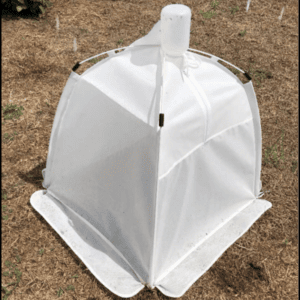
- Figure 5. A soil emergence trap used in the study. The four-sided mesh trap covers a small area of soil (about 2 × 2 feet). Bees that emerge from the soil move upward into a collection jar at the top, where they are safely captured for counting and identification.
-
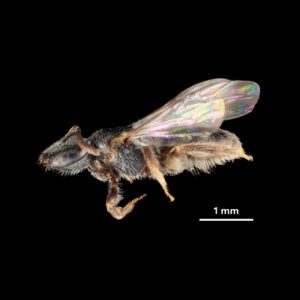
- Figure 6. Female Lasioglossum illinoense sweat bee. Measuring only a few millimeters in length, these small bees are easy to overlook. It is believed that as pollinators, what they lack in size, they make up for in numbers.
After 2 years of sampling, a clear pattern emerged: ground-nesting bees such as Lasioglossum illinoense (figure 6), were far more common in undisturbed soil on the edge of the field than in any of the tilled fields. Overall, there were three to five times as many bees emerging from the field edges compared to the conventional, reduced, and conservation tillage systems (figure 7). This suggests that any soil disturbance will reduce the number of ground-nesting bees in the affected area.
Not only were there a greater number of bees in the field edge, but there were also more species compared to any of the tillage systems. The difference in bee diversity was largest between the field edge and the conventional and conservation tillage systems. The conventional and conservation tillage systems had twelve and eleven fewer bee species compared to the field edge, while the number of bee species was only reduced by five in the reduced tillage system. This suggests that different tillage systems will affect some bee species more than others (figure 8).
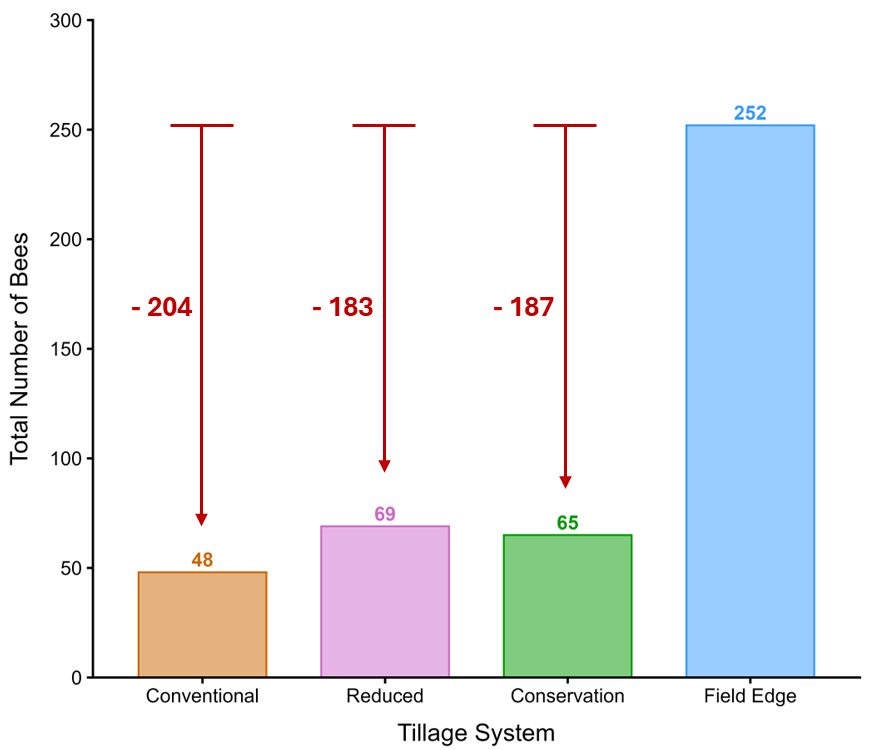
Figure 7. The total number of ground-nesting bees collected in each tillage system and the field edge. Arrows indicate the reduction in the number of ground-nesting bees emerged from each tillage system compared to the field edge.
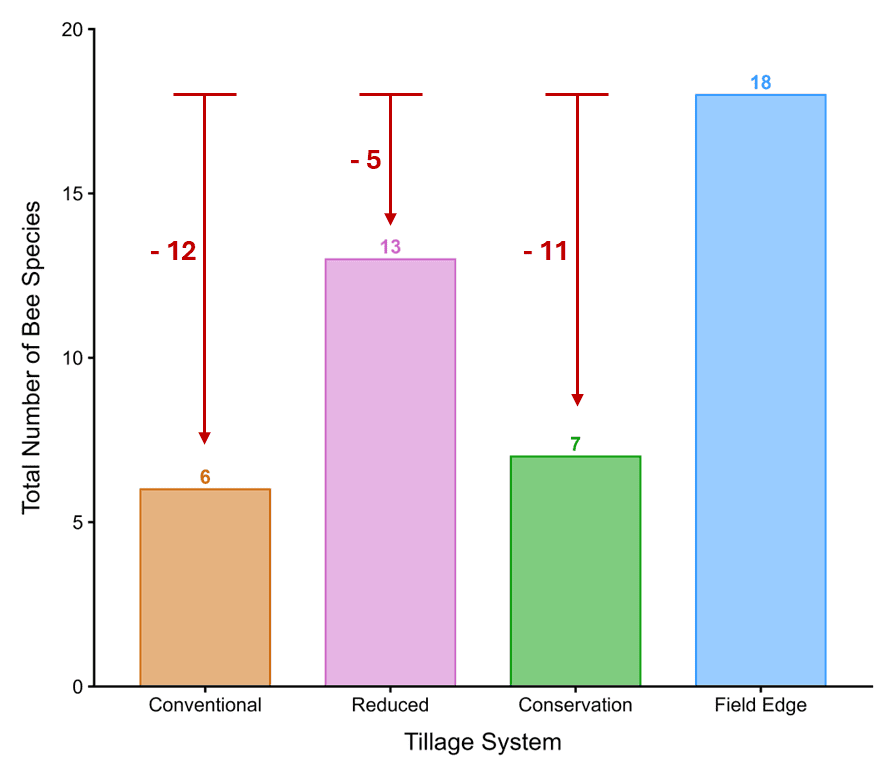
Figure 8. The total number of different species of ground-nesting bees collected in each tillage system and the field edge. Arrows indicate the reduction in bee species detected in each tillage system compared to the field edge.
Recommended Management Actions
Tillage may destroy belowground nests or modify the soil in a way that discourages bees from nesting there. The study shows that regardless of the tillage system, ground-nesting bees were less abundant and less diverse in the tilled fields compared to field edges. Based on this, the recommendation is to protect and establish undisturbed seminatural areas in working lands as an effective way to support ground-nesting bees. One practical option is to increase undisturbed seminatural buffers to a size of at least 10 feet wide. Roadsides, irrigation ditches, fences, tree lines, and conservation buffers can serve as stable areas for bees to nest. These areas could also be amended with native wildflowers to give bees the necessary pollen and nectar they need to sustain themselves and rear the next generation of offspring.
Conclusion
With Alabama’s large acreages of row-crop agriculture, understanding how different tillage systems affect ground-nesting bee communities is important. Understanding tillage effects is relevant for both agricultural and environmental sustainability as well as pollinator conservation. The findings from this study provide practical insights for conserving beneficial pollinators in working agricultural landscapes. Native bee communities provide essential pollination services that support both wild plant diversity and crop production, yet ongoing declines threaten the stability of these services. Because many native bees nest in the ground, it is important to understand how common farming practices such as tillage, used across millions of acres in the United States, affect them.
Given that tillage, regardless of type, negatively affects ground-nesting bees, as observed in the study, producers and land managers may want to carefully evaluate their management practices. Strategies such as reducing tillage intensity and increasing the availability of seminatural, undisturbed areas within working lands could help support native bee populations while maintaining agricultural production.
References
- Antoine, C.M. & Forrest, J.R.K. (2021) Nesting habitat of ground-nesting bees: a review. Ecological Entomology, 46, 143–159.
- Ascher, J.S., and Pickering, J. (2023). Discover Life Bee Species Guide and World Checklist (Hymenoptera: Apoidea: Anthophila).
- Cuminale, A.W., Abbate, A.P., Campbell, J.W., Balkcom, K.S. & Williams, G.R. (2026) Tillage in southeastern US row crops reduces ground‐nesting bee incidence and diversity compared to field edges. Insect Conservation and Diversity, 19, 686–701.
- Kirby, S., Bruckner, S. & Abbate, A.P. (2026) Lifestyles of Alabama’s Bees: Solitary, Social & Somewhere In Between. Alabama Cooperative Extension System.
- Losey, J.E. & Vaughan, M. (2006) The Economic Value of Ecological Services Provided by Insects. BioScience, 56, 311–323.

Selina Bruckner, Assistant Extension Professor, Anthony Abbate, Assistant Research Professor, and Anthony Cuminale, Research Assistant, all in Entomology and Plant Pathology, Auburn University
New August 2026, Safe in the Margins: Why Field Edges Matter to Ground-Nesting Bees, ANR-3287
For more information, contact your county Extension office. Visit aces.edu/directory.
Trade and brand names used in this publication are given for information purposes only. No guarantee, endorsement, or discrimination among comparable products is intended or implied by the Alabama Cooperative Extension System.
