
Crop Production

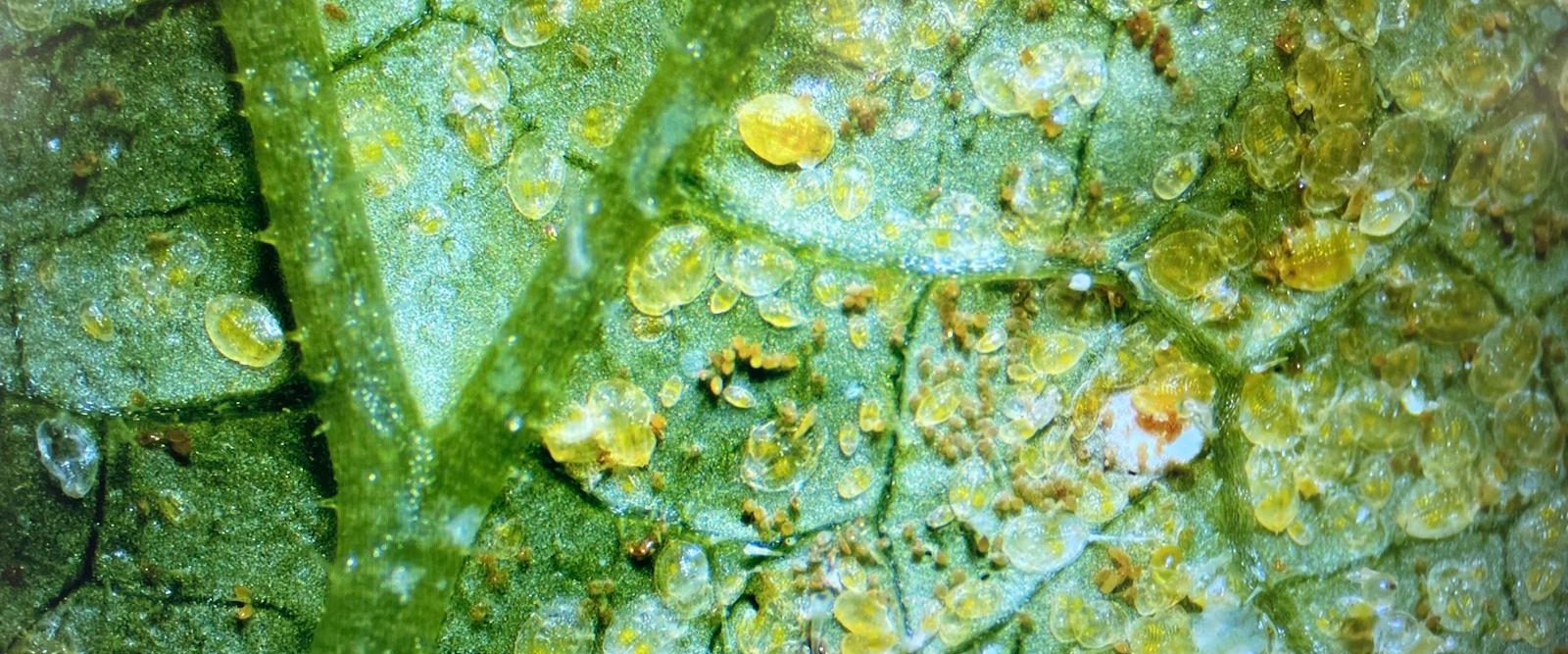
The sweetpotato whitefly (Bemisia tabaci) is a small insect, measuring 0.8 to 1.0 millimeters in length, with a distinctive powdery white appearance. It is a major pest of Alabama vegetable and field crops, including tomato, pepper, squash, cucumber, zucchini, pumpkin, crucifers, okra, and cotton, among others. Learn more about identification, scouting, diseases, and integrated pest management.
The biggest concern with whiteflies is their direct feeding damage to plants’ leaves and their ability to transmit plant viruses, which can significantly reduce crop yields and cause substantial economic losses in the southeastern United States.
In Alabama, whiteflies are a major pest concern in the southern portion of the state, where crops can be grown year-round, offering a continuous food source and breeding habitat for the insect. Typically, whitefly populations peak during hot and dry months from July through October, when whitefly pressure can reach devastating levels (figures 1 and 2).
-

- Figure 1. Heavy infestation of whiteflies on a squash leaf.
-
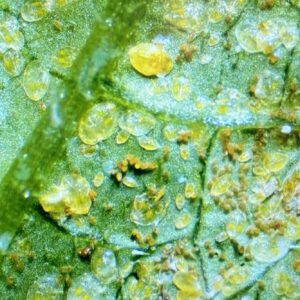
- Figure 2. Developmental stages of whiteflies, including eggs and several nymphal instars.
Life Cycle
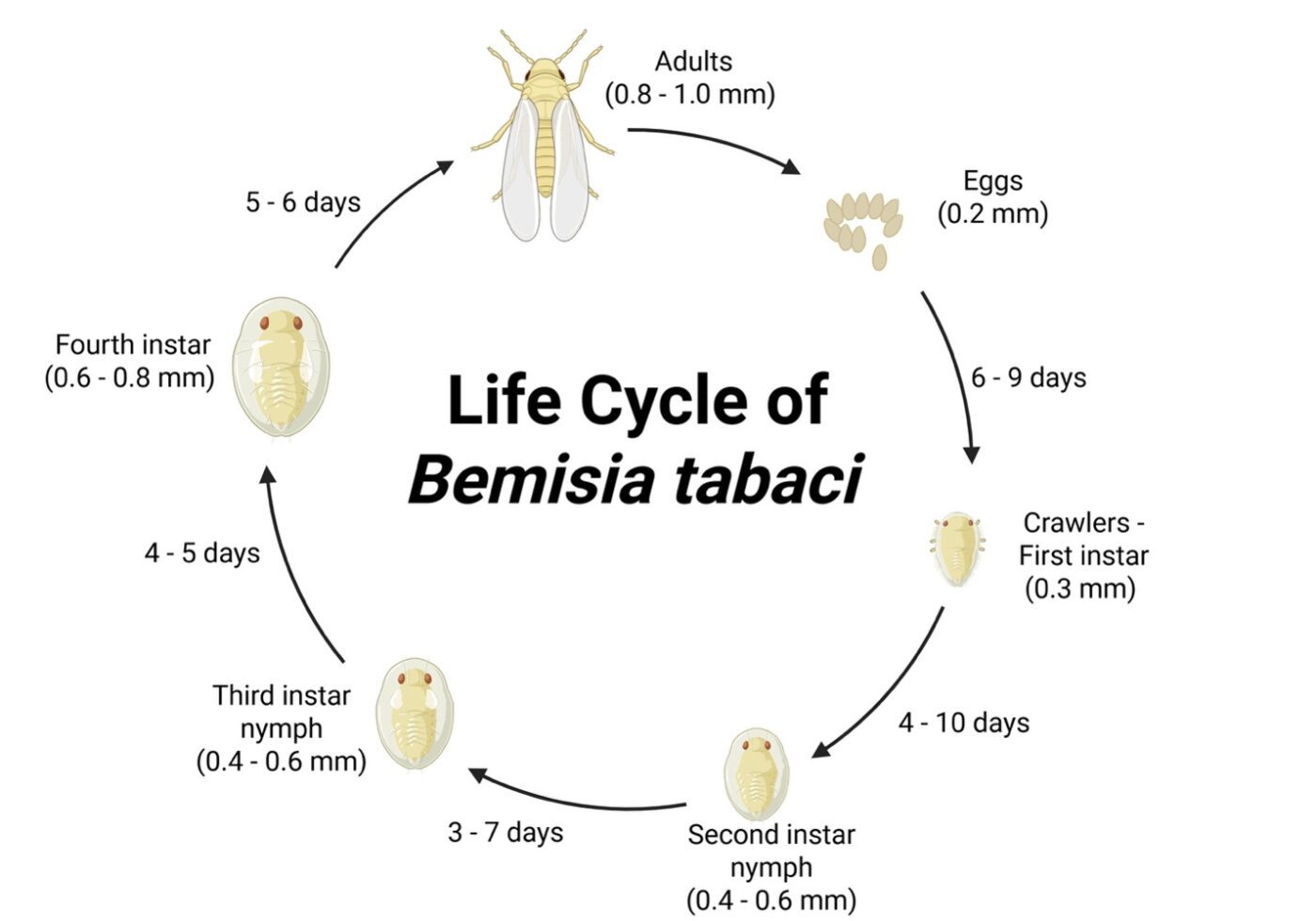
Figure 3. Life cycle of whitefly (Bemisia tabaci). Created in BioRender. Rodrigues, C. (2026) https://BioRender.com/zd5quxl.
The whitefly life cycle is relatively fast, taking 18 to 28 days, depending on weather conditions, with the warmer the temperature, the faster the cycle. In general, the life cycle begins with the egg stage (0.2 millimeters), followed by a mobile first-instar nymph, also known as the crawler (0.3 millimeters). This is succeeded by three additional sessile nymphal instars (second, third, and fourth), which range in size from 0.4 to 0.8 millimeters. Finally, the adult whitefly (0.8 to 1.0 millimeters) is the last stage, and the stage that causes the most damage to crops (figure 3).
Damage Mechanisms
- Direct Feeding: Both adults and nymphs use piercing-sucking mouthparts to extract sap from the phloem, part of the plant’s vascular system. This sap is rich in sugars and essential nutrients, acting as the plant’s primary energy source. The constant sap removal weakens the plant, causing chlorosis (yellowing or whitening), stunted plant growth, and premature leaf drop, significantly reducing the yield potential of the affected crop.
- Honeydew and Sooty Mold: As whiteflies feed, they excrete honeydew, a sticky, sugary substance that coats the surfaces of leaves, stems, and fruit, creating a prime environment for the growth of sooty mold, a term for the dark, powdery fungi that grows on the honeydew and covers the surface of leaves and branches. While sooty mold does not infect plant tissue, it blocks sunlight and reduces photosynthesis. This decreases plant vigor and leads to lower yields and smaller or underdeveloped fruit. Honeydew and sooty mold also affect the appearance and marketability of produce, often requiring costly cleaning or rendering the crops unmarketable.
- Virus Transmission: Whiteflies are vectors of several plant viruses, including tomato yellow leaf curl virus (TYLCV) and cucurbit leaf crumple virus (CuLCrV). These viruses cause leaf curling, leaf distortion, severe stunting, and yellowing, which can lead to a near-total crop loss if not effectively managed early in the growing season. The rapid and widespread transmission of these pathogens by even moderate whitefly populations poses a constant and significant threat to agricultural productivity, making this the most economically damaging aspect of a whitefly infestation.
Factors Favoring Whitefly Outbreaks
Several factors contribute to whitefly population outbreaks in Alabama:
- Extended dry and warm conditions are often seen during late summer and fall.
- Overlapping crop cycles are caused by the overlap of the growing season for row crops and vegetables.
- Poor weed management, as weeds can serve as alternative hosts, allows whitefly populations to build up between crop cycles and later migrate into cash crops, increasing the risk of infestation.
- Insecticide overuse occurs because the repeated use of the same insecticide class selects for resistant individuals, quickly reducing insecticide effectiveness.
Scouting for Whiteflies and Management Strategies
Regular field scouting is essential for effective whitefly management. Growers should closely inspect the undersides of young leaves, where adult whiteflies lay their eggs and nymphs are mostly found. Monitoring should begin as soon as plants emerge or at transplanting and continue on a weekly basis throughout the growing season. While sticky cards can be useful for detecting the presence of adult whiteflies, they are not a substitute for thorough visual plant inspections.
Managing whiteflies effectively requires an integrated approach that combines various strategies to reduce pest pressure and minimize crop damage.
- Cultural Control: Using a reflective silver plastic mulch can significantly reduce whitefly populations and increase yields compared to black/white plastic mulches. Row covers placed immediately after transplanting are another strategy that can also reduce early infestations and increase yields. Ideally, combining the silver plastic mulching with row covers can maximize insect management.
- Host-Plant Resistance: Cultivar selection is the first step in a proper integrated pest management (IPM) program. Therefore, selecting a cultivar resistant to whiteflies and/or whitefly-transmitted viruses is the most important whitefly management strategy. In tomatoes, cultivars with dense glandular trichomes (tiny, sticky hairs) and high levels of plant natural compounds have the potential to reduce whitefly egg-laying and nymph survival, offering valuable natural resistance to the insect.
- Chemical Control: Insecticides are a necessary component of an IPM program; however, they require careful application. Rotating products based on the Insecticide Resistance Action Committee (IRAC) mode of action numbers is crucial to delay resistance development (visit the IRAC website for more information). Neonicotinoids (e.g., Venom, Admire, Assail), butenolides (e.g., Sivanto Prime), and diamides (e.g., Exirel, Coragen) are among the most effective insecticide options. Insect growth regulators like pyriproxyfen (e.g., Knack) and buprofezin (e.g., Courier) are especially useful against immature whitefly stages, reducing population buildup and are more selective and compatible with beneficial insects. Growers must always follow the manufacturer’s label directions regarding specific crop recommendations.
- Biological Control: The best natural enemies to whiteflies are Encarsia formosa and Eretmocerus eremicus, which parasitize whiteflies and help suppress populations. To support beneficial insects, minimize broad-spectrum insecticide use and favor selective products in spray programs.
The Alabama Statewide IPM Coordination Program is actively supporting research, training, and outreach efforts focused on pest management throughout Alabama. Auburn University and the Alabama Cooperative Extension System are committed to providing science-based solutions for managing whiteflies and other pests across the state. Therefore, an integrated approach is essential for sustainable whitefly control. Key recommendations include the following:
- Start scouting early in the season for whiteflies and continue monitoring consistently through harvest.
- Implement cultural controls, such as reflective mulches and row covers, to reduce early-season insect activity.
- Avoid relying on a single insecticide class; instead, rotate pesticides and use applications based on established thresholds.
- Promote natural enemies by using selective insecticides whenever possible.
- Consider resistant varieties, especially for tomato and cucurbits (i.e., yellow squash and zucchini) production.
Acknowledgments
This study was funded by the United States Department of Agriculture Non-Assistance Cooperative Agreement (#58–6080–9–006 “Managing whiteflies and whitefly-transmitted viruses in vegetable crops in the southeastern US”).
References
ACES (Alabama Cooperative Extension System). 2024. Protect Your Crops: Whitefly Numbers May Increase in Alabama. Auburn University, Crop Protection and Management Blog.
Cremonez, P. S. G., Perier, J. D., Simmons, A. M., & Riley, D. G. 2023. Determining field insecticide efficacy on whiteflies with maximum dose bioassays. Insects, 14(6), 510.
NIFA (National Institute of Food and Agriculture). 2024. Statewide Extension IPM Coordination Program for Auburn University and Alabama Cooperative Extension System for 2024–2027. USDA CRIS Project Report.
da Silva, T. R. 2024. The Management of Sweetpotato Whitefly in the Southeastern United States. Ph.D. Dissertation, Auburn University, Department of Horticulture.
Rutz, T., Pizzo, J.S., Jacobson, A.L., Majundar, A., Sikora, E.J., Coolong, T., Simmons, A.M., Kartowikromo, K.Y., Hamid, A.M., Ojeda, A.S., Rodrigues, C., Da Silva, A.L. 2024. Characterization of physical and chemical resistance of wild tomato accessions of Solanum habrochaites to whiteflies. Plant Science. 338:113687.
Sparks, T. C., & Nauen, R. 2015. IRAC: Mode of action classification and insecticide resistance management. Pest Management Science, 71(7), 879-894.

Henrique Grossi Bovi, Graduate Student, Horticulture; Jessica Santos Pizzo, Postdoctoral Fellow, Horticulture; Camila Rodrigues, Extension Specialist, Assistant Professor, Commercial Horticulture; Andre da Silva, Extension Specialist, Associate Professor, Commercial Horticulture; and Paulo Cremonez, Extension Specialist, Assistant Professor, Commercial Horticulture, all with Auburn University
New September 2026, Sweetpotato Whitefly Management for Alabama Vegetable Crops, ANR-3292
For more information, contact your county Extension office. Visit aces.edu/directory.
Trade and brand names used in this publication are given for information purposes only. No guarantee, endorsement, or discrimination among comparable products is intended or implied by the Alabama Cooperative Extension System.