
Farming

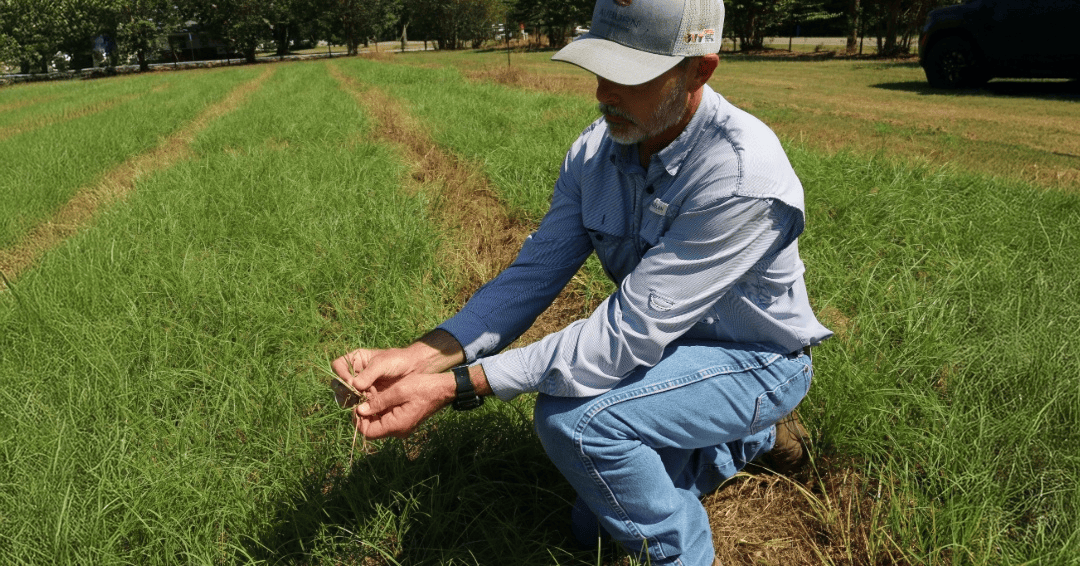
AUBURN UNIVERSITY, Ala. — A forage grass developed by Auburn University is helping cattle producers extend grazing seasons, reduce input costs and better withstand environmental pressures. Known as AU Sand Mountain bahiagrass, the variety was created to meet the growing demand for a hardier warm-season forage.
Study of Bahiagrass for Cattle Producers
Leanne Dillard is a forage specialist for Alabama Extension at Auburn University and researcher for the Alabama Agricultural Experiment Station. She studied the development of AU Sand Mountain and watched it progress at the Chilton Research and Extension Center in Clanton.
“Bahiagrasses like sandy loam soils, which we have in abundance in Alabama,” Dillard said. “The AU Sand Mountain variety is one we promote in central and north Alabama because of its long growing season and characteristics make it an ideal forage choice for many cattle producers.”
Dillard works with cattle producers to find forages that are dependable, versatile and require minimal nutrient inputs through her Alabama Extension outreach.
Land grant universities like Auburn utilize experts in plant breeding and seed scientists to create new varieties with the needs of growers in mind. Auburn has been in the forage-grass breeding practice since the 1970s. The program was led for decades by Professor Emeritus Edzard van Santen, who arrived in 1988. Whether it’s an answer to genetic development or response to disease pressure, plant breeders like van Santen create varieties that move science forward.
That work directly supports cattle producers who incorporate grazing pasture systems into their operations. In pasture systems, cattle harvest their own feed which cuts cost, labor and even strengthens the overall health of the field.
Cattle producers can turn to research results and expertise from the Alabama Agricultural Experiment Station to select the best variety for their specific needs.
About AU Sand Mountain
The lengthened growing season of AU Sand Mountain is one of the qualities that sets it apart from other forages. Compared to bermudagrass varieties, AU Sand Mountain bahiagrass has roughly 30 to 45 more days of grazing productivity.
Another benefit of AU Sand Mountain is its high nutritional value for grazing cattle. Dillard said that 55% of the total digestible nutrients and 10-12% crude protein make it an excellent maintenance forage. At roughly $150 per acre, it can deliver solid nutrition at a steady rate, when properly managed.
For over 15 years, Joseph Paulk, certified seed retailer in Geneva County, has worked with many varieties of forages from planting to finish. As a fourth-generation family farmer, he knows a thing or two about what makes a specific variety viable for growers, like himself.
“Forage systems are not only good for our growers in the southeast, but they are also environmentally beneficial and obviously cost-effective,” Paulk said. “What I like about AU Sand Mountain is the performance of it under drought and also pest pressure.”
Paulk said when growers look for forage seed, he tries to understand their needs so he can help them find the best varieties for their operations. While every operation is a little different, he said AU Sand Mountain has qualities that make it a strong option for many of his clients.
“One client was able to get a third cutting of hay with his AU Sand Mountain pasture. As a salesman, I’m grateful to give a customer something worth their investment,” Paulk said. “It performs well with our erratic Southern weather patterns in the spring and fall, too.”
Bahiagrass is a warm-season perennial that comes back year after year. This tough grass survives extremely high temperatures and is even more drought tolerant than other similar cultivars.
In Alabama, higher-yielding forages like bermudagrass varieties are commonly utilized, but AU Sand Mountain is lower maintenance. It needs less nitrogen, less inputs and even continues to perform in low-fertility and acidic soils.
Guiding Producers
Josh Elmore, Alabama Extension agent in animal science and forages, works directly with cattle producers in Alabama as they manage their operations. He gives guidance to livestock producers on how to make the most of their forages.
Based at the Chilton Research and Extension Center, Elmore takes the research to the hands of producers, helping them adopt new varieties and practices. He works with researchers and the outlying unit staff on forage trials to identify the strengths and weaknesses of each variety.
“Until a few years ago, bermudagrass was the predominate warm season species in central and north Alabama,” Elmore said. “Pest pressure grew from fall army worms and stem maggots and producers looked for other options. We have seen that AU Sand Mountain — and other bahiagrass varieties — tolerates that pressure better than bermudagrass.”
Elmore and Dillard also note that AU Sand Mountain is not limited to production in Alabama. For states with similar climates, this variety performs well for those who manage with care.
“This variety was tested in a multi-state project with Georgia and Florida,” Elmore said. “Which means, even for our neighbors it can be an option for a long season grazing forage.”
As trials continue, teams remain focused on helping producers implement field-tested information, backed by science. In this economy, livestock operations must take advantage of ways to save money, and they need results they can count on.