
Crop Production

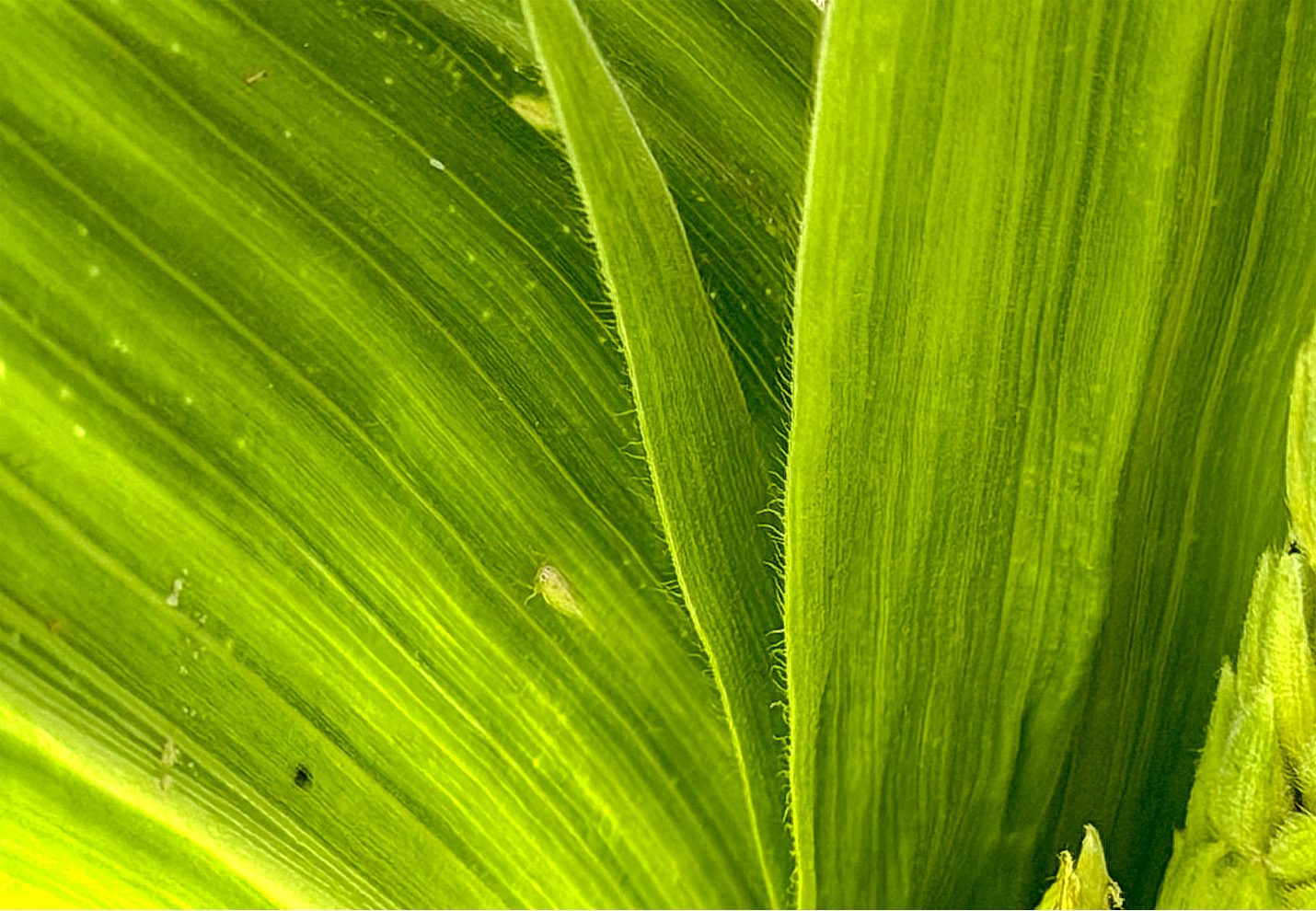
Corn leafhopper (Dalbulus maidis) is becoming an important pest to watch in Alabama. Alabama Extension first detected the insect in October 2025 in volunteer corn at the Prattville Agricultural Research Unit and near Autaugaville. In 2026, as of September, coordinated monitoring confirmed additional detections in Chilton, Autauga, St. Clair, and Escambia Counties. At the Chilton Regional Research & Extension Center, successive weekly samples after the first July detection showed increasing activity into September.
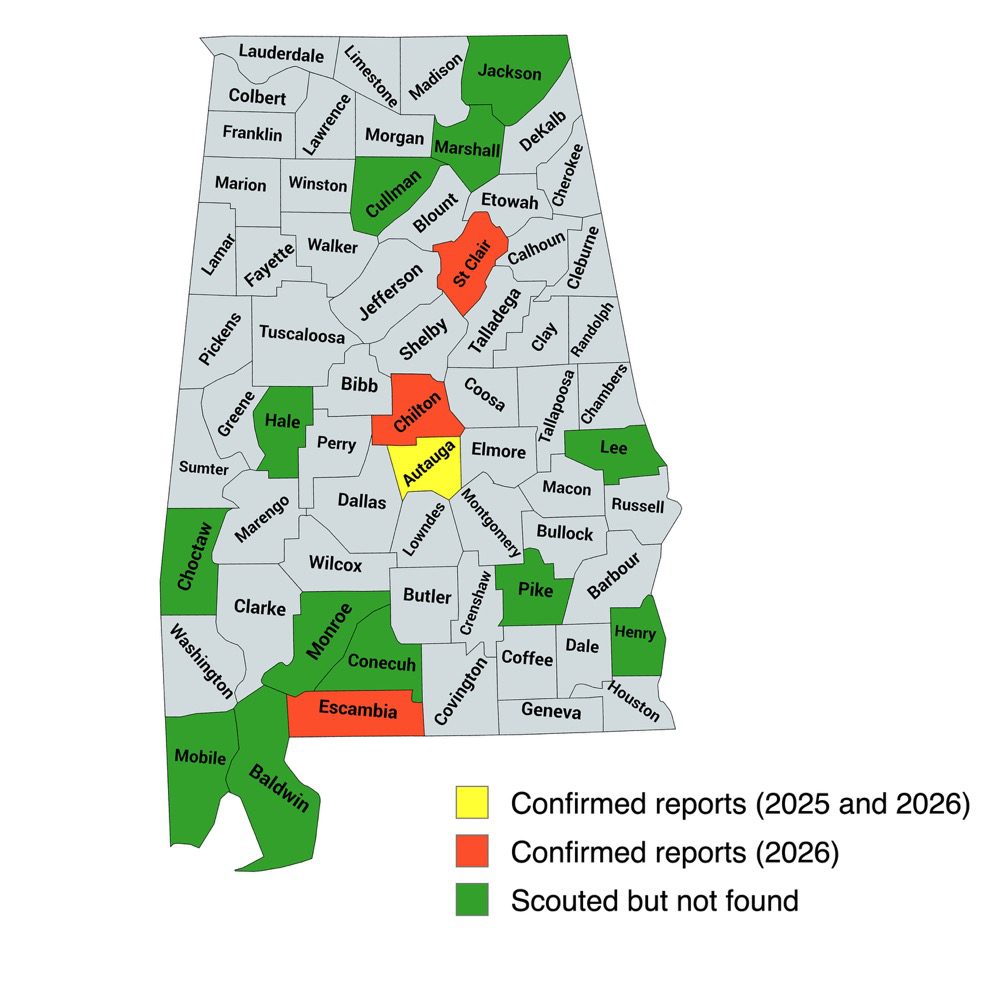
Figure 1. Alabama corn leafhopper monitoring and confirmed reports. Updated September 10, 2026
Why Monitoring for This Pest Matters
The main concern with corn leafhopper is not simply direct feeding. The insect is an efficient vector of pathogens associated with the corn stunt disease complex. Infection early in vegetative growth generally presents the greatest risk of yield loss, while infections occurring after reproductive growth begins are less likely to cause severe damage.
Finding the leafhopper does not automatically mean corn stunt is present, and symptoms alone do not confirm a specific pathogen. Alabama monitoring is continuing to determine whether corn stunt pathogens are present in local leafhopper populations.
How to Identify Corn Leafhopper
Adults are approximately 1/8 inch long with a narrow, wedge-shaped body. They can be pale yellow, cream, or light tan in color. The most useful field characteristic is the pair of dark spots with a distinctive white halo between the eyes.
Adults are very active and may run sideways, jump, or fly when disturbed. Nymphs resemble small adults but lack fully developed wings.
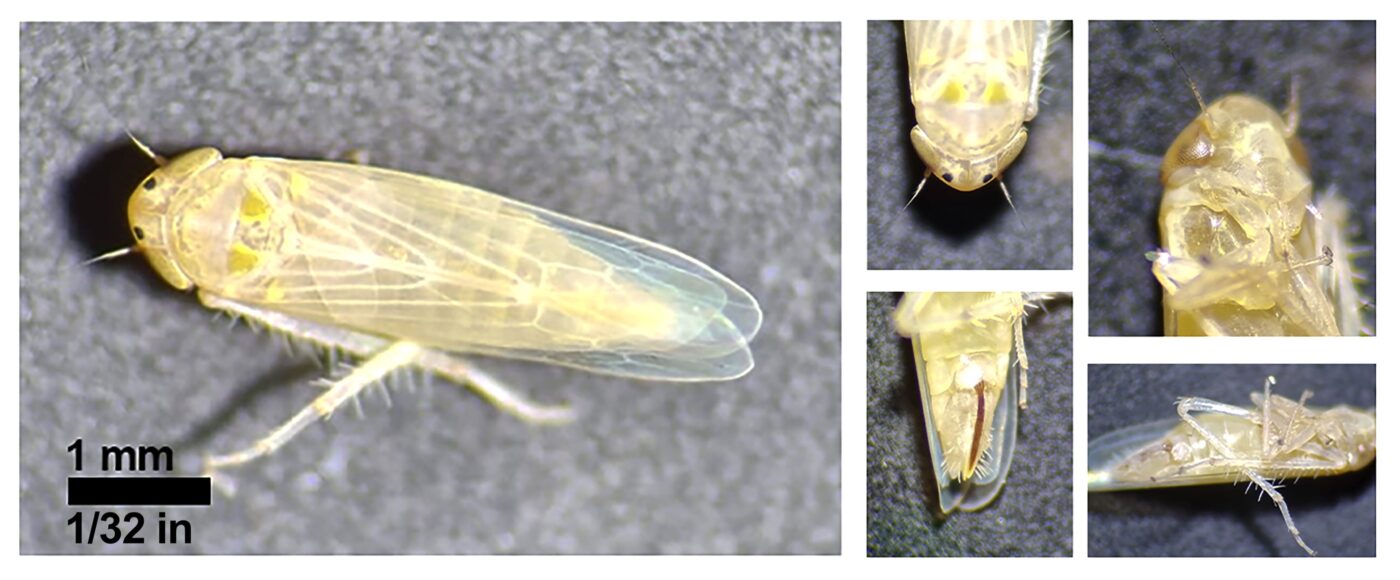
Figure 2. Adult corn leafhopper showing the pale-yellow body and the two distinctive dark spots with a white halo between the eyes. Scale bar = 1 mm (1/32 in)
Scouting and Management Priorities
Early detection is one of the most useful management tools. Focus scouting on young corn, particularly field edges, late-planted or sequential corn, volunteer corn, and fields near older corn. Yellow sticky traps can document seasonal activity and sweep nets can help confirm field activity. Young corn is especially attractive, so examine the whorl and along the undersides of leaves. Because several leafhopper species can occur in corn, suspected specimens from new areas should be preserved for confirmation.
Management should reduce exposure of young corn and limit continuous host availability. Eliminate volunteer corn promptly and avoid a continuous green bridge between plantings when possible. Late and sequential sweet corn plantings deserve additional attention, and the period from emergence through approximately V8 is the most important window for careful scouting. Insecticidal seed treatments and foliar insecticides may suppress leafhoppers as part of an integrated pest management program, but they cannot reverse an infection that has already occurred or guarantee prevention of pathogen transmission.
Large populations in reproductive corn can be visually alarming, but late infections are generally less likely to cause severe yield loss than early infections. Alabama currently does not have a single economic threshold that applies confidently across all corn production systems, so treatment decisions should consider crop stage, local detections, leafhopper abundance, and current Extension recommendations.
What Alabama Growers Should Do Now
The immediate priority is awareness and continued monitoring. Pay particular attention to late-planted corn, volunteer corn, and sequential sweet corn. Report suspected corn leafhopper detections and unusual corn stunt-like symptoms to your local county Extension office or the Auburn University Vegetable & Fruit Entomology program. These reports help Alabama Extension track seasonal movement and determine where confirmation is needed.