
Coastal Programs

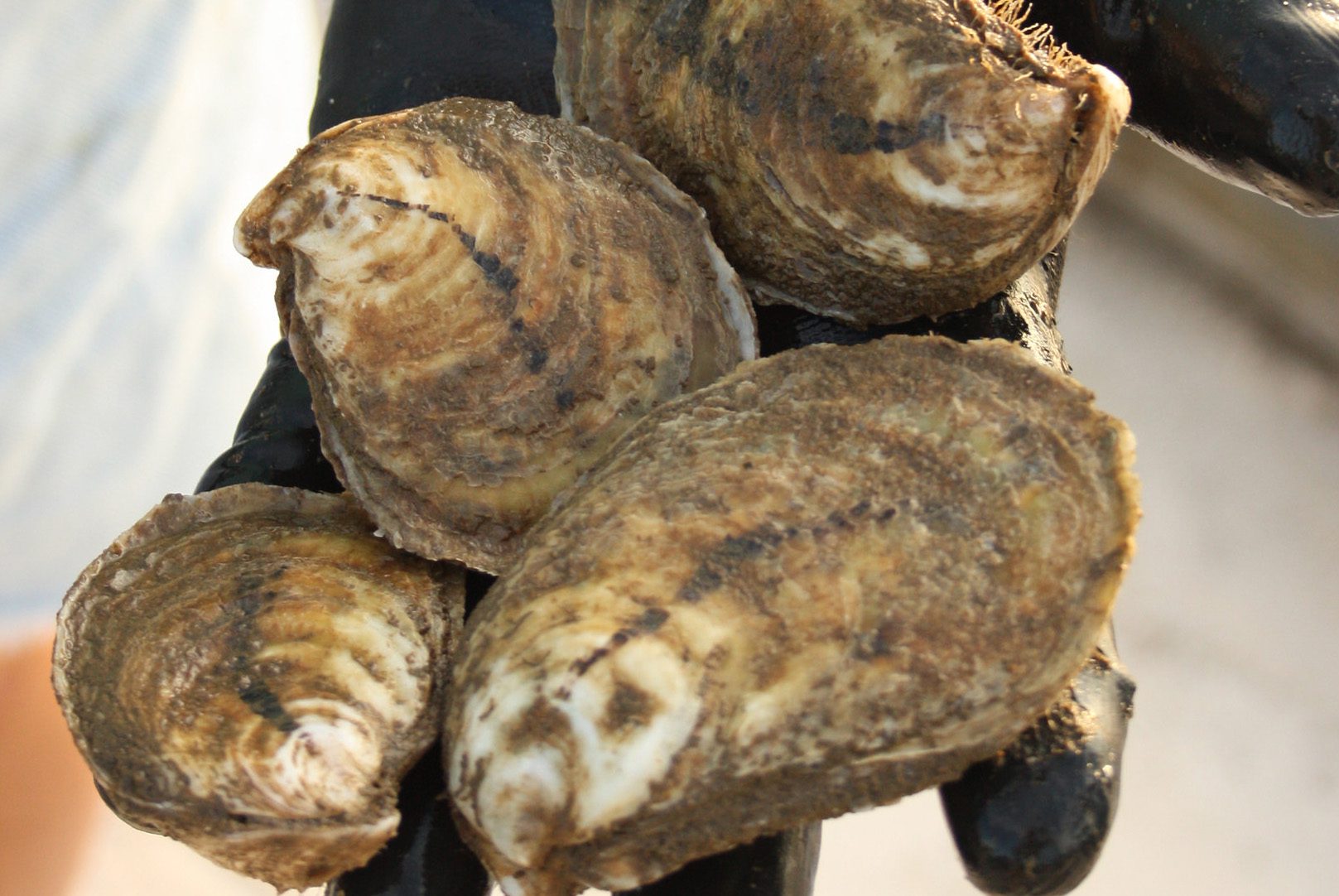
The USDA Risk Management Agency (RMA) is administering a Shellfish Pilot Crop Insurance Program that can benefit Alabama’s commercial oyster growers. The program offers two forms of coverage in Alabama for container-grown oysters commercially cultivated in Baldwin and Mobile Counties.
Available Plans
Actual Production History—Price Component (APH-PC) Insurance
Actual Production History—Price Component (APH-PC) insurance provides indemnity payments when a qualifying event is determined to have occurred in the grower’s county, and the grower sustains an insurable loss of production. Qualifying events include named storms, excessive heat or freeze during a low tide event, and low salinity caused by excessive rainfall in the county’s watershed. Because APH-PC coverage is loss based, the amount of any indemnity payment is specific to the grower’s documented production losses and the coverage level selected.
Hurricane Insurance Protection—Wind Index (HIP-WI) Endorsement
Hurricane Insurance Protection—Wind Index (HIP-WI) is available as an add-on to APH-PC and operates on an event-driven basis. HIP-WI provides coverage for a proportion of the deductible on an underlying policy if a named hurricane brings sustained hurricane-force winds to the county or an adjacent county.
Unlike APH-PC, where indemnity payments are based on crop losses, HIP-WI is event based and does not require crop losses in order for indemnity payments to be made. HIP-WI coverage increases total protection from the underlying coverage up to 95 percent of the expected crop. For instance, HIP-WI coverage added to an underlying APH-PC policy with 50 percent coverage would insure an additional 45 percent of the total expected crop.
HIP-WI indemnity payments are issued when a qualifying hurricane is determined to have affected the grower’s county or an adjacent county, without requiring the grower to document crop losses. It is designed to provide quick payments to growers and to help them recover following named storms.
Growers electing to purchase HIP-WI may also purchase a tropical storm (TS) endorsement, which provides payment at half the hurricane protection amount when a tropical storm trigger is met, up to two times per year. The trigger for the tropical storm endorsement is sustained wind speeds of 34 knots and at least 6 inches of total precipitation over four consecutive days. In years with multiple storms, total payments are capped at the hurricane protection amount.
Example Scenarios of Coverage
To show potential program costs and indemnity payments, we have estimated insurance premiums and potential indemnity payments for two farm sizes in Mobile County: one with an approved yield of 50,000 oysters and the other with an approved yield of 250,000 oysters. The 2026 USDA RMA Cost Estimator for APH-PC and HIP-WI coverage was used.
Under both examples, the following is assumed: an established price of $0.64 per oyster, a 100 percent price election, 100 percent HIP-WI coverage percentage, and an insured share of 100 percent. There is a $30 administrative fee per policy, totaling $60 for APH-PC and HIP-WI policies; this is not reflected in the premiums but is included in tables 7 and 8. Also estimated are the costs and potential indemnity payments for catastrophic (CAT) coverage, which is fixed at a 50 percent coverage level and 55 percent price election, or $0.352 per oyster. CAT coverage is 100 percent subsidized, so there is no premium, but growers must pay a $655 administrative fee.
Example 1: Mobile County Farm with Approved Yield of 50,000 Oysters
Table 1 shows the liability, or value of the production guarantee, for a farm with an approved yield of 50,000 oysters and an established price of $0.64 per oyster for coverage levels ranging from 50 to 75 percent. Liability is calculated as the approved yield (50,000 oysters) multiplied by the coverage level and the price election ($0.64/oyster). Insurance premiums range from $97 to $507, depending on the coverage level selected.
Table 1. Estimated Insurance Premiums for Catastrophic and APH-PC by Coverage Levels for an Approved Yield of 50,000 Oysters
| Coverage Level | CAT 50% | APH-PC 50% | APH-PC 55% | APH-PC 60% | APH-PC 65% | APH-PC 70% | APH-PC 75% |
|---|---|---|---|---|---|---|---|
| Liability | $8,800 | $16,000 | $17,600 | $19,200 | $20,800 | $22,400 | $24,000 |
| Subsidy | 1.0 | 0.67 | 0.69 | 0.69 | 0.64 | 0.64 | 0.60 |
| Premium | $0 | $97 | $125 | $150 | $232 | $324 | $507 |
| Administrative Fee | $655 | $30 | $30 | $30 | $30 | $30 | $30 |
CAT coverage is fixed at 50 percent of the approved yield and a 55 percent price election. There is no premium, but there is a $655 administrative fee, making it an expensive option for small growers. As table 1 shows, the total cost of CAT coverage is more expensive than the cost for all APH-PC coverage levels, and the liability of CAT coverage is lower than the liability for all APH-PC coverage levels. Thus, CAT coverage is probably not practical for small oyster growers. For an APH-PC indemnity payment to be made, there must be a county loss trigger, and value of production to count must be lower than the liability, or the value of the production guarantee. Table 2 shows the expected indemnity payments from the APH-PC by elected coverage level and percentage of approved loss. APH-PC indemnity payments are estimated by the difference between the liability and the value of production to count; they range from $1,600 to $16,000. For example, with an APH-PC coverage level of 75 percent and a production loss of 75 percent, the value of the production to count is estimated as the approved yield (50,000 oysters) multiplied by the survival rate (25 percent) and the price election ($0.64/oyster). The indemnity payment would then be estimated as the liability ($24,000) minus the value of the production to count ($8,000). With 75 percent coverage election, losses would need to exceed 25 percent to receive an APH-PC indemnity payment, and there would need to be a county loss trigger (table 2).
Table 2. Estimated APH-PC Indemnity Payments ($) by Approved Loss Percentage for an Approved Yield of 50,000 Oysters
| Approved Loss | CAT 50%* | APH-PC 50% | APH-PC 55% | APH-PC 60% | APH-PC 65% | APH-PC 70% | APH-PC 75% |
|---|---|---|---|---|---|---|---|
| 25% | |||||||
| 30% | 1,600 | ||||||
| 35% | 1,600 | 3,200 | |||||
| 40% | 1,600 | 3,200 | 4,800 | ||||
| 45% | 1,600 | 3,200 | 4,800 | 6,400 | |||
| 50% | 1,600 | 3,200 | 4,800 | 6,400 | 8,000 | ||
| 55% | 880 | 1,600 | 3,200 | 4,800 | 6,400 | 8,000 | 9,600 |
| 60% | 1,760 | 3,200 | 4,800 | 6,400 | 8,000 | 9,600 | 11,200 |
| 65% | 2,640 | 4,800 | 6,400 | 8,000 | 9,600 | 11,200 | 12,800 |
| 70% | 3,520 | 6,400 | 8,000 | 9,600 | 11,200 | 12,800 | 14,400 |
| 75% | 4,400 | 8,000 | 9,600 | 11,200 | 12,800 | 14,400 | 16,000 |
Table 3 shows the estimated premiums and indemnity payments for a 100 percent HIP-WI coverage percentage. As shown, lower APH-PC coverage enables a greater portion of the deductible to be covered by the HIP-WI endorsement, thus yielding higher HIP-WI premiums, up to $916 in this case,
and greater liability, up to $14,400, under an APH-PC coverage level of 50 percent.
Table 3. Estimated HIP-WI Premiums and Indemnity Payments by Coverage Level for an Approved Yield of 50,000 Oysters
| Coverage Level | APH-PC 50% | APH-PC 55% | APH-PC 60% | APH-PC 65% | APH-PC 70% | APH-PC 75% |
|---|---|---|---|---|---|---|
| HIP-WI | 45% | 40% | 35% | 30% | 25% | 20% |
| Liability | $14,400 | $12,800 | $11,200 | $9,600 | $8,000 | $6,400 |
| TS Option | 0.0987 | 0.0987 | 0.0987 | 0.0987 | 0.0987 | 0.0987 |
| Subsidy | 0.8 | 0.8 | 0.8 | 0.8 | 0.8 | 0.8 |
| Premium | $916 | $814 | $712 | $610 | $509 | $407 |
| Administrative Fee | $60 | $60 | $60 | $60 | $60 | $60 |
Example 2: Mobile County Farm with Approved Yield of 250,000 Oysters
The same estimates from example 1 were calculated for a farm with a higher approved yield of 250,000 oysters. Table 4 shows the liability and insurance premiums by coverage level. The liabilities and insurance premiums are considerably higher than those estimated for a farm with an approved yield of 50,000 oysters. CAT coverage is impractical, as total costs exceed APH-PC at a coverage level of 50 percent and with significantly less liability.
Table 4. Estimated Insurance Premiums for Catastrophic and APH-PC by Coverage Levels for an Approved Yield of 250,000 Oysters
| Coverage Level | CAT 50% | APH-PC 50% | APH-PC 55% | APH-PC 60% | APH-PC 65% | APH-PC 70% | APH-PC 75% |
|---|---|---|---|---|---|---|---|
| Liability | $44,400 | $80,000 | $88,000 | $96,000 | $104,000 | $112,000 | $120,000 |
| Subsidy | 1.0 | 0.67 | 0.69 | 0.69 | 0.64 | 0.64 | 0.60 |
| Premium | $0 | $485 | $627 | $752 | $1,161 | $1,620 | $2,536 |
| Administrative Fee | $655 | $30 | $30 | $30 | $30 | $30 | $30 |
Table 5 shows the expected indemnity payments from the APH-PC by elected coverage level and percentage of approved losses. These estimations are the same as outlined in table 2, and the estimated indemnity payments range from $8,000 to $80,000.
Table 5. Estimated APH-PC Indemnity Payments ($) by Approved Loss Percentage for an Approved Yield of 250,000 Oysters
| Approved Loss | CAT 50%* | APH-PC 50% | APH-PC 55% | APH-PC 60% | APH-PC 65% | APH-PC 70% | APH-PC 75% |
|---|---|---|---|---|---|---|---|
| 25% | |||||||
| 30% | 8,000 | ||||||
| 35% | 8,000 | 16,000 | |||||
| 40% | 8,000 | 16,000 | 24,000 | ||||
| 45% | 8,000 | 16,000 | 24,000 | 32,000 | |||
| 50% | 8,000 | 16,000 | 24,000 | 32,000 | 40,000 | ||
| 55% | 4,400 | 8,000 | 16,000 | 24,000 | 32,000 | 40,000 | 48,000 |
| 60% | 8,800 | 16,000 | 24,000 | 32,000 | 40,000 | 48,000 | 56,000 |
| 65% | 13,200 | 24,000 | 32,000 | 40,000 | 48,000 | 56,000 | 64,000 |
| 70% | 17,600 | 32,000 | 40,000 | 48,000 | 56,000 | 64,000 | 72,000 |
| 75% | 22,000 | 40,000 | 48,000 | 56,000 | 64,000 | 72,000 | 80,000 |
Table 6 shows the estimated premiums and indemnity payments for the HIP-WI endorsement for a farm with an approved yield of 250,000 oysters. The liability ranges from $32,000 to $72,000 based on coverage level, with the indemnity payments ranging from $2,035 to $4,578 based on coverage level. As the crop insurance program has been available only since 2024, the 2026 insurance costs and indemnity payments are used to estimate hypothetical payments to a producer based on historical prevalence of hurricanes and tropical storms from 2016 to 2025 in Mobile County, Alabama (tables 7 and 8). It is assumed that the farm elects the tropical storm endorsement. The cost of insurance is calculated as the sum of the cost of APH-PC and HIP-WI coverage. However, only the HIP-WI indemnity payment is considered, as the APH-PC indemnity is dependent on a grower’s specific production loss associated with each qualifying event (table 5).
Table 6. Estimated HIP-WI Premiums and Indemnity Payments by Coverage Level for an Approved Yield of 250,000 Oysters
| Coverage Level | APH-PC 50% | APH-PC 55% | APH-PC 60% | APH-PC 65% | APH-PC 70% | APH-PC 75% |
|---|---|---|---|---|---|---|
| HIP-WI | 45% | 40% | 35% | 30% | 25% | 20% |
| Liability | $72,000 | $64,000 | $56,000 | $48,000 | $40,000 | $32,000 |
| TS Option | 0.0987 | 0.0987 | 0.0987 | 0.0987 | 0.0987 | 0.0987 |
| Subsidy | 0.8 | 0.8 | 0.8 | 0.8 | 0.8 | 0.8 |
| Premium | $4,578 | $4,069 | $3,560 | $3,052 | $2,543 | $2,035 |
| Administrative Fee | $60 | $60 | $60 | $60 | $60 | $60 |
Table 7 shows net payments of $200,770 to the grower over the last 10 years based on historical storm data and 50 percent APH-PC and 45 percent HIP-WI coverage. This is a slightly conservative estimate as the APH-PC indemnity payments are not included.
Table 7. Estimated HIP-Wi Indemnity Payments ($) for a Farm with an Approved Yield of 250,000 Oysters Using Historical Storm Data (APH-PC 50% Coverage; HIP-WI 45% Coverage)
** H = Hurricane; TS = Tropical Storm
| Year | Insurance Cost* | HIP-WI Indemnity | Net Amount | Storm** |
|---|---|---|---|---|
| 2016 | ($5,123) | $0 | ($5,123) | None |
| 2017 | ($5,123) | $72,000 | $66,877 | NateH |
| 2018 | ($5,123) | $36,000 | $30,877 | GordonTS |
| 2019 | ($5,123) | $0 | ($5,123) | None |
| 2020 | ($5,123) | $72,000 | $66,877 | SallyH, ZetaH, CristobalTS |
| 2021 | ($5,123) | $72,000 | $66,877 | IdaTS, ClaudetteTS |
| 2022 | ($5,123) | $0 | ($5,123) | None |
| 2023 | ($5,123) | $0 | ($5,123) | None |
| 2024 | ($5,123) | $0 | ($5,123) | None |
| 2025 | ($5,123) | $) | ($5,123) | None |
| Total Net Payments | $200,770 |
Table 8 shows the net payments of a higher APH-PC coverage level of 75 percent and an additional 20 percent coverage from HIP-WI. Results indicate that a higher APH-PC coverage level results in lower HIP-WI indemnity payments but may result in higher APH-PC indemnity payments. Keep in mind, however, that APH-PC indemnities are not considered in the analysis because they are dependent on production losses, which are highly variable across farms and years. Expected APH-PC indemnities by coverage level and loss of production are found in table 5.
Table 8. Estimated HIP-WI Indemnity Payments for a Farm with an Approved Yield of 250,000 Oysters Using Historical Storm Data (APH-PC 75% Coverage; HIP-WI 20% Coverage)
** H = Hurricane; TS = Tropical Storm
| Year | Insurance Cost* | HIP-WI Indemnity | Net Amount | Storm** |
|---|---|---|---|---|
| 2024 | ($5,123) | $0 | ($5,123) | None |
| 2016 | ($4,630) | $0 | ($4,630) | None |
| 2017 | ($4,630) | $32,000 | $27,370 | NateH |
| 2018 | ($4,630) | $16,000 | $11,370 | GordonTS |
| 2019 | ($4,630) | $0 | ($4,630) | None |
| 2020 | ($4,630) | $32,000 | $27,370 | SallyH, ZetaH, CristobalTS |
| 2021 | ($4,630) | $32,000 | $27,370 | IdaTS, ClaudetteTS |
| 2022 | ($4,630) | $0 | ($4,630) | None |
| 2023 | ($4,630) | $0 | ($4,630) | None |
| 2025 | ($4,630) | $) | ($4,630) | None |
| Total Net Payments | $65,700 |
Overall, results under both scenarios indicate that net payments to the producer are positive based on historical prevalence of named storms. It is important to note, however, that insurance costs to the producer are largely influenced by the subsidy rate, which is currently 0.80. Future changes to the subsidy rate will result in changes to the costs of insurance. In addition, crop insurance indemnities may have important tax implications, as they can directly impact your taxable farm income.
For more information on the Shellfish Pilot Crop Insurance Program, visit the US Department of Agriculture Risk Management Agency website and search for “Shellfish Pilot Crop Insurance Program.” Crop insurance is sold and delivered solely through private crop insurance agents, which can be found online at the RMA Agent Locator. Producers must work with a licensed crop insurance agent to complete and submit required documentation, which includes, but is not limited to, four crop years of production records and proof of seed purchases. The deadline to apply for coverage is November 30 of each year.

Quinn LaFontaine, Graduate Research Assistant, Taryn Garlock, Extension Specialist, Assistant Professor, and Russell Grice, Administrator, Instructional Outreach Programs, all in Fisheries, Aquaculture, and Aquatic Sciences, Auburn University
New July 2026, USDA Shellfish Crop Insurance Program, ANR-3267
For more information, contact your county Extension office. Visit aces.edu/directory.
Trade and brand names used in this publication are given for information purposes only. No guarantee, endorsement, or discrimination among comparable products is intended or implied by the Alabama Cooperative Extension System.