
Crop Production

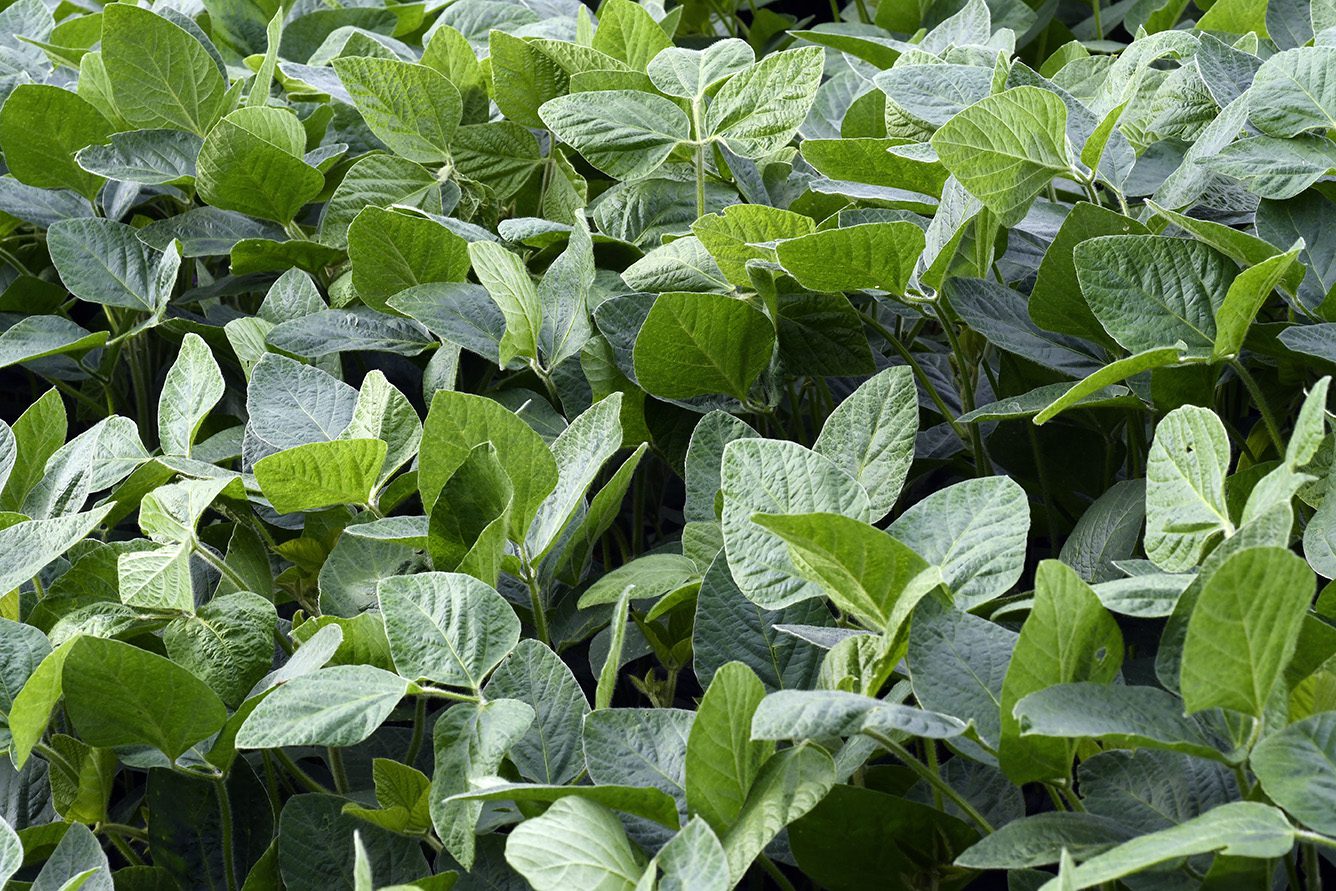
Choosing the right soybean variety is one of the first and most important steps in planning for the next growing season. Soybean variety selection has a significant impact on maximizing yield potential and profitability. Selecting the best-performing variety can be a bigger factor on profit than tillage practices, fertility programs, or other agronomic inputs, since yield differences among varieties can exceed 20 percent under similar growing conditions.
Obtaining maximum yield in soybean production is influenced by a number of factors beyond variety: field conditions, pest and disease pressure, regional adaptation, and maturity. These factors affect overall production costs and management practices (fertilizers, pesticides, and irrigation) and ultimately profitability.
Yield Potential
Soybean genetics matter, but yield remains the most critical factor. Effective management depends on choosing the right variety. Even excellent agronomic practices can fall short if the selected variety lacks strong yield potential. Base your choices on multiyear, multilocation trial data from your region, focusing on varieties that combine high average yields with consistent performance. It is wise to compare options across seed brands to reduce risks such as different herbicide traits or disease tolerance.
Maturity Group
Soybean is a photosensitive short-day plant whose flowering is triggered when the day length begins to shorten in summer. Maturity is determined according to the soybean maturity group (MG), a classification system that describes how long a soybean variety takes to reach maturity based on day length (photoperiod) and temperature response.
In this system, soybeans are grouped into numbered categories (from 000 to 10) that reflect how they grow across latitude. Each group corresponds to the amount of daylight and heat a variety requires to reach full maturity. Lower-number varieties mature earlier and are adapted to northern latitudes; higher numbers mature later and are adapted to southern latitudes.
In Alabama, the recommended MGs range across regions: 4.0 to 5.0 in north Alabama, 4.5 to 5.5 in central Alabama, and 5.5 to 7.0 in south Alabama. Avoid planting short MGs in south Alabama to prevent poor performance. Also diversify harvest timing by including varieties across at least one full MG to spread risk and align with harvest logistics.
Traits and Tolerances
Traits and tolerances is the next step in the process of choosing a soybean variety. There are several trait packages on the market for herbicide resistance (glyphosate, glufosinate, 2,4-D, dicamba, ALS inhibitor, HPPD inhibitor, metribuzin) and disease/pest tolerance (root-knot nematode, iron chlorosis, white mold, sudden death syndrome). Conventional varieties (GMO-free) are also available.
Choose herbicide-tolerance packages based on rotation plans, weed spectrum, and field conditions. Verify compatibility with previous crops/herbicides to reduce volunteer or resistance issues. Also match variety traits to field history of tolerance to cyst nematodes, iron chlorosis, sudden death syndrome, and other diseases.
Soybean varieties usually are rated by category (resistant, moderately resistant, moderately susceptible, susceptible) or on a numerical scale, which presents the level of tolerance. Table 1 presents traits and technologies to consider when choosing a variety.
Table 1. Traits and Technologies Available for Soybean Production Considering Variety Selection
| Technology/Trait | Description | Herbicide Tolerance | Mode of Action |
|---|---|---|---|
| Roundup Ready Xtend | Contains in-plant tolerance to Roundup brand herbicides, allowing growers to spray Roundup, and offers control of broadleaf weeds. Is a preemergence and postemergence application | Glyphosate and Dicamba | Acts as synthetic auxin, causing unregulated growth (Group 4). Inhibits the EPSP synthase enzyme (Group 9) |
| Roundup Ready Xtend Flex | Contains in-plant tolerance to Roundup brand herbicides, allowing growers to spray Roundup. Offers control of broadleaf weeds and presents triple-stacked soybean trait with tolerance to dicamba, glyphosate, and glufosinate. Is a preemergence and postemergence application | Glyphosate, Dicamba, and Glufosinate | Acts as synthetic auxin, causing unregulated growth (Group 4). Inhibits the EPSP synthase enzyme (Group 9). Inhibits glutamine synthetase (Group 10) |
| Liberty Link | Provides in-plant resistance, a nonselective, postemergence herbicide that provides relatively quick contact action on many tough grass and broadleaf weeds | Glufosinate | Inhibits the enzyme glutamine synthetase |
| Enlist One | Offers tolerance to 2,4-D and glufosinate. Is a postemergence application utilizing Colex-D technology for low volatility and drift reduction, targeting broad-spectrum weeds | Glufosinate and 2,4-D | Acts as synthetic auxin, causing unregulated growth |
| Enlist Duo | Offers tolerance to 2,4-D and glyphosate. Is a postemergence application utilizing Colex-D technology for low volatility and drift reduction, targeting broad-spectrum weeds | Glyphosate and 2,4-D | Acts as synthetic auxin, causing unregulated growth |
| Enlist E3 | Offers tolerance to 2,4-D, glyphosate, and glufosinate. Is a pre-emergence and postemergence application utilizing Colex-D technology for low volatility and drift reduction, targeting broad-spectrum weeds | Glyphosate, Glufosinate, and 2,4-D | Acts as synthetic auxin, causing unregulated growth |
| Metribuzin | A selective triazinone herbicide used to control broadleaf and annual grass. Is a pre-emergence and postmergence application | Triazine | Inhibits photosynthesis by blocking the photosystem II complex, disrupting electron transport |
| Sulfonylurea-Tolerant Soybeans (STS) | Enhances a soybean plant’s natural tolerance to the sulfonylurea family of acetolactate synthase (ALS) inhibitor herbicides | Sulfonylurea (ALS inhibitor) | Inhibits the acetolactate synthase (ALS) enzyme |
| Bolt | Enables farmers to plant soybeans immediately following burndown with sulfonylurea (SU) herbicides for effective, long-lasting control of problem weeds | Sulfonylurea (ALS inhibitor) | Inhibits the acetolactate synthase (ALS) enzyme |
| GT27 | Offers double-herbicide tolerance trait to glyphosate and HPPD/Group 27 herbicide that can be used as burndown and pre-emergence applications for broad-spectrum weed control | Glyphosate and HPPD/ Group 27 | Inhibits the EPSP synthase enzyme (Group 9). Inhibits the 4-hydroxyphenylpyruvate dioxygenase (HPPD) enzyme (Group 27) |
| GTLL27 | Offers double-herbicide tolerance trait to glyphosate, glufosinate, and HPPD/Group 27 herbicide that can be used as burndown and postemergence applications for broad-spectrum weed control | Glyphosate, Glufosinate, and HPPD/Group 27 | Inhibits the EPSP synthase enzyme (Group 9). Inhibits glutamine synthetase (Group 10). Inhibits the 4-hydroxyphenylpyruvate dioxygenase (HPPD) enzyme (Group 27) |
Field Environment
When selecting a soybean variety, it is essential to account for local climate conditions. Weather-related stresses such as drought or flooding often reveal significant varietal differences, which can be identified through regional trials.
Ensure that chosen varieties align with field characteristics, including soil type (sand, loam, clay), drainage capacity, fertility level (low versus high organic matter), equipment considerations (seeding rate, row spacing, planting depth, planting date), and drought risk. Growth habit (determinate versus indeterminate) also should be considered, particularly in scenarios involving planting stress.
Seed Cost
Seed cost is a determinant when selecting a soybean variety. The highest yield variety may not be the most profitable choice.
Advances in technology have increased seed costs but have also provided greater yield stability, improved crop health, and enhanced genetic performance. Balancing seed cost, technological traits, and yield potential represents a critical management decision. Reducing the number of genetic traits may lower seed costs, but this may result in increased costs in inputs such as additional pesticide applications. Whenever possible, confirm seed availability early to avoid limited supply or late fees.
Summary
When choosing the soybean variety that is best for your production, make a careful evaluation, taking these guidelines into account:
- Rank candidate varieties based on local/regional trial data and adaptability.
- Select a portfolio of varieties.
- Review trait profiles, focusing on yield consistency, maturity, disease tolerance, and herbicide traits.
- Compare seed pricing and availability.
- Develop a field allocation plan, aligning variety to field conditions.
- Gather documented postharvest performance information: yields, disease incidents, lodging, and seed quality.
- Evaluate selections annually using performance records and updated trial data.
Many sources of soybean variety performance information are available, including on-farm trials, seed company catalogs, Extension agents, agronomists, university reports, and regional testing programs, such as Official Variety Testing (OVT) conducted by Auburn University. AU OVT results help growers compare the yield potential of soybeans under management practices commonly used by farmers in Alabama. These trials evaluate soybean performance under varying conditions, including row spacing, fertilizer management, irrigation versus nonirrigation, regional differences, soil types, and till or no-till systems.
For more detailed information on OVTs and on-farm trials, visit the Auburn University Official Variety Testing Program, Variety Tests website.
References
- Sinclair, T. R., and K. Hinson. 1992. Soybean flowering in response to the long-juvenile trait. Crop Science, 32, 1242–1248.
- Science for Success (Soybean Research & Information Network). 2023. Keys to Success: Choosing the Right Soybean Variety (Factsheet).
 Eros Francisco, Extension Grain Crops Agronomist, Assistant Professor, and Nina Higuchi, Graduate Research Assistant, both in Crop, Soil, and Environmental Sciences, Auburn University
New May 2026, Soybean Varieties: Choosing the Right One, ANR-3215