
Clean Up Applicator Safety Video – English Handout
1. Pesticide accidents and emergencies can damage property, the environment, and wildlife. They can endanger the health of the applicator and first responders and cause financial loss and liability claims.
2. The GHS includes criteria for classifying health, physical and environmental hazards. It specifies what information should be included on labels and safety data sheets(SDS).
3. A SDS explains the hazards, precautions, and response actions for a product and medical or first aid treatment. Occupational Safety and Health Administration (OSHA) requires that employers provide access to SDSs and keep copies in multiple locations.
4. An SDS includes more technical information for selecting “greener” products. Sections 12, 13, 14 and 15 are optional. However, these are used to include information regarding Federal or State transportation, disposal and Right to Know requirements.
5. An emergency response plan (ERP) can help prevent an emergency from becoming a catastrophe. Make sure there is a coordinator with the authority to make emergency decisions, make all necessary calls and take care of required paperwork. Post emergency phone numbers and contacts in the office, shop and truck.
6. The plan should outline critical information emergency personnel will need.
- Include the name of the reporting person.
- Precise location and description of the incident
- Name, quantity, and classification of pesticides.
- Extent of injuries.
- Whether the pesticides have entered the surface water.
7. Have a detailed facility map.
- Show the layout of chemical storage buildings.
- Bulk storage tanks, access roads, shutoffs for electricity, water, gas.
- Fire alarms, extinguishers and other firefighting and emergency equipment.
- Water flow information and fencing or gates and flammable substances.
- Show the facility in relation the surrounding area.
8. The plan should inventory chemicals stored at the facility, and reflect seasonal storage of pesticides, fertilizers and fuels.
9. The Rating System used to assist emergency personnel is the NFPA Hazard Identification System. It is a diamond shaped warning symbol.
10. The Health Hazard is the Blue Section.
11. The Flammability Hazard is a Red Section.
12. The Special Hazard is the White Section.
13. The Instability is a Red Section.
14. Store combustibles away from heating sources. Install a fire detecting system and train employees on using fire extinguishers.
15. Make sure employees evacuate to a designated rendezvous point, and account for all employees once there. Immediately notify the fire department. Provide emergency responders with the SDS’s, labels, emergency plan and site map.
16. Build berms to contain water runoff and leaking pesticide. If burning determine to allow the fire to burn out or to put it out.
17. Call insurance agent, facilities management, and make all regulatory phone calls required by state and federal agencies.
18. A spill is the accidental release of any pesticide in small or large quantities. Practice the 3 C’s for any pesticide spill: CONTROL, CONTAIN and CLEAN it up. Act immediately to control. Put on appropriate PPE before responding.
19. Place leaking containers into larger ones. Try to plug the leak and transfer the contents into a new container.
20. When stopping a leak from a pressurized system, turn off the pump. Never leave the spill site unattended. Keep it from spreading and entering into surface water.
21. Using a shovel, quickly berm off an area to keep the spill out of drains and waterways or use an absorbent spill tube depending on the spill.
22. If the spill contaminates a water system, contact the state, tribe or territory regulatory agencies. Call the number on the SDS to find out steps to take to lessen the dangers and contamination. Call 911. Be ready to respond to the authorities arriving on scene. You must have product labels, SDS’s, and be ready to follow your emergency plan.
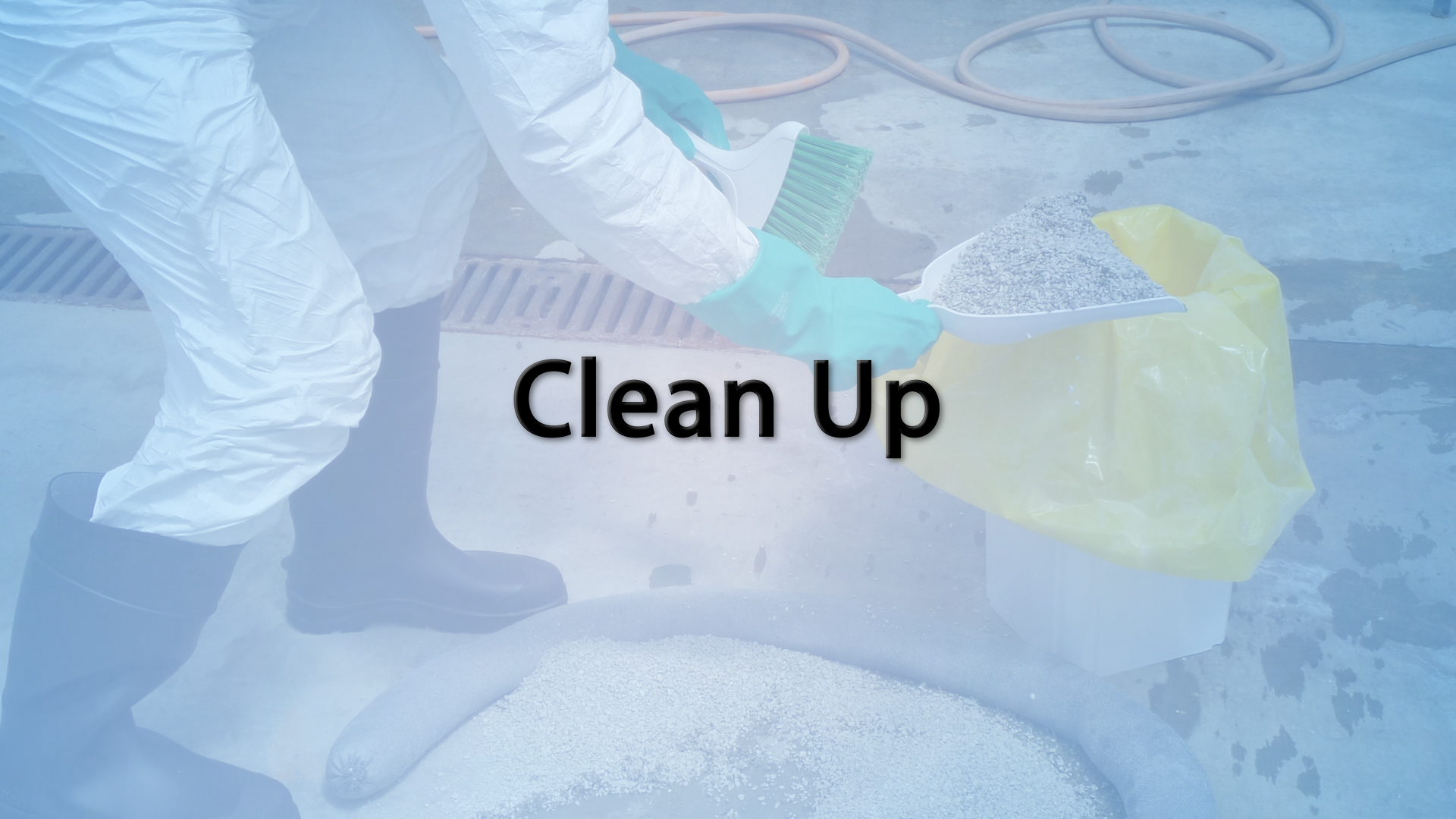
23. Clean-Up the spill site. Sweep up any absorbent materials and contaminated items and place them in a drum.
24. If the spill occurred on concrete or asphalt, neutralize the surface. Follow the instructions on the SDS.
25. If the spill occurs on soil, the State, tribe or territory agency will tell you what to do.
26. Keep records and photograph your activities, conversations with regulatory authorities, emergency responders, news media and the public. Prevent accidental spills by properly maintaining your application equipment and transportation vehicles.
27. Leaks and drips can occur from cracked hoses or loose hose clamps.
28. Refrain from cellphone use while driving. Use defensive driving techniques to prevent accidents.
29. Keep a spill cleanup kit in every transport vehicle and where pesticides are mixed, loaded, and stored. Cleanup kits should include telephone numbers for emergency assistance, PPE, absorbent materials; pillows, clay and cat litter, a shovel, broom and dustpan; and heavy duty detergent. Store your spill kit in a plastic container and keep it clean and updated.
Read More related articles