
Home & Family

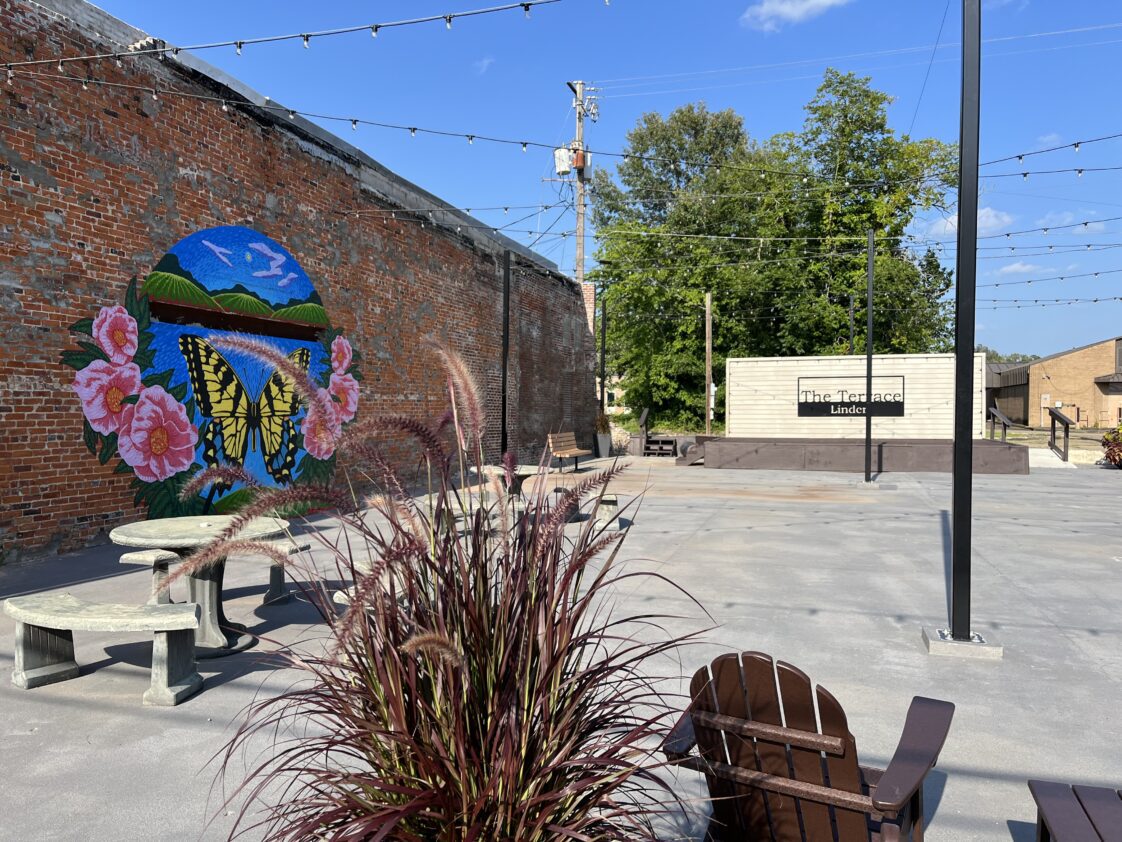
A mural and seating area in The Terrace in downtown Linden, Alabama.
AUBURN UNIVERSITY, Ala. — In the heart of downtown Linden, Alabama, a once-vacant lot has been transformed into a beautiful public space called The Terrace. Featuring colorful painted murals, picnic tables and strings of lights, the open-air venue is the perfect spot for concerts, community holiday celebrations, alumni gatherings and weddings.
“The Terrace has given people passing through Linden a reason to stop,” said Linden Mayor Gwendolyn Rogers. “It’s become kind of a natural meeting place, and I feel like that was something Linden really needed. I love to see families gather there or our older adults spending time sitting on the benches and enjoying the artistry of the murals.”
Mural artist Banks Compton created the murals at The Terrace as part of Linden’s downtown revitalization efforts. Learn more about the Linden, Alabama murals at bankscompton.com/linden-alabama-murals.
The Terrace is one of numerous projects that have come to fruition thanks, in part, to Thriving Communities. A program of Alabama Extension at Auburn University, Thriving Communities focuses on active living and healthy lifestyles. That includes projects that make it easier to walk around city centers. The program also helped the city of Linden establish partnerships with school officials, city and county law enforcement and Alabama Department of Transportation employees. Those partnerships led to new signage downtown.
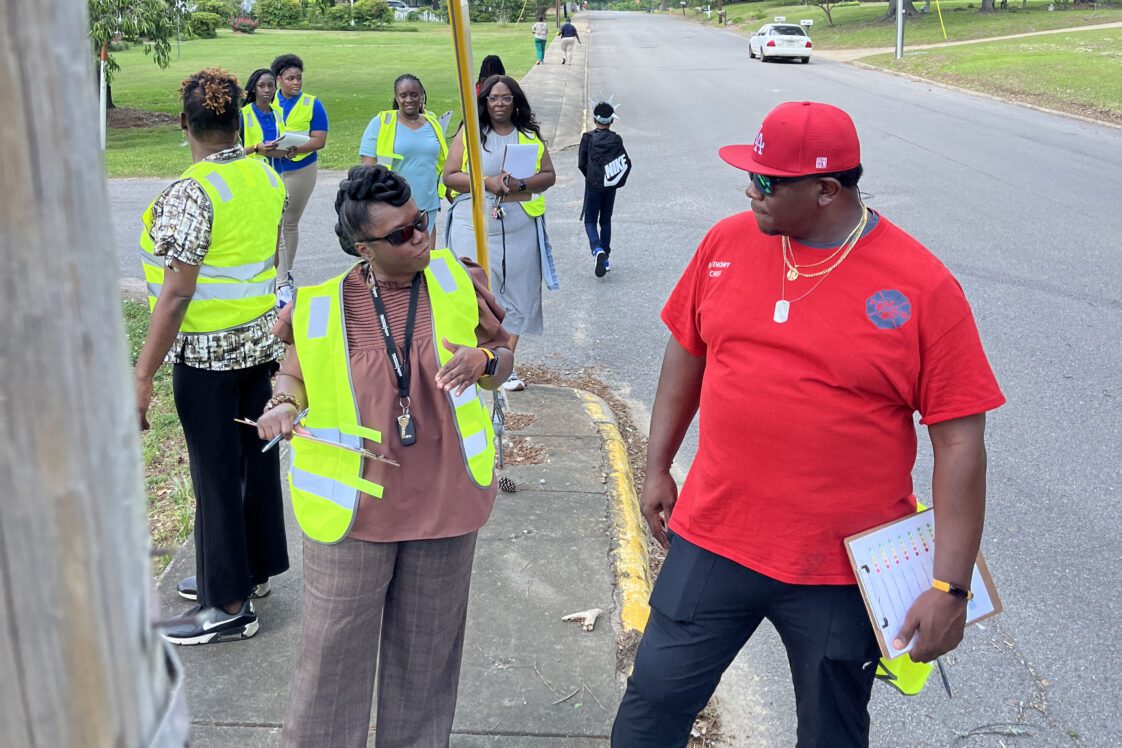
People participate in a Walkability Study in downtown Linden.
“It may seem simple, but new signs show that Linden is paying attention to details and building pride,” Rogers said. “Thriving Communities has helped Linden in ways that are very real and practical. The program provided support and guidance to improve our city without changing who we are. These efforts helped bring people together, improved how our city looks and reminded residents that Linden matters.”
To help other towns achieve similar successes, Alabama Extension and Auburn staff compiled the Thriving Communities PARTNER Toolkit. An acronym, PARTNER stands for Promoting Active Routes and Travel with Need and Experience-based Resources. The online toolkit provides information, tools and tips for transforming ideas into real community improvements.
Aggies Visit The Plains
Alabama Extension Specialists Mitch Carter and Ruth Brock and Jeffrey LaMondia, a professor in Auburn University’s Samuel Ginn College of Engineering, unveiled the PARTNER Toolkit in March during the national Active Living Conference at Kansas State University.
Their presentation sparked an interest in colleagues from other universities to increase collaboration among institutions that do similar work. Debra Kellstedt and Michael Lopez were among those colleagues. They are both assistant professors and specialists at Texas A&M AgriLife Extension Service, the Texas arm of the Cooperative Extension System, and serve various roles within Texas A&M University.
“After their talk, I wanted to meet them, and they’re just such a dynamic group,” Kellstedt said. “Later that spring, when we had an opportunity to apply for an SEC Travel Grant, I knew I wanted to visit Auburn. I liked the work they were doing, and it’s similar to what we’re doing in Texas.”
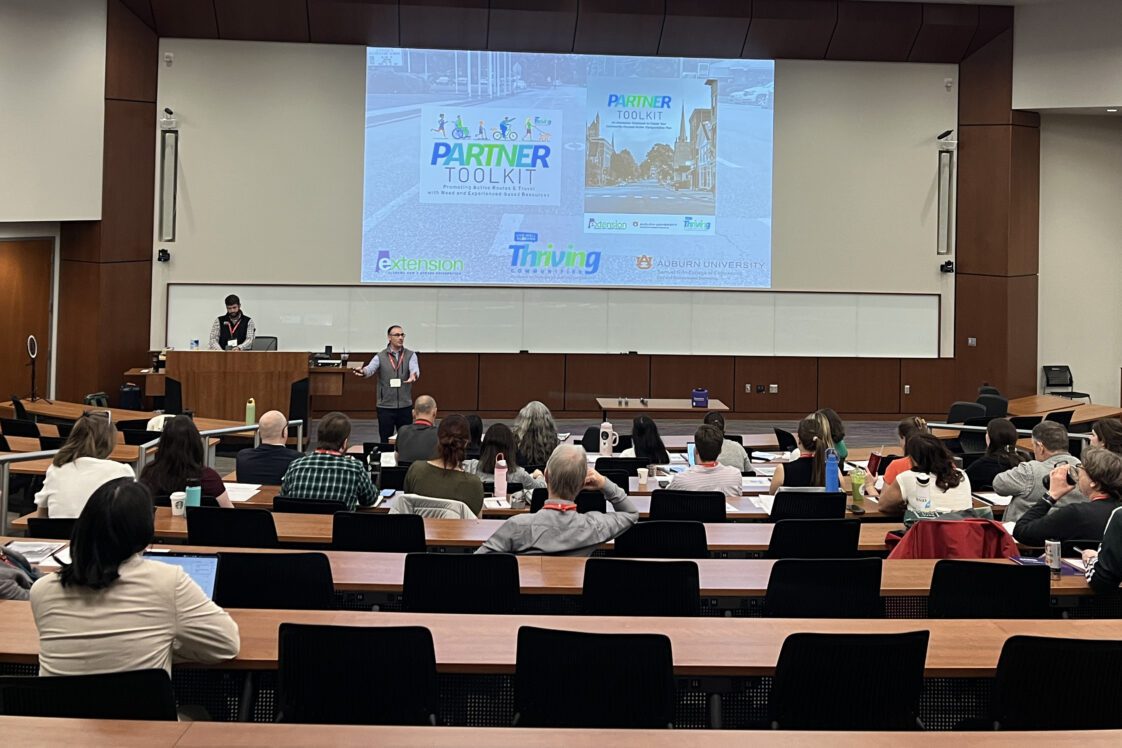
Mitch Carter and Jeffrey LaMondia present at the national Active Living Conference.
For their grant application, Kellstedt and Lopez — who work in various roles at Texas A&M University — worked with Alabama Extension and Auburn staff to develop an agenda for an intensive, in-person meeting. The group also planned to establish a foundation for a consortium of Cooperative Extension and land-grant university professionals focused on active living programs. With the travel grant approved, the pair visited Auburn Nov. 9-11.
“The SEC Travel Grant was essential to get us to Auburn,” Kellstedt said. “We have funding for our active living initiative. However, that is a state-level grant, which does not support traveling out of state. These three days of brainstorming and planning would not have happened without the travel grant. Also, I hope that in the future, we can reciprocate. We’d love for our Auburn colleagues to apply and use a travel grant toward a visit to Texas A&M.”
Foundation for National Consortium
During the visit, Kellstedt and Lopez mainly worked with Carter, Brock and LaMondia, as well as Katie Funderburk, Extension assistant director of federal nutrition programs. The group discussed priorities, goals, opportunities, resources and next steps for creating the national consortium. One major priority is connecting researchers with those who provide community outreach.
“I hope this meeting was a catalyst for building a lasting and impactful relationship between the two universities, including respective departments and Extension programs,” Carter said. “More broadly, I hope the consortium and its future work will lead to more vibrant communities in the Southeast. While the focus of active living is often centered around improving physical activity, we know creating more active communities contributes to economic development and it gives communities a unique sense of pride.”
While the group worked hard, the agenda included time for fun, too, including a tour of Jordan-Hare Stadium.
“I’ve been to almost all of the SEC institutions, and the tradition and energy on those campuses are special,” Lopez said. “To see how much tradition impacts Auburn, I think that was amazing. I am very thankful for this visit. I firmly believe that the work being done at Auburn and Alabama Extension provides a national example of incredible resources and partnerships that others can learn from.”
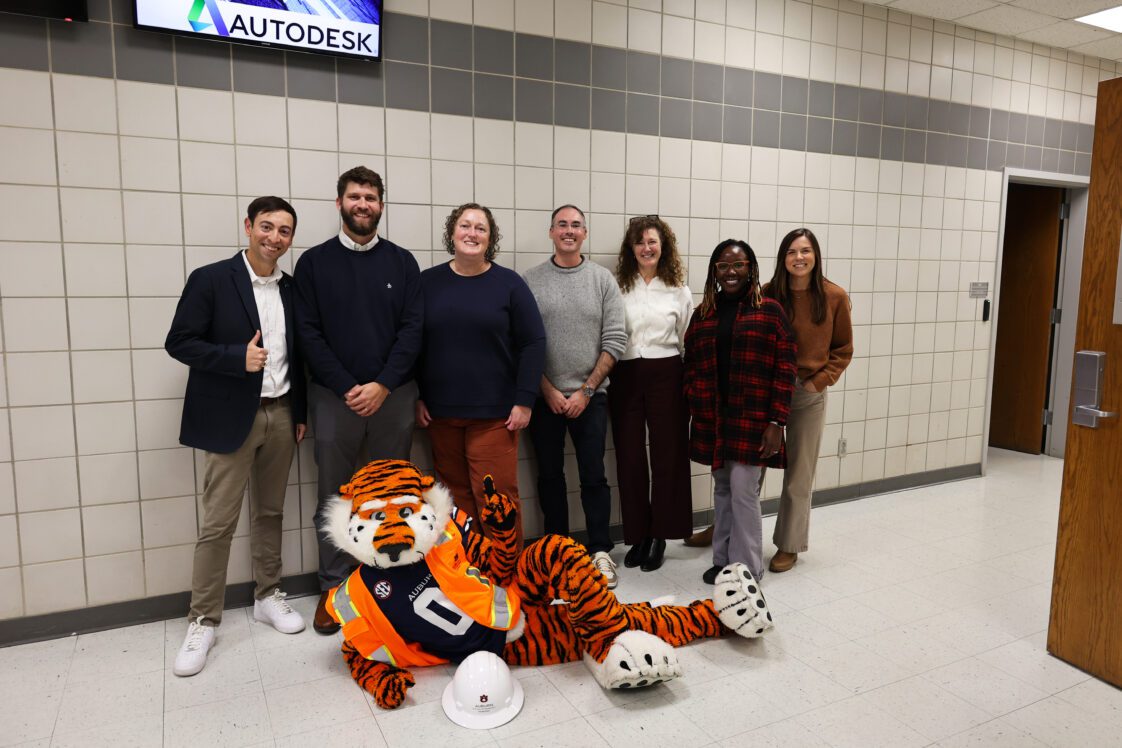
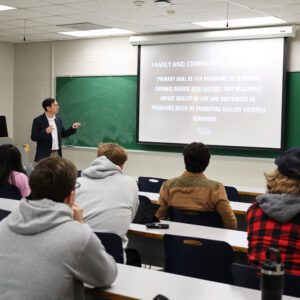
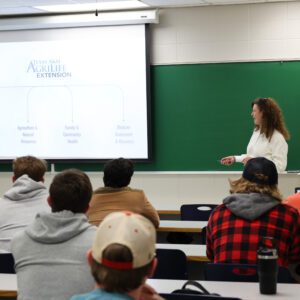
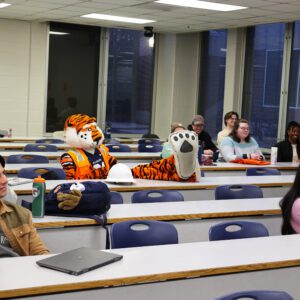
To conclude their meeting, the group also presented to LaMondia’s Multimodal Transportation Planning class of undergraduate and graduate students. The classroom visit featured a special guest appearance from Aubie, Auburn’s official mascot.
“In this course, students learn how to plan a transportation system from an engineering perspective, which involves modeling, forecasting and decision-making based on data,” LaMondia said. “The folks from Alabama Extension and Texas A&M AgriLife Extension provided a great perspective within a real-world context. This was the perfect opportunity for students to learn about factors that influence transportation outside of data alone. Plus, Aubie appearing in an engineering hard hat and safety vest was a joyfully chaotic end to class.”
National Plans with Local Impact
In March, this group of collaborators has plans to return to the annual conference that set this plan in motion. They hope to colead a workshop to gauge interest in other institutions joining the consortium.
“All of this has happened because that SEC Travel Grant allowed us to sit around a table together,” Carter said. “Whether we were in meetings or sharing meals, those face-to-face conversations allowed us to flesh out details. It’s work we could not have accomplished if we had to rely on occasional check-ins through a video chat.”
While plans for the national consortium continue to come together, the future looks bright for communities like Linden, Alabama.
“I want to see our public spaces continue to grow, our partnerships stay strong and our residents, especially our young people, feel proud of this city,” Rogers said. “Thriving Communities helped us take important steps, and I believe that the best is yet to come. I see better public spaces, more activity downtown and stronger relationships. All of that will continue to create safer spaces, build community and instill pride. When people care about their city, they look out for it.”
To learn more, search for Thriving Communities at aces.edu.