
Forestry & Wildlife

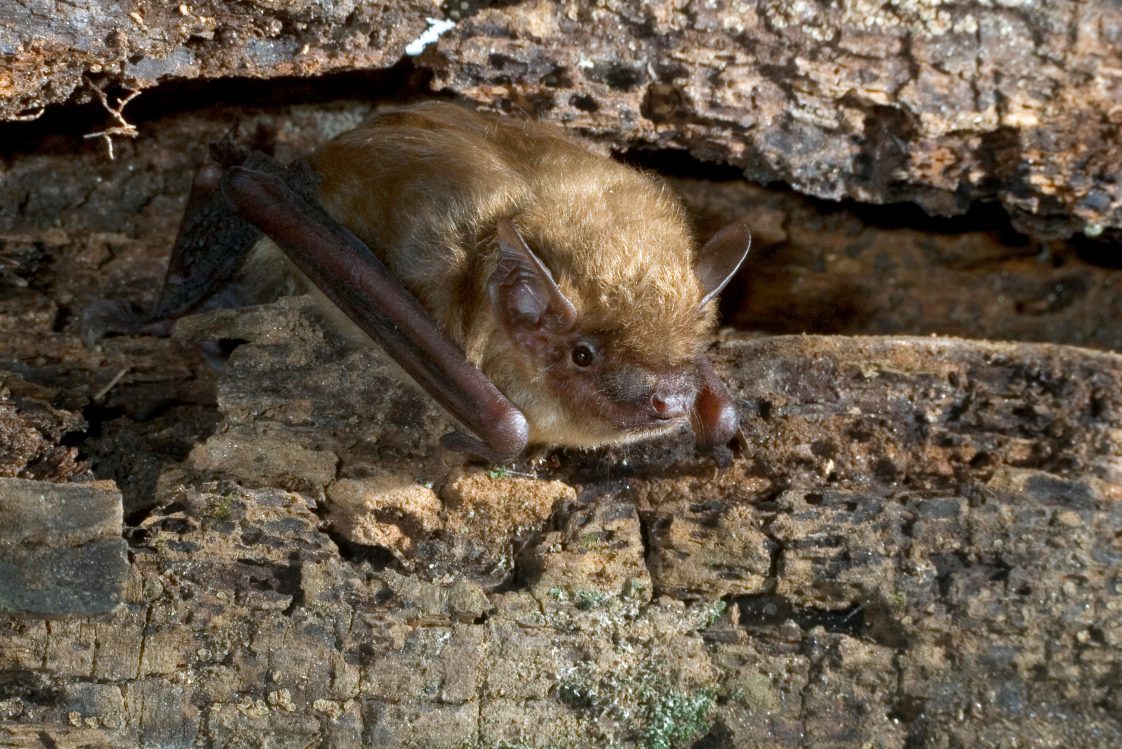
Although more than 1,400 bat species exist, only sixteen are found in Alabama. Bats are an important ecosystem component and provide numerous benefits to humans, but because of the various fictitious tales of terror that have been told throughout history about these creatures, they are often misunderstood by the public and have been needlessly killed. Globally, these animals provide invaluable services, such as seed dispersal, removal of insects that could damage agricultural crops, and pollination of many valuable plants, including dragon fruit, pitaya (cactus fruit), durian, and agave that is used to produce tequila and mezcal.
Bat Myths and Misconceptions
Many myths are associated with bats. While some may think bats are flying rodents, they are not. Bats are mammals in their own taxonomic order, Chiroptera. Bats are not blind; although they have small eyes, they can see well in dark conditions. They also rely on sound waves, or echolocation, to find insect prey and navigate at night. Many people also think that most bats suck blood when, in fact, only three bat species feed on the blood of other animals. Of all the other bat species in the world, some feed exclusively on insects, others on fruit or nectar, some on small vertebrates such as frogs and fish, and others on a general diet that can include insects, fruit, and vertebrates. In Alabama, however, each of the sixteen species is exclusively insectivorous. Many people think that bats eat enough mosquitoes to reduce their numbers significantly, but while mosquitoes may be part of an insectivore bat diet, bats alone will not control mosquito populations.
Bat Biology
As the only order of mammals with actual flight ability, bats possess unique anatomy and behavior. All bat species in Alabama are nocturnal and use echolocation to take advantage of the many insects moving at night. Compared to other mammal species, and especially compared to small rodents that live 1 to 3 years in the wild, bats can live an exceptionally long time, even up to 20 years or more. They also have an impressive immune system, likely due to the extreme energy they use when flying. This enables them to remain healthy even when infected with a virus. However, due to a long gestation period for their size (around 2 to 4 months) and a typical litter of 1 or 2 pups, bats are one of the slowest reproducing mammal groups, creating challenges for their conservation.
-
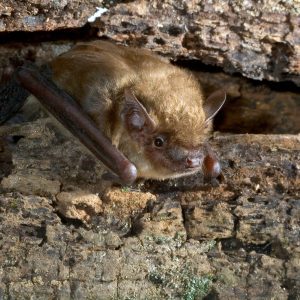
- Figure 1. Big brown bat (Eptesicus fuscus).
-
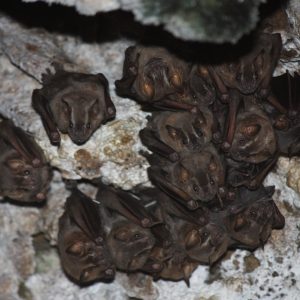
- Figure 2. Mexican free-tailed bat (Tadarida brasiliensis).
-
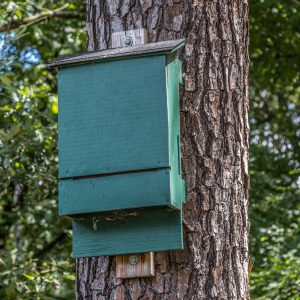
- Figure 3. Bat house.
Bat species show differences over where they roost—or make their home—and how solitary they are most of the year. Some bat species such as the big brown bat and the Mexican free-tailed bat (figures 1 and 2) are more likely to live in caves, buildings, or human-made bat houses (figure 3), whereas other species such as the eastern red bat (figure 4) and hoary bat are more solitary and will likely live in forested settings. In Alabama, solitary bats may decide to roost in tree hollows, under peeling tree bark such as the shagbark hickory (figure 5), or even in leaf litter (figure 6).
-
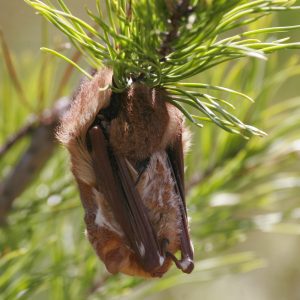
- Figure 4. Eastern red bat (Lasiurus borealis) on pine tree. (Photo credit: @kodiakgarden, iNaturalist.org)(CC-BY)
-
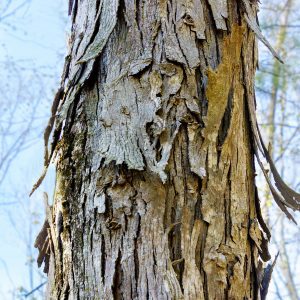
- Figure 5. Shagbark hickory (Carya ovata).
-

- Figure 6. Leaf litter.
In the fall after mating season, pregnant females may gather in colonies to roost. After a few months of gestation, bats give birth to pups in the spring and rear them through the summer. Most bat species only have one pup per litter because the babies can average a quarter to more than a third the size of the mother at birth. However, some species in the southeastern United States, including the eastern red bat, hoary bat, and evening bat, have smaller pups and may have between 1 and 4 per litter. As newborns, pups will cling to the mother as she hunts at night until they can roost unassisted. At that stage, the mother will leave the roost to feed and may return to nurse throughout the night until the pup can fly and hunt on its own.
Benefits of Alabama Bats
Many studies on the economic importance of bats have been conducted worldwide because of their pollination and pest management services. Because Alabama bats feed exclusively on insects, there is potential for reduction of the pests that farmers and gardeners often encounter. Rutgers University has identified the insect pests native bat species will consume and the affected crops that could benefit. Some insects that bats native to Alabama can consume include the green stink bug (Acrosternum hilare), brown stink bug (Euschistus servus), thrips (Aptinothrips rufus), and tarnished plant bug (Lygus lineolaris).
Globally, bats are critical to the ecosystem and economy, particularly in tropical and desert environments. Many species feed on the nectar and pollen provided by both native and cultivated crops and assist in the pollination of those plants. Countless communities rely on these bats for playing important roles in nature and for helping produce the fruits people depend on and enjoy.
Concerns and Risks
Although bats provide many benefits to humans, there are some risks to close encounters. Native bats can reside in various places in or around homes or buildings due to their small size. Openings as small as ½ inch can be used to gain access, including exposed chimneys, loose shingles, torn or missing screens on vents or windows, broken siding, or various junctions around the structure (figures 7 and 8). With so many places bats can position themselves, conflicts with these animals could easily occur.
-
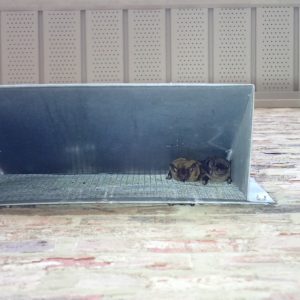
- Figure 7. Bats under a home side vent. (Photo credit: @friel, iNaturalist.org)(CC-BY)
-
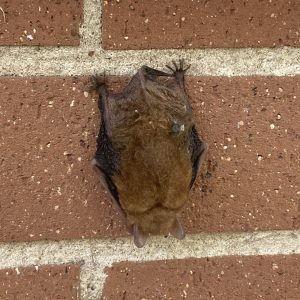
- Figure 8. Bat on a brick wall. (Photo credit: @featherenthusiast, iNaturalist.org)(CC-BY)
Because of the small size of the bat species in Alabama, bites may seem insignificant or go unnoticed. However, it is important to seek medical care when a bite has occurred or potentially could have occurred. Bats are one of the most common reservoirs— or long-term sources—of rabies, which is almost always fatal if treatment does not happen before symptoms arise, according to the Alabama Department of Public Health. Although only a small percentage of bats will carry the virus, one should seek immediate medical attention if a bat is found in a house or bedroom where it is likely that someone has slept with the animal present.
Histoplasmosis, a fungal disease, can also be contracted through respiration of contaminated soil often associated with bird droppings or bat excrement, known as guano. When humans contract histoplasmosis, symptoms are similar to those of other lung infections—fever, cough, fatigue, chills, headache, chest pain, and body aches. In most cases, the symptoms resolve themselves in a few days to a month, but in severe cases, often in immunocompromised individuals, a long-term lung infection can develop with the potential to spread to other parts of the body with additional complications or even death.
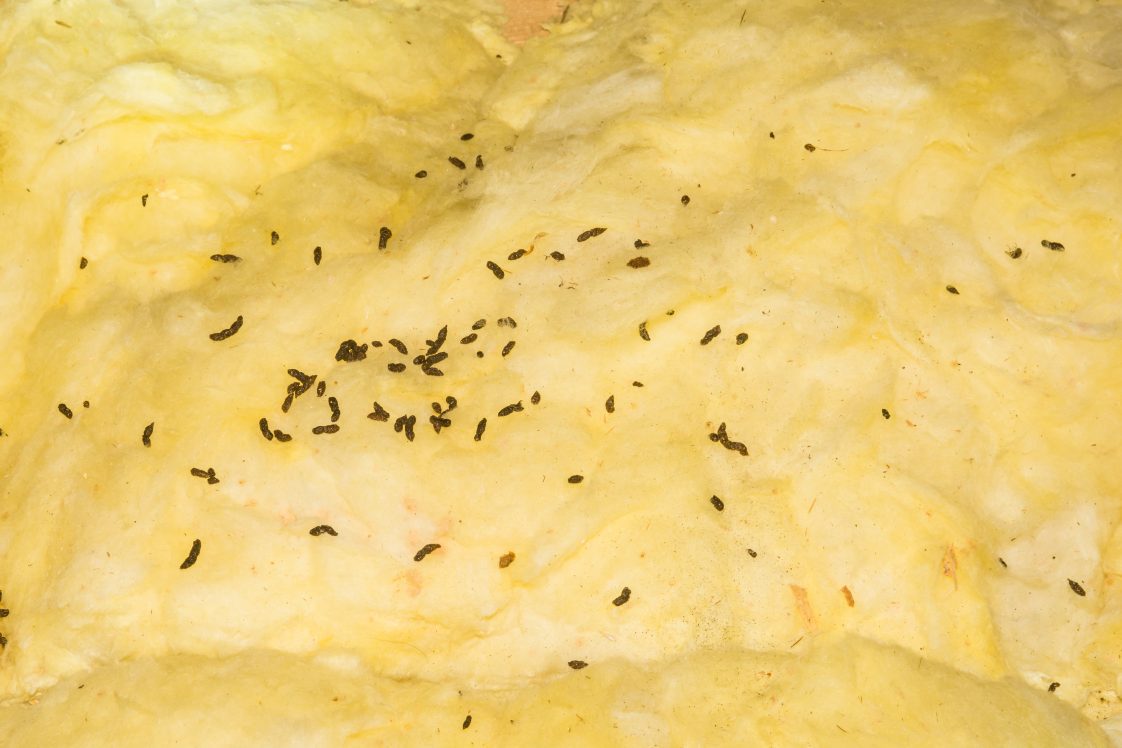
Figure 9. Bat feces on attic insulation.
While certain species of bats in other parts of the world have contributed directly and indirectly to cases of different viruses, such as Hendra and Nipah, there is a low chance of outbreak in the United States. Many diseases linked to handling, killing, or harvesting bats can be prevented internationally through regulating and enforcing bans on illegal wildlife trade and markets, restricting harvesting for human consumption, and implementing best management practices in forestry.
Along with the human health concern, other issues are related to bat excrement. Not only will large amounts of feces produce a foul odor, but guano can also stain structures, making them unsightly and contaminated (figure 9). Over time, urine may weaken wooden structures through crystallization of the liquid. Significant excrement deposits can also attract insects, including beetles, cockroaches, and bat bugs, leading to additional concerns over contamination, disease, and health matters.
Nuisance Bat Management
Before any bat management is conducted, it is important to note that no toxicants or fumigants are registered for bat control. This means that the toxicants and fumigants to control some nuisance wildlife species or other pests, such as insects, should not be used. The protection status of several species may also make other lethal strategies illegal. Bat exclusion or removal should only occur outside the pupping season to prevent separation of juvenile bats from their mothers. This ensures that the young can continue nursing and mature into adulthood, which supports bat population growth and avoids issues like odor and contamination from pups that might otherwise die trapped in the structure when they cannot fly.
If you encounter a bat in your home, school, or place of business, it is important to look for other signs to understand what measures should be taken. The number of bats and the situation will determine the necessary action. A bat may sometimes find its way into a structure as it is migrating or moving through an area and may only occupy the space for a night or a few days. However, in buildings or homes frequently used by humans, it is essential to remove the bat as soon as possible. If there is evidence of a potential colony through observation of multiple bats or a significant amount of bat feces, contact a nuisance wildlife control operator permitted to remove bats. Check the Alabama Department of Conservation and Natural Resources website for a list of permitted operators.
When the bat is likely solitary and has unintentionally entered a building or home, providing access to openings such as windows or doors while closing off adjacent rooms, turning off fans and lights, and being patient and quiet may encourage the bat to find the available exits. If the bat does not leave and a bite or scratch is not known or suspected to have occurred, relocation to the outside can be performed with thick leather gloves, long sleeves, a plastic face shield or other face cover, and a small, disposable cardboard or plastic box such as a disposable food container. Once the bat lands in an accessible spot, place a box over it and then slide a piece of cardboard or a lid under it while wearing proper clothing and thick work gloves. Never handle a bat with your bare hands. The bat can then be released outside near a tree or other spot at least 5 feet above ground level. Throw away the box or container used to transport the bat. If you are not confident that you can do this safely on your own, contact someone on the Alabama Permitted Nuisance Wildlife Control Operators list to assist you with removal.
If a bat is roosting inside a building or home, finding areas that may allow entrance is imperative. Observing the structure 30 minutes before dark for approximately 1 hour can help identify where the bats are entering and leaving. Avoid shining bright lights on the structure because bats are sensitive to light. If possible, use a red light to illuminate the area. If unsuccessful, try the observation again to account for variations in the weather or other factors.
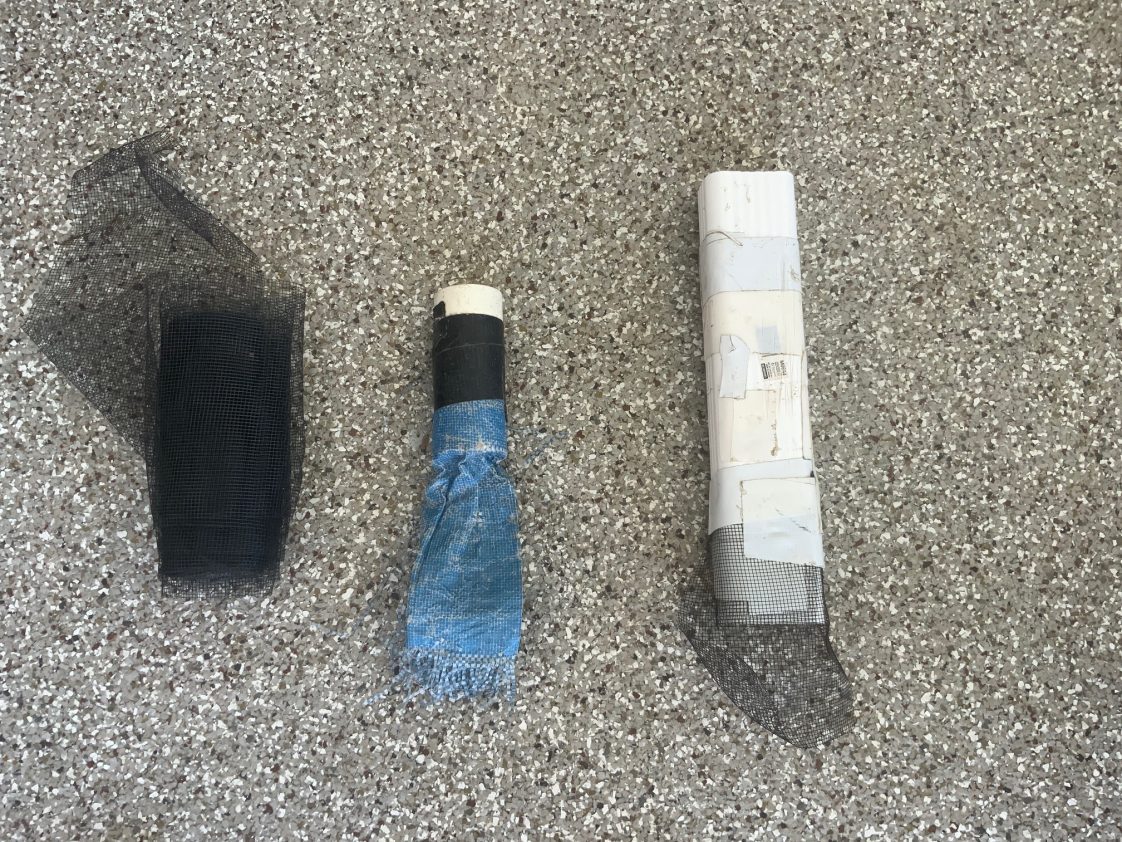
Figure 10. One-way bat exclusion devices.
(Photo credit: Conservation Services of Alabama, LLC)
Once the entry point is located, exclusion mechanisms such as one-way doors or funnels can be used outside the pupping season (April through August) to allow bats to exit the structure and prevent re-entry (figure 10). Because adults leave pups in the roost when they go to feed, it is essential not to use exclusion methods during this time. Doing so leaves the pups trapped inside, causing them to die from starvation. Not only is the odor and contamination a concern in that scenario, but due to the long gestation period and small litter sizes, conservation of many bat species relies on successful young development that would be halted if exclusion is performed during this time. Outside of the pupping season, one-way doors can be placed on active entry points for 3 to 5 days (or longer if there has been inclement weather) to exclude bats from a structure. Netting can also be used to allow exit but deter re-entry. Make sure to seal all inactive cracks and openings with mesh or caulk.
Bats that roost on outside structures, such as under patio roofs or behind shingles, often do so temporarily. If the area is not used by people and bat droppings do not accumulate to levels of concern, control may be unnecessary. In areas where bat presence is a concern for human activity, adding angled crown molding that removes access to 90-degree corners may deter bats from using the structure. If outside lights are attracting insects to the area, choose a bulb with a warmer hue over a white light to reduce the gathering of insects and the bats that are attracted to them.
Bat Conservation
Bat populations have decreased in the United States due to several factors. Of the sixteen species of bats native to Alabama, ten have either state or federal protection. Land use change has led to decreased suitable roosting sites and disturbances during hibernation may affect body reserves needed for the bats to last through the winter. In north Alabama, where there are numerous caves, disturbance of these places is a major concern. Fewer standing dead trees (snags) and trees with defects, mining operations, intentional killing, and climate change have contributed to reduced bat populations. Agricultural practices, such as the use of pesticides, have also reduced insect populations available for food and contaminated insects with bioaccumulating compounds that bats can consume.
White-nose syndrome (WNS), a fungal disease discovered in 2006, has also devastated US bat populations. For the three species studied by the US Fish and Wildlife Service—the northern long-eared, tricolored, and little brown bat (all found in Alabama)—populations have decreased by at least 90 percent. In Alabama, WNS was first documented in 2012 in Jackson County and has been confirmed or suspected in at least fourteen counties, mainly in the northernmost part of the state. At least eight of Alabama’s sixteen bat species have confirmed cases of WNS in parts of their native range (some yet to have confirmed cases in Alabama), with four other species having positive cases of the fungus but no sign of the disease.
Many forestry and agricultural practices can be implemented to conserve bat habitat. This includes retaining snags of 3 inches or greater diameter where safe to do so; protecting streamside management zones and preserving canopy cover over rivers and creeks; retaining many large-diameter trees, especially those with exfoliating bark or cavities; and harvesting according to best management practices where bats are known to be roosting. Reduction of pesticide use could benefit bats by maintaining prey populations and reducing the negative impacts from contact with certain chemicals.
In summary, bats provide valuable agricultural and ecological services. While there are risks of disease from contact with these species, several strategies can provide safe solutions when nuisance management is necessary. Because many bat species in Alabama and worldwide are of high conservation concern, it is important to use nonlethal measures when conflict arises with these creatures and to apply best management practices when conducting land management activities.
For further reading on nuisance bat management or bat conservation, visit the Bat Conservation International website. For more information on Alabama’s native bat species, please visit the Alabama Department of Conservation and Natural Resources website. For additional resources or more information on rabies, please visit the Alabama Department of Public Health website. View the Alabama Bats poster and related article on the Alabama Extension website at www.aces.edu.
References
- Farmer, Sarah. 2012. Leaf Litter Keeps Ground Roosting Bats Warm. U.S. Forest Service Southern Research Center.
- Cheng, T. L., Reichard, J. D., Coleman, J. T., Weller, T. J., Thogmartin, W. E., Reichert, B. E., Bennett, A. B., Broders, H. G., Campbell, J., Etchison, K., Feller, D. J., Geboy, R., Hemberger, T., Herzog, C., Hicks, A. C., Houghton, S., Humber, J., Kath, J. A., King, R. A., Loeb, S. C., Masse, A., Morris, K. M., Niederriter, H., Nordquist, G., Perry, R. W., Reynolds, R. J., Sasse, D. B., Scafini, M. R., Stark, R. C., Stihler, C. W., Thomas, S. C., Turner, G.G., Webb, S., Westrich, B. J., Frick, W. F. 2021. The scope and severity of white-nose syndrome on hibernating bats in North America. Conservation Biology, 35(5), 1586–1597.
- Hayman, D. T. S., Bowen, R. A., Cryan P. M., McCracken, G. F., O’Shea, T. J., Peel, A. J., Gilbert, A., Webb, C.T., Wood, J. L. N. 2012. Ecology of Zoonotic Infectious Diseases in Bat: Current Knowledge and Future Directions. Zoonoses Public Health 60(1): 2-21.
- Ober, H. K., & Wisely, S. M. 2020. Facts about Wildlife Diseases: Bats and Coronaviruses: UW473/WEC428, 05/2020. EDIS, 2020, 4.
- Maslo, B., and Kerwin, K. 2020. Fact Sheet FS1270: Ecological and economic importance of bats in Integrated Pest Management. Rutgers: New Jersey Agricultural Experiment Station.
 Kerry Steedley, Extension Agent, ACES-AFNR-Field, and Wesley Anderson, Extension Specialist, Assistant Professor, Forestry, Wildlife, and Environment, both with Auburn University
New September 2025, Bat Management for Alabama, FOR-2183