
Food Safety

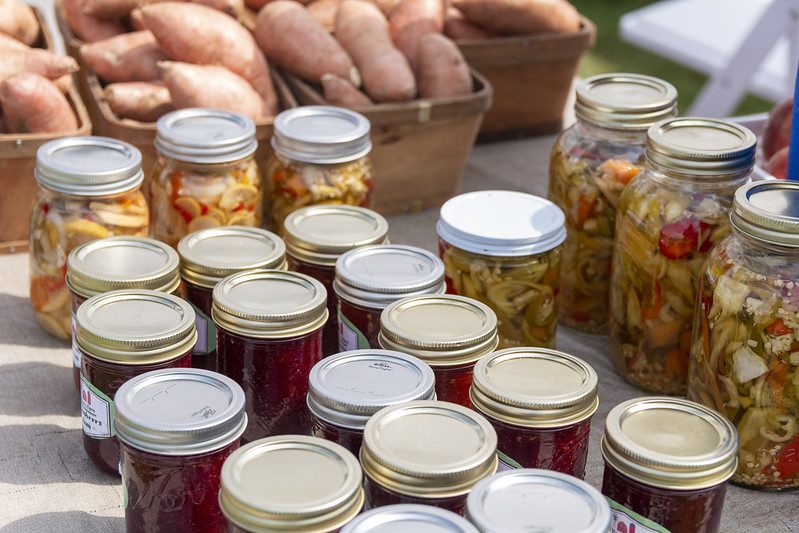
Food preservation has long helped people extend their harvests, maintain food supplies during shortages, and control what goes into their food. Of course, there have been some big changes along the way that have come about for several reasons:
- People better understand foodborne illness and the hazards that can be associated with food preparation and preservation.
- Some ingredients have changed. For instance, tomatoes today are not as acidic as they used to be. This is why current recommendations include the addition of acid to canned tomatoes. Also, some old pickling recipes were based on a vinegar with 10 percent acidity. Modern recipes have been developed with a 5 percent acidity vinegar, and the 10 percent acidity vinegar isn’t readily available.
- There is a wider variety of ingredients. For example, canning recipes for peaches are designed for yellow peaches, which are acidic. While white peaches have become popular for fresh eating, they are low in acid and cannot be safely canned using recipes meant for yellow peaches.
These are just a few of the many reasons why it is important to use a current, tested, and verified recipe and process to ensure safety. The food that you work hard to produce and preserve should nourish your body, not make you sick. Foodborne illness is dangerous and can even result in disability and death in some cases.
Recipe Resource
The National Center for Home Food Preservation (NCHFP) is a great source for current, tested, and reliable recipes. Their Newsflash provides the latest news and updates on food preservation. For example, the August 2025 Newsflash provided interesting information on pepper jelly. Adding peppers—or other low-acid ingredients—to any canned product could reduce the acid enough to result in an unsafe product if the recipe was not designed and tested with the added ingredient. The NCHFP recommends adding a small amount (1 teaspoon or less) of flavorings or herbs for people who want to add a little variety to jams and jellies. You can subscribe to Newsflash and find a variety of recipes and so much more at nchfp.uga.edu.