
Fish & Water

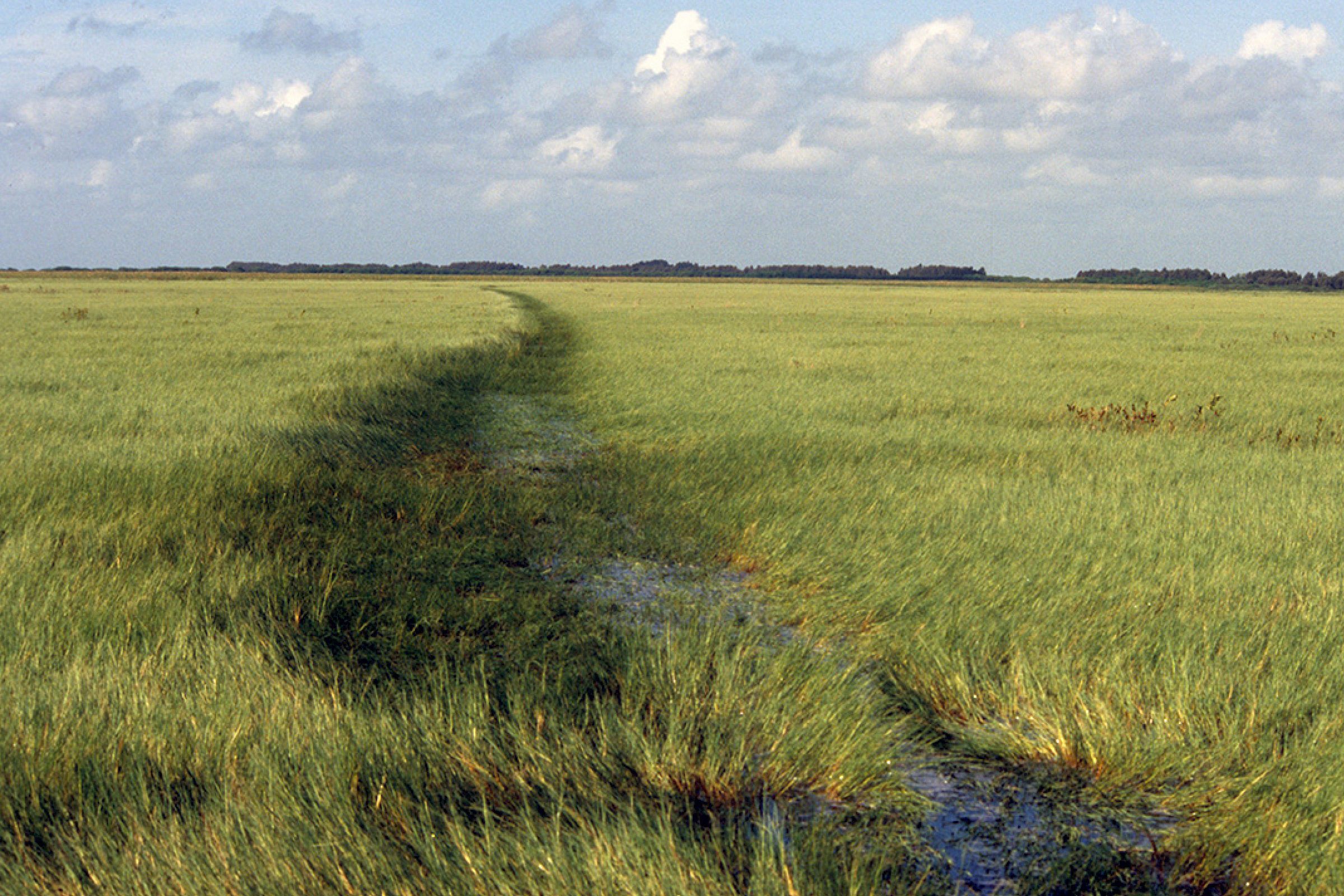
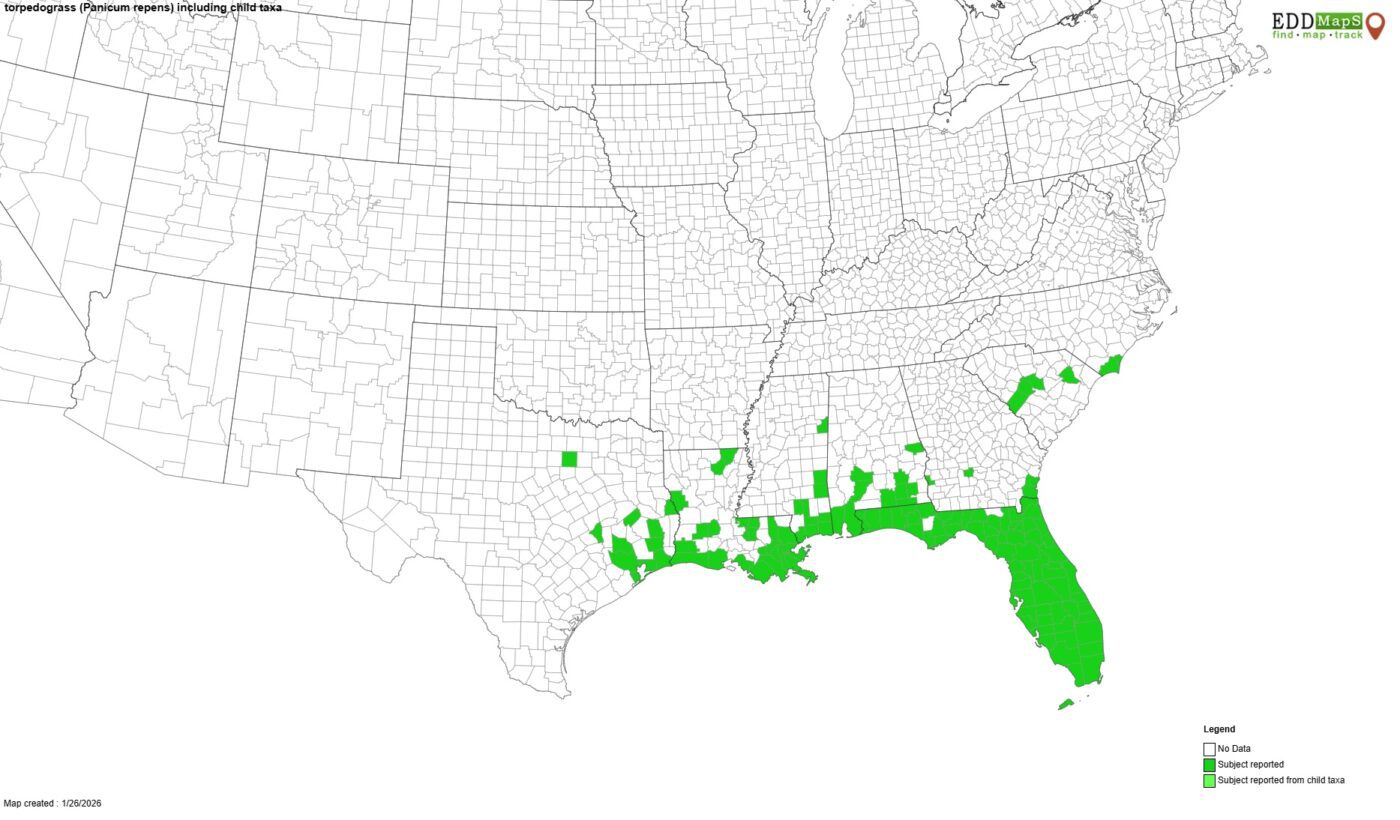
Figure 1. Southeastern range of torpedograss. (Image credit: EDDMapS)
Torpedograss, also known as bullet grass, is an invasive perennial grass that poses major challenges in both terrestrial and aquatic systems across the southeastern United States. Long-term control requires an integrated management system combining herbicides, scouting, and site restoration.
Torpedograss (Panicum repens) was brought to the United States Gulf Coast before 1876 as a potential forage for the cattle industry. It is believed to be native to tropical Africa, North Africa, and the Mediterranean. In the United States, it quickly escaped cultivation and is now widespread throughout the Gulf Coast region (figure 1).
Torpedograss is currently listed as a noxious weed in Alabama, Hawaii, and Texas and is ranked as a category 1 invasive by the Florida Invasive Species Council (FISC). It is recognized as one of the world’s most problematic weeds and continues to expand its range in wetlands, shorelines, pastures, turf, and disturbed sites. In Florida alone, more than 70 percent of the state’s public waters are infested with torpedograss.
Identification
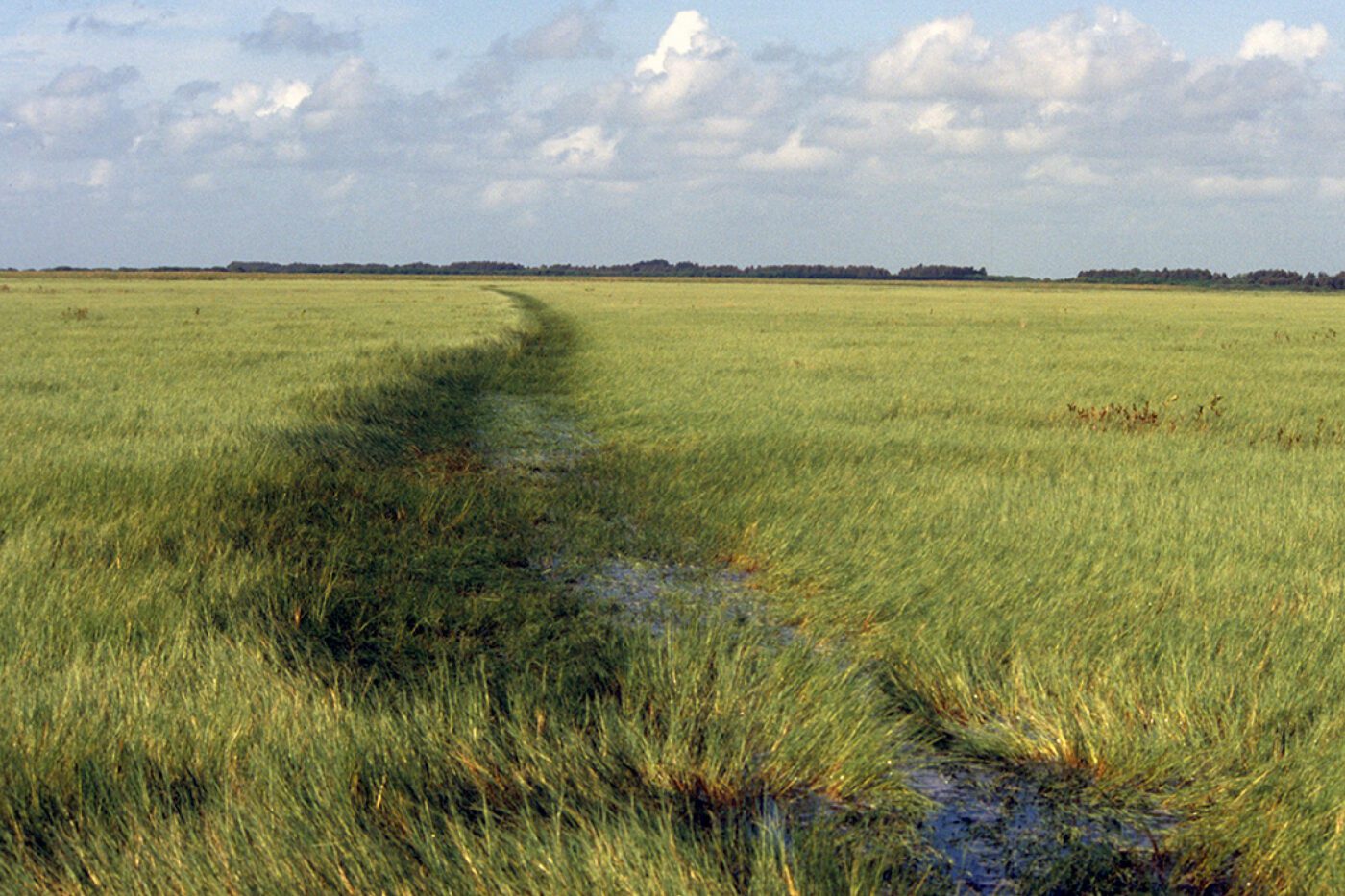
Figure 2. Torpedograss forms monocultures and outcompetes native vegetation. (Photo credit: Jeff Schardt, Florida FWC)
Torpedograss is a perennial rhizomatous creeping grass capable of forming dense monocultures (figure 2), much like cogongrass (Imperata cylindrica). Though often recognized for its colonization of aquatic areas, torpedograss can also be found in dry upland sites. This makes it difficult to control because the rhizomatic growth occurs under the soil. Characteristics of the grass include the following:
Growth
- Perennial grass growing up to 3 feet tall
- Long creeping rhizomes tipped with sharp, torpedo-like points (figure 3)
- Rigid aerial stems produced from underground rhizomes (figures 4 and 5)
Leaves (figure 6)
- Linear, flat, or folded, typically 1 inch to 10 inches long and 0.04 inches to 0.25 inches wide, often with a waxy or whitish coating
- Sheaths glabrous or hairy; ligule membranous with short hairs
Reproduction
- Predominantly vegetative propagation via stolon and rhizome fragments
- Rhizome node and stem fragment capable of producing new plants, making attempted control by mowing and other mechanical disturbance a risk factor for spread
- Sexual reproduction (via seeds) limited; overall reproductive success low
- Flowers throughout summer and into early fall (May to November) (figure 7)
Habitats
- Wetlands, lakeshores, marshes, shorelines of brackish and freshwater systems
- Coastal sand dunes, ridges, plains, and beaches
- Lawns, landscapes, abandoned fields, and disturbed uplands
-
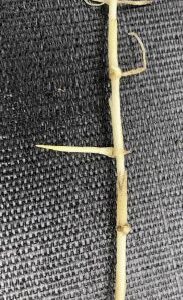
- Figure 3. Sharp pointed rhizome of torpedograss. (Photo credit: Chris Marble, UF/IFAS CAIP)
-
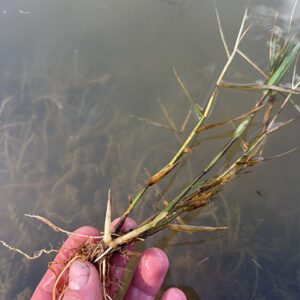
- Figure 4a. The sharp, torpedo-like points have a penetrating capability.
-
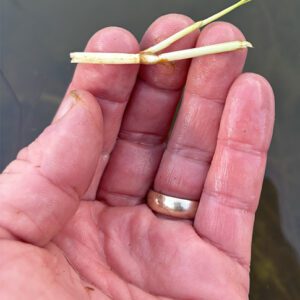
- Figure 4b. The sharp, torpedo-like points have a penetrating capability.
-
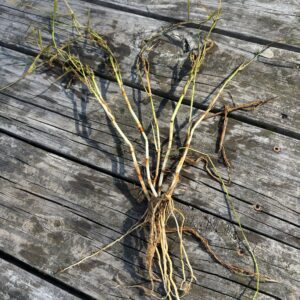
- Figure 5. Underground rhizomes create a clumped root structure.
-
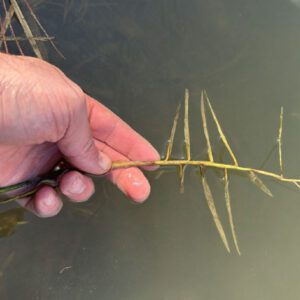
- Figure 6a. Torpedograss leaves are linear, flat, or folded, often with a waxy or whitish coating.
-
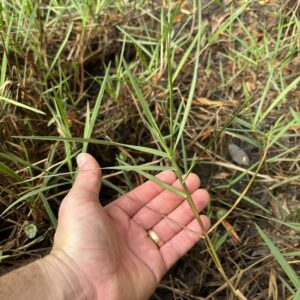
- Figure 6b. Torpedograss leaves are linear, flat, or folded, often with a waxy or whitish coating.
-
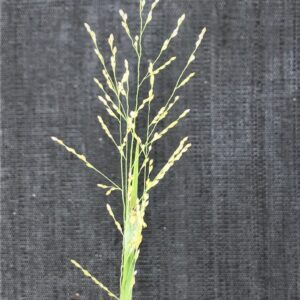
- Figure 7. Inflorescent flowers appear throughout the summer and into fall. (Photo credit: Chris Marble, UF IFAS).
Best Management Practices
No single method of control can eradicate torpedograss in one season; however, with proper prevention and an integrated approach using repeated chemical treatments, the best results can be achieved.
Four R’s of Herbicide Application
Watch “Using Herbicides,” a Management Minute video on the Alabama Extension website at www.aces.edu to learn the four R’s of herbicide application:
- Right herbicide
- Right rate
- Apply based on the label
- Right time (growing season)
- April to October
- Weather impacts (wind and rain)
- Right place (site of application)
- Soil type
- Water features
- Land use
Site-Specific Chemical Control (Table 1)
Aquatic sites: Use foliar application of aquatic-labeled glyphosate and imazapyr with nonionic surfactant. Scout for resprouting every 6 to 8 weeks during the growing season (April to October).
Turf and landscapes sites: Spot-treat with glyphosate; repeat multiple times. Reestablishment of grass may be necessary for heavily infested lawns.
Pastural, agricultural, and forested sites: Use site-specific herbicides and maintain competitive forage cover. In fire-dependent ecosystems, herbicide applications after a prescribed fire have proven effective for control.
Table 1. Recommended Herbicide Rates for Torpedograss
2Addition of a nonionic surfactant at .25% to .5% vol./vol. is recommended for foliar herbicide treatments unless a surfactant is included in the formulation.
3Imazapyr is soil active and can damage nearby plants/trees. Not for residential use.
4Irrigation restrictions apply for turfgrass and crops. Read the label.
Use proper personal protective equipment (PPE) when applying herbicides. Read the label.
Source: Mississippi State University and University of Florida
| Herbicide Active Ingredient | Herbicide Trade Name | Application Method | Rate1 | Site | Formulation |
|---|---|---|---|---|---|
| Glyphosate | Rodeo, Aquamaster, Roundup Custom & More | Foliar2 | 2% solution vol./ vol. 2.5 fl. oz./gal. | Aquatic | Liquid |
| Glyphosate | Roundup, Glypro, Accord & More | Foliar | 2% solution vol./ vol. 2.5 fl. oz./gal. | Terrestrial | Liquid |
| Glyphosate + Imazapyr3 | Rodeo, Aquamaster, Roundup Custom & More Arsenal, Ecomazapyr, Habitat, Polaris & More | Foliar | 1% solution vol./ vol. 1.25 fl. oz./gal. + 1.25 fl. oz./gal. | Aquatic | Liquid |
| Imazapyr | Arsenal, Chopper, Polaris & More | Foliar | 1% solution vol./vol. 1.25 fl oz/gal | Terrestrial | Liquid |
| Imazapyr | Arsenal, Ecomazapyr, Habitat, Polaris & More | Foliar | 1% solution vol./vol. 1.25 fl. oz./gal. | Aquatic | Liquid |
| Flumioxazin4 | Clipper SC, Propellor, Flumigard | Foliar | 12 oz./ac. | Aquatic | Water dispersible granule |
| Quinclorac | Drive 75DF, Paramount 75DF | Foliar | 1 lb./ac. | Terrestrial/ Residential | Dry flowable |
Mechanical Control
Disturbance, such as mowing or disking, may worsen spread by fragmenting rhizomes.
Preventive Cultural Practices
Carefully inspect boating equipment, such as propellers and trailer rails, to make sure torpedograss vegetation is not transported between water bodies.
- Maintain dense desirable vegetation to reduce spread.
- Use clean fill/soil to avoid contamination from rhizome fragments.
- Maintain prescribed fire activities in fire-dependent environments with a combination of chemical controls.
Conclusion
Torpedograss remains one of the most aggressive invasive grasses in the southeastern United States. Long-term control of this weed requires an integrated management system combining herbicides, scouting, and site restoration. Understanding its nature and aggressive rhizome-driven spread is essential for protecting landscapes from its highly invasive characteristics.
Works Cited
- “Torpedograss.” 2020. Mississippi State University Extension Service
- “Panicum repens.” 2026. United States Department of Agriculture
- “Torpedograss (Panicum repens).” 2026. Mississippi State University Extension Service
- “Torpedograss: Panicum repens (Cyperales: Poaceae).” 2018. Invasive Plant Atlas of the United States
- “Panicum repens.” 2018. Plant Directory, Center for Aquatic and Invasive Plants, University of Florida Bodrey, Ray. “Torpedograss: a Challenge to Manage on Land or Water.” 2019. University of Florida Extension
- Khamare, Yuvraj, Candice Prince, and Chris Marble. “Biology and Management of Torpedograss (Panicum repens) in Ornamental Landscape Planting Beds”
- Turnage, Gray. “Control of Torpedograss (Panicum repens) through Submersed Applications of Systemic and Contact Herbicides – Interim Report”
- “Torpedo Grass (Panicum repens) Ecological Risk Screening Summary.” 2016. U.S. Fish & Wildlife Service
- Early Detection & Distribution Mapping System. 2026. The University of Georgia, Center for Invasive Species and Ecosystem Health
 Levi Blackmon, Extension Agent, Aquatic Resources, Auburn University
New April 2026, Torpedograss: Identification & Control, ANR-3233