
Fish & Water

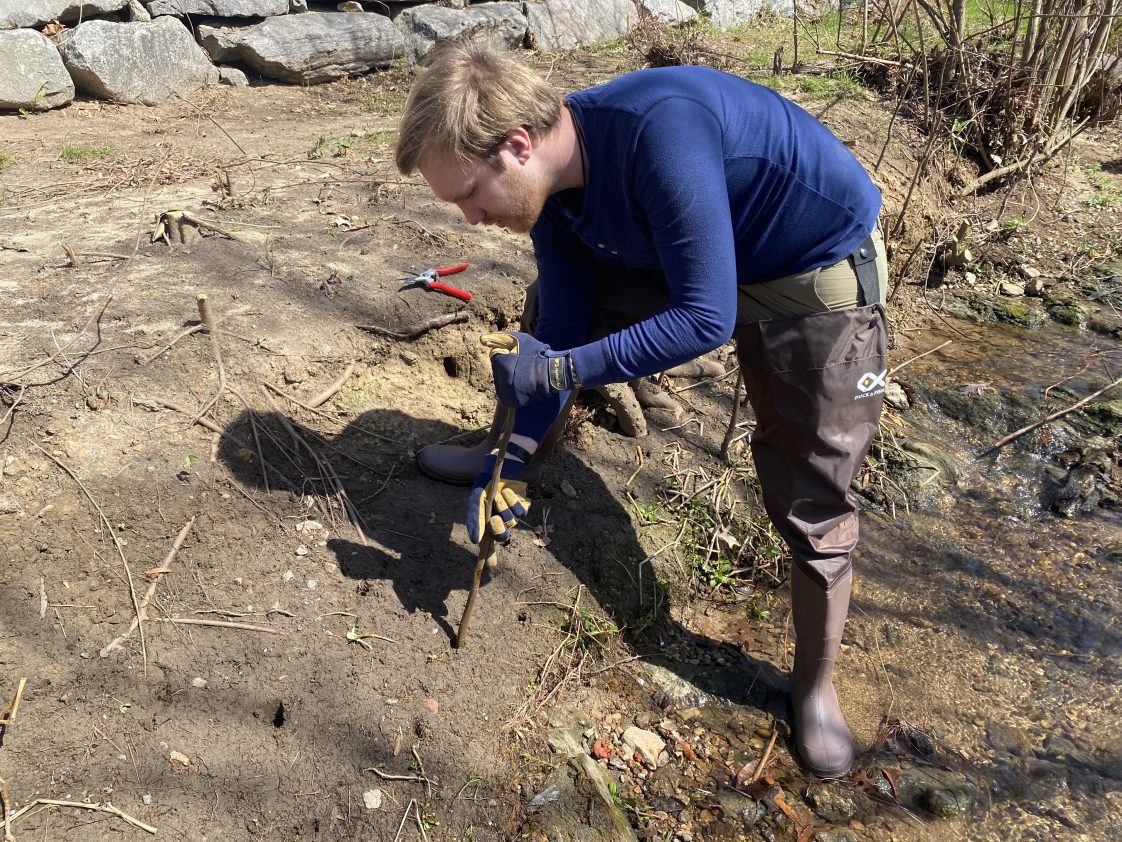
Many people struggle with eroding waterways on their property and wonder how to slow the erosion. Learn ways to propagate native plants during their dormant season as “live stakes” that can be inserted into the lower 2 feet of stream banks to initiate plant growth, rebuild streamside vegetation, slow erosion, and restore ecosystem functions.
Riparian Buffers
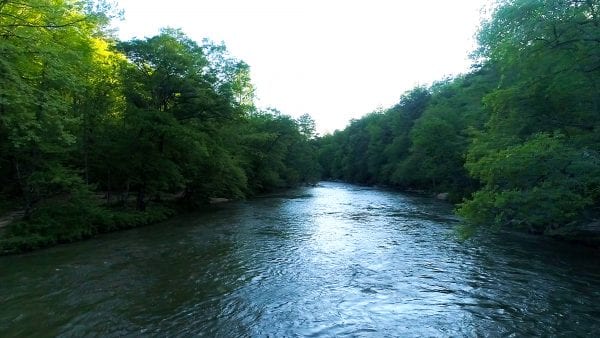
Figure 1. A healthy riparian buffer along an Alabama waterway.
Riparian buffers are vegetated areas along waterways. They can significantly improve stream health in agricultural, urban, and suburban areas and help prevent streamside erosion. These buffers are ideally 30 to 100 feet wide on both sides of waterways (although any size can be helpful). Riparian buffers protect water quality by intercepting sediment, fertilizers, pesticides, and other pollutants from runoff before they enter streams. Well-designed buffers with diverse vegetation, including grasses, perennials, shrubs, and trees, can remove up to 80 percent of excess nutrients, with forested buffers providing maximum benefits (figure 1).
Riparian buffers partially assist with the following:
- Stabilizing eroding stream banks and preventing in-stream scour
- Filtering sediment and organic material from stormwater runoff
- Filtering nutrients, pesticides, and other chemicals
- Providing wildlife habitat and shade to maintain water temperatures suitable for aquatic organisms
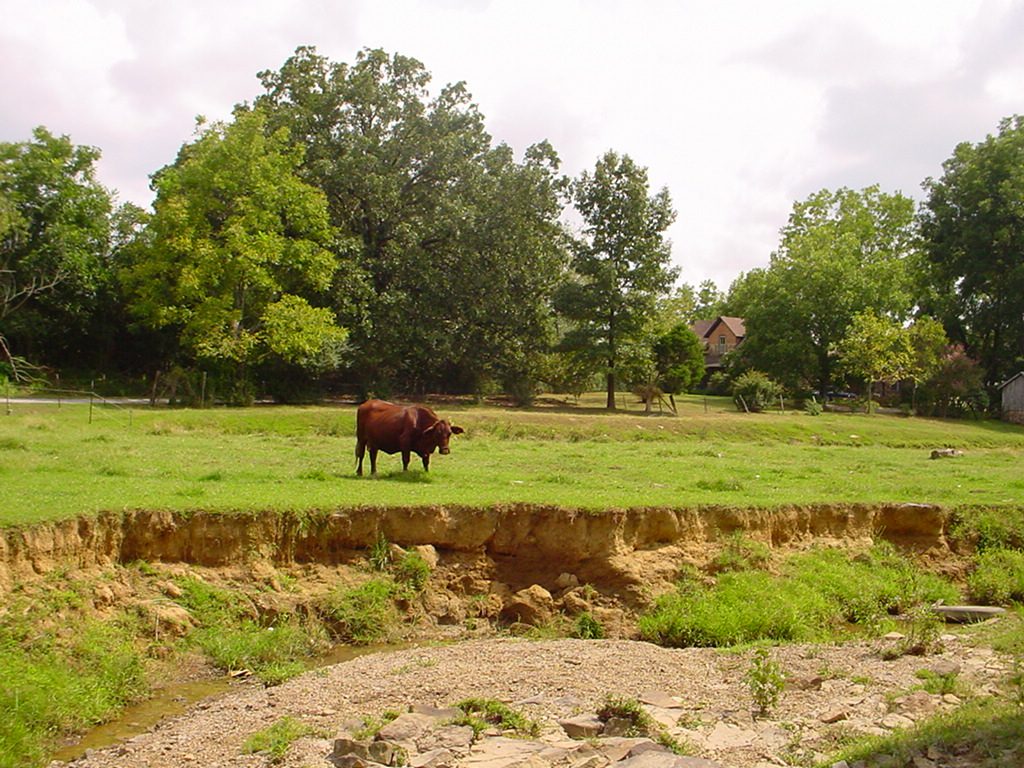
Figure 2. Side view of an eroding stream bank lacking deep root structures to keep soils in place.
Beyond filtration, riparian buffers offer critical flood protection by slowing water velocity and allowing infiltration into soil rather than overflow. Plant roots stabilize stream banks, preventing erosion that would otherwise bury aquatic habitats under sediment, damaging food chains and harming fish populations. These buffers also provide essential wildlife habitat— tree shade and cool water for species such as native trout, fallen leaves that feed aquatic insects, and woody debris that creates shelter. The diverse vegetation supports pollinators and serves as wildlife corridors for various species.
Eroding stream banks are a common problem in both rural and urban areas that lack streamside vegetation and have high water volumes (figure 2). Landowners can establish buffers by allowing natural vegetation growth or actively planting native trees, grasses, and shrubs. Although establishing a riparian buffer may not resolve all erosion issues, it may help. This publication discusses ways to propagate native plants during their dormant season as “live stakes” for patching eroding areas along the lower 2 feet of a stream bank.
Using Live Stakes
Live stakes are stem cuttings taken from small trees during their dormant season (before their buds open) with the intention of being planted in stream banks to restore the riparian buffer (figure 3). Live stakes will eventually grow into new trees and create a successful way to establish root networks that help prevent further soil erosion. Live stakes can be bought from local nurseries or harvested for free from native vegetation growing in the region.
The following tools are needed for installing live stakes (figure 5):
- Loppers
- Rubber mallet
- 1 to 2 feet of rebar
- Waterproof boots or waders, optional
-
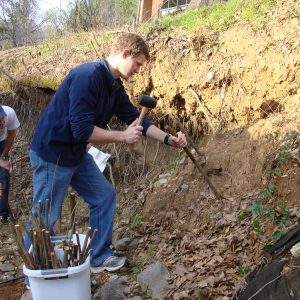
- Figure 3. Live stakes being installed in an eroding stream bank.
-
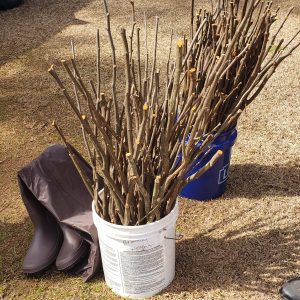
- Figure 4. Cut live stakes stored for installation in a water bucket.
-
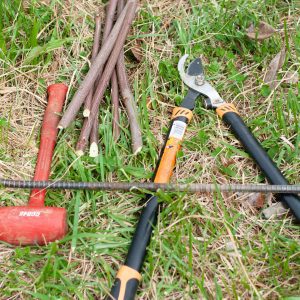
- Figure 5. Tools needed for live staking installation: loppers (or hand loppers), rubber mallet, rebar.
-

- Figure 6. The end of a live stake is cut at an angle to make insertion into the ground easier and ensure that the stake is planted with the correct end facing up.
Step 1: Planning and Harvesting
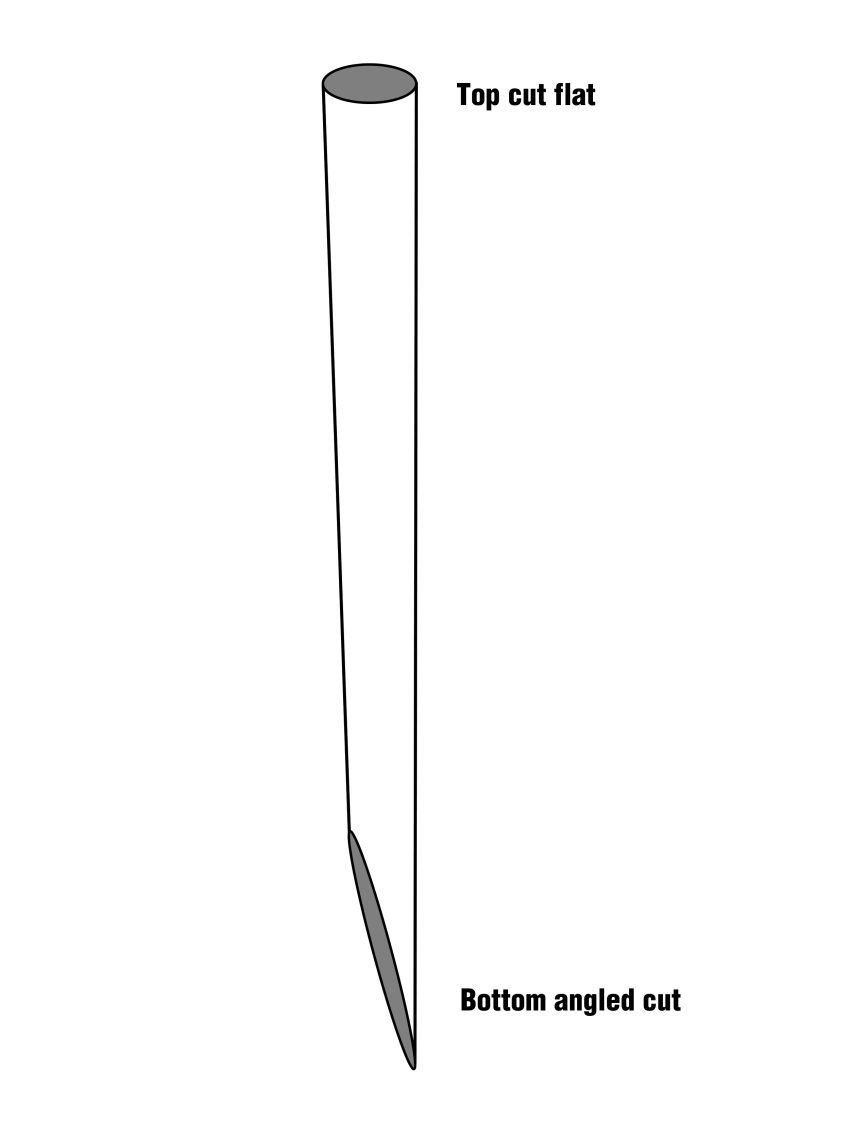
Figure 7. Cut a live stake at an angle.
Plan. In Alabama and other southeastern states, it is best to collect and plant live stakes from late September to early March when plants are still dormant. Live stakes are highly perishable, so the sooner they are planted after cutting, the better their chances of survival.
Before harvesting live stakes, consider the types of live stakes you want to collect and when you can install them. (An extensive list of live staking plants is available at the end of this publication.) Identify a location with the native plant species you wish to plant. Think about the neighborhood’s aesthetics, planting heights, and viewing considerations. Get permission from the landowner if needed.
Harvesting. Plan a day for cutting and installing live stakes. To begin, find branches on the trees about ½ to 1½ inches in diameter. Use loppers to cut a branch at the base of the plant. Cut the branch into 2-to-3-foot sections. Cut the bottom of the stake at an angle to form a point or stake (figures 6 and 7). This point will help you insert it into the ground.
Step 2: Planting
Plant stakes right after cutting them. If you are collecting a large number of stakes, bring a bucket of water to store the live stakes and keep them from drying out. If you need to store live stakes between harvesting and planting, consider the following:
Short-term storage options
- Store live stakes in a cool, dark location like a basement or garage to prevent them from drying out.
- Wrap the stakes in wet burlap or newspaper or stand them in a bucket of water.
- Ensure that the stakes are stored above freezing to prevent root damage.
Long-term storage (up to a couple of weeks)
- Refrigeration is recommended for long-term storage, ideally at 34 to 40 degrees F with high humidity (60 to 70 percent).
- Prevent drying by wrapping stakes in peat moss or wet burlap.
If live stakes are being delivered from a nursery, soak the bottoms in a bucket of water for a day or two. Before planting stored live stakes, give them a fresh angled cut at the bottom and soak them in water for a few hours to rehydrate them.
Because planting live stakes will likely require that you to get into the stream, waders or high waterproof boots are recommended. If the ground is too hard for the stakes, you can make the planting process more manageable by using a piece of rebar (or something similar) to create pilot holes evenly 2 to 3 feet apart along the stream bank (figure 8). A mallet hammer can also be used to pound the rebar into the ground to make the hole.
Live stakes are often planted in a triangular pattern to increase density since not all are expected to survive. Be sure that live stakes are planted close enough to the stream that they are within the water table. Live stakes need moist soil to survive.
After creating a pilot hole at a 90-degree angle into the soil surface (figure 8), insert the live stake’s angled end into the pilot hole at the same 90-degree angle until about half of the stake is in the ground (figure 10). If live stakes are correctly planted, you can expect up to 80 percent stake survival.
Planting Tips
- Plan the design before the planting date or estimate as you go along.
- Make all of the pilot holes before you start planting the live stakes, or make the pilot holes and plant the live stakes simultaneously.
-
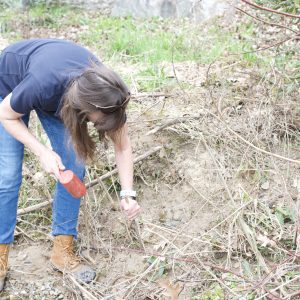
- Figure 8. Use a piece of rebar or something similar to create a pilot hole. This will help prevent damage to the live stake.
-
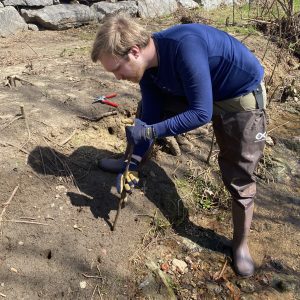
- Figure 9. Installing live stakes next to a stream.
-
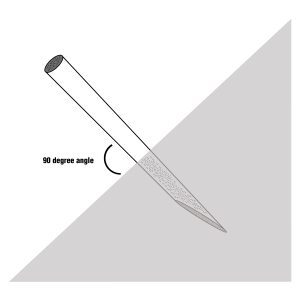
- Figure 10. After cutting the live stake at an angle, insert it into the stream bank at a 90 degree angle.
-
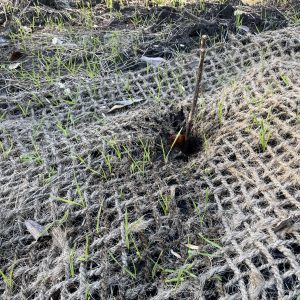
- Figure 11. Live stake installed under erosion control matting at a stream restoration site.
-
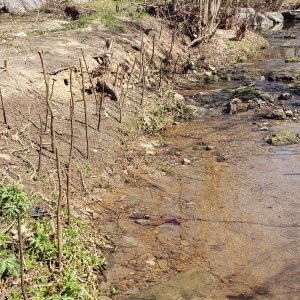
- Figure 12. Live stakes installed along a stream.
Step 3: Planting After Care
During the first year of growth, live stakes will focus most of their energy and nutrients toward root development. Sometimes, you will see some leaf growth in the first growing season. Do not be discouraged if you do not see leaf growth. To determine how successful your planting was, give the live stakes a gentle tug to test the root development after the first growing season. If all the plantings did not survive, you can always plant more.
Maintenance
- Inspect the stream bank quarterly to identify areas of erosion and flag them for additional planting or other intervention.
- During dry periods, water young trees and shrubs as needed.
- Remove invasive plants, such as privet, mimosa, kudzu, Japanese honeysuckle, and Chinese tallow tree (popcorn tree), before they spread and outcompete the native plant community.
- Do not mow or trim weeds on the stream bank during the first 3 years while shrubs and trees are becoming established. Mowing defeats the purpose of developing a riparian buffer. Small seedlings need time to develop. During the first 3 years, the banks will be covered in native grasses and flowering herbaceous plants growing about 3 feet high, after which time the trees will emerge to create an early-success forest. Monitor this growth and add other native plants as needed.
Plants Native to Alabama Suggested for Live Staking
Various native species from the southeast are excellent for bank stabilization and live staking. Not all native plants will take to live staking as well as others. The species discussed here are readily available from most plant nurseries or can be found growing wild along rivers and streams in the area.
Elderberry
- Deciduous shrub 5 to 12 feet tall and 6 to 10 feet around
- Tolerates wide range of soil moisture (prefers moist)
- Will spread by its roots and form thickets if not pruned
- Sun to partial shade
- Excellent pollinator and erosion control; also produces edible fruits for people and birds
-
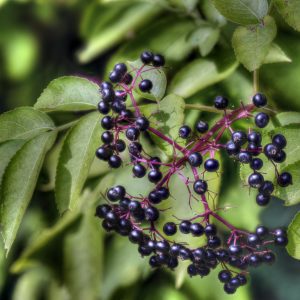
- Figure 13. Elderberry (Sambucus canadensis).
-
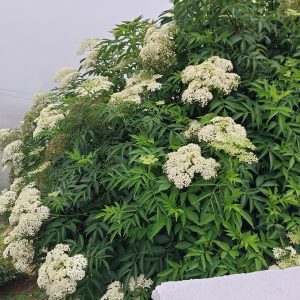
- Figure 14. Elderberry (Sambucus canadensis).
Silky Dogwood
- Shrub, 6 to 12 feet tall
- Full sun to full shade
- Should be kept in cool, moist soils near stream
- Good for erosion and produces clusters of pretty white flowers in spring
-
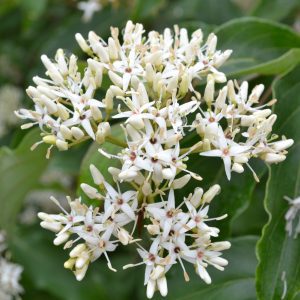
- Figure 15. Silky Dogwood (Cornus amomum).
-
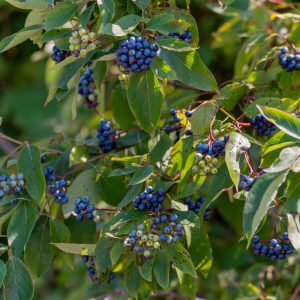
- Figure 16. Silky Dogwood (Cornus amomum).
Smooth Alder
- Small tree that can grow up to 15 feet tall if given room or be less than 6 feet tall
- Prefers full sun; can tolerate partial shade
- Likes lots of soil moisture; can tolerate partial flooding
- Grows quickly
- Great pollinator, host for harvester butterfly
-
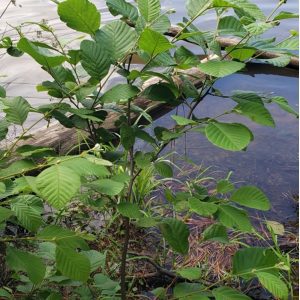
- Figure 17. Smooth alder (Alnus serrulata).
Buttonbush
- Deciduous shrub, 12 to 20 feet tall, 8 feet wide
- Needs consistently wet/moist soils, can thrive in up to 3 feet of standing water
- Full to partial sun
- Produces interesting puffball flowers
- Exceptional for pollinators, birds, and small mammals; resistant to deer browsing
- Excellent bank stabilizer, especially in areas with poor drainage
-
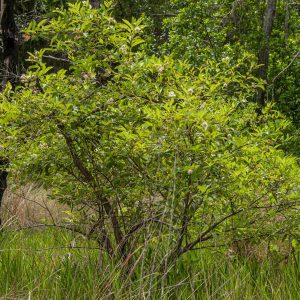
- Figure 18. Buttonbush (Cephalanthus occidentalis).
-
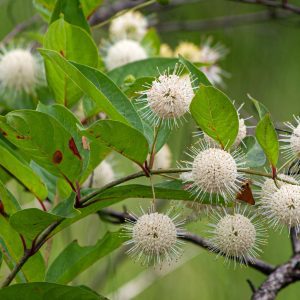
- Figure 19. Buttonbush (Cephalanthus occidentalis).
Sweetspire
- Semi-evergreen shrub; grows up to 8 feet tall, though generally a lot smaller
- Partial sun to partial shade
- Tolerant to wide range of soil conditions and pH but prefers moist and slightly acidic
- Forms colonies from root suckers; excellent for bank stabilization
- Grows long (2 to 6 inches) raceme with small white flowers
- Leaves turn red-purple in fall and continue into winter
-
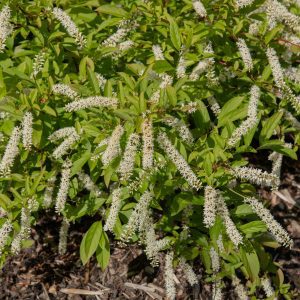
- Figure 20. Sweetspire (Itea virginica).
Ninebark
- Many cultivars that grow to different sizes
- Deciduous shrub generally less than 8 feet tall
- Full sun; prefers some shade in warmer areas
- Named for its peeling bark layers
- Does well on rocky banks and moist soils
- Forms large round flower balls
-
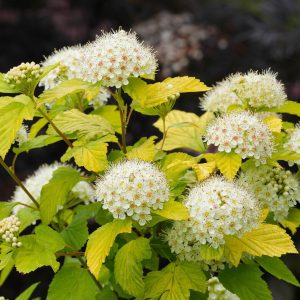
- Figure 21. Ninebark (Physocarpus opulifolius).
This is not a comprehensive list of all possible native plant species that could be used for live staking. If deciding on another potential species for live staking, consider the following:
- Is the plant native and adapted to that environment?
- Is the plant invasive? (A list of invasive plants can be found on the Alabama Invasive Plant Council’s website.)
- Can the plant survive high soil moisture or full submersion?
- Will root development occur quickly?
- Is there an aesthetic you need to maintain, and have you planned accordingly?
Live stakes can provide a cost effective and aesthetically appealing addition to slow, swiftly degrading stream banks.
 Daniel Gragson, Technician, Fisheries, Aquaculture, and Aquatic Sciences, and Laura Cooley, Administrator, Outreach Programs, Crop, Soil, and Environmental Sciences, both with Auburn University
New October 2025, Live Stakes: Plant Solutions for Eroding Stream Banks, ANR-2138