
Fish & Water

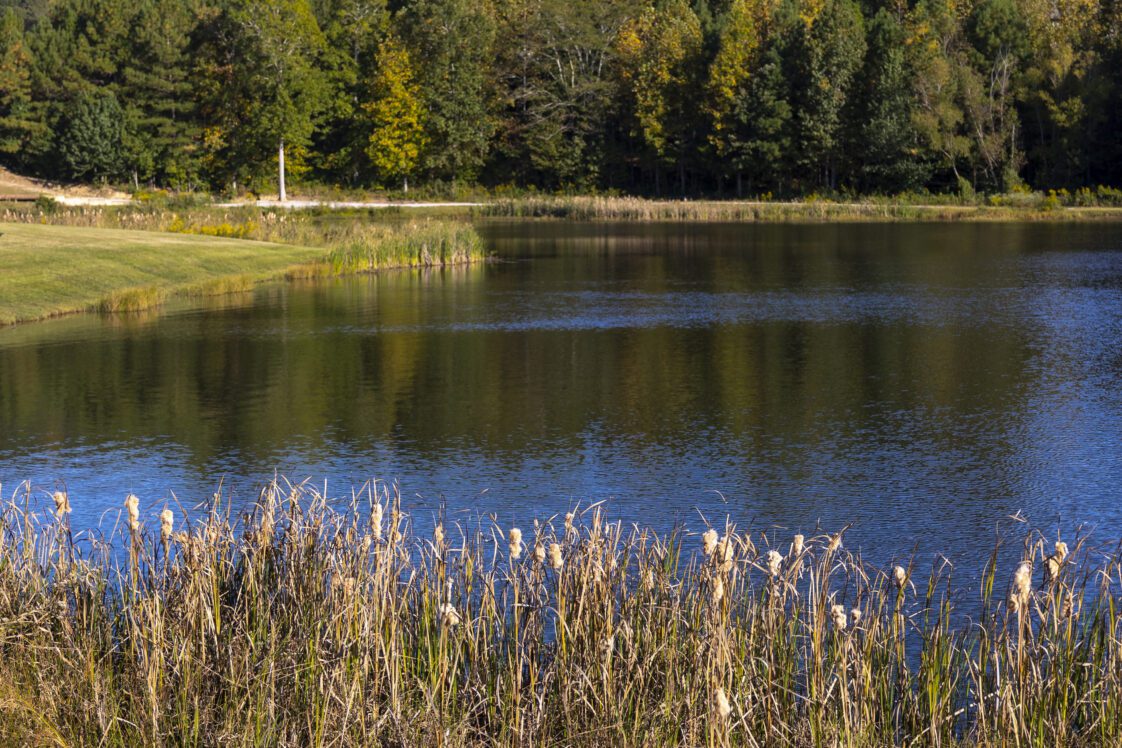
AUBURN UNIVERSITY, Ala. — January is a popular month for goal setting and planning. Beyond the typical New Year’s resolutions of getting fit and saving money, landowners in Alabama may set a goal of better managing resources, including recreational fish ponds. For those wanting a more reliable harvest of fish, cage culture may be a good option to try in 2026.
Corey Courtwright, an aquatic resources agent with Alabama Extension at Auburn University, said cage culture is simply growing fish intensively in a small cage within a larger body of water. The two major benefits to raising fish in this manner are reliable harvest and predator control.
 “Recreational ponds are very different from commercial ponds,” Courtwright said. “It’s difficult to seine the ponds because of logs, tree tops, rocks and other obstructions on the pond floor. With the cage, you can easily harvest. Plus, you’re almost guaranteed a large harvest, because you won’t lose as many fish to larger predators. They can’t penetrate the mesh of the cage.”
Stocking Types and Timing
“Catfish can be stocked while the water is cool,” Courtwright said. “A lot of commercial catfish growers stock in January and February. The fish will transport better. You can start with about an 8-inch fingerling.”
For tilapia, Courtwright said pond water needs to reach 70 degrees Fahrenheit before stocking.
“That would happen about April, and the tilapia should be harvested before temperatures drop again, in late October or so,” Courtwright said. “If you want to start with stocking tilapia, it’s good to go ahead and make those plans now. You can work on building your cage and setting up fingerling orders so you’re ready to go come spring.”
Cage Construction
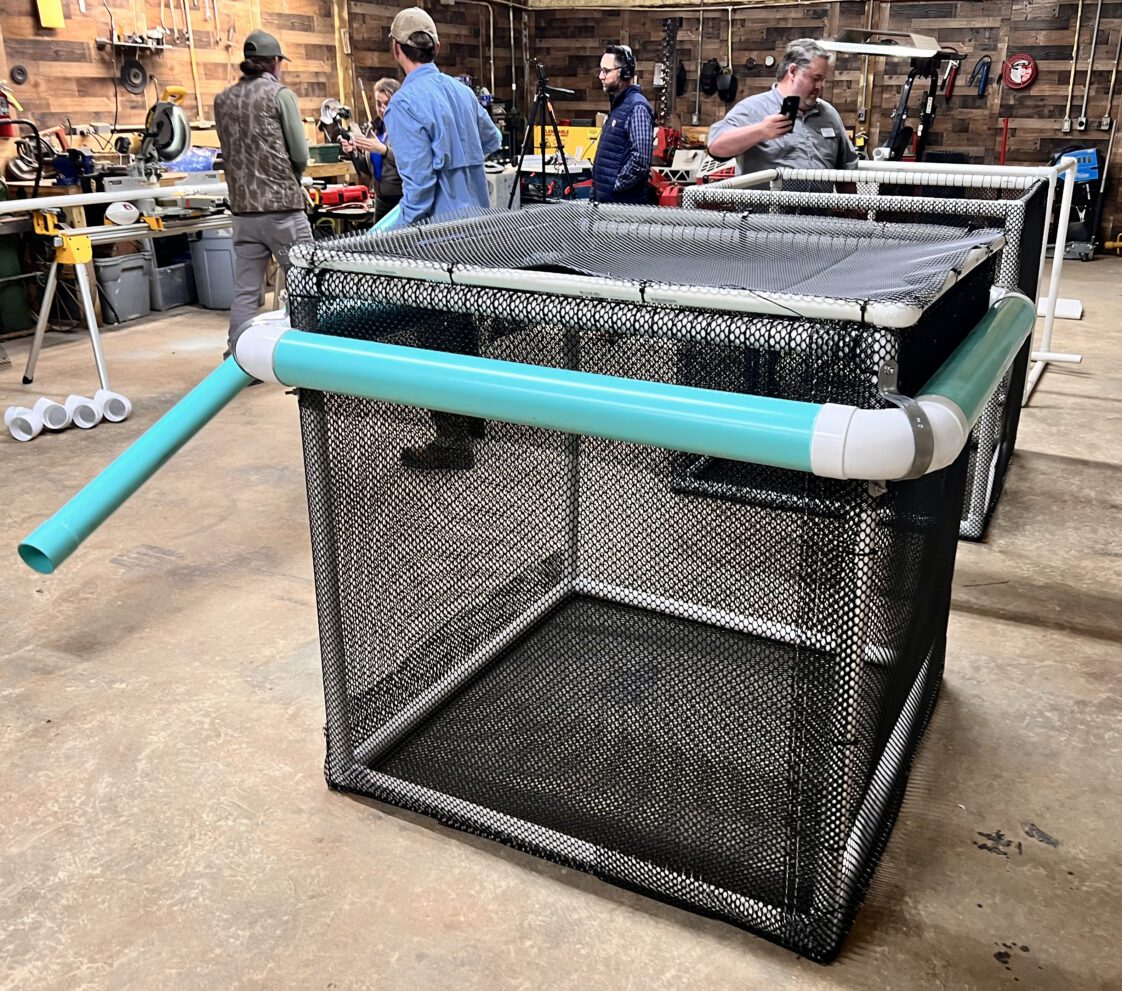
For construction, Courtwright suggests using rigid plastic mesh and crafting a 4-foot by 4-foot by 4-foot cube. Then, add 4-inch polyvinyl chloride pipe around the top of the cage so it will float.
“Small cages are more efficient,” Courtwright said. “You can harvest a few hundred pounds of fish out of a cage that measures about 1-cubic meter. There is a balancing act, too. You want the mesh to allow for a good amount of water exchange, but it needs to be small enough to contain the fingerlings.”
More Information
Courtwright and the aquatic resources team at Alabama Extension offer numerous resources for constructing and managing recreational fish ponds. Visit aces.edu to discover more.