
Fire

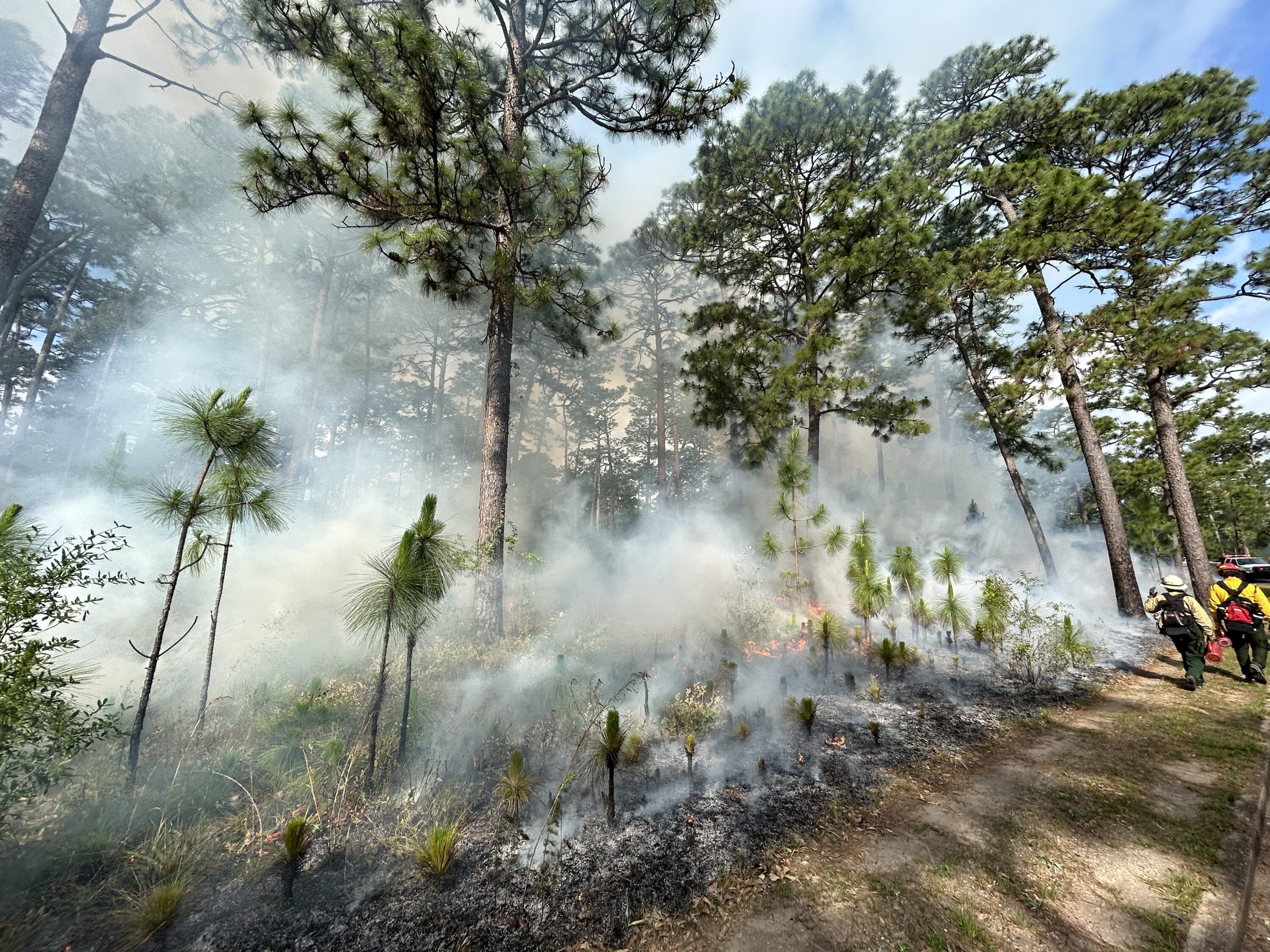
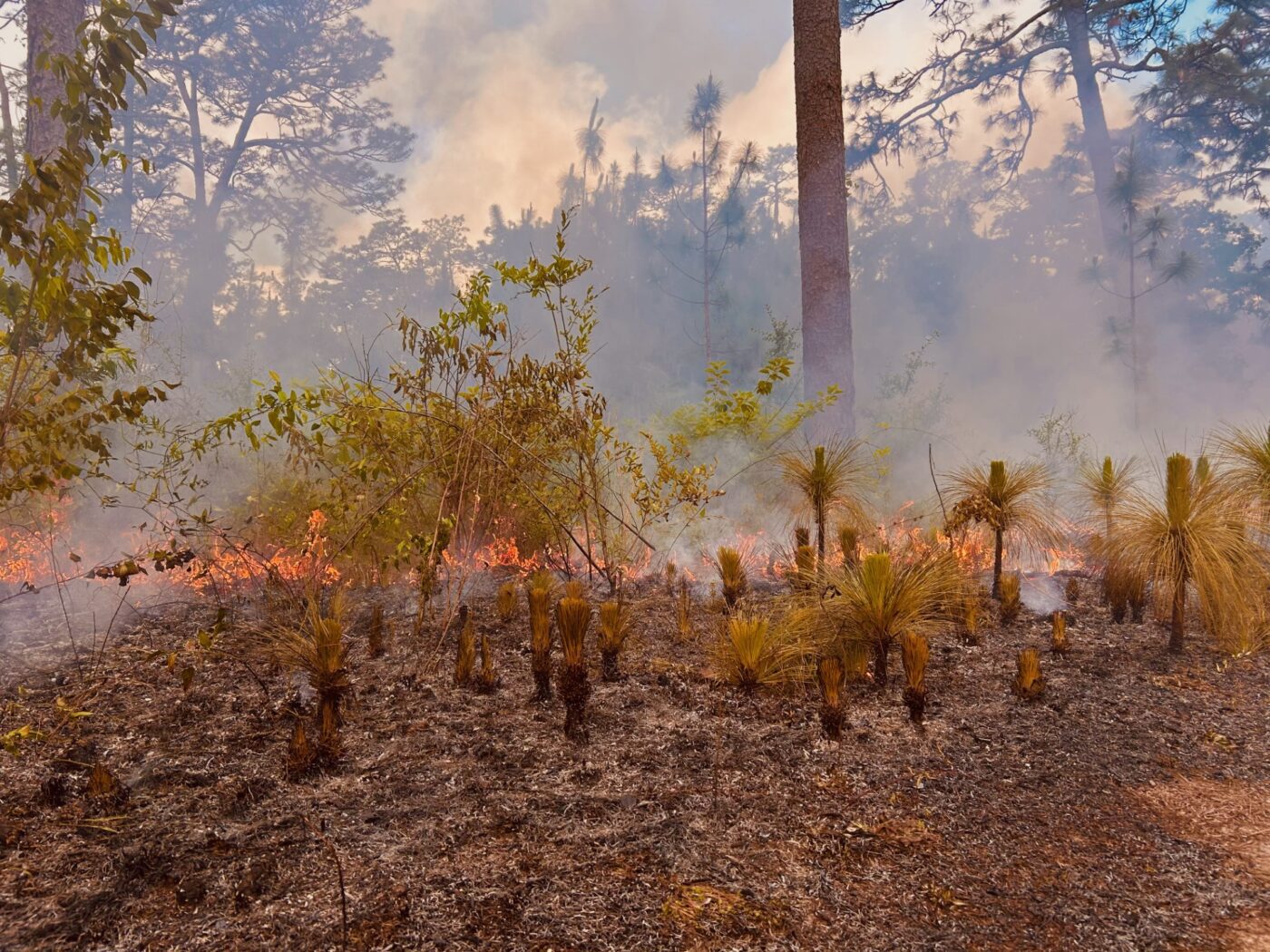
Figure 1. Longleaf-pine prescribed burns must be done after candling has passed to avoid unnecessary mortality.
Fire has long been an ecological force on Alabama’s landscape. Historically, lightning-ignited fires and indigenous land-management practices maintained open, park-like forests dominated by fire-tolerant species, such as longleaf pine, yaupon, and rivercane. Without periodic fire, hardwood species increase in density, while understory vegetation becomes thick and shaded. There is also a decline in fire-dependent plant communities and overall diversity of species, which leads to a decrease in wildlife habitat quality. Prescribed fire is one of the most effective and widely used tools for managing forests and reducing the impacts of wildfire in Alabama. This prescribed burning restores these systems by mimicking natural disturbance processes. Dormant-season burning has historically been more common, largely due to operational convenience. However, the use of growing-season prescribed fire burns is also an effective method for hardwood control and wildlife support.
What Is Growing-Season Burning?
In fire-adapted ecosystems across the Southeast—particularly longleaf pine systems—growing-season fire more closely reflects natural fire regimes. When applied appropriately, it can play a critical role in reducing hardwood competition—improving understory structure and enhancing wildlife habitats and food sources. Depending on the location and management goals, managers typically conduct growing-season burns during late spring and summer (April through August) when vegetation is actively growing. During this time, trees are actively transporting nutrients, and their vascular tissue systems are more vulnerable to the impacts of severe temperatures associated with fire. Additionally, the energy consumption that is required to initiate spring bud break in hardwood species is simultaneously exhausting their carbohydrate reserves, limiting their ability to recover post disturbance. Finally, the environmental conditions, primarily heat and humidity, influence fire behavior differently than in winter. These factors combined contribute to greater effectiveness in controlling hardwoods compared to dormant-season burns.
Comparison of Dormant-Season Burns and Growing-Season Burns
| Factor | Dormant-Season Burns | Growing-Season Burns |
|---|---|---|
| Hardwood control | Moderate | High |
| Understory diversity | Moderate | High |
| Physiological stress on plants | Low | High |
| Operational flexibility | High | More limited |
| Public perception (smoke) | More accepted | Generates more concern |
Effects on Hardwood Reduction
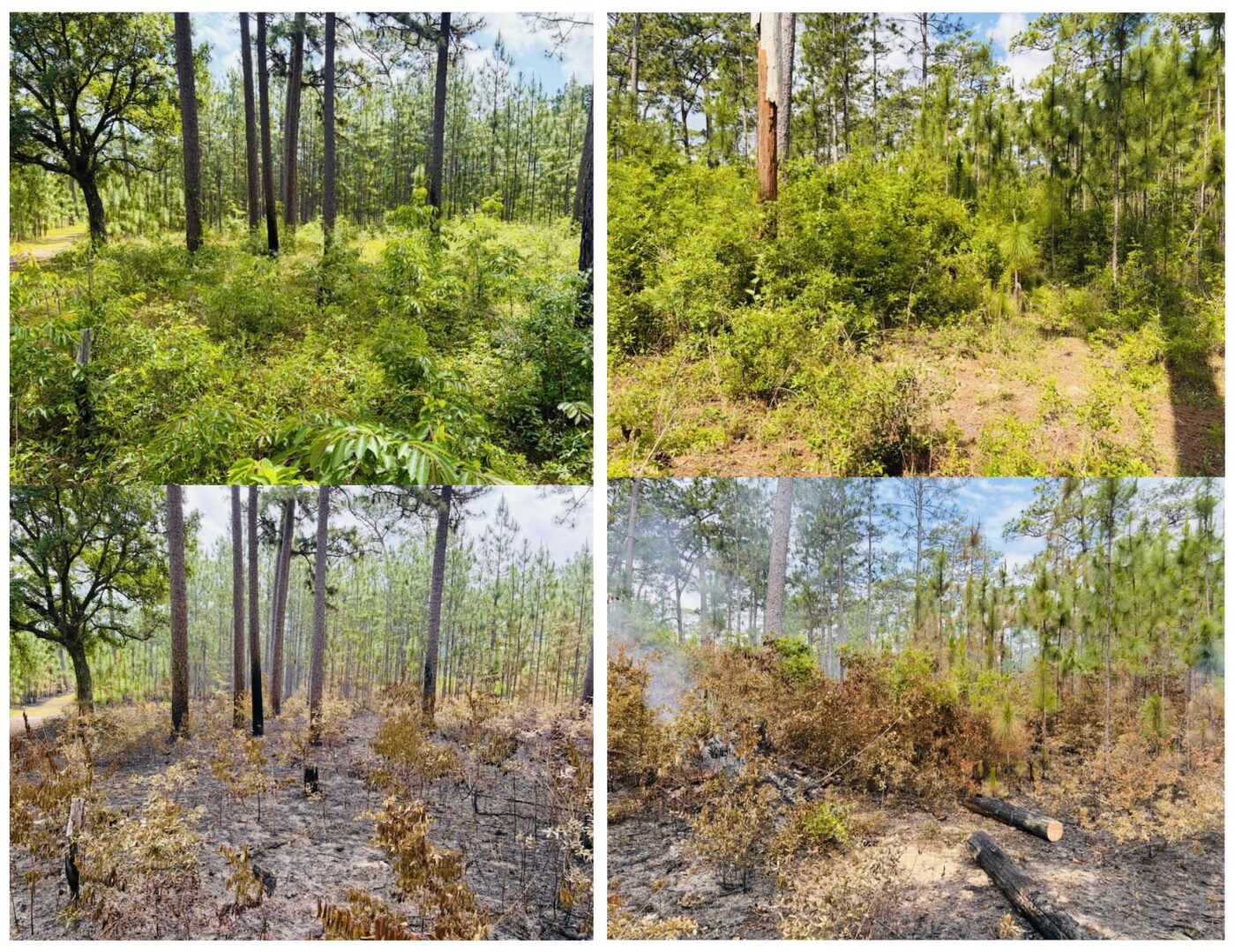
Figure 2. Before and after of a longleaf pine forest burned May 2026
Photo credit: Robert Wood
One of the most important applications of growing-season fire is the control of hardwood encroachment, particularly in pine-dominated systems. Pines are considered pioneer or early successional species—which are terms used to describe the first flora to emerge after a disturbance. Without fire, these species will eventually succumb to late successional species like oaks and other hardwoods. Maintaining a mosaic of both environments is crucial to the biodiversity needs of forests and wildlife.
Growing-season fire is especially effective at top killing hardwood saplings by repeatedly depleting root reserves at a time when these nutrients are limited, preventing hardwoods from reaching canopy dominance. In systems where a hardwood midstory has developed, repeated growing-season burns can reduce hardwood abundance, increase sunlight penetration to the forest floor, and accelerate nutrient cycling—eventually shifting competitive advantage back to pines and herbaceous plants. This is particularly valuable in restoring longleaf pine ecosystems where hardwood encroachment is a major concern.
In return, growing-season fire promotes a productive understory by reducing shade from hardwood competition. This stimulates the growth of grasses and forbs and encourages native, fire-adapted species, such as wiregrass and American beautyberry. This results in increased plant diversity, improved ground cover continuity to reduce erosion and the impacts of drought, and enhanced ecological resilience. These changes are essential for both ecosystem function and wildlife use.
Wildlife Habitat Benefits
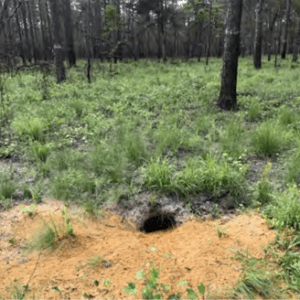
Growing-season fire has significantly positive impacts on Alabama’s wildlife habitats. This includes improvements in forage availability, enhanced habitat for ground nesting, and fire-dependent species. Post-burn environments produce tender, nutrient-rich regrowth, which increases the availability of browse and herbaceous plants. This benefits species, such as the gopher tortoise, in both diet and ability to navigate territory while avoiding predation. Open understories that have diverse ground covers support northern bobwhite quail, wild turkey and poults, and other ground-nesting birds. Growing-season fire helps maintain these conditions more effectively than dormant-season burns alone. Both approaches have value, and many land managers find success in using a combination of seasonal burns to achieve long-term objectives.
-
-
Figure 3. Gopher tortoise burrow in pine forest
Photo credit: Project Gopher Tortoise
-
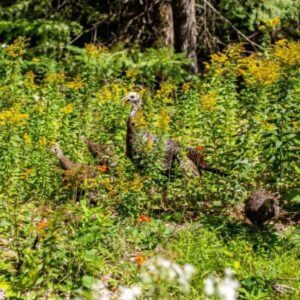
- Figure 4. Turkey and poults
-
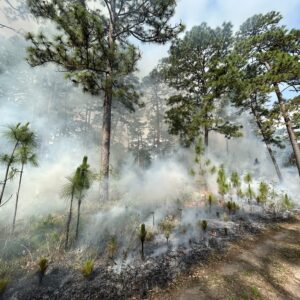
- Figure 5. Crew safety concerns differ with seasonality.
Management Considerations
Growing-season burning comes with some complications and will require careful planning and experience. Key considerations include weather conditions (temperature, humidity, wind, etc.), fuel continuity and moisture, species tolerance, seasonal growth cycles, and personnel safety (increased operational temperatures).
Working with trained professionals and following state guidelines is essential. In Alabama, prescribed burning is recognized as a valuable land management tool. Liability protections exist for certified burn managers operating under proper conditions, with a permit, and in conjunction with the filed burn plan.
Despite its benefits, growing-season fire presents challenges. These include narrower burn windows, increased heat and physical demands on crews and response personnel, greater smoke management concerns, and public perception and awareness. These factors can limit widespread adoption without proper education and training. Normalizing growing-season burns and explaining the risk-benefit analysis has shown positive support from communities, fostering the likelihood of future burns. Extending an invitation to local volunteer organizations for support and outreach can both ease public concerns and gain awareness among residents.
Conclusion
Prescribed fire burning during the growing season is a powerful and underutilized forest-management tool in the Southeast. By more closely mimicking natural fire regimes, it offers enhanced control of hardwood competition and supports the development of high-quality wildlife habitats.
When integrated into a long-term management strategy, growing-season burns can restore fire-adapted ecosystems, improve forest health and resilience, enhance biodiversity, and support wildlife populations. For landowners and managers across Alabama, incorporating growing season fire—when conditions and objectives align—can significantly improve the effectiveness of prescribed fire programs.
For more information, resources, and education, contact your local Extension Forestry, Wildlife, and Natural Resources agent, the Alabama Forestry Commission, or consider reaching out to one of many local prescribed burn associations across the state.