
Farming

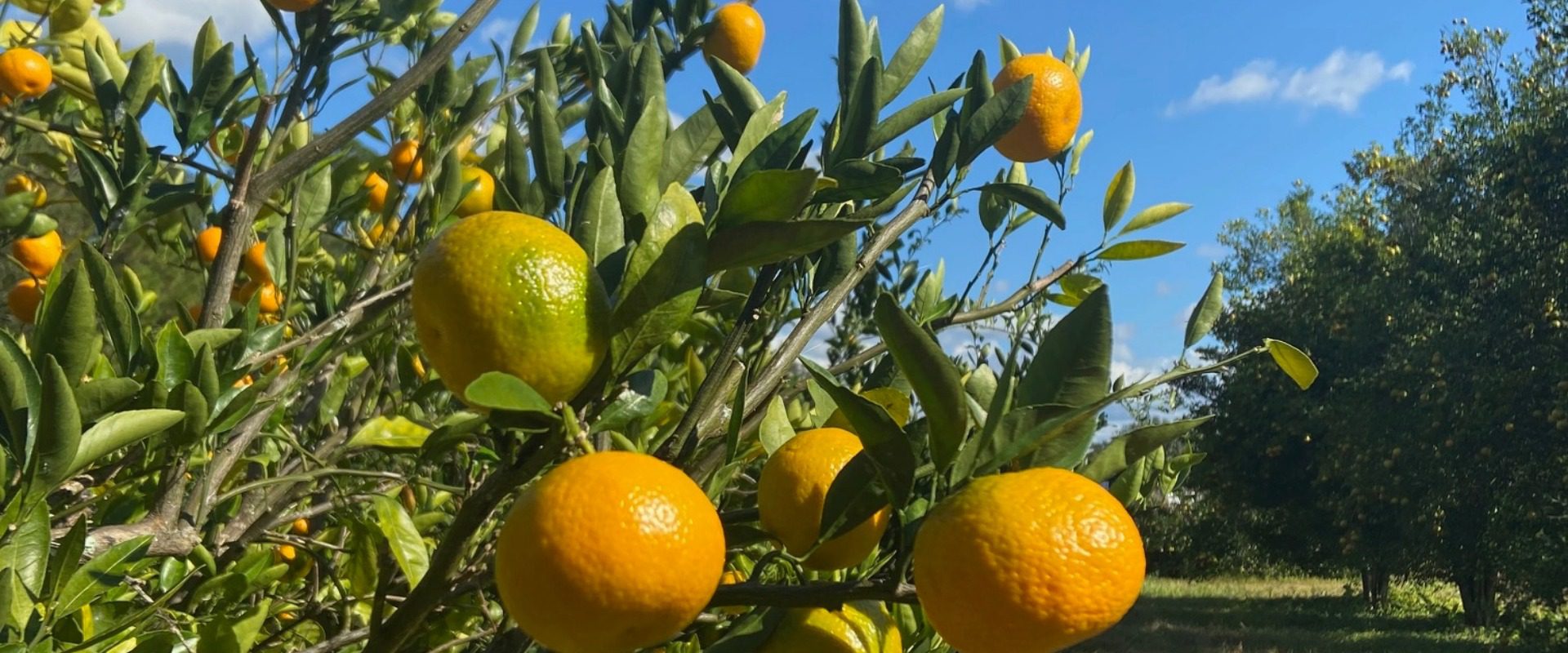
AUBURN UNIVERSITY, Ala. — Along the Gulf Coast of Alabama, citrus producers fight cold snaps, diseases and invasive species year after year. To protect their crops, they turn to the expertise of Jacob Kelley, an Alabama Extension commercial horticulture agent at Auburn University. Serving the southwest corner of the state, Kelley assists horticultural growers with a variety of enterprises, but citrus is a constant.
“Fruit and vegetable production are my bread and butter,” Kelley said. “I studied horticulture through Auburn with Jay Spiers, where I gained a real understanding of the industry.”
Working closely with researchers and the teams at the Alabama Agricultural Experiment Station, Kelley uses his Extension appointment to help citrus growers tackle their toughest problems.
Citrus production began in the southernmost counties of Alabama, Baldwin and Mobile, in the early 20th century. Today, with a few nursery stock growers and approximately 100 commercial fruit producers, it is an industry that depends on support from Alabama Extension and research.
Winter Weather Stress
One of the biggest obstacles that citrus growers face is highly variable weather, like late-season freezes and unpredictable rainfall.
Kelley said erratic winter temperatures that swing from 70 to 80 degrees Fahrenheit in one week to well below 32 degrees the next cause major stress for citrus trees.
“We never know for sure what our winters will bring in south Alabama,” Kelley said. “While late-season frost is a problem for us, sometimes the worse issue is early season warm-ups followed by significant temperature drops.”
According to Kelley, these warmer temperatures cause trees to shift into a false sense of spring. Warm spells push moisture into the buds, trapping fluid in the aboveground portion of the tree. When a freeze hits, that fluid expands and splits the bark, injuring the tree.
“Cold injury can kill the cells inside developing flower buds, which prevents the buds from opening and ultimately stops the tree from producing blooms,” Kelley said. “We get calls about that, and we have to tell growers the cell damage from those March freeze events kept their plants from blooming.”
In January 2025, a snowstorm across Alabama’s coast decimated much of the state’s citrus production. Mobile and Baldwin counties were covered in as much as 12 inches of snow, severely damaging the citrus acreage.
Strategic Care for Citrus
Even with weather challenges, there is good news for producers. Through careful management, growers can reduce their losses by using battle-tested techniques intended to protect the trees from the cold.
Spiers, an associate professor in the Auburn College of Agriculture’s Department of Horticulture, said greenhouses and cold frame structures are good options to protect citrus and are used for small-scale citrus production in other parts of the state.
“Winter cold damage is our most limiting factor for citrus in Alabama,” Spiers said. “Grafting satsumas onto trifoliate orange rootstock enhances cold tolerance and is the best rootstock choice for satsumas. A micro sprinkler arranged to target the graft union and another micro sprinkler placed within the canopy at 360 degrees has been our best option for active protection of field-grown satsumas.”
During the 2025 snowstorm, growers who properly utilized irrigation techniques suffered the least damage, according to Kelley. Irrigating before freezing allows the moist soil to hold heat for longer. So, watering the day before predicted frost reduces yield losses.
Along with prefreeze irrigation, growers are also encouraged to use frost cloths, row covers or lightweight materials that cover the canopy. These types of covers trap radiant heat under the canopy and help protect the integrity of the tree.
“As always, the effectiveness of active freeze protection strategies varies with weather events,” Spiers said. “A windbreak to reduce prevailing winds during a cold front can enhance the effectiveness of irrigation for freeze protection.”
Alongside physical freeze‑protection measures, Alabama producers favor satsumas because the variety’s natural hardiness fits the coastal environment. In fact, most Alabama satsuma producers mainly stick to one single variety of satsumas: Owari. Growers recognize Owari for its exceptional flavor, and many describe it as the right balance of sweet and tart.
Citrus Canker and Citrus Greening
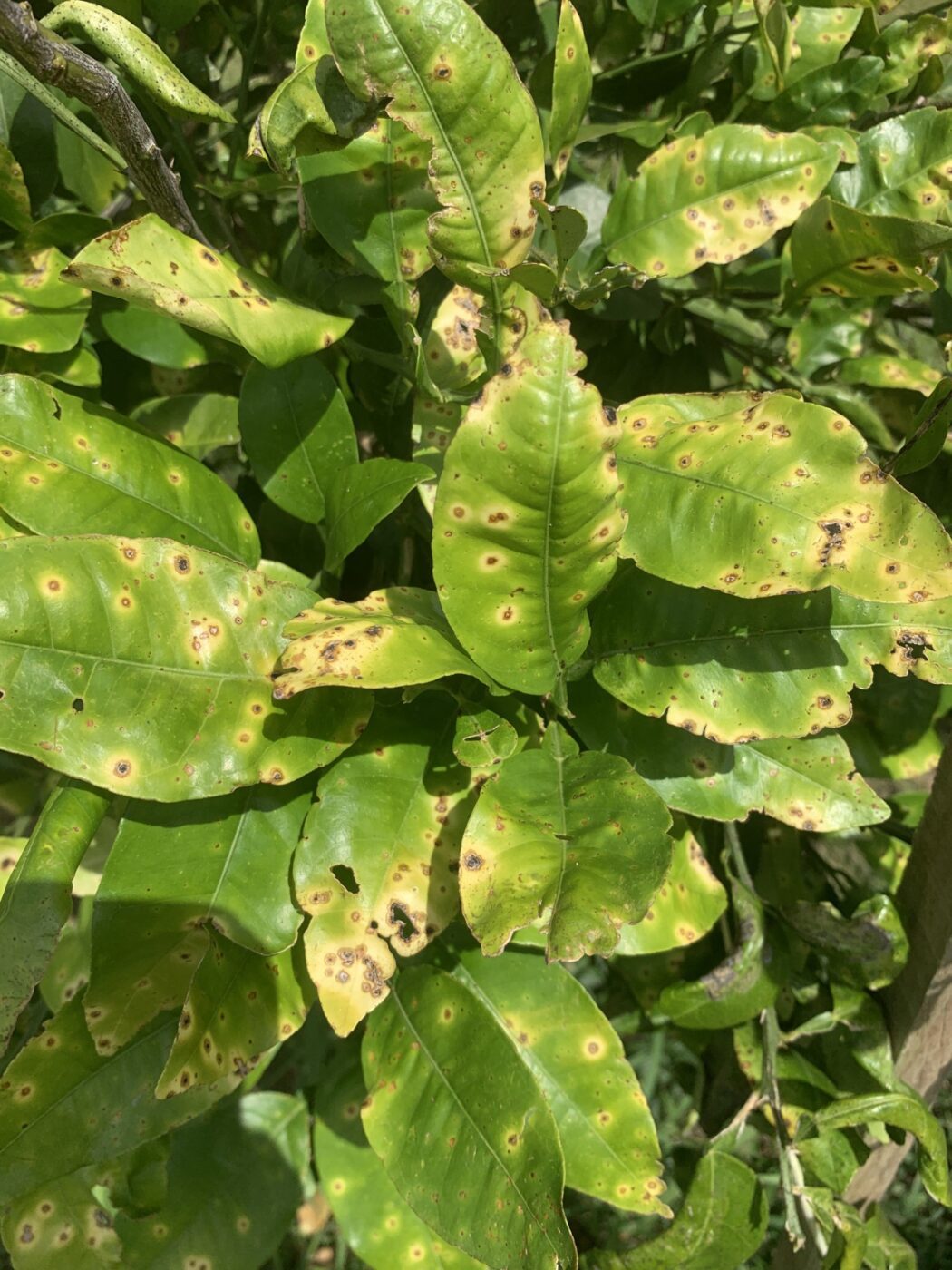
Citrus canker disease
Climate challenges are only part of the battle for Alabama citrus growers. In recent years, they have also looked closely at two major pests: citrus canker and citrus greening.
In 2025, the Auburn University Plant Diagnostic Lab confirmed citrus canker in samples from Mobile and Baldwin counties. Found during the Alabama Department of Agriculture and Industries annual citrus surveys, self-imposed quarantines were initiated to slow the spread.
“Since citrus canker spreads through rain and wind drift, we strongly encourage thorough equipment sanitation, especially between each orchard block,” Kelley said. “That might seem extreme but protecting your citrus and even your neighbor’s citrus is crucial to slowing down this bacterial disease.”
Early symptoms of citrus canker include raised, corky lesions with watery margins on leaves and fruit. However, the most distinct marker is the yellow halo around each lesion.
Alternatively, citrus greening is caused by the Asian citrus psyllid, which moves from tree to tree spreading the bacterium. With citrus greening, leaves are discolored with blotchy yellow patches. Trees are also left with misshapen and green fruit at harvest time.
Mobile and Baldwin counties have quarantines for citrus greening as well. Still, Kelley said he is hopeful since the detection was residential and not on a commercial property.
“Although citrus greening is a pest of concern, continued surveys and public outreach by the Alabama Department of Agriculture and Industries and Alabama Extension may help keep the disease under control,” Kelley said.
More Information
Even with the challenges, the future is bright for Alabama citrus production. Kelley said he hopes to continue working in partnership with the Alabama Agricultural Experiment Station. Variety trials and hands-on demonstrations provide growers with opportunities to enhance their operations.
To report suspected citrus canker or citrus greening, contact Kelley or the Alabama Department of Agriculture and Industries Plant Protection Division.
For more information on citrus care and detailed weed‑management practices, refer to Kelley’s publication, “Weed Management for Young Citrus Groves in South Alabama.” This is available on the Extension website, aces.edu.
Satsuma photo credit: Brittaney Allen, Alabama Department of Agriculture and Industries