
Farming

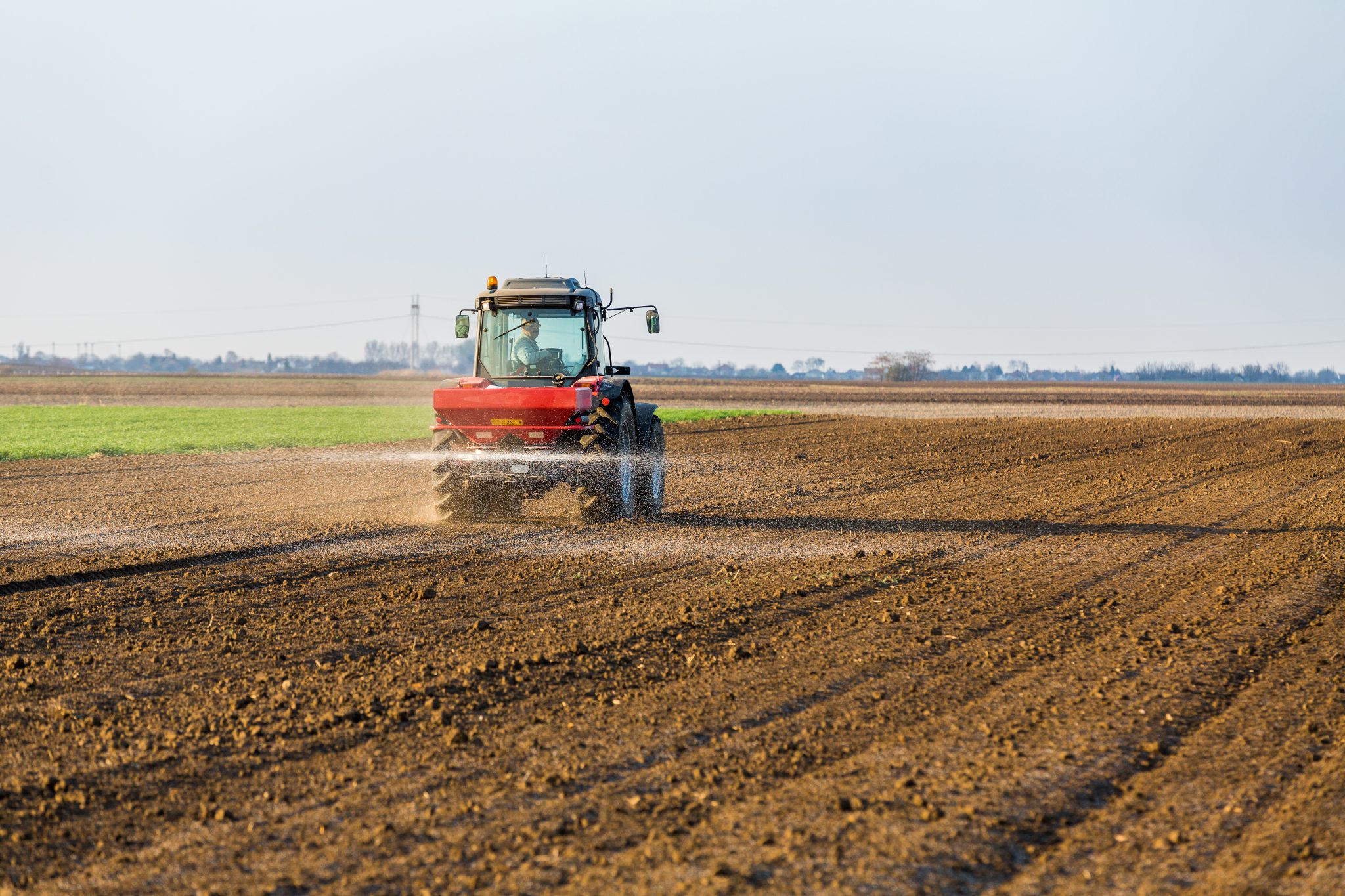
In the 2020 growing season, Alabama row crop producers faced a bleak market outlook. In 2026, the high fertilizer prices that farmers face bring back some of the same thoughts that they had in 2020. Managing the economic side of producing crops often leads farmers to look for and implement the most-efficient production practices. The following points are considerations for maximizing efficiency and profitability, ranging from fertilizer input costs to overall profitability.
Use Research-Based Soil Test Recommendations
Decades of research have been used to correlate soil-extractable nutrients with increases in yield to develop fertilizer recommendations for Alabama crops. In Alabama, this research has been based on yield increases according to Mehlich-1-extractable soil nutrients—except in the Blackbelt where the Mississippi extract is used. Soil test reports from the Auburn University Soil, Forage, and Water Testing Laboratory use formulas to calculate the recommended phosphorus and potassium to the nearest 10 to 30 pounds. Auburn University recommendations continue to be evaluated for newer, higher-yielding row crop varieties.
While public labs use research-based information to update soil test recommendations, there is no guarantee that fertilizer recommendations from private, commercial laboratories are based on local research. Commercial laboratories may recommend more fertilizer than is required to maximize economic return. However, it is possible to generate fertilizer recommendations based on Auburn University research as long as the appropriate soil extractant (Mehlich-1 for most Alabama soils) is used. To convert results from private soil testing laboratories to Auburn University recommendations, use the Soil Test Recommendation Tool at soillab.auburn.edu or contact the agronomic crops Extension agent in your area.
Use a Soil Sampling Strategy That Accounts for Field Variability
Soil acidity and nutrient content can vary widely throughout a field. Traditional soil sampling techniques rely on random sampling throughout a field followed by a uniform application of fertilizer according to average recommendations for that field. Precision technologies increase the ability to (1) apply fertilizer and lime where we need it the most and (2) avoid applying fertilizer and lime where soil test levels are sufficient.
Zone sampling is a technique that allows producers to divide a field into management zones based on knowledge of a specific field. One method for creating zones is to divide a field according to soil type. Soil type information for a specific field can be obtained from the US Department of Agriculture Natural Resources Conservation Service’s Web Soil Survey. Another method is to divide a field into according to yield potential based on information from yield maps or farmer knowledge of the field.
Grid sampling is a technique that is widely used to assess field variability in Alabama soils. In this method, fields are divided into uniformly spaced rectangles and sampled accordingly. The most common grid size used in the state is 2.5 acres.
Producers can work with their local agricultural retailers to create a map for precision application of nutrients according to soil sampling results for zones or grids.

Figure 1. Nitrogen rates for Alabama corn production
Be Realistic About Yield Goals
For some nutrients, fertilizer recommendations vary by yield goal. For example, nitrogen recommendations for corn will vary according to the anticipated yield. When determining a yield goal, it is important to think about what fertilizer rate you can use to maximize profitability instead of yield.
Figure 1 shows corn yield according to the nitrogen rate for three Alabama soil types. The nitrogen source was 34-0-0, and a split application was used: one-third at planting and two-thirds at the sixth-leaf growth stage. All the plots were irrigated using a center pivot system. For the Decatur silt loam production system, profitability was maximized at 360 pounds of nitrogen per acre. For the Dothan sandy loam production system, profitability was maximized at 180 pounds of nitrogen per acre. The most profitable fertilizer rate was not necessarily the rate at which the yield was maximized. Farmers must be realistic about yield potential in a given field to determine fertilizer rates and maximize their economic potential.
Compare Nutrient Rates in Fertilizer Products
When comparing prices of fertilizer prices, it is important to consider the concentration of nutrient within a product. For example, nitrogen fertilizers are often compared based on price per unit of nitrogen instead of price per ton of product. While this may seem obvious for macronutrients such as nitrogen, price per unit of nutrient is often overlooked for less frequently applied nutrients, such as calcium and boron. The example in the table compares calcium concentration for various fertilizer products commonly applied for peanut production. Some alternative sources of calcium supply less calcium at a higher price. Unless there is documented research that the source of fertilizer impacts nutrient uptake or nutrient loss, select a product that is the most cost-effective per unit of nutrient.
Compare Nutrient Rates in Fertilizer Products
| Product | % Ca | Product info | Product Rate lb per acre | Ca Rate lb per acre |
|---|---|---|---|---|
| Gypsum | 21% | CaSO4 | 1,000 | 210 |
| Hi-Cal Lime | 34% | CaCO3 | 1,000 | 340 |
| Alternative Gypsum 1 | 12% | Humate—21% | 1,000 | 120 |
| Alternative Gypsum 2 | 11% | Mg—1%, B—0.02%, Co—0.0005%, and Fe—1% | 1,000 | 110 |
| Liquid Ca 1 | 12.5% | Humate—1% liquid | 3 (gallons per acre) | 4 |
Make pH a Priority
Maintaining soil pH is the first step to improving soil fertility for crop production. Most Alabama soils are naturally low in pH and must be limed to create soil conditions that boost production. When the pH of soil falls below a value of 6.0, the availability of most macronutrients needed for crop production (such as nitrogen and phosphorous) decreases. However, the availability of most plant micronutrients (such as zinc, manganese, and iron) increases at low pH. Maintaining pH according to soil testing lab recommendations will ensure that the availability of all plant nutrients is maximized so that any fertilizers applied to the soil do not go to waste. Maintenance of soil pH is money well spent for producers because it improves crop quality and yield.
Implement a Plant Tissue Sampling Program
Tissue testing is used to ensure that adequate nutrients are present for crop growth. Tissue testing can be used to either diagnose a nutrient deficiency symptom or monitor crop nutrient status throughout the growing season.
Diagnostic testing. If a nutrient deficiency is suspected, plant tissue should be sampled from the area of the field where deficiencies are suspected and an area where crop growth is adequate. Soil samples should also be collected from the poor growth area and the adequate growth area to accompany
Monitoring plant nutrient status. Tissue samples can be collected throughout the growing season to monitor crop nutrient status. Use the information gained from tissue testing to adjust fertilizer applications. For consistent tissue testing results, collect samples at the same time of day for each sampling date.
For a representative tissue sample, collect leaves from 25 to 30 randomly selected plants within the sampling locations. For young seedlings, collect whole plant samples (clip the plant approximately 1 inch above the soil level) for 25 to 30 plants. For larger plants, collect the most recent fully expanded or mature leaf for 25 to 30 plants. Place samples in a paper bag to send for analysis at your soil testing lab.