
Farming

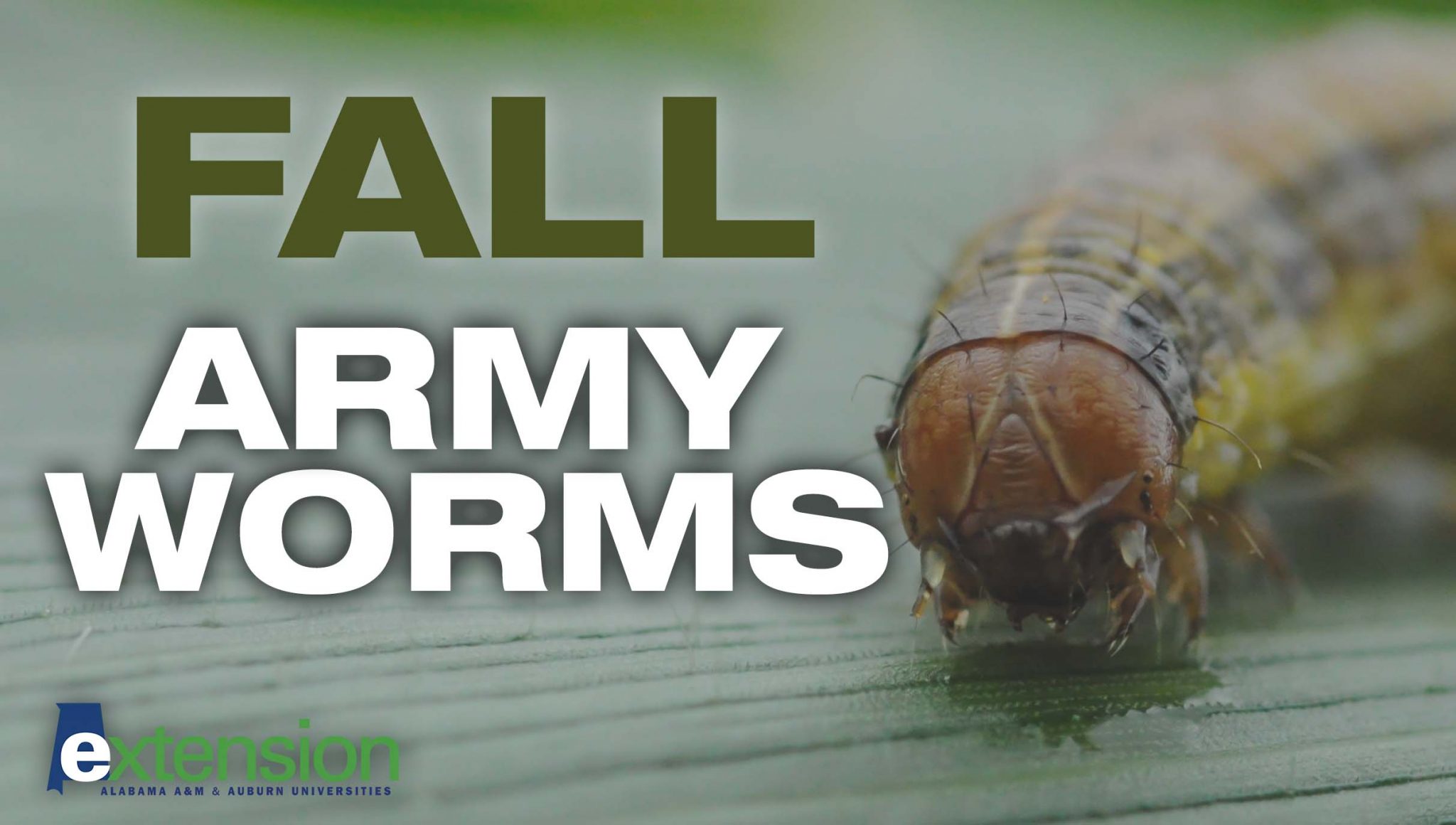
AUBURN UNIVERSITY, Ala. — The invasion of fall armyworms is a yearly occurrence in Alabama. Usually starting in late-July or August, these pests can quickly invade and destroy a stand of healthy forages in a matter of hours. This makes scouting extremely important so producers can treat infestations early, before too much damage occurs.
Last year, Alabama faced a massive outbreak of fall armyworms. Entomologists with the Alabama Cooperative Extension System are certain that high temperatures and rain patterns contribute to outbreaks. Once infestation occurs, producers can usually expect to see a new flight of fall armyworms every 30 days. However, when temperatures rise, generations of fall armyworms develop faster. This causes flights to occur closer to every 25 days, which leads to more armyworms overlapping and causes more issues.
Scout Early and Often
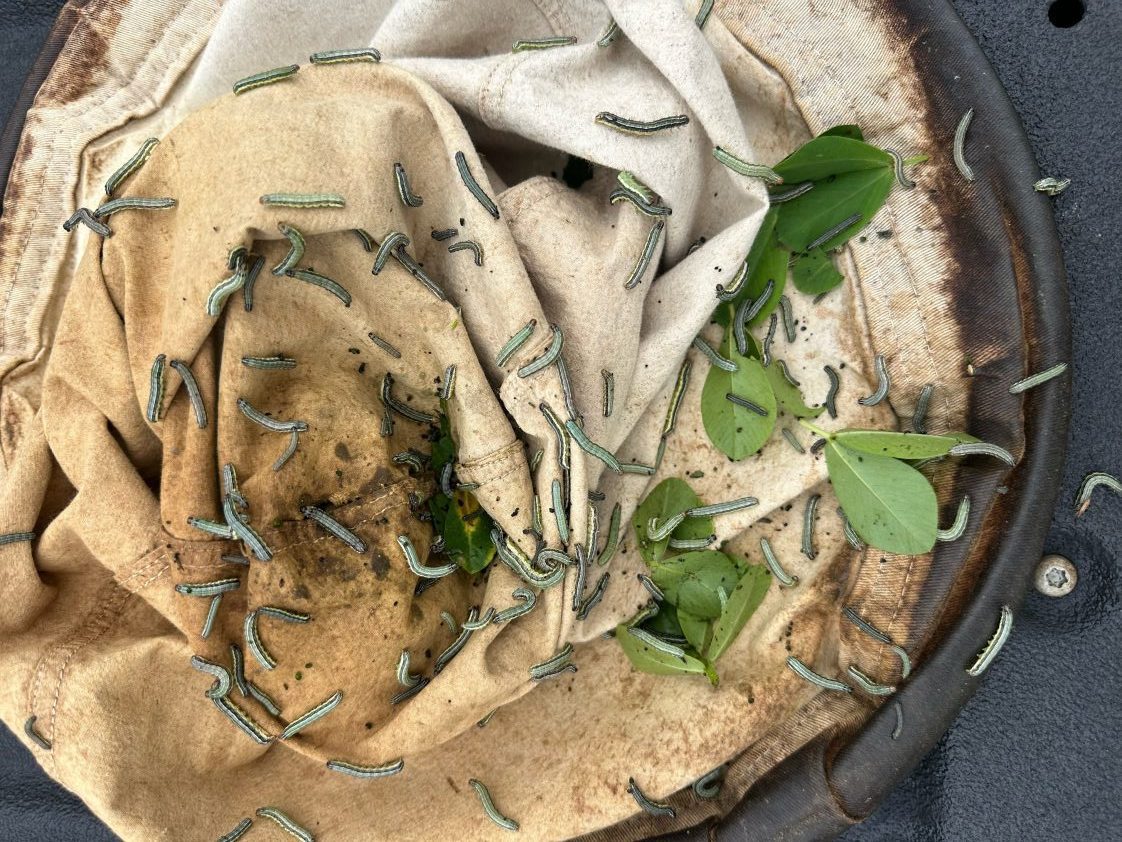 When it comes to scouting, time is of the essence. Scott Graham, an Alabama Extension entomologist at Auburn University, said scouting is critical for managing any pests, and fall armyworms are no different. Pasture and forage producers need to be alert and scouting closely.
“These pests are called armyworms for a reason,” Graham said. “They are exceptionally fast and efficient when consuming forages. To scout, I recommend using a sweep net or getting down and looking to see if worms are present in the fields.”
It is best to scout during the cooler parts of the day when the caterpillars are actively feeding. However, producers can scout during the hotter parts of the day by looking for armyworms near the soil surface.
“A lot of times, we don’t notice armyworms until we start seeing birds flocking to fields to eat them,” said Caitlyn Lawton, a graduate research assistant at Auburn University. “However, with high numbers of armyworms, waiting until we see the birds may be too late and can complicate things.”
When scouting, note both the size and number of armyworms. This will greatly affect the needed control strategy. For effective control, treating armyworms when they are less than 1/2-inch long is key.
“Fall armyworms are much easier to control when they are smaller,” Lawton said. “Producers can also look for damage the caterpillars cause, which will appear as jagged grass edges.”
Control Options
If armyworms are present, quick and efficient action is crucial to controlling them. There are multiple control options for fall armyworms in pastures, including mechanical and chemical options.
“Hayfields can be harvested early, if they are close to harvest, or cattle can be moved onto the field to graze before the armyworms consume it all,” Lawton said.
When it comes to chemical control, the right application largely depends on where it is being used. Chemicals vary in price, residual control and level of rainfastness (the time needed between an application and a period of rain). Graham offers the following recommendations for armyworm control in pastures and hayfields:
- Insect growth regulators. Products that contain diflubenzuron (Dimilin) or methoxyfenozide (Intrepid) are insect growth regulators. They control the pest by disrupting its life cycle. They are best for controlling small caterpillars. Residual control for diflubenzuron products is approximately 10 days. Residual control for methoxyfenozide products is seven days. Both will cease to provide control following rain.
- Pyrethroids. Common pyrethroid products include Mustang Maxx, Karate and Warrior II. These chemicals will provide more immediate knockdown but have shorter residual control. They will also stop providing control after rain.
- If the frequency of rain in the state continues, producers should consider applying products that are more rainfast. Products containing chlorantraniliprole, such as Vantacor and Besiege, are taken up by the plant, so they are still effective after a rain. These products are more expensive, but they offer longer control, up to 21 days at the highest labeled rate.
“If producers do not plan to harvest for another 10 to 14 days and have multiple generations of armyworms, they should consider mixing a pyrethroid and an insect growth regulator or using a diamide,” Graham said.
Whichever chemical you chose, Lawton said it is important to make applications late in the day. This will allow the armyworms to ingest the chemical while they eat overnight. A list of products labeled for pasture and forage armyworm control is available in the Alabama Extension Pastures and Forage Crop IPM Guide.
Potential Control Issues
There are several hurdles that producers can experience when controlling armyworms. As mentioned above, pyrethroid applications stop working after a rain event. While they are a control option, Graham said producers should use caution.
“We experienced widespread reports of pyrethroid failures across the country in 2021,” Graham said. “While we also received a few scattered reports in 2024, we have not heard of any issues so far this year in Alabama.”
Graham suggests that producers monitor their situation closely, considering when and where to use pyrethroids.
“As fall armyworms get larger, they consume more food, and most of the more-consistent materials are a little slower to control,” Graham said. “Waiting a few days to evaluate a control failure can be the difference in saving a field or not.”
I Have Sprayed. Now What?
After making a chemical application, producers must monitor their fields to see how the armyworms are affected. Do not panic if results are not immediate. All chemicals have different modes of actions, and it may take longer for some to start working.
In instances where the application does not fully control the infestation, a second application may be necessary. For example, if there was a rain event and a systemic insecticide was not used, Graham said a second application should be done.
However, it is important to remember that if a spray failure does occur, do not use the same mode of action. For example, if a producer used a pyrethroid and control was not achieved, they might use a carbaryl product for the second application.
More Information
This year, Alabama Extension is helping producers and other residents keep an eye on outbreaks through the Alabama Fall Armyworm Tracker. Updated weekly, this web page contains a map showing the counties where fall armyworms have been reported. The page also has helpful resources on scouting and control. Visit aces.edu/go/FAWTracker for more information.
Trade and brand names used in this publication are given for information purposes only. No guarantee, endorsement, or discrimination among comparable products is intended or implied by the Alabama Cooperative Extension System.