
Farming

AUBURN UNIVERSITY, Ala. — The College of Agriculture at Auburn University has been awarded its largest single grant in the college’s history to establish a new program with the International Fertilizer Development Center (IFDC). In its inaugural year, the new Feed the Future Fertilizer and Soil Health Innovation Lab is receiving approximately $10 million from the U.S. Department of State to advance the project’s goals through a range of activities and programs. The award is for up to five years.
This research effort seeks to adapt soil health and fertilizer solutions through partnerships with agricultural agencies, growers, non-profits, private-sector partners, research institutions and universities in the U.S. and developing nations.
“This initiative will have a massive footprint,” said Arthur Appel, interim dean of the College of Agriculture. “Supply chains, soil health and inefficient fertilizer use are serious constraints faced by agricultural producers at home and abroad.”
Applications at Home
At home, the U.S. depends on key product imports, but supply chains are concentrated and fragile, posing a direct risk to U.S. agriculture. This is why the Feed the Future project aims to strengthen fertilizer and soil health products and systems, stabilize supply chains and expands markets for U.S. agricultural technology.
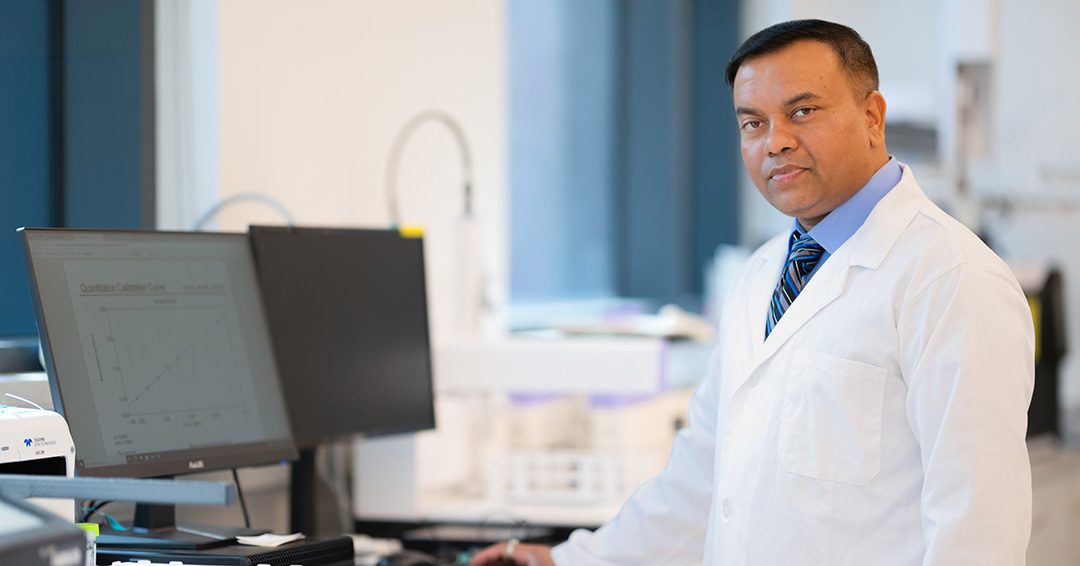
Rishi Prasad, associate professor and Extension specialist in nutrient management at Auburn, leads the grant-funded initiative with a focus on efficient implementation.
“We are part of this global innovation so we can help empower farmers in the U.S. and participating countries,” Prasad said. “By taking our institutional knowledge and expertise to these countries, we’ll benefit U.S. agriculture, as well, through new markets, stronger supply and better agricultural products for use here at home.”
The four major focus areas of this project will take a systems-based approach:
- Modernizing fertilizer production systems to improve efficiency and resilience
- Developing next-generation fertilizer products and precision nutrient application technologies
- Strengthening soil health systems to improve nutrient-use efficiency and farm productivity
- Capacity building, accelerating scaling through market development, private sector engagement and policy alignment
- The Feed the Future Innovation Lab will translate in-field trial data into real-world recommendations for local farmers and agricultural organizations
Feeding the Future
Auburn researchers and Alabama Extension specialists plan to visit Bangladesh, Guatemala, Senegal, Sri Lanka and Zambia, with the possibility of expanding the project to additional countries. They will work closely with agencies, Extension programs and governments to build stronger soil health programs locally. Prasad said he and the IFDC partners aim to give farmers the knowledge and tools they need to sustain the project long after its completion.
Prasad and the team will take field-tested U.S. fertilizers to the participating countries, evaluate them under local conditions and help residents identify the most reliable options. This work will showcase American agricultural innovation, strengthen fertilizer supply chains, and open new market opportunities for U.S. technologies. The team also plans to utilize new fertilizer formulations developed at Auburn, along with subsurface applicators that place fertilizer below the soil surface for direct nutrient delivery. Recommendations will be tailored to each country’s crops and landscapes, generating practical insights that can improve productivity abroad while supporting more resilient and efficient fertilizer and soil health systems for American farmers.