
Farming

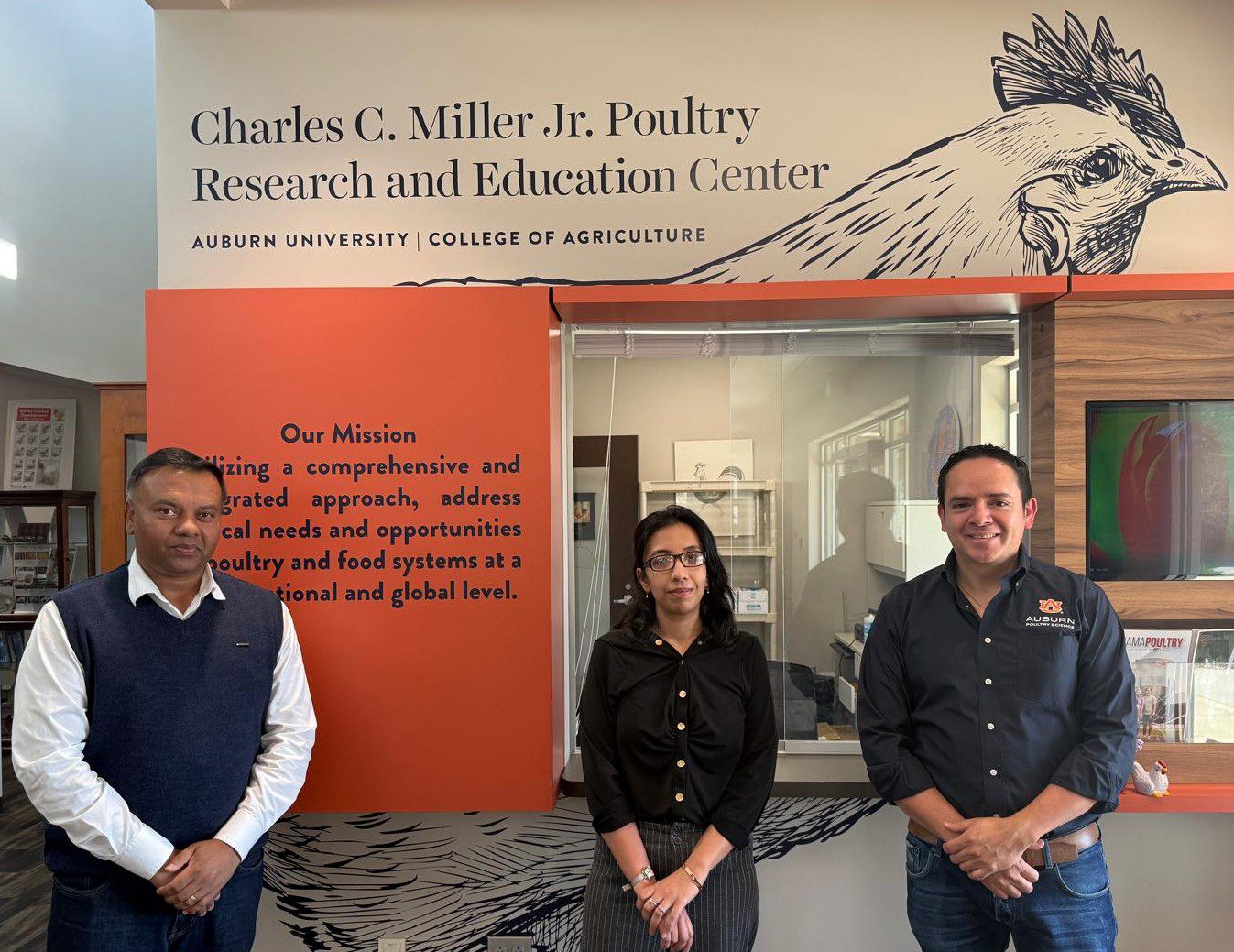
AUBURN UNIVERSITY, Ala. — In Alabama, chickens outnumber humans by the millions. With that many birds, poultry broilers, or chickens raised for meat, handily claim the top spot among Alabama’s agricultural commodities.
Even as an Alabama powerhouse, the poultry industry has its challenges, and Auburn researchers are looking for new solutions. In a new initiative, Auburn researchers are developing strategies to reduce gas emissions from poultry houses and improve animal welfare for poultry production.
Research to Reduce Emissions
The effort is funded by the Alabama Department of Economic and Community Affairs, and Gov. Kay Ivey awarded this and other projects to advance agricultural innovation. The research is conducted through the Alabama Agricultural Experiment Station.
Debolina Chakraborty, an assistant research professor for the Department of Biosystems Engineering, is leading the project. Chakraborty and the team are taking one step at a time to build a more sustainable future for the poultry industry.
“We aim to develop a safer and more sustainable litter amendment that does more than just control ammonia,” Chakraborty said. “Our goal is to create a product that improves environmental quality, protects public health, supports better animal welfare and helps broiler producers stay profitable in the long run.”
With that goal in mind, Chakraborty said the research helps all involved — from producers and workers to the birds themselves.
Alabama Extension’s Role
Rishi Prasad and Wilmer Pacheco, both associate professors and specialists with Alabama Extension at Auburn University, also serve on the project team. They represent crop, soil and environmental sciences and poultry science departments. With a producer’s perspective in mind, they provide firsthand knowledge of the challenges of litter management.
“A lot of science is done in the lab, but many times it does not reach end users,” Prasad said. “In this study, our partnership will play a significant role in testing and transferring the technology to the poultry growers.”
Raising Broilers, Controlling Emissions
Today’s poultry industry must juggle bird health, such as guarding against diseases, and waste management. Each year, broiler production in Alabama brings in around $16 billion in revenue, and over 1 billion birds are raised in the state. With that level of output, it comes as no surprise that managing broiler litter is a major undertaking for producers. In fact, the production process emits around 2 million tons of waste, known as broiler litter, annually.
Broiler litter releases ammonia and other gases into the environment. It is also known to produce high levels of nitrous oxide. This excrement can even produce microorganisms, including salmonella and E. coli, which are threats to food safety and flock health.
Producers and researchers alike take much-needed precautions to protect the poultry and reduce risks of contamination. Currently, many producers use poultry litter treatment, which is a chemical amendment added to the waste. Unfortunately, this only offers a temporary solution.
“Because they are harsh chemicals, they may also create other problems, such as irritating birds’ skin, causing foot lesions or disrupting beneficial microbes in the litter,” Chakraborty said. “As a result, these treatments may negatively affect bird health and overall litter quality.”
To tackle these problems, Auburn researchers are creating a new type of adsorbent. It reduces ammonia and nitrous oxide when added to broiler litter. It also suppresses pathogens and helps lower the risk of phosphorus runoff.
Next Steps
Right now, the team is hard at work developing the litter amendments. Soon, they will take these treatments to the Poultry Miller Center and eventually test them in pilot trials in Alabama poultry houses.
“Ultimately, this work supports a more sustainable future for poultry farming, benefiting the planet, the people who work in the industry and the birds themselves,” Chakraborty said.
This project takes a step toward a cleaner and more sustainable poultry industry with healthier birds and science-backed solutions that move innovation from the lab to the poultry house.