
Commercial Applicator

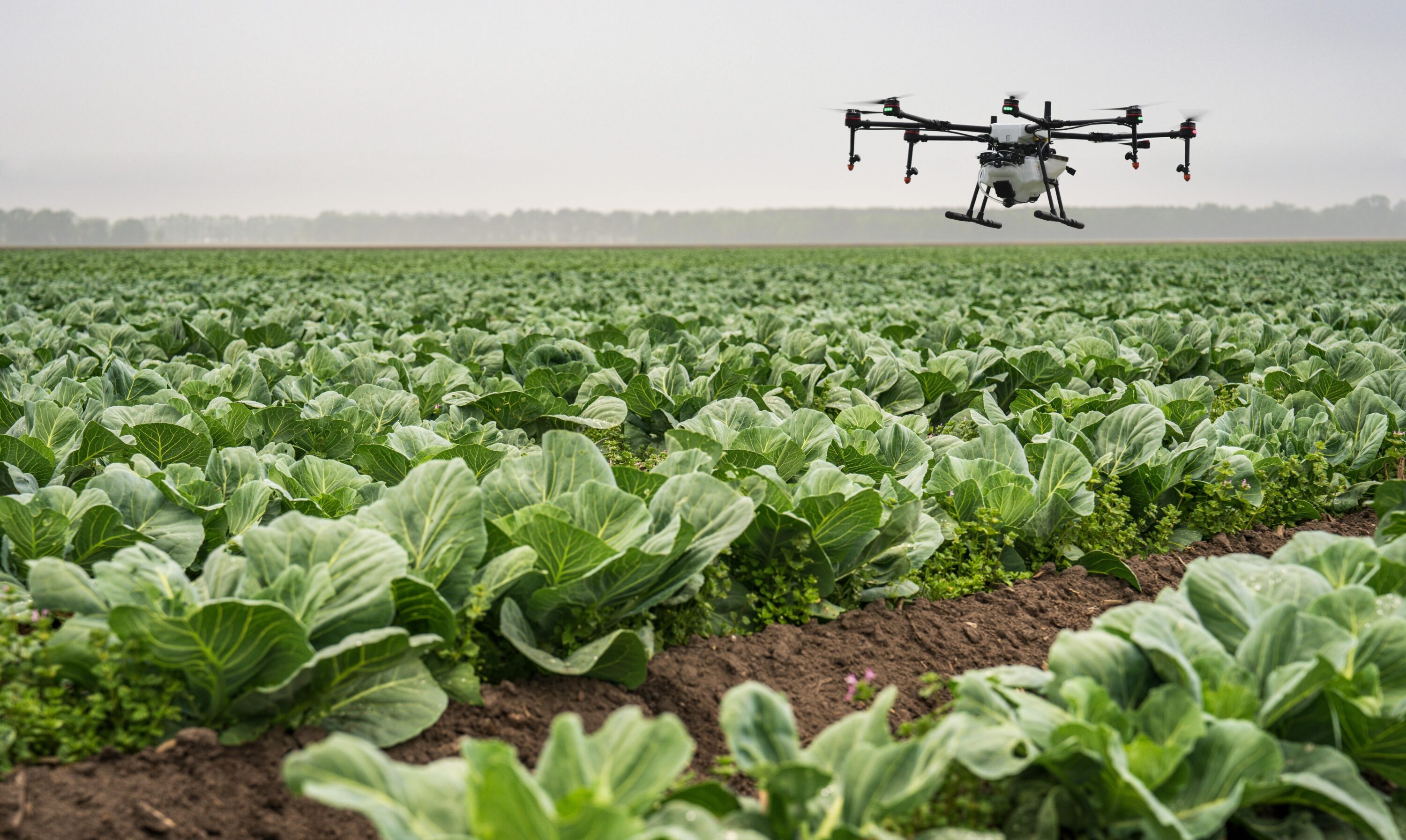
Alabama’s hot, rainy summers are optimal for the growth of fruits and vegetables, but it also creates ideal conditions for disease and pest to develop, making a proper spraying program essential. However, a new way of spraying is needed when constant rainfall leaves fields too wet for heavy equipment and conventional sprayers. Spray drones offer the ability to reach a crop before a manageable problem becomes more difficult and expensive to control. A drone can take off from outside the field and apply a product without ground traffic, but weather restrictions, pesticide labels, and drift-management practices still determine whether an application can be made safely and legally.
Logistical Considerations Before Purchasing
Growers must first understand that drones are not a simple replacement for every sprayer. A drone’s value will depend on the crop, acreage, target pest or disease, application requirements, operator training, and the economics of the individual farm.
Tomatoes and strawberries grown in plasticulture systems, as well as peach orchards, are among specialty crop operations that may benefit from spraying drone applications. These crops are high-value, and delays in disease or pest management can lead to significant loss. Therefore, growers must select a drone that will provide a successful spraying cover of the crop canopy. This will depend on operation mode (the spray’s ability to reach the intended part of the plant), flight height, drone speed, swath width, droplet size, carrier volume, nozzle setup, and wind conditions. The application in a low-growing strawberry canopy is different from that in a mature tomato crop or in a peach tree with dense foliage. Particularly, spraying applications in orchards are one of the most challenging because the product must move into and through a vertical canopy.
Drones also should not operate during rain, excessive wind, or other unsuitable conditions. Weather restrictions, pesticide labels, and drift-management practices still determine whether an application can be made safely and legally.
In addition, cost and return on investment are consideration points before purchasing a drone. Growers must consider how many acres they need to treat, how frequently applications are made, and whether the drone can complete the work within the available spray window. Remember, drone price is only one part of the decision. Batteries, charging equipment, mixing and refill systems, transportation, maintenance, software, repairs, insurance, and trained labor also affect the total cost. For some farms, hiring a qualified drone-application service may be more practical than owning and operating the equipment.
Technical and Licensing Considerations Before Purchasing
The technical learning curve should not be underestimated. Spray drones rely on mapping, geospatial programming, route planning, calibration, and accurate application settings. A mistake in field boundaries, altitude, speed, or flow rate can reduce coverage or create an off-target application. Growers should identify who will operate the drone, who will maintain the equipment, and where technical support and replacement parts will come from before making a purchase.
Finally, licensing and regulatory requirements must be addressed before spraying begins. According to the Federal Aviation Administration (FAA) Part 107, a Remote Pilot certificate is generally required for nonrecreational operations, but it does not authorize the dispensing of agricultural products. Agricultural spraying also requires FAA authorization under Part 137 for an Agricultural Aircraft Operation certificate. In Alabama, applicators need the appropriate pesticide certification or license and aerial mode-of-application credentials. Applications must follow all label directions, including crop, rate, method, weather, buffer, and drift restrictions. If hiring a service, growers should verify the operator’s credentials, pesticide applicator status, insurance, and records.
Extension Can Help
Extension can help reduce the uncertainty that surrounds new technology. Research trials and on-farm demonstrations can compare coverage, application timing, crop response, and operating costs. Extension agents and specialists can also help growers locate licensing information, understand pesticide-label requirements, and develop questions to ask equipment dealers or service providers. This support can flatten the learning curve and help growers avoid expensive mistakes.
For growers, remaining open to new technology is an important part of development, but they should first identify if spray drones are right for them. Growers should understand if wet fields are delaying critical applications and if a smaller or irregular field is difficult to treat efficiently. A drone is a good fit only when it improves timeliness, application quality, or farm efficiency without creating greater financial, technical, or regulatory challenges. Alabama Extension can help growers evaluate those tradeoffs and make a science-based decision for their operation.
For more information, visit aces.edu or contact your local Extension agent.