
Beef

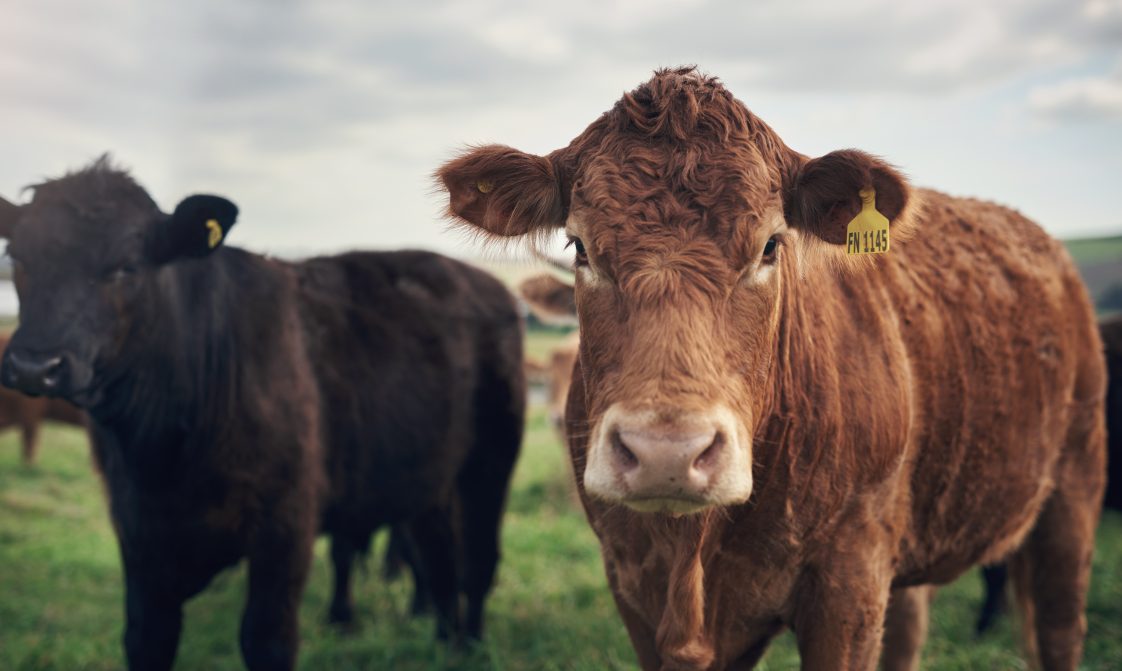
The Animal Sciences and Forages Extension team provides direct education to forage and livestock farmers on best management practices along with communication and relationship building with stakeholders. The goal is to improve producers’ livelihoods and to benefit Alabama communities through stewardship of animal, land, and water resources and improved food security.
Program Summary Highlights
Alabama Forage Focus Program (2017–2024)

Institutional Lead: 1862–Auburn University
Project Leader: Leanne Dillard
Background/Situation/Issue: This program is used to educate stakeholders on sustainable forage management practices. Program participation increases the ability of producers to establish, manage, and sustain a viable forage base for their operations.
Select Outputs
Meetings with Stakeholders: Fifty-three forage management meetings are conducted annually with a total reach of 1,145 contacts (6-year average).
Field Days: Integrated research-Extension demonstrations in partnership with Alabama Agricultural Experiment Station outlying units provide opportunities for livestock-forage producers to see management practices in the field and view current research on forage management systems. Four to eight field days are held annually at Alabama Agricultural Experiment Station research farms. During these field days, attendees view current research projects and learn results of previous projects and how to implement them on their farms. Field days were held at the Wiregrass Research and Extension Center (REC) in Headland, Alabama; Tennessee Valley REC in Belle Mina, Alabama; E. V. Smith REC in Shorter, Alabama; the Black Belt REC in Marion Junction, Alabama; and others across the state.
Hands-on Learning: The Alabama Grazing Academy was started in 2018 as a hands-on meeting to teach stakeholders about pasture and hayfield management strategies. Programs are often hosted on private farms or at Auburn University outlying research centers. Up to five workshops are held annually. Since 2018, 240 farmers have completed the program. Farmers reported increased knowledge (by 30 to 60 percent) in precision soil fertility, forage testing strategies and interpreting results, grazing and weed management, and temporary electric fencing. When asked how likely they would be to adopt concepts from the day’s segments, attendees on average rated all three topics as “somewhat probable.” The total economic impact was $237,975.
Online Education: In 2021, the Forage Basics online course was released as a free, self-paced way for farmers to learn more about forage practices. The course provides a general overview of key forage management concepts in the southeastern United States. Participants can watch a series of videos, take interactive quizzes, and receive a certificate of completion. The course helps reach participants who are just getting started with forage management, and it is a valuable tool for new and beginning farmers, those who want a refresher on certain concepts, and youth interested in agriculture. Since release of the course, there have been 706 enrollments with a 32 percent completion rate.
Evaluation Techniques: Pre- and post-program surveys and one-on-one farmer impact interviews
Value Statement: The Alabama Forage Focus Program improves local communities through targeted educational efforts on stewardship of soil, plant, and water resources.
Program Resources:
- Forage Basics: https://www.aces.edu/blog/topics/farming/forage-basics-online-course/
- Website: www.alabamaforages.com
- Social Media: www.facebook.com/alabamaforages
Sustainable Livestock Systems Program (2016–2024)
 Institutional Lead: 1862–Auburn University
Project Leader: Kim Mullenix
Background/Situation/Issue: The objective of the Sustainable Livestock Production Systems program is to provide livestock producers (beef, dairy, and equine) with comprehensive programming aimed at teaching best management practices to enhance on-farm sustainability.
Select Outputs
Meetings with Stakeholders: Average of 90 meetings per year (6-year average)
Educational Resources: Both online and in-print resources were created on sustainable livestock management practices for use by internal and external stakeholders to address on-farm livestock-forage management questions. This includes online coursework, digital publications, website content updates and additions, webinars, videos, and social media resources.
On average, 11,780 contacts are reached annually through website visits, online course participation, video views, and social media posts. Livestock programs, educational resources, and events are highlighted on the website and linked to social media for promotion. There has been increased interaction on our Facebook page since the onset of the COVID-19 pandemic (26 percent increase in likes/followers since 2020).
Programs for New and Beginning Farmers: An introductory-level educational program was developed for stakeholders interested in learning more about the basics of beef cattle management systems in Alabama. The Beef Systems short course was designed to (1) introduce producers to concepts related to best management practices in beef operations and (2) to create awareness among producers about educational services offered through the Alabama Cooperative Extension System.
Since the program began in fall 2019, 305 participants have enrolled in the course across the state. A 4-year average of data collected from program participants indicates that this represents 55,634 acres and 29,318 head of cattle.
Eight topics were taught over four evenings (two topics per meeting at 45 minutes each). Topics included forages; nutrition; herd health; reproduction; animal identification, genetics, and records; environmental stewardship; economics; and meat science. A post-program survey was conducted to evaluate (1) potential change in knowledge regarding beef cattle management practices and (2) awareness of Extension resources.
Most participants were part-time farmers (52 percent). Overall, producers were highly satisfied with the program, giving an overall rating of 4.7 out of 5 (Likert-type scale) across program topics. Seventy-five percent indicated they planned to adopt one or more of the management practices in their operation within the next 12 months. Top management practices that producers planned to implement or improve upon included (1) forage management (soil/forage testing and grazing management, such as rotational stocking), (2) establishing a calving season, (3) record keeping, and (4) proper identification of livestock.
Notably, 48 percent of participants reported that this was their first time attending an Extension program. This demonstrated the reach of this program to new and beginning clientele.
Total estimated economic impact of the program is $728,528 (based on estimated savings reported per operation).
Self-Paced Online Learning: An extensive online course on the basics of beef cattle management was released in January 2016. Since then, 2,191 students have enrolled in the course, with 23 percent completing it. Enrollment is voluntary, and the course generates a certificate of completion at the end for 8 hours of training credit in beef management.
Evaluation Techniques: Pre- and post-program surveys and one-on-one farmer impact interviews
Value Statement: Improved knowledge and on-farm management strategies increase sustainability of livestock systems in the state, which contributes to a safe and secure food supply chain for consumers.
Program Resources:
- Beef Basics: https://www.aces.edu/blog/topics/beef/beef-basics-online-course/
- Website: www.alabamabeefsystems.com
- Social Media: www.facebook.com/alabamabeefsystems
Beef Cattle Performance Programs to Enhance Profitability (BCIA) (2016—2024)
 Institutional Lead: 1862–Auburn University
Project Leader: Michelle Elmore
Background/Situation/Issue: The Alabama beef cattle industry represents over $509 million in gross sales; it ranks third in leading state commodities; and it has a total inventory of 1.17 million head produced from 14,641 farms, as reported by the 2022 USDA Census of Agriculture and the USDA National Agricultural Statistics Service.
The 2022 National Beef Quality Audit reported that improved application of animal identification and record keeping can have a positive effect across all aspects of an operation and its end products. Expansion of record keeping and increased application of genetic selection tools and recommended management practices would advance operational efficiency and enhance profitability.
The Alabama Beef Cattle Improvement Association (BCIA) serves as an educational program within Alabama Extension to provide this education. Alabama BCIA’s mission is to promote, educate, and facilitate the use of performance data, record keeping, and marketing opportunities.
Activities with Stakeholders: Average of 47 activities and 2,879 participants per year
Stakeholder Reach: Through the Alabama BCIA website, Facebook page, email blasts, and mail, our educational messages on production record keeping, genetic tools, and program events are featured for an average of 15,012 contacts per year (7-year average).
Select Outputs
Alabama BCIA Commercial Record-Keeping Program: The Alabama BCIA Commercial Record-Keeping Program utilizes a specialized internet-based system of hands-on record-keeping applications. Since 2016, a total of 32,493 calves have been recorded, for an average adjusted weaning weight of 576 pounds and an average of 43 herds enrolled per year.
In 2024, 43 herds were enrolled representing animal records. The average adjusted 205-day weaning weight was 564 pounds for 3,471 calves weighed between 160 to 250 days of age. The average actual weaning weight was 563 pounds from 4,542 calves, which is higher than previous national and regional reported values.
In 2014, the specialized record-keeping system utilized was transitioned from software-based, centralized processing to an internet-based system to allow for hands-on use. In 2019, beef cattle producers were surveyed to assess the application and hands-on use of this new record-keeping system in operational management.
The online survey consisted of fourteen multiple-choice questions. The Qualtrics XM web-based survey tool was used to deliver and evaluate results. The response rate was 45 percent from fifty-six beef producers surveyed.
The value of performance records was rated extremely valuable (72 percent). Hands-on access was rated very valuable (92 percent). The frequency of system access was 40 percent weekly, 20 percent monthly, and 8 percent daily. The most common devices used (at 36 percent) were a combination of computer and smartphone. Respondents were most actively engaged in the areas of calving records (22 percent), weaning data (20 percent), and culling cows based on performance (18 percent). Planned expansion was indicated in the areas of yearling data for replacement heifers (23 percent) and collecting mature cow weights at calf weaning (21 percent). Overall, responding cattle producers indicated that the internet-based system was definitely meeting their needs (88 percent).
In 2019, the Alabama BCIA Performance Advocate Program was launched to encourage beef producers to expand record keeping for further evaluation of whole herd performance and to recognize efficiency. Six specific areas of data collection are evaluated: breeding, pregnancy percentage, calf adjusted weaning weights and ratios, mature cow weight at calf weaning, yearling weights for replacement heifers, and herd health. A score of 100 points is awarded per data area for a possible perfect score of 600.
For 2024, eight herds were awarded a perfect score of 600, including four herds that have held this 600 score for the last 5 years, one herd for the last 3 years, and four herds for the last 2 years.
Seedstock Evaluation and Marketing: Alabama BCIA offers programs for seedstock cattle producers for the evaluation and marketing of breeding animals. Alabama BCIA sponsors the North Alabama Bull Evaluation, a feed performance evaluation located in Cullman, and the Alabama BCIA Fall Round Up Bull Sale, an annual bull consignment sale in Uniontown to market breeding bulls. Within the last 8 years, 874 bulls have been marketed, impacting 748 producers, for a total economic impact of $2,923,550.
Alabama BCIA North Alabama Bull Evaluation: The North Alabama Bull Evaluation offers an opportunity for stakeholders to participate in post-weaning development of bulls for marketing. Consignors enroll bulls in the program and are provided performance evaluation of the bulls.
A survey of Alabama BCIA North Alabama Bull Evaluation participants from 2019 to 2021 was conducted. Results reflected benefits as follow: (1) Bull evaluations are very valuable (60 percent); (2) evaluation provides an opportunity to evaluate herd genetics to performance standards (17 percent) and to market herd genetics (17 percent); (3) knowledge increased in the areas of performance measurements in yearling weights and ratios (80 percent) and foot scores (79 percent); and (4) knowledge increased in the areas of genetic selection tools in evaluation of structural correctness and soundness (46 percent), Expected Progeny Differences (EPDs) (31 percent), and selection indices (23 percent). Overall, 86 percent of respondents stated that their participation was beneficial, and they planned to participate in the future.
Value Statement: This project supports education of Alabama beef producers to advance the application of best management practices, record keeping, and genetic selection tools to improve operational efficiency and profitability. In turn, this benefits the economy of Alabama and the production of safe and wholesome beef.
Evaluation Techniques: Marketing program reports, web-based surveys, and in-person data collection through pre- and post-program surveys
Program Resources:
- Website: www.albcia.com
- Social Media: www.facebook.com/alabamabcia
 Opportunities for Value-Added Livestock Marketing (2016–2024)
Institutional Lead: 1862–Auburn University
Project Leader: Michelle Elmore
Background/Situation/Issue: The Alabama cattle industry ranks third in leading state agricultural commodities, with cattle produced in every county for a total inventory of 1.17 million. Based on USDA APHIS NAHMS data, a low percentage of cattle producers in the eastern United States apply best management practices, such as a defined calving season, breeding soundness exams, animal identification, record keeping, and health documentation. The eastern region trends lower than both the national and other regional values.
The objectives of this program are to increase the knowledge and skills of commercial and seedstock beef cattle producers so that they can make sound genetic selection decisions to enhance herd profitability and marketing.
Outputs
The Alabama Pasture to Rail Program (2016–2024): The Alabama Pasture to Rail program is an opportunity for beef producers to learn more about the retained ownership process through the feed yard and harvest phases of the beef industry.
Participating beef producers receive data on individual animals that can assist them with management decisions for herd genetics, health, and nutrition. This includes post-weaning performance data, herd health information, and carcass measurements for their herd. Through this, producers can gain knowledge to benchmark their herd to make genetic selections for improvement, without the need for individual investment to finish an entire pen or load of calves.
The 2022–2023 Alabama Pasture to Rail Program resulted in an average profit of $163.03 per fed calf, with a range of −$27.38 to $361.94 per fed calf by shipment. Overall carcass performance through the 2022–2023 Alabama Pasture to Rail Program showed Alabama-raised fed cattle met or exceeded national values as reported by the 2022 National Beef Quality Audit. The 2022–2023 Pasture to Rail Program fed cattle averaged 917 pounds in hot carcass weight and 15.48 square inches in ribeye area, and had an average yield grade of 2.6, all of which exceeded national values and met the national average value of low Choice-quality grade. Many producers have utilized this program in order to make genetic improvements within their herds.
 Herdbuilder Replacement Female Sale (1998—2024): The Herdbuilder Replacement Female Sale is a marketing program conducted by the Alabama Cooperative Extension System’s Animal Science team and the Alabama Beef Cattle Improvement Association. The sale has two primary goals: (1) to provide high-quality bred replacement heifers to beef cattle producers and (2) to add value to commercial replacement heifers to enhance profitability.
From 1998 to 2024, the Herdbuilder Replacement Female Sale marketed 7,517 heifers, for an economic impact of over $10.9 million. In 2024 181 marketed bred heifers averaged $3,183 per head, directly impacting thirty-two beef operations, for a total economic impact of $576,100.
Value Statement: Value-added livestock management and marketing practices enhance farm and community-based economic sustainability.
Evaluation Techniques: Program survey and marketing report data
Program Resources:
- Website: www.albcia.com and https://www.aces.edu/blog/topics/beef/herdbuilder-replacement-female-sale/
- Social Media: www.facebook.com/alabamabcia and www.facebook.com/alabamabeefsystems
Food Animal Quality Assurance
Institutional Lead: 1862–Auburn University
Project Leader: Soren Rodning
Background/Situation/Issue: The objective of this program is to provide Beef Quality Assurance and Pork Quality Assurance training and certification for beef and pork producers to facilitate sustainable meat animal production.
Select Outputs
Beef Quality Assurance Program: Beef Quality Assurance (BQA) is a nationally coordinated, state-implemented program that provides education and training for cattle producers about good animal husbandry and management. One goal of BQA is to help producers raise cattle under the best management and environmental conditions possible. The training is practical and based on scientific knowledge.
BQA guidelines are also designed to ensure that beef consumers can trust and have confidence in the entire beef industry. This is extremely important considering that farm and ranch families comprise less than 2 percent of the U.S. population, which means many people are not very familiar with food production.
BQA provides a great opportunity for a relatively small number of beef producers to speak with a louder, more unified voice about how and why cattle are raised and managed the way they are. The Alabama Beef Quality Assurance Program is offered throughout the state, with 168 producers receiving BQA training through Extension in 2023.
Pork Quality Assurance Plus Program: Pork Quality Assurance Plus (PQA Plus) is a producer-driven program designed to ensure that U.S. pork products are of the highest quality and safe for consumption, and that animals raised for food are cared for in a way that ensures their well-being.
PQA Plus is designed to identify practices with potential to result in a food safety hazard and minimize this potential risk through producer education of relevant on-farm practices. On average, the Alabama PQA Plus program maintains certification for over 100 Alabama pork producers, which is required for most pork producers to be able to market their hogs.
Value Statement: Food animal quality assurance training demonstrates the beef and pork industries’ commitment to food safety and quality and improves consumer confidence in meat products.
Alabama Drought Reach
 Institutional Lead: 1862–Auburn University
Project Leader: Kent Stanford
Background/Situation/Issue: Initiated in 2024, Alabama Drought Reach is a statewide drought communication and outreach program focused on increasing drought literacy. Agriculture is Alabama’s number-one industry and is affected by drought approximately 20 percent of the time. Drought can have devastating impacts on agriculture, which affects not only the farmers dependent on that income but also the citizens relying on goods and services.
The United States Drought Monitor (USDM) is a national tool that shows the location and severity of drought across the United States and its territories. Although not an agricultural drought product, it directly procures some USDA funding as well as private insurance coverage. This money helps in a tangible way, therefore producers expect the USDM maps to accurately reflect the impacts of drought they are experiencing.
Alabama Extension and the Auburn Water Resources Center recognized a need for improved condition monitoring and drought communication, leading to this new endeavor. Alabama Drought Reach is building a bridge between Extension and the Office of the State Climatologist to provide a more accurate assessment of field conditions.
Data collected from Extension agents is used weekly by the Office of the State Climatologist to write the summary report submitted to the USDM. Information flows back to Extension agents through weekly graphics that highlight the current drought conditions and emerging trends. This bridge between the two agencies will outlive ADR, making it a sustainable solution to drought mapping in Alabama.
Mission: To improve drought communications and drought agricultural impact monitoring in Alabama
Vision: To better document drought’s agricultural impacts in Alabama, resulting in a more informed scientific and agricultural community
Key Objectives:
- Develop a systematic approach and monitoring program for drought agricultural impact data collection by Extension and Experiment Station personnel
- Develop and conduct drought training for Alabama Cooperative Extension System and Alabama Agricultural Experiment Station personnel
- Work alongside the Office of the State Climatologist to provide timely and relevant agricultural impact data
- Increase drought impact literacy among Alabama farmers, landowners, and the public
Select Outputs
Alabama Drought Reach was developed under the Auburn University Water Resources Center due to a need for better drought monitoring and communication with key stakeholders. Over the course of 2 years the program was designed as a unique partnership, with the Office of the State Climatologist, Alabama Extension, and the Alabama Agricultural Experiment Station providing funding.
Discussions were held with all Extension program teams in agriculture, forestry, and natural resources to gather input on data each could provide and utilize. A program coordinator position was outlined using this input, and a coordinator was hired in the summer of 2023. Immediately, a framework was developed to include a condition monitoring survey and the data format needed weekly by the Office of the State Climatologist.
ArcGIS Survey 123 was utilized to gather site-specific data from Extension agents across the state. This brief survey was specifically designed to capture meaningful information and images to show the actual conditions at field level without being lengthy and burdensome to complete. The survey was evaluated extensively in the fall of 2023 to ensure that the platform was performing correctly.
Survey data is provided each Monday morning to the Office of the State Climatologist for its use in completing the state summary report to the U.S. Drought Monitor. While the weekly data is a major focus, the most meaningful result is establishment of an open line of communication between Extension and the Office of the State Climatologist. The ongoing discussions between agents and this office provide a link not available previously. Other direct results include the following:
- 52 drought reports and 40 crop impact reports published
- 32 Drought Update newsletters published
- 180 surveys submitted in 2024 to assess conditions
- Partnership with the Alabama Office of the State Climatologist at the University of Alabama in Huntsville to write a NOAA NIDIS assessment of the 2023 Southeast drought
- Presentation to ADR at the annual American Meteorological Society conference in New Orleans and the NOAA NIDIS Drought and Southeast Aquatic Ecosystems workshop in Raleigh. (Several state climatologists from other states wanted to talk more about how they could build a lasting relationship with their Extension.)
Evaluation Techniques: An evaluation was made of each of the seven regional training sessions conducted in 2024. Results indicated that attendees increased their knowledge of drought by 33 percent. Also, over 90 percent of those in attendance indicated their intention to utilize drought resources monthly in their county or region.
Agronomy and animal science and forages are the two teams designated to provide timely survey reporting. Over 60 percent of the counties in Alabama have utilized Alabama Drought Reach to prepare loss assessments for the local FSA office.
The impacts listed here demonstrate the value of this program in Alabama.
Techniques: Data collection and accuracy are a focus of Alabama Drought Reach, but drought literacy is also an identified need. Agricultural producers often feel that their situation is not fully captured and would like to be more engaged.
Condition Monitoring Observer Reports (CMOR) is a public tool to report drought conditions and severity across the United States. USDM authors use CMOR reports to get a better picture of drought extent.
ADR has promoted CMOR via workshops and outreach material as a way for the public to get involved with drought reporting. CMOR reports in Alabama have grown exponentially since the inception of ADR due to collaboration with producer organizations and CMOR promotion to producers. Following are some statistics:
- 2022 (before ADR was created): 9 total reports for Alabama
- 2023 (first year of ADR): 627 total reports
- 2024 (second year of ADR): 480 total reports
- Over 40 county loss assessments due to drought provided by ADR
Many producers have private crop insurance that defaults to the U.S. Drought Monitor report and/or their local FSA disaster designation. While it is not possible to gather the full impact of Alabama Drought Reach through these varied crop insurance options, there is no doubt that more accurate monitoring has led to higher payout for farmers under these programs.
Program Resources:
- Website: https://aaes.auburn.edu/wrc/extension-outreach2/al-drought-reach/
- Social Media: https://www.facebook.com/profile.php?id=61561834160554
Testimonials
The following are some selected impact highlights from stakeholders and participants in our programming efforts:
- “Extension people made my forage program a success.”
- “Through the Pasture to Rail program in particular, Alabama Extension has been a useful resource for me. When I retained ownership on some calves that I sent through the program, I was able to get carcass data that had been collected on them after slaughter. By working with Extension, I was able to select bulls that had a better marbling score in hopes of their future progeny grading better on the rail. I have also been a part of the Herdbuilder Replacement Female Sale for several years.”
- “The Alabama Beef Handbook is one of the single best resources I have seen from Extension in years and is a practical guide for my operation.”
- “Overall, this test (North Alabama Bull Evaluation) has historically been managed well and brought buyers and consigners together at a wonderful sale facility in Cullman, Alabama. Thank you for continuing the program and caring about the continued success of the evaluation.”
Becky Barlow, Associate Dean, Assistant Director, Agriculture, Forestry, and Natural Resources, and Leanne Dillard, Extension Specialist, Associate Professor, Animal Sciences and Forages, both with Auburn University
New September 2025, Animal Science & Forages Team Impact Report 2024, ANR-3172
Past Reports
- Animal Science & Forages Team Impact Report 2023, ANR-3067
- Animal Science & Forages Team Impact Report 2022, ANR-3013
The Alabama Cooperative Extension System (Alabama A&M University and Auburn University) is an equal opportunity educator, employer, and provider. If you need a reasonable accommodation or language access services, contact Leanne Dillard at dillasa@auburn.edu.