
Animals

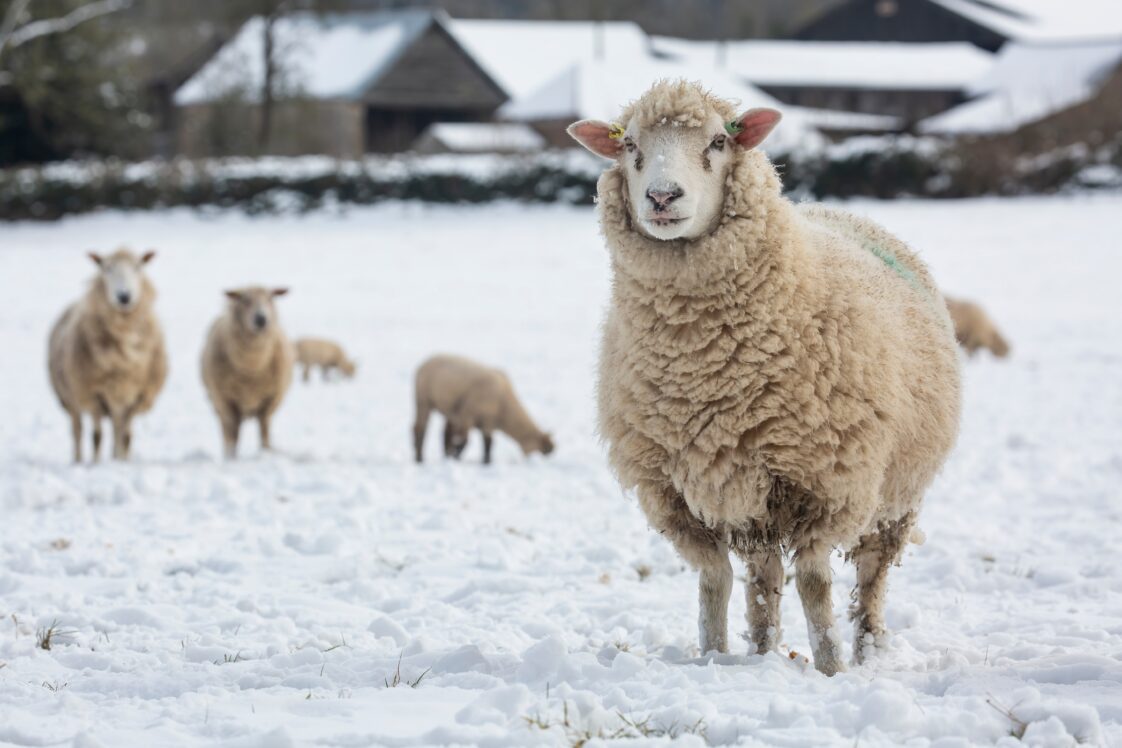
Cold weather alone can challenge sheep and goats. The risk to animal health and productivity increases sharply when low temperatures are combined with rain, sleet, mud, or high humidity. Cold stress during wet weather is one of the most underestimated threats to small ruminants. It is a major threat in regions where winter temperatures frequently fluctuate around the freezing point. These conditions can rapidly overwhelm the animals’ natural defenses, leading to serious welfare and production problems.
What is cold stress in wet weather?
Small ruminants like sheep and goats are homeothermic animals. This means that they must maintain a stable internal body temperature regardless of environmental conditions. Goats and sheep perform well within a thermoneutral zone, a temperature range where no extra energy is needed to regulate body temperature. Animals enter a state of cold stress when environmental temperatures drop below this range, and animals must burn more energy to generate heat and maintain normal body temperature.
Moisture is a major factor that intensifies cold stress. Rain, snow, mud, or damp bedding breaks down the insulating air layer within the hair coat, dramatically increasing heat loss through conduction and convection. Even animals with thick winter coats can become severely cold-stressed once their coat becomes wet. Wool retains some insulating capacity when wet, which explains why sheep generally tolerate moisture better than goats. However, prolonged exposure to wet conditions can eventually overwhelm this advantage.
How Wet Conditions Intensify Cold Stress
In dry conditions, sheep and goats rely on coat insulation, body fat reserves, and heat generated through rumen fermentation to maintain body temperature. However, wet weather disrupts all three mechanisms simultaneously and intensifies cold stress. Moist conditions from rain, snow, mud, or damp bedding reduce insulation by flattening hair fibers and collapsing the insulating air layer within the hair coat. This causes dramatic heat loss from the body surface through conduction and convection.
For every degree that temperature drops below the lower critical temperature, energy requirements increase by approximately 1 to 2 percent. During wet and windy conditions, the effective temperature felt by the animal can be far lower than the actual air temperature, sharply increasing energy demands and placing added strain on the animal’s system.
Physiological and Hormonal Responses
Cold stress triggers a range of physiological and neuroendocrine responses in small ruminants. These include increased metabolic rate and feed intake, activation of the hypothalamic–pituitary–adrenal axis, elevated cortisol secretion to mobilize energy reserves, and increased thyroid hormone activity to enhance heat production. These responses are essential for short-term survival but come at a biological cost.
Chronic exposure to cold and wet conditions can lead to oxidative stress, suppression of immune function, reduced reproductive hormone secretion, and increased susceptibility to disease. In severe cases, hypothermia may develop, particularly in young animals, thin or sick individuals, and recently shorn sheep and goats that lack adequate insulation.
Impact on Productivity and Health
Cold stress during wet weather has clear and measurable economic consequences for producers. Growth rates and feed efficiency decline as more dietary energy is used for heat production. Milk yield is often reduced, particularly during early lactation, and milk composition may be altered, with higher fat concentration but overall lower volume. Neonatal mortality increases markedly in lambs and kids exposed to cold and wet environments shortly after birth.
Additional health risks include frostbite affecting ears, teats, testes, and other extremities, as well as a higher incidence of infectious diseases due to compromised immune defenses. Although animals may consume more feed during cold periods, much of this intake supports survival rather than productive functions.
Management Strategies to Reduce Risk
Effective management practices can greatly reduce the impact of cold stress. Providing shelter and wind protection—such as sheds, windbreaks, or natural covers—helps minimize wind chill and direct exposure to rain. Even a partial shelter can significantly reduce heat loss and improve animal comfort.
Keeping animals dry is equally critical. Good drainage in pens and paddocks, prompt replacement of wet bedding, and avoidance of overcrowding help limit moisture buildup. Nutritional support is also essential during cold, wet periods, with increased dietary energy density to meet higher metabolic demands. High-quality forage supports rumen fermentation and internal heat production, while supplemental energy is often necessary for pregnant, lactating, or growing animals.
Special attention should be given to high-risk groups, including newborns, thin animals, older stock, and recently shorn sheep and goats. Promptly drying newborns and providing warm, draft-free environments can be lifesaving. In addition, access to unfrozen, clean, and palatable water must be ensured, as cold or icy water reduces intake and worsens dehydration and feed utilization.
Conclusion
Cold stress during wet weather is not merely a temperature issue but a complex interaction among moisture, wind, nutrition, and animal physiology. While sheep and goats possess remarkably adaptive capacity, prolonged exposure to cold and wet conditions can overwhelm their defenses, leading to reduced productivity, compromised health, and increased mortality. Clear knowledge of how wet conditions amplify cold stress allows producers to implement timely and effective management strategies. By prioritizing preparedness rather than reaction, sheep and goat producers can protect animal welfare, maintain productivity, and minimize economic losses during periods of cold and wet weather.