
About Us

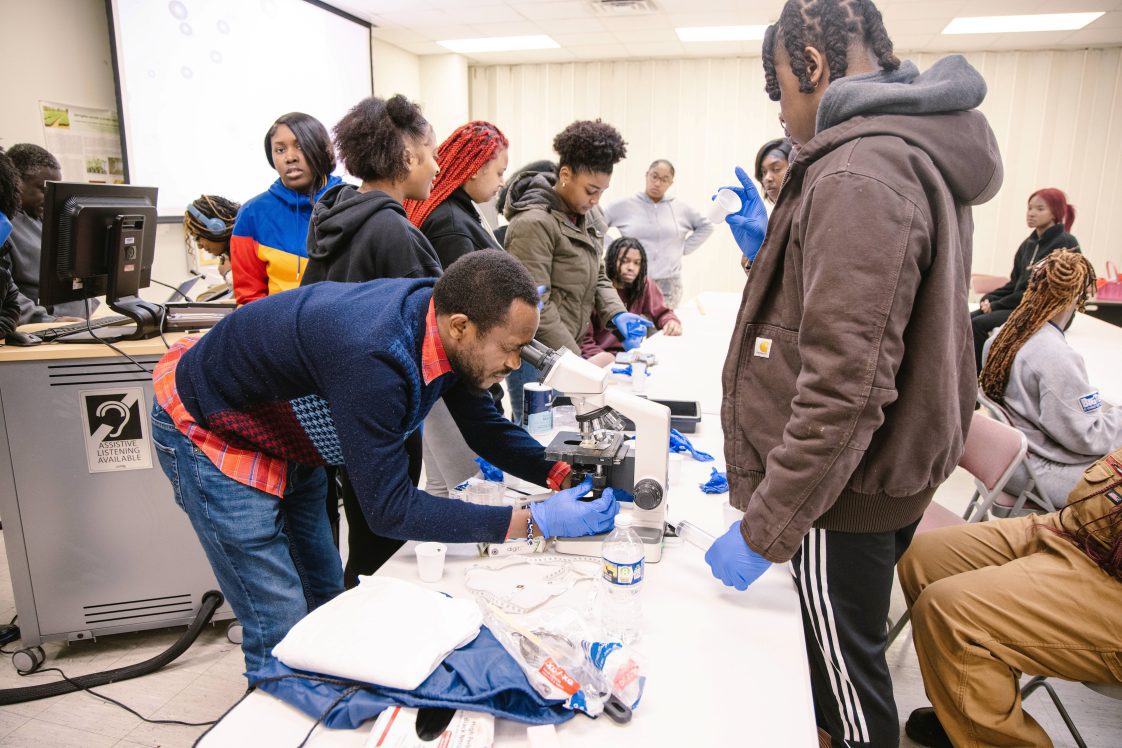
Bio-health science students in the Department of Food and Animal Science at Alabama A&M University (AAMU) attended a two-day workshop offered through the Alabama Cooperative Extension System. Alabama Extension Specialist Felix Samuel and Lead Goat Technician Daivon Allen facilitated the workshop at AAMU’s Winfred Thomas Agricultural Research Station. The purpose of the training was to equip students with practical tools to improve animal health and productivity while tackling the growing challenge of anthelmintic resistance.
Bridging Theory and Practice
Designed to connect classroom learning with real-world applications, the workshop immersed students in key diagnostic techniques for small ruminants. A FAMACHA® training focused on identifying anemia caused by the barber pole worm (Haemonchus contortus) using the FAMACHA® eye color chart. Students learned how to assess anemia levels in sheep and goats. After an assessment, they applied targeted deworming strategies essential in reducing the overuse of dewormers and slowing the spread of parasite resistance.
A fecal egg count (FEC) session introduced students to diagnostic methods through hands-on microscopy. Participants prepared fecal samples, identified parasite eggs, and learned to interpret FEC results critical for monitoring parasite load and evaluating the effectiveness of deworming programs.
Experiential Learning
Post-training evaluations revealed that 90 percent of the students reported increased confidence in applying the techniques independently. Many expressed excitement about using these tools to promote animal health and viable farming practices.
“Before this training, I only understood parasite control theoretically,” one participant said. “Now, I can confidently conduct fecal egg counts and use the FAMACHA® chart to make informed deworming decisions—skills that will be invaluable in my career.”
Through these trainings, students not only developed technical skills but also gained a deeper appreciation for the role of strategic deworming in promoting animal welfare and productivity. The participants learned how identifying parasitized animals early and using targeted treatments can reduce reliance on dewormers, help prevent the development of anthelmintic resistance, and support maintainable livestock production.
Next Generation Ag Leaders
Samuel emphasized the importance of hands-on instruction in preparing students for real-world challenges. These trainings provide future animal scientists with critical tools to improve animal welfare and farm profitability while addressing the global threat of parasite resistance.
With expert guidance from both Samuel and Allen, the bio-health science students developed core competencies that align with science-based, sustainable animal health practices.
Career-Ready and Certified
By blending practical experience with industry-relevant certifications, the workshop exemplified the strong partnership between AAMU’s Department of Food and Animal Science and the Alabama Cooperative Extension System in preparing students for careers in veterinary medicine, animal production, research, and extension outreach. As demand rises for sustainable livestock management, AAMU students are well-positioned to lead innovation in animal bio-health and parasite control.