
About Us

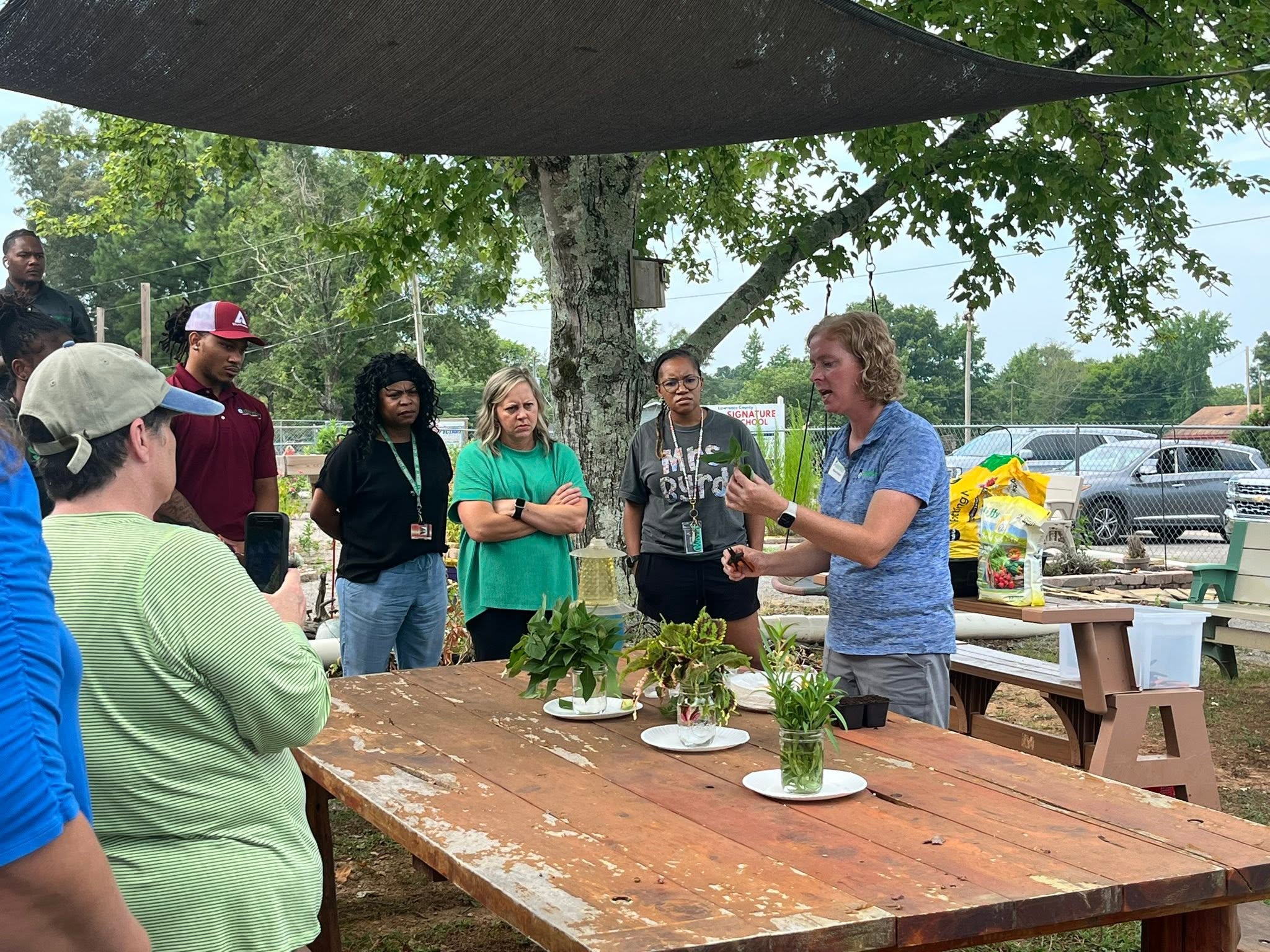
There is growing concern that urban youth lack basic agricultural literacy. Supermarkets and fast-food restaurants typically surround urban youth, thus confounding their understanding of just where food comes from. Urban farms, community gardens, and, more importantly, school gardens help students understand agriculture by actively engaging them in cultivating fresh fruit and vegetables. Young people also have an opportunity to improve their STEM (science, technology, engineering, and mathematics) skills.
Teacher Training
STEM in the Garden is a teacher-training workshop that helps educators establish school gardens and enhance their schools’ capacity to provide STEM education. Select schools receive a free turnkey raised-bed garden. In 2025, STEM in the Garden Teacher Workshops offered educators information on topics ranging from propagation to vermicomposting.
Program impacts include the following:
- Extension delivered two in-person, 6-hour workshops to 66 participants.
- 9 partners united to offer $2,500 in donations.
- Each participant saved an estimated $85.00.
- 28 curriculum and 63 STEM in the Garden Outdoor Classroom Calendars were delivered.
- 228 continuing education units (hours) were provided to teachers via PowerSchool.
STEM in the Garden surveys among 45 participants revealed that:
- 44 (98%) of respondents agreed they learned something new and plan to implement at least one best management practice they learned.
- 29 (65%) would test soils for nutrients.
- 28 (63%) would adopt propagation techniques.
- 27 (60%) would add pollinator plants.
- 26 (58%) would adopt composting techniques.
Other Home Horticulture Program Impacts
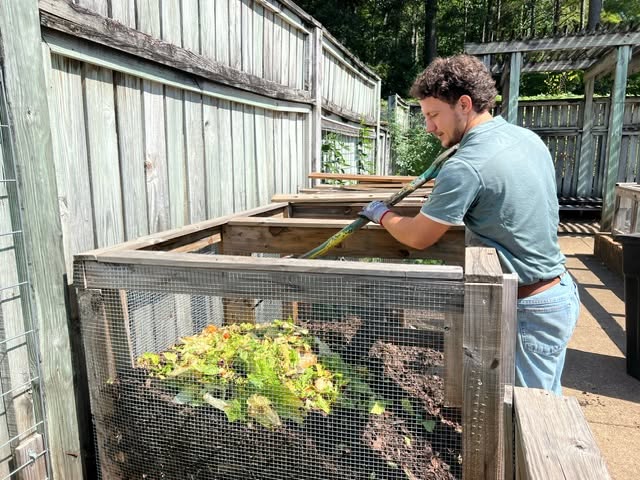 Urban Ag: Urban Food Production and Sustainable Communities
Urban Agriculture programming reached 5,383 food producers, small-scale farmers, homeowners, community groups, master gardeners, veterans,
beginning farmers, city planners, business owners, and community leaders directly through 81 workshops, live demonstrations, and other activities. These educational activities enabled participants to start, manage, and sustain community gardens and small-scale operations, increasing access to fresh, local produce.
Spring Community Garden Expo
The Spring Community Garden Expo reached 116 participants. Survey results among 71 participants indicated the following:
- 49 (69%) of respondents were new to Extension programs.
- 69 (97%) planned to implement a newly learned BMP.
- 39 (55%) found the content extremely useful, and 32% rated it very useful.
- 61 (86%) indicated the recommendations would save them money.
As a result of attending the Spring Community Garden Expo:
- 52 (73%) would add pollinator plants to their landscape.
- 29 (41%) would add pollinator habitat.
- 34 (48%) would alter chemical use to protect pollinators.
- 36 (51%) would add mulch to improve soil and water conservation.
- 29 (41%) would use IPM for more sustainable pest and disease management.
- 45 (63%) would compost to recycle nutrients on their property.
Urban Green
Urban Green offered 104 in-person and online activities, providing 4,979 urban residents with sustainable practices to manage landscapes, urban gardens, and home pests. Urban Green highlights in 2025 are as follows:
- 340 client calls were answered.
- 12 raised-bed gardens were installed.
- The program served more than 65 schools.
- The program obtained $70,000.00 in extramural funds, along with $3,200 in donations, to support programming efforts.
- Volunteers completed 260 hours of service valued at $9,045.40.
Back 2 Basics Webinar Series
Additionally, 846 participants attended 13 Back 2 Basics Webinar sessions, helping Urban Green reach its program objectives. Webinar videos received 3,558 minutes of online views, and the program impacts revealed the following:
- 603 (82%) had previously attended a Back 2 Basics webinar session.
- 294 (40%) of Urban Green respondents also attended Back 2 Basics.
- 669 (91%) agreed they learned something new from the series.
- 456 (62%) joined to learn a new skill.
- 698 (95%) felt the program met their needs.
- 617 (84%) planned to implement what they learned.
For More Information
For more information about home horticulture programs, contact Extension Environmental Specialist Dr. Karnita Garner at (256) 372-8331 or kfg0003@aces.edu.