
About Us

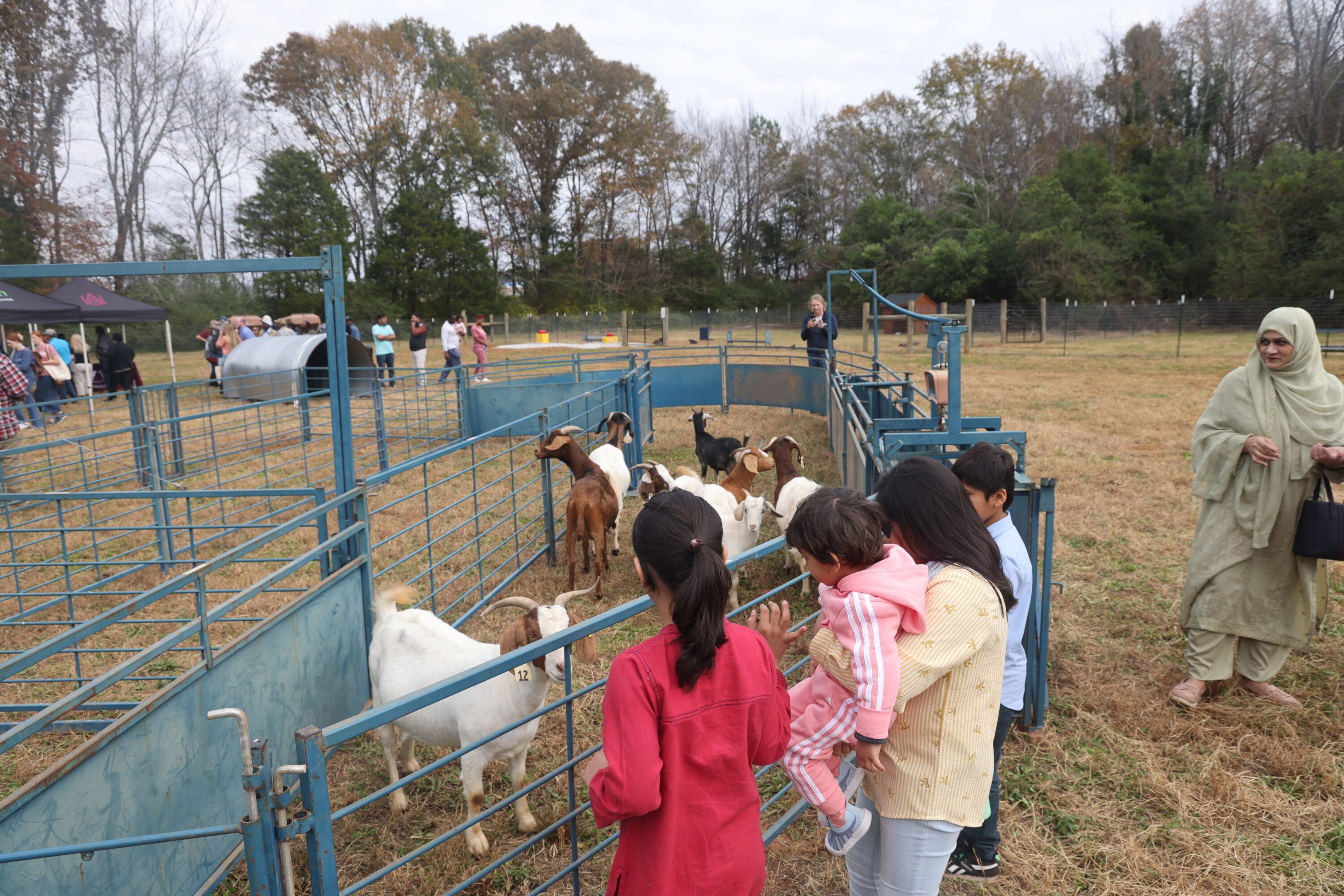
To run a profitable small ruminant business, producers are advised to identify a market niche (meat, wool, dairy, or breeding), maintain grazing or foraging land, reduce losses due to parasites and disease, and find a strong buyer’s market for their products. Unfortunately, goat and sheep producers often struggle due to poor herd health, inadequate nutrition, ineffective marketing strategies, and limited finances. The Small Ruminant Program helps to change those odds.
Small Ruminant Program
Alabama Extension’s Small Ruminant Program educates audiences about effective marketing strategies and environmentally sound, sustainable practices. These best management practices enable landowners, livestock farmers, and small-scale producers to improve animal health and overall productivity of goat and sheep operations.
In 2025, the Small Ruminants Program reached 11,688 participants online and in-person, leading to the following impacts:
- 4,675 (40%) participants increased their knowledge on how to optimize feed and pasture management for flock health, growth, and reproductive performance.
- 7,013 (60%) participants increased their understanding of breeding schedules, abortion risk reduction, lambing/kidding management, and periparturient parasite surges.
- 8,182 (70%) participants increased their knowledge in parasite and overall health management.
- 4,675 (40%) attendees increased their knowledge of feeding and management practices for offspring growth and productivity.
- 4,091 (35%) attendees increased their knowledge of farm management skills.
- 5,844 (50%) farmers gained tools to reduce costs, improve efficiency, and increase profitability.
Educating small ruminant producers on best management practices helps to sustain agribusiness operations and reduce risks that decrease
profitability.
Other Animal Science Program Impacts
FAMACHA System
The FAMACHA score certification and fecal egg count (FEC) training addresses the ongoing challenge of parasite management in small
ruminants, particularly gastrointestinal parasites, which can reduce productivity, compromise animal health, and increase treatment costs.
In 2025, 304 participants attended FAMACHA and FEC training, which resulted in the following:
- 176 (58%) increased knowledge of FAMACHA and body condition scoring.
- 204 (67%) increased knowledge of anthelmintic resistance.
- 179 (59%) increased knowledge of how to perform FECs.
- 207 (68%) increased understanding of refugia.
- 188 (62%) increased knowledge of hoof trimming and care.
- 264 (87%) increased understanding of breeding soundness and synchronization.
Alabama Goat and Sheep Summit
The Alabama Goat and Sheep Summit addresses the challenges faced by small ruminant producers, including reproductive disorders, herd health management, parasite control, and sustainable nutrition. Producers, especially small-scale and youth farmers, often lack access to practical, research-based strategies to improve productivity, animal welfare, and profitability. The Alabama Goat and Sheep Summit also provides hands-on demonstrations, expert-led sessions, and youth engagement to equip participants with the knowledge and tools to overcome these challenges.
In 2025, 120 participants gained practical knowledge and skills they could directly apply to improve their small-ruminant operations.
- 91 percent increase in knowledge of managing reproductive disorders.
- 79 percent gain in understanding of forage and grazing strategies.
- 81 percent improvement in knowledge of reproductive management strategies.
- 73 percent improvement in knowledge of managing toxic plants.
Overall, 104 (87%) of participants reported that the knowledge gained would directly enhance the return on investment of their goat or sheep operations, and 116 (97%) indicated they would recommend the training to peers.
More Information
For more information about animal science and forages programming, contact Extension Animal Science Specialist Dr. Felix Samuel at (256) 924-0984 or sfu0001@aces.edu.