
About Us

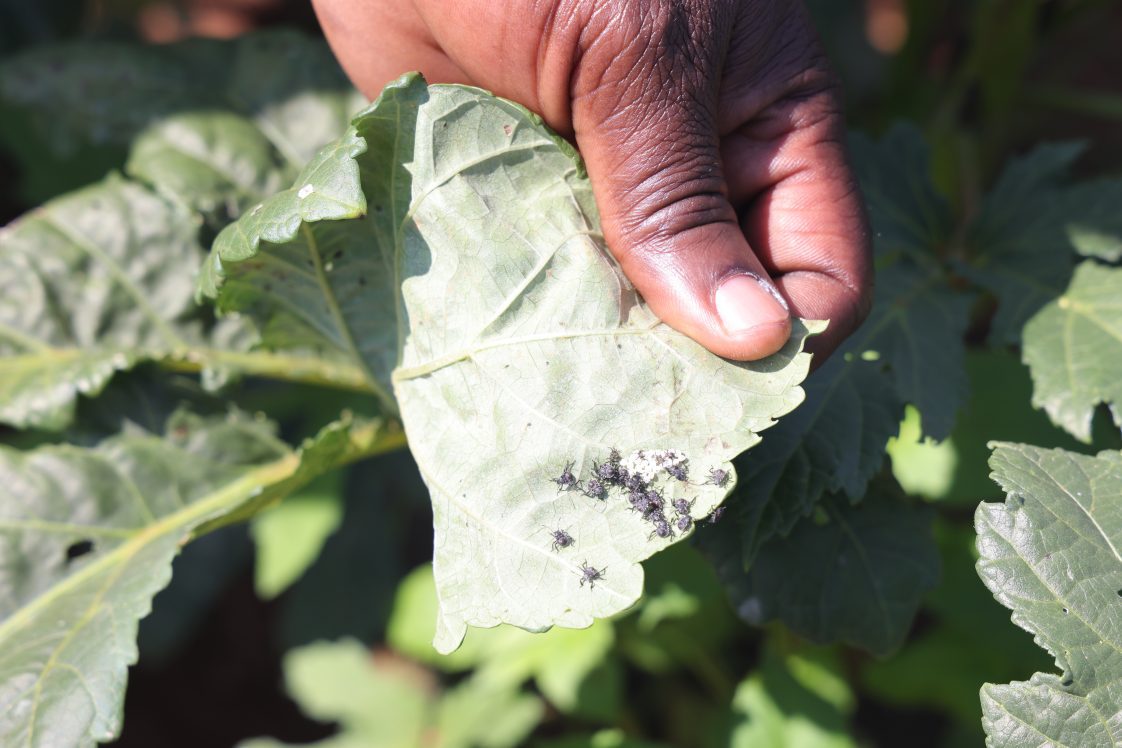
Integrated Pest Management (IPM) programs work to control pests and diseases that are harmful to plants and the environment. Specifically, they are designed to reduce the reliance on harmful pesticides while minimizing harm to humans, animals, and the environment. In addition, IPM programs help to protect beneficial insects, such as pollinators and predators that play key roles in pest control and the health of ecosystems.
IPM Program at AAMU
Alabama Extension’s program at Alabama A&M University works with urban food producers, small-scale farmers, beginning farmers, home gardeners, city planners, community leaders, and academic researchers to provide sustainable solutions to pest and plant disease problems. Although this program is still in development, staff are available to assist growers and homeowners across the state.
2024 Program Impacts
- 5,536 direct and indirect program contacts were made during 2024.
- 30+ individual growers and homeowners were educated on how to control pests like aphids, squash bugs, stink bugs, spotted wing drosophila (SWD), and peach pests.
The People’s Patch
In February 2024, AAMU and the Madison County Commission signed a five-year agreement to establish a farm to address food insecurity and provide research opportunities. Alabama Extension staff routinely provide marketing and promotion, crop selection, harvesting, and other services to the farm commonly known as The People’s Patch. The IPM specialist works closely with the harvest manager at The People’s Patch to control pests and plant diseases.
- In 2024, an estimated 111,060 pounds of produce were grown at the farm and distributed to Madison County residents at no cost.
- The People’s Patch is also used for research. It is among the first sites where the Leptopilina japonica, a beneficial parasitic wasp that attacks the SWD, has been documented. The SWD poses serious threats to small fruit producers of blackberries, blueberries, cherries, elderberries, strawberries, and other fruit tree crops.
IPM minimizes pesticide risks for growers and the environment and protects beneficial insects.
For More Information
For more information about the IPM program, contact Clement Akotsen Mensah at (256) 372-256-4969.